“`html
A Day in the Life of a Master Esthetics Student at AVI (NO FINANCIAL AID FOR THIS PROGRAM)
A Master Esthetics Student (NO FINANCIAL AID FOR THIS PROGRAM) at AVI Career Training in Vienna, Virginia spends their day moving between structured classroom instruction and real client services — building the clinical skills and confidence that employers at medical spas, dermatology offices, and luxury spas are actively looking for in the DC metro market.
If you’ve been wondering what the master esthetics (NO FINANCIAL AID FOR THIS PROGRAM) student daily schedule actually looks like before committing to enrollment, this article walks you through it — hour by hour, honestly and specifically.
Key Takeaways
- Virginia requires 1,500 clock hours to qualify for Master Esthetician licensure (vs. 600 hours for Basic Esthetics)
- AVI Career Training is COE-accredited and SCHEV-certified — two independent quality credentials that matter for licensing and financial aid
- Students practice on real clients in AVI’s student clinic under licensed instructor supervision
- Federal financial aid (FAFSA/Title IV) is NOT available for this program as it does not meet the minimum 600-hour requirement. AVI offers flexible payment plans and private financing options. AVI accepts the GI Bill® — making training accessible for veterans and career-changers across the DC metro area
- Master estheticians in the Northern Virginia / DC metro area earn approximately $38,000–$60,000+ per year, depending on specialization and work setting
What Is Master Esthetics (NO FINANCIAL AID FOR THIS PROGRAM) — and How Is It Different from Basic Esthetics?
Before walking through a typical training day, it helps to understand exactly what you’re signing up for — and why it’s different from a standard esthetics license.
In Virginia, the Department of Professional and Occupational Regulation (DPOR) sets two distinct licensing tracks for estheticians:
- Basic Esthetics: Requires 600 clock hours of training. Covers foundational skincare skills — facials, waxing, basic product knowledge, and entry-level client services.
- Master Esthetics (NO FINANCIAL AID FOR THIS PROGRAM): Requires 1,500 clock hours of training. Builds on that foundation with advanced clinical techniques, medical-grade modalities, chemical exfoliation, and in-depth skin science.
The extra 900 hours aren’t filler. They’re the difference between being qualified to work at a nail salon facial bar and being qualified to work alongside a dermatologist or in a high-end medical spa.
At AVI Career Training, the Master Esthetics (NO FINANCIAL AID FOR THIS PROGRAM) program is designed to close the gap between school and career. You’re not just learning theory — you’re performing real services, analyzing real skin conditions, and practicing on a diverse range of clients from day one of clinic hours.
That scope is why the daily schedule at AVI is built the way it is: structured mornings for learning, focused afternoons for doing.
Morning: Theory, Technique, and the Classroom Floor
Most mornings at AVI begin with instructor-led classroom instruction. This isn’t passive lecture-hall learning. AVI’s instructors are licensed industry professionals — people who have worked in spas, clinics, and salons — and they teach with that real-world context built in.
What Morning Sessions Cover
A typical morning block might include:
- Skin science and anatomy — understanding how the skin functions at a cellular level, how conditions like hyperpigmentation, acne, and rosacea develop, and how to identify them accurately across all skin tones
- Product chemistry — learning what ingredients actually do, why pH matters in chemical exfoliation, and how to read a label beyond the marketing copy
- Technique demonstrations — watching an instructor walk through a treatment step by step, then practicing movements and sequences before moving to the clinic floor
- Regulatory and safety review — understanding Virginia State Board standards, sanitation protocols, and the documentation practices that protect both you and your clients
That last point matters more than many students expect. Working in a clinical or medical spa environment means operating under real professional standards from day one. AVI builds that mindset early.
Skin Tone Inclusivity Starts Here
One thing that sets AVI’s curriculum apart: training explicitly prepares you to work beautifully on every skin tone. Skin analysis, treatment selection, and product recommendations are all taught with a diverse clientele in mind. If you plan to work in Northern Virginia or the DC metro area — one of the most diverse regions in the country — that training isn’t optional. It’s essential.
Afternoon: Hands-On Practice in AVI’s Student Clinic
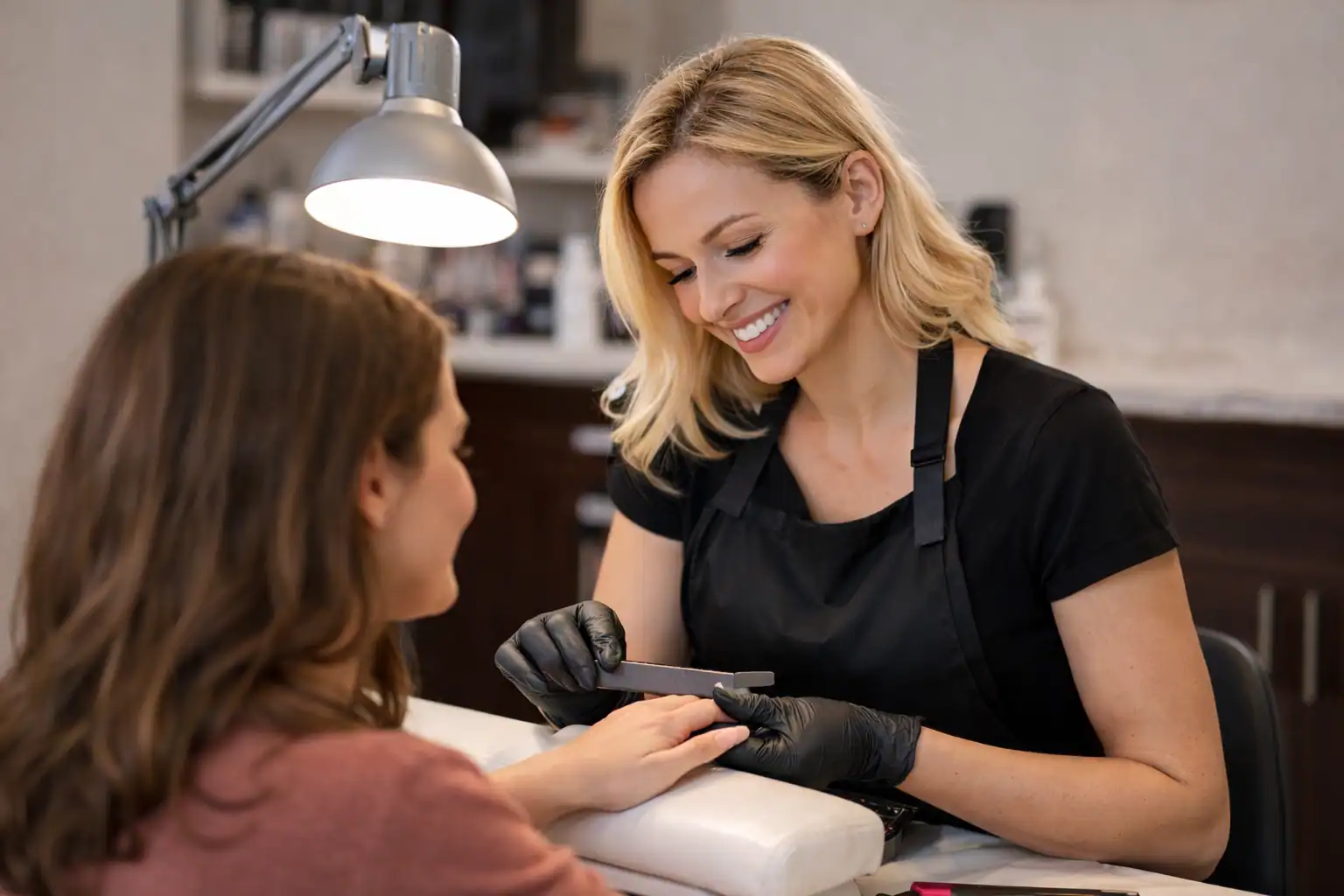
After the morning session, students transition to AVI’s student clinic. This is where the master esthetics (NO FINANCIAL AID FOR THIS PROGRAM) student daily schedule shifts from learning about skills to actually using them.
The clinic serves real clients — members of the public who book services at AVI knowing they’ll be treated by supervised students. That’s not a downgrade for clients. It’s a structure that benefits everyone: clients receive quality services at reduced rates, and students gain the kind of hands-on experience that classroom training alone can never replicate.
What Students Practice in the Clinic
Depending on where you are in the program, afternoon clinic sessions might include:
- European and customized facials — full-service treatments including cleansing, exfoliation, extractions, masking, and product finishing
- Chemical exfoliation treatments — applying and monitoring chemical peels appropriate to each client’s skin type and concern
- Advanced modalities — including microcurrent, high-frequency, ultrasonic, and other technology-based treatments common in medical spa settings
- Full client intake an
“`