Clinical esthetics education is defined as post-licensure, advanced training that equips licensed estheticians with medical-grade skincare skills to perform procedures under physician supervision. This field sits at the intersection of beauty and healthcare, covering treatments like chemical peels, laser therapy, and microneedling that go far beyond what a standard esthetician license covers. If you are exploring a career in the beauty industry and want to work in a med spa, dermatology clinic, or plastic surgery office, understanding what is clinical esthetics education is your first step. The path requires planning, the right credentials, and hands-on practice that builds real clinical confidence.
What is clinical esthetics education and why does it matter?
Clinical esthetics education is specialized, advanced training built on top of a foundational esthetician license. It prepares licensed estheticians to perform medical-grade treatments safely, accurately, and in collaboration with physicians. The industry term for practitioners in this space is “medical esthetician,” though the training pathway and title vary by state.
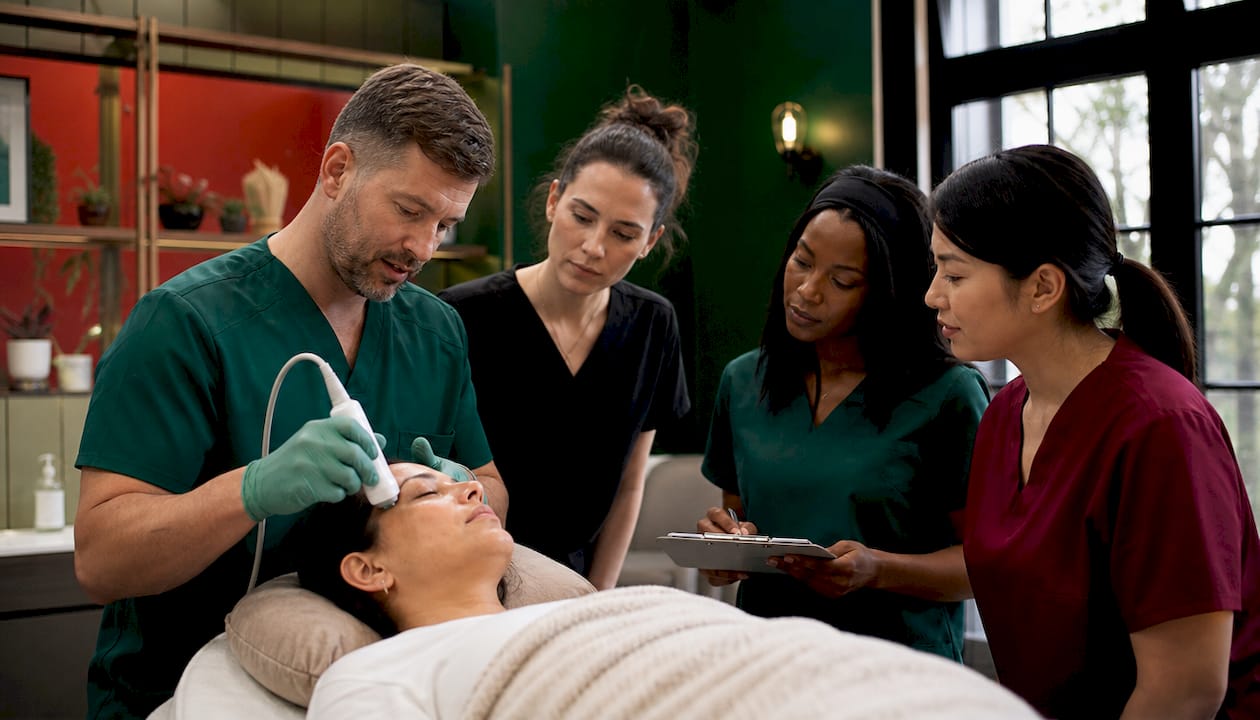
The scope of this training goes well beyond facials and waxing. Advanced clinical programs cover skin anatomy, pathology, pharmacology basics, medical ethics, and hands-on work with devices like lasers and microneedling tools. That depth of knowledge is what allows a clinical esthetician to work alongside dermatologists and plastic surgeons rather than in a traditional spa setting.
The demand for clinically trained estheticians is growing as med spas expand across the United States. Clients now expect results-driven treatments, not just relaxation services. Clinical esthetics education is the credential that positions you to meet that demand with both skill and legal standing.
What foundational licenses and prerequisites do you need first?
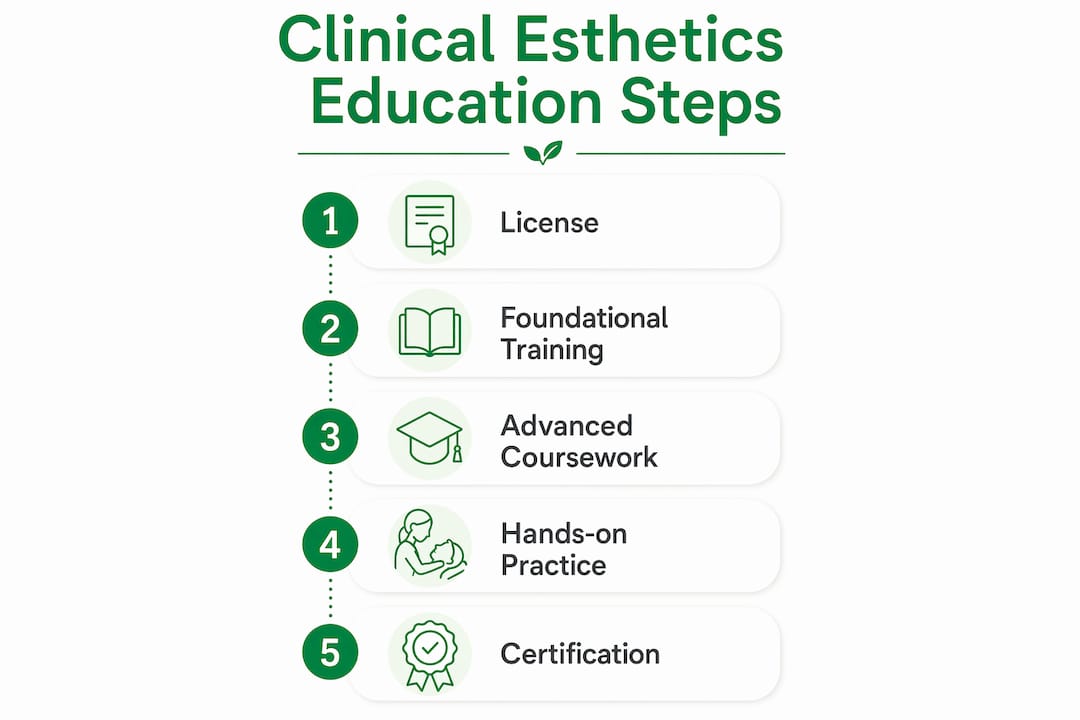
A foundational esthetician license is the non-negotiable starting point for any clinical esthetics career. State licensing requirements range from 260 hours in Virginia to 1,500 hours in Oregon and Washington. That wide range means your location directly shapes how long your initial training takes before you can even consider advanced coursework.
State laws and medical board regulations require a foundational esthetician or cosmetology license before you can legally practice clinical esthetics or obtain malpractice insurance. Skipping this step is not a shortcut. It is a legal and professional liability that no reputable employer will overlook.
Beyond the license itself, experienced practitioners advise building 1–3 years of hands-on spa experience before pursuing advanced clinical training. That time in the field builds the manual skills, client communication habits, and professional confidence that classroom hours alone cannot replicate.
Here is what to confirm before enrolling in any clinical esthetics program:
- Your state esthetician license is active and in good standing
- You meet the minimum hourly training requirement for your state
- You understand whether your state offers a master esthetician track (Virginia, Washington, Utah, and Washington D.C. do)
- You have reviewed malpractice insurance requirements for clinical practice in your state
- You have researched whether the program you want requires prior work experience
Pro Tip: Virginia requires only 260 hours for a foundational esthetician license, one of the lowest thresholds in the country. That makes it a realistic starting point, but it also means you will want to invest extra time in hands-on practice before moving into clinical work.
How is a clinical esthetics program structured?
Clinical esthetics training adds 100–300 hours of specialized instruction on top of your foundational license. Those hours are dense. They cover material that overlaps with medical and nursing education, not just beauty school curriculum.
A typical program includes the following core areas:
- Advanced skin physiology and anatomy covering dermal layers, vascular structures, and how skin responds to medical-grade treatments
- Pharmacology basics including topical agents, chemical exfoliants, and contraindications for common medications
- Medical ethics and patient safety with a focus on documentation, informed consent, and scope of practice
- Hands-on device training using lasers, microneedling pens, and chemical peel solutions under clinical supervision
- Client consultation and assessment teaching you to identify contraindications and customize treatment plans
- Physician collaboration protocols so you understand how to work within a medical team and when to escalate concerns
Hands-on training with live models is the element that separates strong programs from weak ones. Working on real clients develops muscle memory, teaches you to read tissue response, and builds the judgment that no textbook exercise can replicate.
Pro Tip: When evaluating programs, ask specifically how many live model hours are included. A program heavy on lectures and light on clinical practice will leave you underprepared for a med spa environment.
The table below compares the three most common program types you will encounter:
| Program type | Typical hours | Key benefit |
|---|---|---|
| State master esthetician track | 600–1,200 total | State-recognized credential, broadest scope of practice |
| Private certification program | 100–300 additional | Flexible, modality-specific, faster to complete |
| Med spa in-house training | Varies | Employer-specific protocols, immediate job application |
The curriculum at accredited programs includes anatomy, ethics, assessment, and patient safety as core pillars. Those four areas are not electives. They are the foundation of safe clinical practice.
How much does clinical esthetics education cost?
Program costs range from $1,500 to $20,000 depending on the program type, location, modalities taught, and whether the school holds state accreditation. That is a wide range, and knowing what drives the price helps you evaluate whether a program is worth the investment.
The main factors that affect tuition include:
- Accreditation status: State-accredited master esthetician programs typically cost more but carry broader legal recognition
- Training hours: More hours mean more equipment time, more instructor contact, and higher tuition
- Modalities included: Programs covering lasers, injectables preparation, and ultrasound cost more than those focused on peels alone
- Location: Urban markets like Northern Virginia, Washington D.C., and Seattle carry higher overhead, which shows up in tuition
The return on that investment is real. Mid-career salaries for clinically trained estheticians range from $55,000 to over $95,000, compared to the lower end of the pay scale for spa-only estheticians. A well-chosen program in a high-demand market can pay for itself within the first year of clinical employment.
Financial aid is available at accredited schools. Avi, for example, offers financial aid options to make quality esthetics education accessible to students who qualify. Always ask about payment plans, grants, and federal aid eligibility before ruling out a program based on sticker price alone.
What career opportunities open up with clinical esthetics training?
Clinical esthetics training expands your career options well beyond the traditional spa or salon setting. The roles available to clinically trained estheticians reflect the medical nature of the work and come with compensation to match.
Common work settings include:
- Medical spas and aesthetic clinics
- Dermatology and plastic surgery offices
- Laser and skin rejuvenation centers
- Oncology support programs focused on skin care during treatment
- Cosmetic surgery recovery suites
Job titles in this space include Medical Esthetician, Lead Clinical Esthetician, Clinic Manager, and Aesthetic Consultant. Each role carries different responsibilities, but all require the advanced clinical skills that a foundational spa license alone does not provide.
Career growth in clinical esthetics follows a clear path. You start in a clinical support role, build your procedure portfolio, and advance toward lead positions or independent consulting. Continuous education through specialty certifications in areas like laser safety, chemical peel protocols, or facial ultrasound keeps your skills current and your earning potential rising.
Successful clinical estheticians combine deep medical knowledge with hands-on skills developed through live patient instruction. That combination is what employers in medical settings are hiring for, and it is what separates a qualified candidate from one who simply completed an online course.
What common mistakes should aspiring clinical estheticians avoid?
The biggest misconception in this field is that “medical esthetician” is a standalone license you can earn independently. Most US states do not offer a dedicated medical esthetician license. The actual pathway requires stacking advanced certifications on top of your existing state esthetician license. Misunderstanding this leads people to enroll in programs that sound official but carry no legal weight in their state.
Other mistakes to avoid:
- Rushing into advanced training too soon: Without foundational spa experience, advanced coursework is harder to absorb and less likely to translate into job readiness
- Choosing non-accredited programs: Certificates from unaccredited vendors may not satisfy employer requirements or state regulations
- Underestimating the medical component: Anatomy, pharmacology, and ethics are not background topics. They are the core of safe clinical practice
- Skipping hands-on hours: Programs that rely heavily on video instruction or simulation cannot replace live model practice
- Ignoring scope of practice laws: Performing procedures outside your legal scope, even under physician supervision, creates serious liability
Pro Tip: Before enrolling in any advanced program, verify that the credential it offers is recognized by employers in your target market. Call three local med spas and ask what certifications they require. That 10-minute research step can save you thousands of dollars.
Preparation for advanced procedures also involves skin readiness. Understanding how to prepare skin before a procedure is a practical skill that clinical programs teach and that clients will ask you about from day one.
Key Takeaways
Clinical esthetics education is advanced, post-licensure training that requires a state esthetician license, hands-on clinical hours, and deep knowledge of anatomy, pharmacology, and medical ethics to qualify for medical-setting careers.
| Point | Details |
|---|---|
| Foundational license is required | State esthetician licenses range from 260 to 1,500 hours before clinical training begins. |
| Advanced programs add 100–300 hours | Clinical coursework covers anatomy, ethics, pharmacology, and device training beyond the basic license. |
| Costs range from $1,500 to $20,000 | Program type, accreditation, and location are the main factors driving tuition differences. |
| Mid-career salaries reach $55,000–$95,000+ | Clinical settings pay significantly more than traditional spa roles for trained estheticians. |
| No universal medical esthetician license exists | Advanced credentials are stacked on a foundational state license, not issued as a separate standalone license. |
Why clinical esthetics is becoming a healthcare career, not just a beauty one
The field is shifting in a direction that most people entering it do not fully anticipate. Clinical esthetics is no longer primarily about skin glow and relaxation. It is becoming a genuine healthcare support role, and the training programs that recognize this are producing far better practitioners.
What I have seen consistently is that students who approach this field with a medical mindset, rather than a beauty mindset, adapt faster and advance further. They ask better questions during training, they document more carefully, and they earn physician trust more quickly. That trust is what opens doors to the most interesting and highest-paying roles in the field.
The emergence of facial ultrasound as a safety standard in clinical esthetics is a perfect example of this shift. Visualizing vascular depth before advanced procedures is a skill borrowed directly from medical practice. Programs that include this kind of training are preparing students for where the field is going, not where it has been.
My honest advice: be patient with the foundational stage. The estheticians who rush into clinical certifications without real spa experience tend to plateau early. The ones who spend two years building manual skills, learning to read skin, and developing client relationships arrive at clinical training ready to absorb everything. That patience compounds into a career that lasts.
The esthetician program benefits that matter most are not the ones listed in a brochure. They are the habits, the judgment, and the professional identity you build through consistent, supervised practice. Invest in that foundation, and the clinical layer becomes something you grow into rather than something you struggle to keep up with.
— krishna
Avi’s accredited esthetics programs in Northern Virginia
Avi Career Training in Fairfax County, VA offers accredited esthetician programs built around the hands-on training that clinical careers demand. From foundational licensure to the master esthetics program, Avi’s curriculum covers skin anatomy, advanced treatment protocols, and real-world clinical skills developed with live clients.
Avi’s partnerships with leading spas and medical facilities in Northern Virginia give students direct access to externship placements and career connections that matter after graduation. Personalized mentorship from enrollment through graduation means you are never navigating the path alone. If you are ready to build the skills that clinical employers are hiring for, hands-on training at Avi is where that preparation begins. Explore Avi’s esthetics programs and take the first step toward a clinical career grounded in real skill.
FAQ
What is clinical esthetics education?
Clinical esthetics education is advanced, post-licensure training that prepares licensed estheticians to perform medical-grade skincare treatments under physician supervision. It covers anatomy, pharmacology, ethics, and hands-on device training beyond what a standard esthetician license includes.
How many hours does clinical esthetics training require?
Foundational esthetician licenses require 260–1,500 hours depending on the state, and advanced clinical programs add 100–300 hours of specialized instruction on top of that.
Is there a medical esthetician license I can earn directly?
Most US states do not offer a standalone medical esthetician license. The standard pathway stacks advanced certifications on an existing state esthetician license, with select states like Virginia and Washington offering a recognized master esthetician track.
What does a clinical esthetician earn?
Mid-career salaries for clinically trained estheticians range from $55,000 to over $95,000, depending on skill level, specialty certifications, and the clinical setting where they work.
How do I choose a quality clinical esthetics program?
Look for state accreditation, a curriculum that includes live model hours, and coverage of anatomy, ethics, and medical device training. Verify that the credential the program offers is recognized by employers in your local market before enrolling.