
What Esthetician School Is Really Like Day To Day
Esthetician school is a structured, hands-on experience where you spend most of your time in a real clinic setting practicing skin care treatments on actual clients — far more than you might expect from a traditional classroom. If you have been wondering whether beauty school is all theory and textbooks, the short answer is no. At AVI Career Training in Vienna, VA, students in our Basic Esthetics and Master Esthetics programs hit the clinic floor quickly, learning by doing from day one.
Key Takeaways Before You Read On
- Esthetician programs at AVI Career Training are built around hands-on clinical hours, not just lectures.
- Basic Esthetics requires 600 program hours; Master Esthetics requires 750 program hours.
- A typical school day combines classroom theory in the morning with supervised client services in the afternoon.
- You will learn to perform facials, waxing, skin analysis, chemical exfoliation, and more.
- Title IV federal financial aid is available for qualifying programs, including esthetics.
- AVI Career Training is COE-accredited and located at 112 Lawyers Rd NW Suite 3, Vienna, VA 22180.
- Graduating with real client hours on your resume makes you far more competitive in the job market.
Your First Week: Orientation and the Basics
Your first few days at esthetician school are all about orientation — learning the rules of the clinic, understanding sanitation and safety protocols, and getting acquainted with your fellow students. Do not underestimate this phase. In Virginia (and across the country), state boards take sanitation seriously, and so do employers. At AVI Career Training, instructors make sure every student understands proper disinfection procedures, client intake forms, and professional conduct standards before anyone touches a client.
You will also get your first look at the products and tools of the trade: steamers, magnifying lamps, galvanic machines, high-frequency wands, and more. The equipment can feel overwhelming at first, but within a week or two, it becomes second nature.
A Typical School Day: Morning Theory, Afternoon Clinic
One of the most common questions prospective students ask is, “What does a normal day actually look like?” While every program has its own rhythm, here is a general picture of what you can expect at AVI Career Training:
Morning: Classroom Instruction
Mornings typically begin with structured classroom learning. Instructors cover topics like skin anatomy and physiology, ingredient science, contraindications for various treatments, and the business side of esthetics. You might spend one morning studying the layers of the skin and the next learning how different chemical exfoliants work at the cellular level. These lessons are not just academic — they directly inform the decisions you make when a client sits down in your chair.
Afternoon: Supervised Clinic Practice
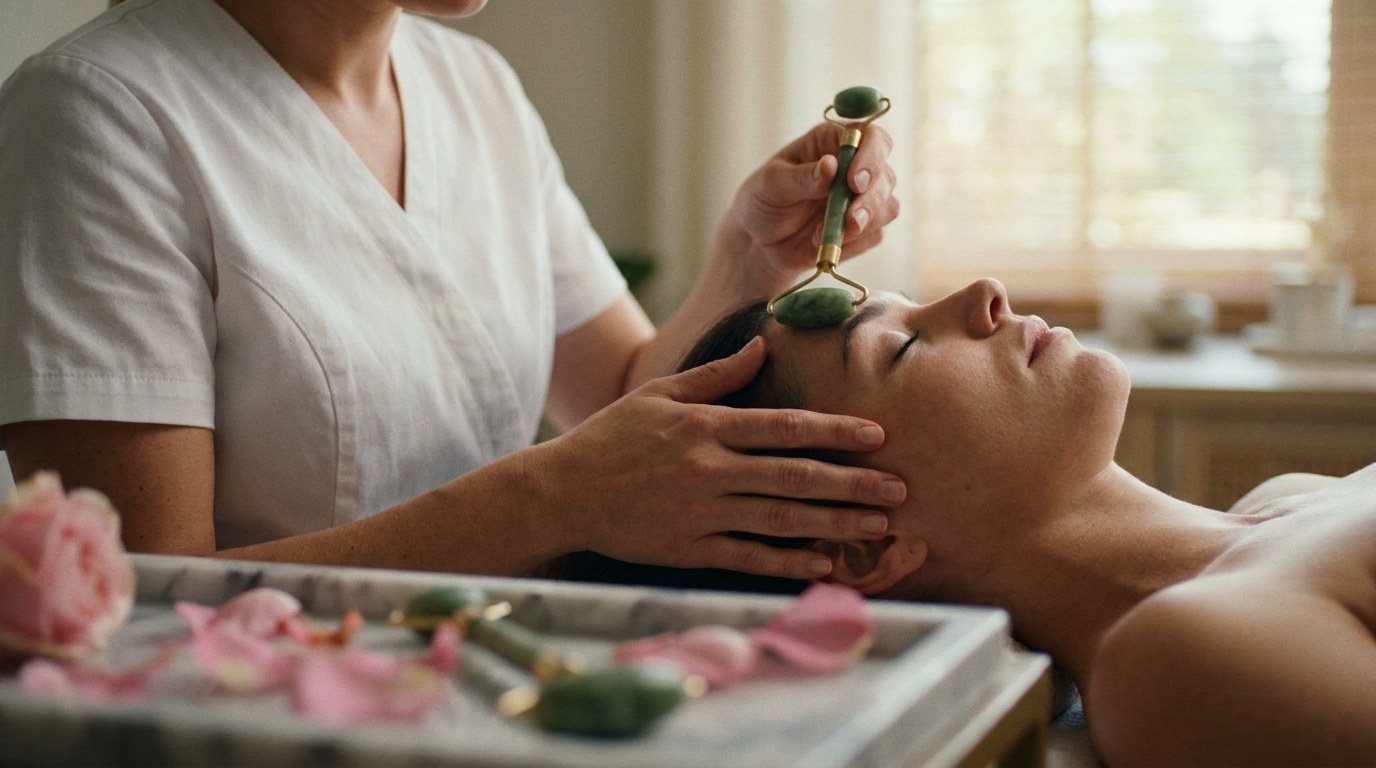
Afternoons are where the real magic happens. Students rotate through clinic services, working with real clients who book appointments specifically to receive treatments from supervised student estheticians. You will perform facials, eyebrow shaping, waxing services, and more — all under the watchful guidance of licensed, experienced instructors. This structure means you graduate with genuine, documented client hours, which employers value enormously.
By the time you finish your 600-hour Basic Esthetics program (or 750 hours for Master Esthetics), you will have performed dozens of treatments across a wide variety of skin types and concerns. That experience is irreplaceable.
What You Actually Learn: Skills That Build Week by Week
Esthetics education is cumulative. Skills build on top of each other progressively, so the curriculum is carefully sequenced. Here is a general sense of how topics and techniques develop over your program hours:
Early Weeks: Foundations
Sanitation, client consultation techniques, skin typing, basic facial massage, product knowledge, and your first supervised basic facials. Getting comfortable with touch and with speaking professionally to clients is a big focus early on.
Mid-Program: Expanding Your Treatment Menu
Waxing (facial and body), chemical exfoliation basics, mask application, extractions, and specialty treatments begin here. You also start spending more time in the clinic and less time in lecture, because you now have the foundation to understand what you are doing and why.
Later Weeks: Advanced Techniques and Business Readiness
In the final stretch, you tackle more advanced modalities, review for your state board exam, and focus on speed and consistency — because licensed estheticians work on tight appointment schedules in the real world. Career readiness, resume writing, and how to build a clientele are also covered as you approach graduation.
For students in the Master Esthetics program, the additional hours go deeper into advanced skin care modalities, giving graduates an edge in medical spa and clinical settings.
The Emotional Reality: It Is Rewarding but Demanding
No honest account of esthetician school would skip this part. There will be days when your hands are tired, your feet ache, and you have to repeat a technique several times before it clicks. Beauty school requires patience — with yourself and with the learning process. You are training to work on people, which carries real responsibility.
At the same time, most students describe the experience as deeply fulfilling. When a client tells you their skin has never looked better, or when you finally master a tricky waxing technique, the satisfaction is real and immediate. The community inside the school — your classmates, your instructors, the clients who return week after week — creates a sense of momentum that carries you through the harder days.
Instructors at AVI Career Training are working professionals who understand both the art and the business of esthetics. They are invested in your success because they have been in your chair.
How Financial Aid Fits In
Cost is a real consideration for most prospective students. The good news is that AVI Career Training offers access to Title IV federal financial aid for qualifying programs, including Basic Esthetics and Master Esthetics. Our admissions team can walk you through what you may be eligible for and help you understand your options without any pressure. We encourage you to reach out or start your application online so we can have that conversation with you directly.
Is Esthetician School Right for You?
If you love helping people feel good about themselves, have an interest in skin science, and want a career with genuine flexibility — working in spas, salons, medical offices, or even for yourself — esthetics is worth exploring seriously. The programs at AVI Career Training are designed for real life: focused, practical, and completed in a timeframe that gets you into the workforce without years of waiting.
Whether you are a recent high school graduate, someone pivoting careers, or a professional looking to add esthetics credentials to your existing skill set, there is a path here for you. Our team is ready to answer every question you have.
Apply to AVI Career Training today and take the first step toward your esthetics career.
Frequently Asked Questions About Esthetician School Day-to-Day Life
How many hours a week will I be in school for the esthetics program?
Schedule structures vary, but AVI Career Training designs its programs to fit both full-time and more flexible schedules. The Basic Esthetics program is 600 total hours and the Master Esthetics program is 750 total hours. Your admissions advisor can walk you through the specific schedule options available when you apply so you can plan around your existing commitments.
Do I work on real clients during esthetician school, or just on mannequins and classmates?
You work on real clients. After you complete the foundational early weeks of training, you move into the supervised clinic where paying clients book appointments for student-performed services. This is one of the most valuable parts of your education — you graduate with real-world experience, not just textbook knowledge. Clients receive great services at a reduced rate, and you gain the hands-on hours that employers look for.
What should I wear and bring to esthetician school each day?
Most esthetics programs, including ours, require students to wear a uniform or follow a specific dress code to maintain a professional clinic environment. You will also want comfortable, closed-toe shoes since you will be on your feet for clinic hours. Your program supply list will tell you exactly what tools and products you need; some items may be included in program materials. Your admissions advisor can give you specifics before your start date.
How hard is the state board exam, and does school prepare me for it?
Virginia’s state board exam for esthetics includes both a written (theory) portion and a practical (hands-on) portion. It is rigorous, but it is very passable when you have been properly prepared. At AVI Career Training, exam preparation is woven into the entire curriculum — not just crammed in at the end. By the time you complete your program hours, the material on the exam should feel familiar because you have been applying it in the clinic throughout your training.
Can I get financial aid to cover esthetician school at AVI Career Training?
Yes. Title IV federal financial aid is available for qualifying students enrolled in eligible programs at AVI Career Training, which includes our esthetics programs. Eligibility depends on factors like your financial situation and enrollment status. The best way to find out what you may qualify for is to connect with our admissions team. You can submit your application at avi.edu/apply or call us directly at (571) 520-4417 to start the conversation.
AVI Career Training is a COE-accredited beauty and wellness career school located at 112 Lawyers Rd NW Suite 3, Vienna, VA 22180. We offer programs in Cosmetology (1,000 hours), Basic Esthetics (600 hours), Master Esthetics (750 hours), Massage Therapy (625 hours), Nail Technology (150 hours), Laser Technician (120 hours), Medical Assistant (600 hours), and ESL (1,200 hours). Call us at (571) 520-4417 or visit avi.edu/apply to get started.