Esthetician School Near Fairfax County: Evening & Weekend Options
AVI Career Training in Vienna, VA offers hands-on esthetics training just minutes from Fairfax County — with schedules built for working adults.
Yes — there is an accredited esthetician school near Fairfax County that works around your schedule, not the other way around. AVI Career Training, located at 1595 Spring Hill Rd in Vienna, Virginia, sits just minutes from the Fairfax County line in the heart of Northern Virginia’s Tysons corridor. If you work full time, raise a family, or simply can’t walk away from your income to sit in a classroom Monday through Friday, AVI’s esthetics program is designed with you in mind.
Northern Virginia’s spa, med spa, and wellness industry is growing fast — and skilled, licensed estheticians are in high demand across the entire DC metro market. This guide walks you through Virginia’s licensing requirements, what a realistic school schedule looks like for a working adult, what to look for in an esthetics program, and exactly what AVI offers at its Vienna campus.
⚡ Key Takeaways
- Virginia requires 600 clock hours of approved esthetics training to sit for the state board exam.
- AVI Career Training is COE-accredited and SCHEV-certified — credentials that matter for quality assurance and eligibility for certain funding programs.
- AVI is located in Vienna, VA — fewer than 10 miles from most Fairfax County zip codes.
- The GI Bill® is accepted at AVI — a meaningful benefit for the large veteran population in Northern Virginia.
- AVI’s curriculum is built to serve every skin tone — a critical differentiator in the diverse DMV market.
Clock hours required for VA esthetician licensure
Miles from most Fairfax County zip codes to AVI’s Vienna campus
Accreditation — a nationally recognized quality standard
Why Fairfax County Residents Choose Esthetician Training
Esthetics is one of the fastest-growing career paths in the Northern Virginia and DC metro market — and it doesn’t require a four-year degree. The region’s dense concentration of medical spas, luxury day spas, dermatology clinics, and wellness centers creates consistent, year-round demand for licensed estheticians who can perform professional-grade skin care treatments.
According to the U.S. Bureau of Labor Statistics, employment of skincare specialists is projected to grow 16 percent over the next decade — much faster than average. In a high-income market like Northern Virginia, that growth translates into real earning potential, with positions available in settings ranging from boutique salons to medical aesthetics clinics to luxury resort spas.
What makes esthetics especially attractive to Fairfax County residents is the career flexibility it offers. Many licensed estheticians work in employee settings with set schedules, while others build independent clientele and set their own hours. Either way, you’re entering a profession where skilled, licensed practitioners are genuinely sought after — and where your training directly determines your earning ceiling.
Student Story: Career Changer from Burke, VA
Imagine a healthcare administrative worker from Burke — she’s been commuting to a desk job for eight years, feeling stuck and underpaid. She’s always loved skincare and starts researching esthetician programs near Fairfax County on her lunch break. Her concern? She can’t quit her job to go back to school. She needs a program that fits around her 9-to-5 without putting her family’s finances at risk. She finds AVI’s Vienna campus less than 20 minutes from her home, confirms the schedule works around her current job, enrolls — and completes her training without missing a single paycheck. Within weeks of passing her Virginia State Board exam, she’s fielding interview requests from two med spas in Tysons.
Virginia Esthetician License Requirements: What You Need to Know
Virginia requires 600 clock hours of approved esthetics training before you can sit for the state board exam. That requirement is set by the Virginia Department of Professional and Occupational Regulation (DPOR), which oversees the Board for Barbers and Cosmetology — the body that administers the esthetician licensing exam in the Commonwealth.
The Virginia State Board Exam
After completing your 600 hours at an approved school, you apply through DPOR to take the Virginia State Board exam. The exam has two components: a written theory test and a practical skills demonstration. Both sections test the knowledge and techniques you develop during your training program. Passing both is required before you can practice as a licensed esthetician in Virginia.
Why Accreditation Matters
Not every esthetics program is created equal — and not every program qualifies you for exam eligibility. Attending a school that is COE-accredited (accredited by the Council on Occupational Education) and SCHEV-certified (certified by the State Council of Higher Education for Virginia) gives you a meaningful guarantee: your training meets both national and state-level quality standards. These credentials also determine your eligibility for certain funding programs, including the GI Bill®.
Can You Attend Esthetician School Around a Full-Time Schedule?
Yes — many esthetics students in Northern Virginia complete their training while working full time. The key is finding a school that structures its program hours around adult learners, not traditional academic calendars.
How Evening and Weekend Programs Work
Evening and weekend esthetics programs compress your required training hours into time blocks that don’t conflict with a standard workday. Instead of attending five days a week from 9 a.m. to 3 p.m., you attend scheduled evening sessions and Saturday or Sunday blocks. Your clock hours accumulate over a longer calendar span than a full-time day program, but you graduate with the same 600 hours and the same license eligibility.
The practical reality: most working adults who choose an evening or weekend schedule find that their weekly commitment runs somewhere between 15 and 25 hours per week in class and clinic time, depending on the program structure. That’s a manageable load — especially for someone motivated by a clear career goal.
What “Clinic Hours” Actually Means
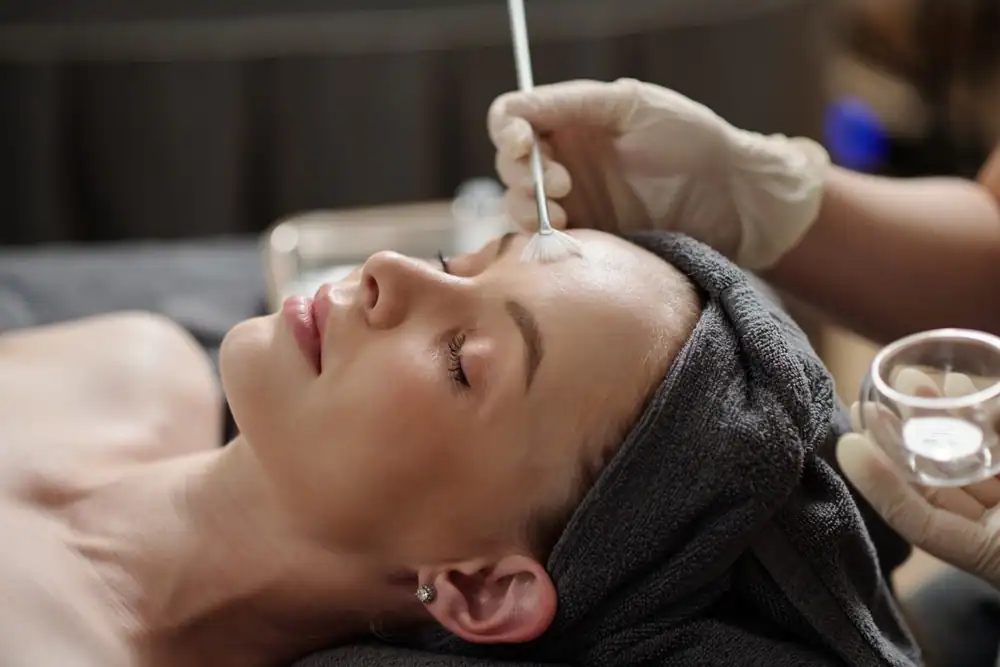
Esthetics programs aren’t just classroom instruction. A significant portion of your 600 hours is hands-on clinical training — practicing facials, skin analysis, waxing, exfoliation, and other treatments on real clients in a supervised student clinic. This is where you build the technical confidence that separates a licensed esthetician from someone who just read about skincare. The best programs integrate clinic hours into the same flexible schedule as your theory classes, so you’re not juggling two separate commitments.
Student Story: Active-Duty Spouse in Reston
Picture a military spouse based in Reston with two school-age kids and a part-time retail job on weekends she can’t give up. Her partner is frequently deployed, which means she’s effectively a single parent for months at a time. She needs training that happens in predictable, manageable blocks she can plan childcare around. She contacts AVI, confirms the schedule details, and maps out exactly how her 600 hours will fit into her life over several months. She completes her program, sits for the Virginia State Board exam — with her GI Bill® benefit helping offset costs — and launches her esthetics career at a spa near Tysons Corner while her kids are in school.
What to Look for in an Esthetician School Near Fairfax County
Choosing an esthetics school is one of the most important decisions you’ll make on this career path. Here’s what actually matters — and what to look past.
Accreditation and State Approval
This is non-negotiable. Any school you attend must be approved by the Virginia Board for Barbers and Cosmetology for your 600 hours to count toward licensure. Beyond state approval, national accreditation from an agency like the Council on Occupational Education (COE) signals that the program meets rigorous quality standards evaluated by an independent body. SCHEV certification confirms the same at the state level in Virginia.
Inclusive Curriculum — All Skin Tones
The DC metro area is one of the most ethnically diverse markets in the country. If your training curriculum defaults to one skin type, you’ll be underprepared for the majority of your future clients. Look for a program that explicitly trains you to analyze, treat, and recommend for every skin tone — from the lightest to the deepest. This is both an ethical standard and a professional advantage.
Hands-On Clinical Training
Reading about facials and performing them are two different things. Your program’s clinical component — where you treat real clients under licensed instructor supervision — is where your skill actually develops. Confirm that the school’s program includes substantial hands-on hours, not just lecture-based instruction.
Financial Aid and Veteran Benefits
Program costs vary, so it’s worth asking early about payment plans, institutional scholarships, and veteran benefits. If you or a family member have served, GI Bill® eligibility at an accredited school can be a significant differentiator. Note that financial aid availability depends on the specific program and its approved hours — always verify directly with the school’s admissions team.
Proximity and Commute
When you’re balancing school with work and family, a 45-minute commute each way adds up fast. For Fairfax County residents, a school in Vienna or the Tysons area cuts that burden significantly compared to programs located in DC or farther out in Maryland.
- COE-accredited and SCHEV-certified
- Virginia Board-approved esthetics program (600 hours)
- Evening and/or weekend schedule options
- Inclusive curriculum covering all skin tones
- Substantial hands-on clinical training hours
- GI Bill® acceptance and transparent financial options
- Convenient location for Northern Virginia commuters
AVI Career Training: Esthetics Program in Vienna, VA
AVI Career Training is a CO