✦ Beauty & Skincare · 600 Clock Hours · Tysons Corner, VA

Basic Esthetics
Program in Virginia

Start your journey toward a career in professional skincare at AVI Career Training. Healthy skin is more than beauty — it is confidence, wellness, self-care, and professional skill. Learn facials, skin analysis, waxing, sanitation, and client care in a hands-on, career-focused environment.

600
Clock Hours
Hands-On
Practical Training
COE
Accredited School
Aid
Financial Aid Available

Basic Esthetics Program at a Glance

Everything you need to know about AVI Career Training's Basic Esthetics program before you apply.

Program Name
Basic Esthetics
Program Length
600 Clock Hours
Location
AVI Career Training — Tysons Corner / Vienna, Virginia
Training Format
Classroom instruction and supervised hands-on practical training
Financial Aid
Available for those who qualify. Speak with our financial aid office for details.
Licensing Preparation
Designed to help eligible students prepare for the applicable Virginia esthetics licensing process
Program Focus
Skincare, facials, skin analysis, waxing, sanitation, client consultation, product knowledge, professional ethics, and career preparation
Career Paths
Spa esthetician, skincare specialist, waxing specialist, beauty consultant, skincare sales, and self-employment where permitted
Talk to Admissions About Upcoming Start Dates →

Why Choose AVI Career Training for Basic Esthetics?

Choosing the right esthetics school is an important decision. Students need more than a classroom — they need guidance, practice, encouragement, and a learning environment that prepares them for real client interactions.

🤲

Hands-On Learning

Students practice esthetics techniques in a supervised training environment. Hands-on learning builds confidence, improves accuracy, and connects classroom knowledge with real-world application.

👩‍🏫

Experienced Instructors

AVI instructors help students understand both the theory and practical side of esthetics. Students receive guidance, feedback, and support as they progress through the program.

🏫

Modern Training Environment

Students learn in a professional school environment designed to support beauty, wellness, and career education — with tools, products, and procedures used in the industry.

🎯

Career-Focused Education

Beyond skincare techniques, students learn client communication, professional appearance, sanitation, time management, customer service, and workplace expectations.

💬

Supportive Admissions Team

The AVI admissions team helps prospective students understand program details, schedule options, tuition, financial aid, enrollment steps, and campus tour opportunities.

📍

Convenient Northern Virginia Location

Located in Tysons Corner / Vienna — accessible from Fairfax, Arlington, Alexandria, Falls Church, Reston, Herndon, Sterling, Ashburn, Manassas, and nearby communities.

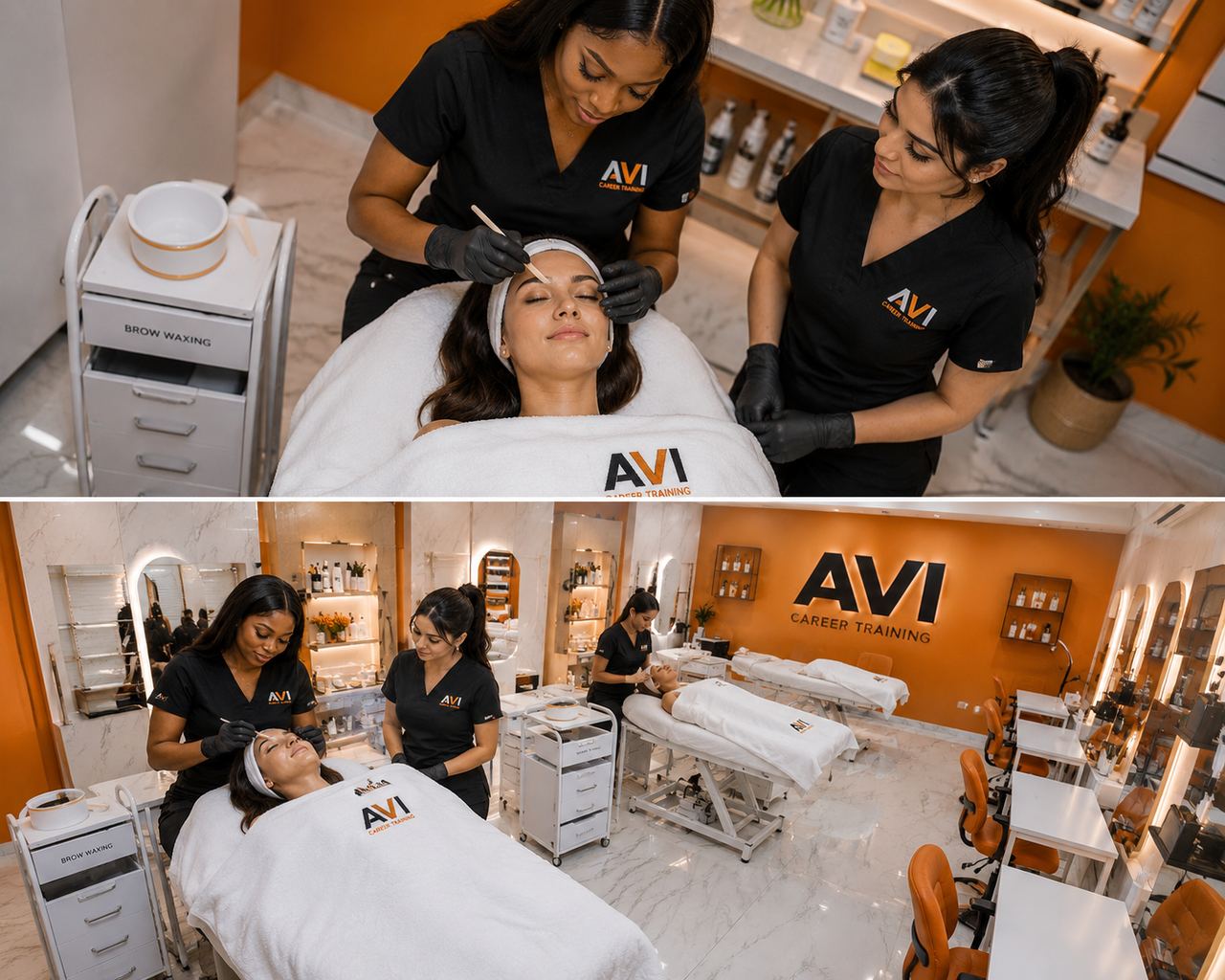
Basic Esthetics students practicing facial techniques at AVI Career Training in Tysons Corner Virginia
Students receive hands-on training under instructor supervision

What Is Basic Esthetics?

Basic Esthetics is the study and practice of professional skincare. It focuses on understanding the skin, identifying skin types, performing facial treatments, providing hair removal services, following sanitation procedures, consulting with clients, and recommending appropriate skincare routines.

An esthetician is a skincare professional trained to help clients improve the appearance and condition of their skin through non-invasive beauty and wellness services. Estheticians may work in day spas, salons, beauty clinics, wellness centers, skincare studios, hotels, resorts, and other personal care environments.

Basic esthetics education gives students the foundation they need before entering the professional skincare field. Students learn how skin works, how to analyze skin conditions, how to perform facial treatments safely, how to communicate with clients, and how to maintain a clean and professional treatment space.

Esthetics Combines Science, Beauty & Client Care

Skin Science — anatomy, physiology, cell function, skin conditions
Clinical Practice — facials, exfoliation, steaming, masks, massage
Hair Removal — waxing, brow shaping, facial hair removal
Product Knowledge — ingredients, formulations, home care guidance
Client Care — consultation, communication, ethics, trust-building
Hygiene & Safety — sanitation, disinfection, infection control

What Does an Esthetician Do?

An esthetician provides professional skincare and beauty services. A typical esthetician workday may include client consultations, skin analysis, facial treatments, waxing, product recommendations, and maintaining a clean treatment space.

Daily Professional Responsibilities

Greeting clients professionally
Reviewing client intake forms
Discussing skincare goals
Analyzing skin type and condition
Preparing the treatment room
Performing facial treatments
Providing waxing services
Recommending home care products
Cleaning and disinfecting tools
Maintaining client records
Rebooking clients
Supporting retail product sales

Estheticians Help Clients Feel Confident

Clients visit estheticians because they want healthier-looking skin, relaxation, self-care, confidence, and professional guidance. A successful esthetician combines technical skill with empathy, communication, and trust. This relationship-focused approach is central to building a loyal clientele and a sustainable career in the beauty industry.

Important Note: Estheticians do not diagnose or medically treat skin conditions. Clients with medical concerns should be referred to a qualified healthcare professional.

What You Will Learn in the Basic Esthetics Program

The Basic Esthetics Program introduces students to the core knowledge and practical skills used in professional skincare environments. Training covers six major areas of esthetics education.
🔬

Skin Science

Skin anatomy & physiology
Skin types & conditions
Aging, acne-prone, sensitive skin
Dry, oily & dehydrated skin
Skin functions & barrier
💆

Facial Treatments

Cleansing & skin analysis
Exfoliation & steam
Facial massage & masks
Treatment room setup
Post-treatment recommendations
🪮

Hair Removal

Waxing safety & technique
Facial & brow waxing
Client preparation
Contraindications
Aftercare instructions
🗣️

Client Consultation

Intake forms & communication
Treatment planning
Product recommendations
Consent & client records
Professional boundaries & ethics
🧼

Sanitation & Infection Control

Cleaning & disinfection
Infection prevention
Hand hygiene & glove use
Cross-contamination prevention
Safe disposal of single-use items
💼

Professional Development

Customer service & communication
Time management
Professional appearance
Retail communication
Client retention & business basics
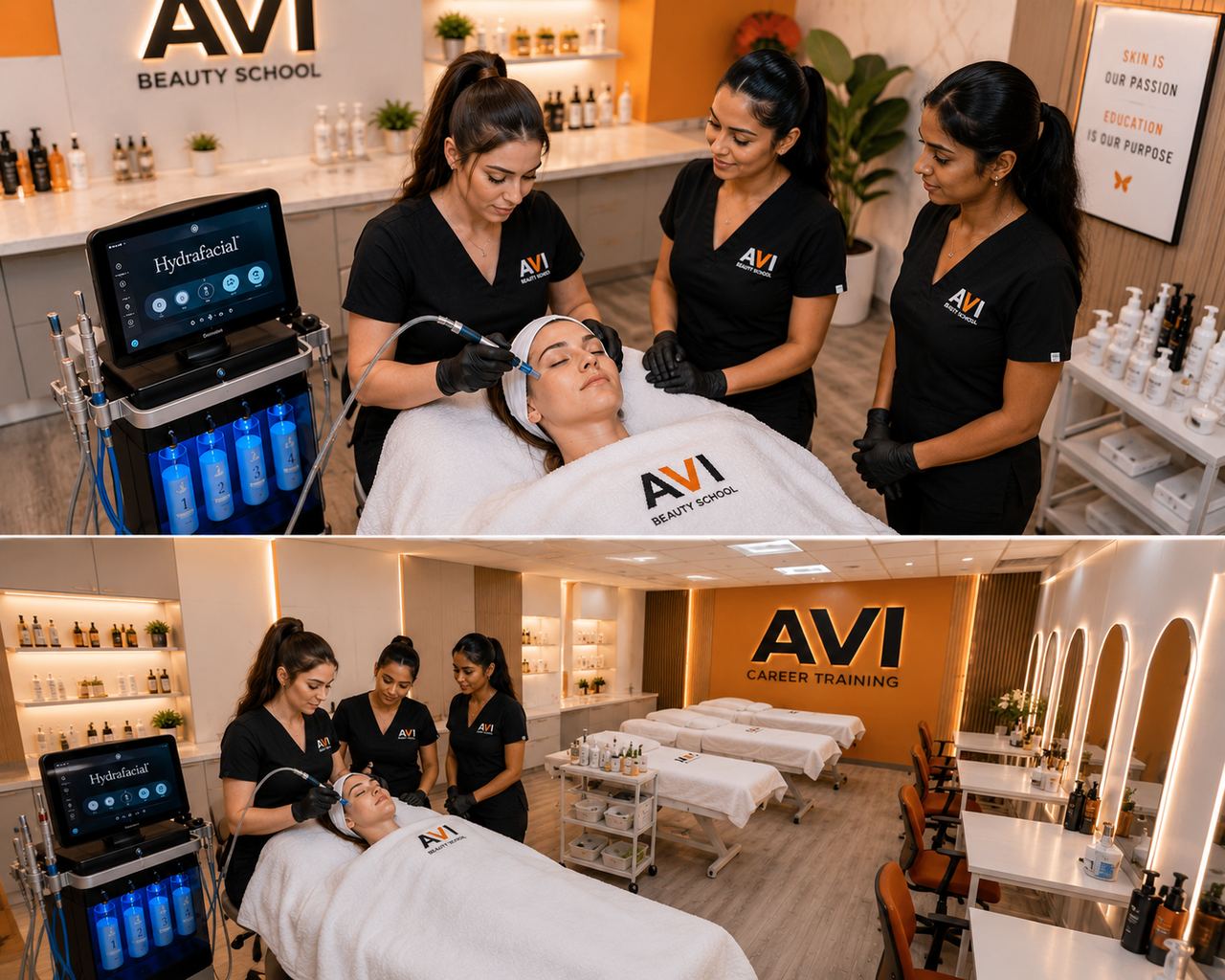
Esthetician student performing facial treatment at AVI Career Training Virginia
Supervised Practical Training
AVI Career Training basic esthetics skincare program students in classroom
Professional Skincare Education

Basic Esthetics Curriculum Overview

The curriculum builds knowledge step by step. Students begin with foundational theory and progress into practical techniques under instructor supervision across seven core subject areas.

Subject Area Coverage
Orientation & Professional Foundations
Professional image, ethics, career planning, customer service
Virginia Laws & Regulations
State rules, licensing overview, scope of practice
General & Applied Sciences
Anatomy, physiology, chemistry, bacteria, product ingredients
Skin Care Procedures
Facials, analysis, exfoliation, massage, masks, steam
Makeup & Beauty Enhancement
Color theory, product selection, professional hygiene
Body & Wellness Treatments
Body treatment concepts within permitted scope of practice
Hair Removal
Waxing, brow shaping, hair growth cycles, aftercare
Curriculum content may vary. Contact admissions for current program details and hour breakdowns.

Skin Science Foundation

Strong esthetics education begins with understanding the skin — the body's largest organ. Students learn how skin protects the body, responds to products, changes with age, and reflects lifestyle factors.

Layers of the Skin

Epidermis
The outermost layer — involved in cell renewal, pigmentation, and barrier protection.
Dermis
The middle layer — contains collagen, elastin, blood vessels, nerves, hair follicles, and glands.
Hypodermis
The deeper layer — contains fat and connective tissue that cushion and support the body.

Functions of the Skin

ProtectionTemperature RegulationSensationImmune DefenseMoisture BalanceVitamin D ProductionBarrier Function

Important Skin Terms

Sebaceous Glands
Oil-producing glands that help lubricate the skin surface.
Melanin
The pigment that gives skin its color and helps protect against ultraviolet radiation.
Collagen
A protein that supports firmness and structure in the skin.
Elastin
A protein that helps skin maintain flexibility and elasticity.
Skin Barrier
The protective outer function that retains moisture and defends against irritants.

Understanding Skin Types & Skin Conditions

One of the most important skills an esthetician develops is recognizing different skin types and understanding common skin conditions. This guides treatment selection and helps avoid unsuitable services.

Normal

Balanced skin that is not overly oily or dry.

Dry

May feel tight, rough, flaky, or lacking in oil.

Oily

Produces excess oil; may appear shiny or be prone to clogged pores.

Combination

Oily in some areas and dry in others.

Sensitive

May react easily to products, heat, friction, or environmental factors.

Dehydrated

Lacks water even if it also produces oil.

Mature

Affected by age-related changes: fine lines, dryness, loss of firmness.

Acne-Prone

Prone to blackheads, whiteheads, blemishes, and clogged pores.
Estheticians do not diagnose medical conditions. Clients with medical skin concerns should be referred to qualified healthcare professionals.
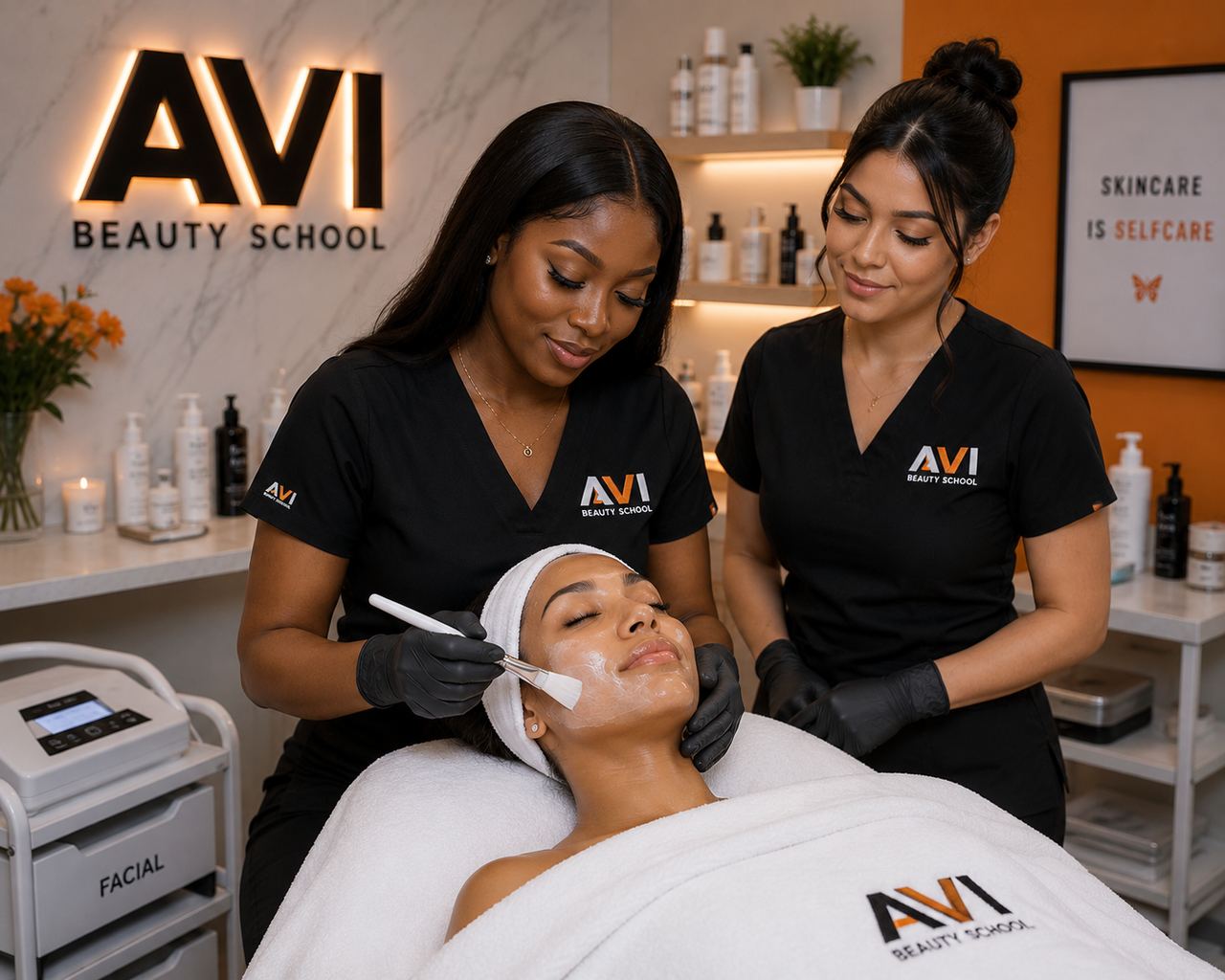
AVI Career Training esthetics program student clinic and training environment Virginia
Professional esthetics training at AVI Career Training, Tysons Corner VA

Hands-On Esthetics Training

Hands-on training is one of the most valuable parts of esthetics education. Students need practice to develop confidence, accuracy, timing, sanitation habits, and professional client communication.

At AVI Career Training, students practice techniques under instructor supervision, connecting classroom knowledge with real-world application.

Students May Practice

Setting up a treatment room
Preparing products and supplies
Greeting clients professionally
Performing skin analysis
Completing full facial steps
Facial massage technique
Applying and removing masks
Practicing waxing techniques
Cleaning and disinfecting areas
Explaining aftercare to clients

Student Clinic Experience

Depending on their stage of training, students may have opportunities to perform services in a supervised student clinic environment — developing confidence, professionalism, and real-world service skills.

Skills Developed in Student Clinic

Client communication and consultation
Treatment planning and service flow
Professional confidence and timing
Sanitation consistency and protocol
Product selection and client education
Rebooking and customer service skills

Professional Esthetics Tools & Equipment

Esthetics students become familiar with tools and equipment commonly used in spas, salons, and skincare settings. Understanding how to use equipment safely is part of building career readiness.

💨
Facial Steamer
Used to help soften the skin and support certain facial procedures in a safe, controlled way.
🔍
Magnifying Lamp
Helps the esthetician view the skin more clearly during analysis and treatment planning.
🛏️
Treatment Bed
Provides a comfortable and professional setting for facial and skincare services.
🕯️
Wax Warmer
Used to heat wax safely and consistently for professional hair removal services.
🧺
Towel Warmer
Keeps towels warm and ready for professional client comfort during treatments.
🥣
Mixing Bowls & Brushes
Used to prepare and apply masks and skincare products hygienically and precisely.
🧴
Professional Skincare Products
Used during facials, masks, exfoliation, and client care throughout training.
🧹
Sanitation Supplies
Used to clean, disinfect, and maintain safe and professional treatment areas at all times.
🎭
Extraction Tools
Used only when appropriate and within training and regulatory guidelines for student level.

Skincare Products & Ingredients Students Learn

Product knowledge is a critical part of esthetics education. Estheticians need to understand how skincare products work, how ingredients affect different skin types, and how to recommend appropriate home care routines.

Product Types

CleansersTonersExfoliantsMasksSerumsMoisturizersSunscreensEnzyme ProductsClay MasksHydrating ProductsOil-Control ProductsSensitive Skin Products

Common Ingredient Categories

Alpha Hydroxy AcidsBeta Hydroxy AcidsEnzymesAntioxidantsHyaluronic AcidNiacinamideVitamin CRetinoidsPeptidesCeramidesSoothing Botanicals
Ingredient education is presented as professional skincare training, not medical advice. Students learn to recommend products ethically and within their scope of practice.
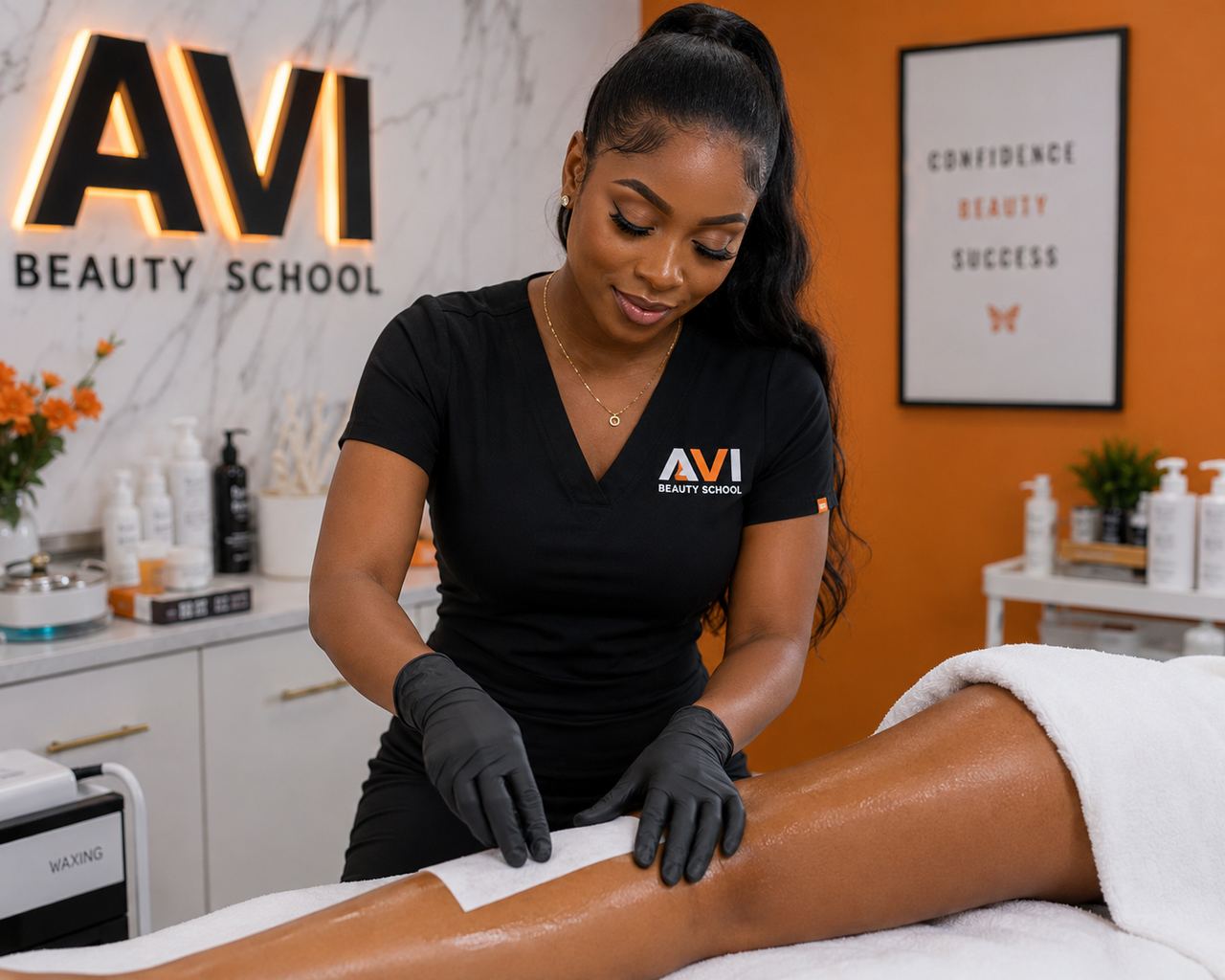
AVI Career Training esthetics program beauty school students skincare Virginia
AVI Career Training Esthetics Program
Esthetics beauty school program at AVI Career Training Tysons Corner Virginia
Professional Beauty School Training

Facials, Waxing & Professional Skills

💆 Facials & Skin Treatments

A professional facial may include cleansing, skin analysis, exfoliation, steam, massage, mask application, moisturizing, and home care recommendations.

Basic Facial Steps

Client consultation & skin analysis
Cleansing
Exfoliation
Steam when appropriate
Facial massage
Mask application & removal
Moisturizer & SPF recommendation
Home care discussion

🪮 Waxing & Hair Removal

Hair removal is a common esthetics service. Students learn to perform waxing safely, professionally, and hygienically. Proper waxing requires attention to skin condition, product temperature, sanitation, and aftercare.

Waxing Services Covered

Brow shaping
Upper lip waxing
Chin waxing
Facial waxing
Arm & leg waxing concepts
Client preparation
Contraindications screening
Wax temperature safety
Sanitation procedures
Aftercare instructions
Students learn to recognize when waxing may not be appropriate and how to protect client safety.

🗣️ Client Consultation & Communication

A strong consultation helps prevent mistakes, improves client satisfaction, and supports safer, more personalized service. Students learn to build client trust through professional communication.

Ask professional questions
Listen and communicate clearly
Set realistic expectations
Recommend appropriate products
Document client information
Maintain confidentiality
Communicate aftercare instructions

🧼 Sanitation & Infection Control

Sanitation is critical. Estheticians work directly with clients' skin, tools, towels, and surfaces. Proper sanitation protects both client and professional.

Cleaning & disinfection protocols
Hand hygiene & glove use
Surface & tool disinfection
Cross-contamination prevention
Safe disposal of single-use items

Professional & Business Skills for Estheticians

A successful esthetician needs more than technical ability. Employers and clients also value professionalism, communication, reliability, and customer service.

Professional Skills Students Develop

Professional appearance
Time management
Client communication
Active listening
Empathy & trust-building
Sales communication
Product recommendation
Appointment flow
Client retention skills
Workplace etiquette

Business & Career Concepts

Building a clientele
Retail product sales
Rebooking clients
Personal branding basics
Professional networking
Spa operations overview
Self-employment concepts
Ethical decision-making

Career Opportunities After Basic Esthetics

Graduates may pursue a variety of career paths after meeting applicable licensing and employer requirements. Opportunities may vary based on location, experience, and state regulations.

AVI Career Training does not guarantee employment or specific income. Career opportunities may vary based on licensing, experience, employer requirements, and state regulations.

Potential Workplaces

Day spas
Beauty salons
Wellness centers
Hotels & resorts
Medical spas (where permitted)
Dermatology offices (where permitted)
Cosmetic practices (where permitted)
Retail skincare companies
Waxing studios
Private skincare studios
Cruise ships
Self-employment (where permitted)

Possible Job Titles

Licensed Esthetician
Skincare Specialist
Facial Specialist
Spa Esthetician
Waxing Specialist
Beauty Consultant
Skincare Sales Representative
Product Educator
Independent Skincare Professional (where permitted)

Career Growth

Many estheticians pursue additional training in advanced skincare, master esthetics, lash services, makeup, waxing, product education, or business ownership after graduation — where permitted by state regulations.

Virginia Esthetician Licensing Preparation

In Virginia, esthetician licensure is regulated by the Virginia Board for Barbers and Cosmetology under the Department of Professional and Occupational Regulation (DPOR). The Basic Esthetics Program at AVI Career Training is designed to help eligible students complete the required education and prepare for the next steps in the licensing process.

General Licensing Steps

Complete a Virginia-approved esthetics training program
Meet the required clock-hour training requirement
Apply for the required licensing examination
Pass the required written and practical examinations
Submit required documentation and fees
Receive licensure from the appropriate state board

Important Licensing Notes

Completing school is an important step, but licensure also requires passing required examinations, paying fees, and meeting current state board requirements.
Licensing rules can change. Students should confirm current requirements with AVI Career Training admissions.
Graduates may pursue licensure after meeting applicable state requirements — licensure is not automatic upon graduation.
Contact the Virginia Board for Barbers and Cosmetology (DPOR) directly for official licensing information.

Basic Esthetics Compared to Other Beauty Programs

Not sure which program is right for you? Compare beauty and wellness programs to find the best fit for your goals.

Program Main Focus Typical Services Best For Students Who Want To Career Direction
Basic Esthetics ★ Skincare foundation Facials, skin analysis, waxing, product knowledge Start a professional skincare career Spa, salon, skincare, waxing, beauty consulting
Master Esthetics Advanced skincare Advanced treatments depending on state scope Expand into advanced skincare specialties Medical spa, advanced skincare, specialized esthetics
Cosmetology Hair, skin, nails, beauty Hair cutting, styling, color, basic skincare, nails Learn a broader beauty curriculum Salon, hair, beauty, cosmetology
Nail Technology Nail care Manicures, pedicures, artificial nails Focus specifically on nail services Nail salon, spa, independent nail services
Permanent Cosmetic Tattooing Cosmetic tattoo procedures Brows, lips, eyeliner where permitted Learn cosmetic tattoo skills Permanent makeup field
Laser Technician Laser and light-based aesthetics Laser hair removal, IPL, skin rejuvenation (where permitted) Work with aesthetic technology Medical spa or aesthetic laser environments
Massage Therapy Bodywork and wellness Massage techniques and wellness services Help clients with relaxation and wellness Spa, wellness, clinical massage settings

How to Enroll in Basic Esthetics

AVI Career Training makes the admissions process clear and supportive. Speak with an admissions representative to learn about program details, schedules, tuition, financial aid, and enrollment requirements.

Request information by phone, email, or online
Speak with an admissions representative
Schedule and attend a campus tour
Review the Basic Esthetics program details
Discuss class schedules and available start dates
Review tuition and financial aid options
Complete the application and submit required documents
Attend orientation and begin training
Start Your Enrollment Today →

Tuition and Financial Aid

Education is an investment in your future. AVI Career Training helps students understand tuition, payment options, and financial aid opportunities. Financial aid is available for those who qualify.

Students Can Ask About

FAFSA and federal financial aid eligibility
Payment plan options
Required documents for financial aid
Tuition breakdown and program costs
VA benefits & GI Bill eligibility where applicable
WIOA workforce funding (for eligible students)
Speak With Financial Aid →

Class Schedules & Start Dates

Many students balance school with work, family, and personal responsibilities. AVI Career Training may offer schedule options depending on program availability.

Upcoming Start Dates Day Schedules Evening Schedules (if available) Full-Time Options Part-Time Options (if available)
Ask About Upcoming Classes →

Student Support at AVI Career Training

AVI Career Training supports students from inquiry through graduation. The school's goal is to help students understand expectations, develop confidence, and prepare for career opportunities.

Admissions guidance and information
Financial aid guidance for eligible students
Instructor feedback throughout training
Academic support and student services
Career readiness preparation
Resume guidance and interview preparation
Professional development resources
Campus tour support for prospective students

Why Students Choose a Career in Esthetics

Students choose esthetics for many reasons — the love of skincare, the desire for a hands-on career, the enjoyment of helping others feel confident, or the appeal of the wellness and beauty industry.
Esthetics May Be a Good Fit If You

Enjoy skincare and beauty
Like working one-on-one with people
Want a hands-on career
Are interested in wellness and self-care
Enjoy learning about products and ingredients
Want career flexibility
May want to become self-employed in the future
Enjoy helping people feel confident
Want to build meaningful client relationships
AVI Career Training Basic Esthetics program students learning professional skincare Tysons Corner Virginia
Preparing students for a career in skincare, beauty, and wellness

Basic Esthetics Program FAQs

Choosing a school is an important decision. Below are answers to common questions students ask before enrolling in the Basic Esthetics Program at AVI Career Training.

The Basic Esthetics program at AVI Career Training prepares students for a career in professional skincare. Students receive hands-on training in facial treatments, skin analysis, hair removal, sanitation, client consultation, product knowledge, and professional techniques. The program is designed to help students develop the technical and professional skills needed to pursue state licensure and begin working in spas, salons, wellness centers, and skincare businesses.
An esthetician specializes in improving and maintaining healthy skin. Their services may include facials, skin analysis, exfoliation, waxing, eyebrow shaping, facial massage, skincare consultations, and recommending skincare products. Many estheticians also educate clients on maintaining healthy skin at home.
Many students choose esthetics because it combines creativity, wellness, and client care. Estheticians can work in salons, spas, medical spas, hotels, resorts, wellness centers, or even start their own businesses. Demand for skincare services continues to grow as more people invest in personal wellness and professional skincare.
AVI Career Training focuses on hands-on education, experienced instructors, and preparing students for real-world careers. Students practice professional techniques while learning industry standards, sanitation procedures, and client communication skills that employers value.
The Basic Esthetics Program at AVI Career Training is 600 clock hours. The actual completion timeline depends on the class schedule, attendance, and program format. During an admissions appointment, AVI Career Training can explain available schedules, expected completion timelines, and graduation requirements.
Students may learn skin anatomy, skin physiology, facial treatments, skin analysis, cleansing techniques, exfoliation, facial massage, masks, hair removal, waxing, brow shaping, product knowledge, client consultation, infection control, professional ethics, and state regulations.
Yes. Many students enter the program with no previous beauty industry experience. The curriculum begins with foundational knowledge before progressing into hands-on esthetics techniques.
No previous beauty or skincare experience is required. AVI Career Training teaches students from the beginning while helping them develop confidence through practical training.
Yes. Hands-on learning is an important part of esthetics education. Students practice techniques under instructor supervision to build practical experience before graduation.
Depending on the stage of training and program requirements, students may gain supervised experience providing services in a student clinic environment. This helps students develop confidence, professionalism, and real-world service skills.
Students are introduced to professional facial procedures, including cleansing, exfoliation, facial massage, masks, and customized skincare treatments based on skin analysis.
Yes. Learning how to evaluate different skin types and skin conditions is one of the core skills developed during esthetics training.
Yes. Students typically learn professional hair removal techniques, including facial waxing and other common waxing procedures while following sanitation and safety guidelines.
Yes. Brow shaping and facial hair removal are common services included in esthetics education.
Yes. Proper sanitation, disinfection, and infection prevention are essential parts of professional esthetics and are emphasized throughout the program.
Students train using professional esthetics equipment and tools commonly found in salons and spas. This may include treatment beds, steamers, magnifying lamps, wax warmers, skincare products, mixing bowls, brushes, towels, and sanitation supplies.
Yes. Students learn how professional skincare products work, how ingredients affect different skin types, and how to recommend products based on client needs.
Employers often value technical ability, professionalism, communication skills, sanitation practices, customer service, time management, and the ability to build lasting client relationships.
Estheticians spend much of the day standing, performing treatments, preparing rooms, and interacting with clients. Good posture, organization, and time management help maintain comfort throughout the workday.
Many students balance work and school. AVI Career Training offers different scheduling options depending on program availability, and admissions representatives can discuss which schedule may best fit your needs.
Class schedules vary by program availability. Contact AVI Career Training to learn about current day and evening schedule options.
Admissions requirements may vary. The admissions team can explain the specific educational requirements needed for enrollment.
Students receive information before classes begin regarding uniforms, supplies, identification, and any required materials for the program.
Many esthetics programs include professional tools and supplies. Admissions can explain exactly what is included with your enrollment.
Yes. The Basic Esthetics program is designed to prepare eligible students with the knowledge and practical skills needed to pursue the applicable state licensing process. Students must still meet all current state board requirements.
After completing the program and meeting applicable requirements, graduates can pursue licensure and begin applying for esthetics positions in salons, spas, wellness centers, or skincare businesses.
Graduates may pursue opportunities in day spas, beauty salons, resorts, hotels, wellness centers, medical spas where permitted, dermatology offices where permitted, cruise ships, retail skincare companies, and private skincare studios.
Many estheticians eventually become business owners after gaining industry experience and meeting local business and licensing requirements.
Yes. Many estheticians build independent businesses by offering skincare services, renting treatment rooms, or opening their own studios, subject to local regulations and licensing requirements.
The beauty and skincare industry continues to evolve as consumers increasingly seek professional skincare services, wellness treatments, and personalized beauty experiences.
Income varies depending on location, experience, employer, specialty services, client base, and whether the esthetician works independently. Earnings may include wages, commissions, tips, and retail product sales where applicable. AVI Career Training does not guarantee employment or income.
Yes. After building foundational experience, some estheticians pursue additional education in advanced skincare treatments, makeup artistry, medical esthetics, lash services, waxing, or other specialty areas, depending on state regulations.
Financial aid may be available for students who qualify. The financial aid office can explain eligibility, application steps, and available funding options.
AVI Career Training can discuss available payment options and financing arrangements during the admissions process.
The enrollment process typically begins by speaking with an admissions representative, touring the campus, reviewing program details, completing the application, and submitting required documentation.
Yes. Prospective students are encouraged to schedule a campus tour to meet instructors, view classrooms, and learn more about the esthetics program before making a decision.
Successful students are curious, professional, dependable, eager to practice, committed to learning, and passionate about helping clients feel confident in their skin.
AVI Career Training emphasizes hands-on instruction, supportive faculty, career-focused education, and preparing students with practical skills that can help them transition into the beauty industry.
If you enjoy skincare, wellness, helping others, beauty, creativity, and working one-on-one with clients, esthetics may be a rewarding career path. Visiting the campus and speaking with an admissions representative can help you determine whether the program aligns with your goals.
The first step is to contact AVI Career Training to request information, schedule a campus tour, meet with an admissions representative, review financial aid options if applicable, and choose the class schedule that best fits your goals.
Basic Esthetics focuses on foundational skincare services such as facials, skin analysis, waxing, sanitation, client consultation, and product knowledge. Master Esthetics typically focuses on more advanced skincare concepts and services, depending on state regulations. Students who want to begin a skincare career usually start with Basic Esthetics, while students interested in advanced skincare may later explore Master Esthetics.
An esthetician focuses mainly on skincare, facials, waxing, skin analysis, and related beauty services. A cosmetologist studies a broader beauty curriculum that usually includes hair, skin, nails, and salon services. Students who want to focus specifically on skincare often choose esthetics, while students who want a broader beauty license may choose cosmetology.
Estheticians may provide skincare services and product recommendations that support acne-prone skin, depending on their training and state scope of practice. However, estheticians do not diagnose or medically treat acne. Clients with severe or persistent acne should consult a licensed healthcare provider or dermatologist.
Chemical peel rules vary by state, license type, product strength, and scope of practice. Basic Esthetics students may learn exfoliation concepts, but students should always follow Virginia regulations and employer policies regarding what services they may legally perform.
Some estheticians work in medical spa environments, depending on state rules, employer requirements, additional training, and supervision policies. Medical spa roles may require advanced training or additional credentials.
Yes. Esthetics is open to students of all genders. Men can become successful estheticians and may work in spas, salons, skincare studios, waxing centers, beauty retail, or self-employment.
Esthetics requires practice, focus, professionalism, and attention to detail. Students study both theory and hands-on skills. With instructor support and consistent practice, beginners can build confidence over time.
The first day may include orientation, meeting instructors and classmates, reviewing school policies, learning about supplies and uniforms, and beginning foundational topics. AVI Career Training provides students with guidance before classes begin.
Many esthetics programs include supervised practice with classmates before students progress to more advanced practical training. This helps students build confidence in a controlled learning environment.
Students should follow AVI Career Training's dress code and uniform requirements. Admissions or student services will provide details before the first day of class.
Many estheticians recommend and sell skincare products as part of client home care. Product knowledge and ethical recommendations are important professional skills.
Estheticians build clients through excellent service, professionalism, referrals, rebooking, product knowledge, social media presence, customer service, and consistent client education.
Some estheticians work part time, while others work full time or operate independently. Schedule flexibility depends on the employer, business model, and client demand.
Home-based esthetics services depend on local business rules, zoning, licensing, insurance, and state board regulations. Students should confirm legal requirements before offering services outside a licensed facility.
Many working estheticians carry professional liability insurance, especially if they are self-employed or renting space. Insurance requirements may vary by employer, business type, and state regulations.
Successful estheticians are often patient, caring, detail-oriented, professional, reliable, clean, organized, good listeners, and comfortable working closely with clients.
Skin analysis is the process of evaluating a client's visible skin type, condition, concerns, and goals before selecting products or performing a treatment. It is an important part of safe and personalized esthetics service.
A contraindication is a condition or factor that may make a service unsafe or unsuitable for a client. Examples may include certain skin reactions, recent procedures, medications, allergies, or medical concerns. Estheticians learn to identify contraindications and adjust or avoid services when needed.
Sanitation helps prevent infection, cross-contamination, and unsafe service conditions. It also shows professionalism and protects both clients and estheticians.
Facial frequency depends on skin type, goals, budget, lifestyle, and professional recommendations. Estheticians can help clients create a skincare plan, but they should avoid making medical claims.

Start Your Skincare Career
at AVI Career Training

The Basic Esthetics Program provides the foundation students need to begin learning professional skincare services, client care, sanitation, and career-focused esthetics skills. If you are ready to explore a future in skincare, beauty, and wellness — we are here to help.

AVI Career Training
Tysons Corner / Vienna, Virginia