MBLEx Exam Prep: How AVI’s Massage Therapy Program Gets You Licensed
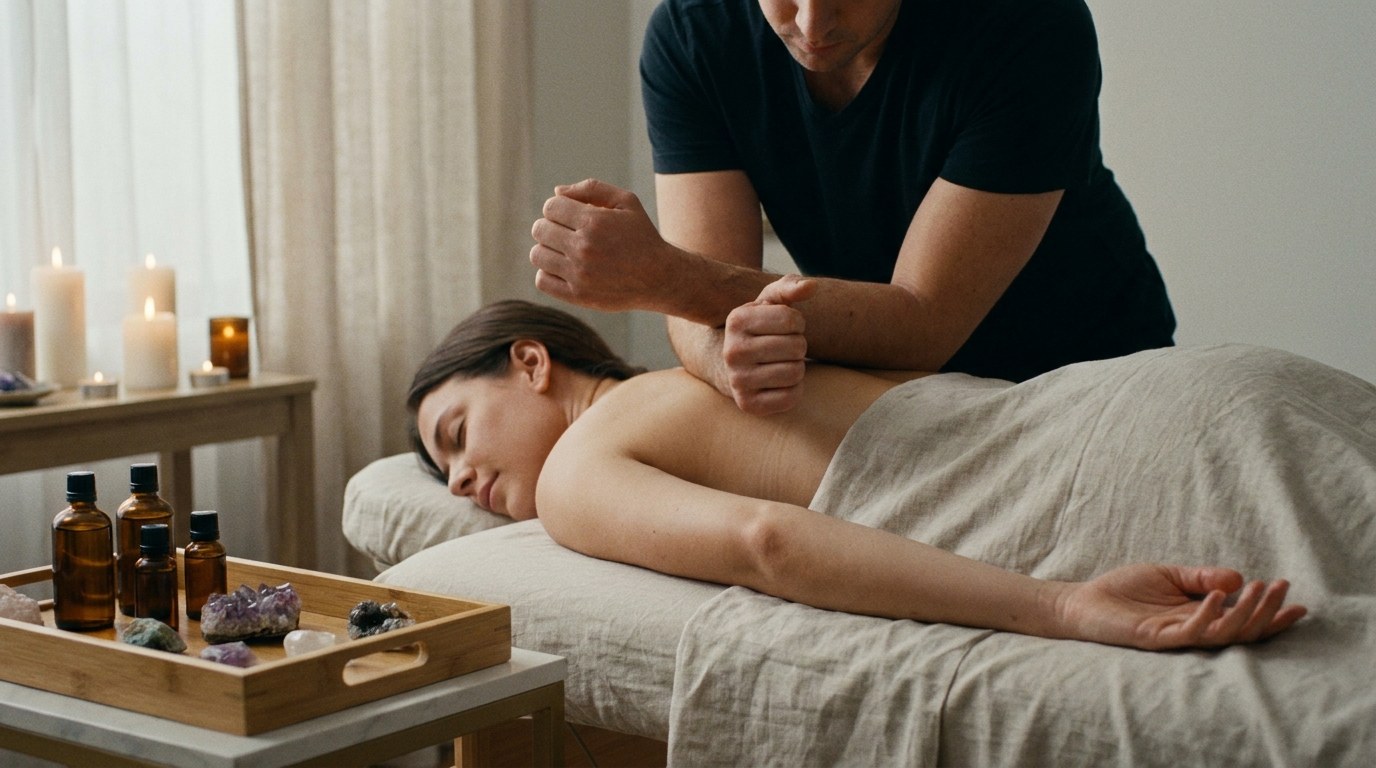
AVI Career Training’s 625-hour Massage Therapy program in Vienna, Virginia is specifically designed to align with the MBLEx content domains — so when you graduate, you’re not just trained, you’re ready to pass your licensing exam and start your career.
If you’re exploring massage therapy as a career path in Northern Virginia, one question comes up fast: How do I actually get licensed? The answer runs through one exam — the MBLEx — and one decision: choosing a school whose curriculum prepares you to pass it.
This guide walks you through everything you need to know. What the MBLEx is, what Virginia requires, how AVI’s program maps directly to exam content, and what your career can look like on the other side of that license.
Key Takeaways
- Virginia requires passage of the MBLEx, administered by the FSMTB, for massage therapy licensure
- AVI’s Massage Therapy program is 625 hours — meeting and exceeding Virginia’s training hour requirements
- The MBLEx exam fee is $265 (FSMTB published fee — verify current amount before registering)
- National first-attempt MBLEx pass rates run approximately 67–70% — proper preparation matters
- AVI is COE Accredited and SCHEV Certified, and accepts federal financial aid and the GI Bill®
—
What Is the MBLEx — and Why It’s Your Gateway to a Massage Career in Virginia
The MBLEx — the Massage & Bodywork Licensing Examination — is the national licensing exam that most states, including Virginia, require before you can legally practice massage therapy.
The exam is administered by the Federation of State Massage Therapy Boards (FSMTB), a national organization that sets professional standards for the massage therapy industry. It tests your knowledge across the core competency domains every safe, effective massage therapist needs to master — from anatomy and pathology to professional ethics and client boundaries.
In Virginia, your pathway to licensure runs through the Virginia Board of Nursing, which oversees massage therapy credentials in the state. Passing the MBLEx is a non-negotiable step in that process. You cannot apply for a Virginia massage therapy license without an official passing score report from the FSMTB.
Here’s why this matters before you choose a school: the MBLEx isn’t just a test you take after graduation. It’s the benchmark your entire training is measured against. Schools that build their curricula around MBLEx competency domains produce graduates who are genuinely prepared — not just on paper, but in practice.
Nationally, only about 67–70% of first-time test takers pass the MBLEx on their initial attempt (FSMTB data). The difference between passing and retaking often comes down to whether your school’s curriculum actively addressed the exam’s content — or simply logged hours.
AVI Career Training was built to close that gap. Explore AVI’s Massage Therapy program today and see how the curriculum is structured to get you to that passing score.
—
Virginia Massage Therapy Licensing Requirements: What You Need to Know Before You Enroll
Virginia’s massage therapy licensing requirements are clear — but they have multiple steps, and understanding all of them before you enroll helps you plan your path with confidence.
The Core Requirements
To obtain a massage therapy license in Virginia, you must:
1. Complete a state-approved training program at an accredited school (programs must meet Virginia’s minimum hour requirements)
2. Pass the MBLEx with a qualifying score
3. Submit a licensure application to the Virginia Board of Nursing, along with your FSMTB score report, proof of training completion, and applicable fees
4. Pass a background check as part of the application process
Virginia’s licensing authority — the Virginia Department of Professional and Occupational Regulation (DPOR) — oversees the application process in coordination with the Board of Nursing. You can verify current requirements directly on the DPOR website.
The Training Hour Requirement
Virginia requires a minimum number of supervised training hours before you’re eligible to sit for the MBLEx. AVI’s program delivers 625 hours of instruction — a figure drawn directly from AVI’s 2026–2027 Student Catalog. That hour count is intentionally designed to meet and exceed state minimums, giving you a fuller foundation than the bare-minimum programs that simply check the regulatory box.
The Exam Fee and Registration
Once you’ve completed your training and your school certifies your eligibility, you register for the MBLEx through the FSMTB’s candidate portal. The current exam fee is $265 (verify the current fee at fsmtb.org before registering, as fees are subject to change). The exam is computer-based and offered at testing centers throughout Northern Virginia and the DC metro area.
Understanding the full licensing pathway — not just the exam — is what separates candidates who move smoothly through the process from those who get stalled by missing steps.
—
How AVI’s 625-Hour Massage Therapy Program Aligns With the MBLEx Content Domains
AVI Career Training’s Massage Therapy program doesn’t treat the MBLEx as an afterthought — it treats passing the exam as the goal every course unit is working toward.
The FSMTB publishes an official MBLEx Content Outline that defines exactly what the exam tests. AVI’s 625-hour curriculum maps directly to those domains. Here’s how that alignment works in practice:

Anatomy, Physiology & Kinesiology
A significant portion of the MBLEx tests your knowledge of the human body — muscular systems, skeletal structures, body systems, and how movement works. AVI’s program dedicates substantial coursework to anatomy, physiology, and kinesiology, building the clinical vocabulary and body-system knowledge you’ll need to answer exam questions confidently and to work safely with real clients.
Pathology, Contraindications & Special Populations
The MBLEx expects you to know when not to apply massage — recognizing contraindications, understanding how health conditions affect treatment decisions, and adapting technique for special populations. AVI’s pathology coursework goes beyond memorization. You learn to apply clinical reasoning, which is exactly what the exam tests.
Massage Application & Technique
This is the heart of your training. AVI’s curriculum covers Swedish massage, deep tissue, neuromuscular techniques, myofascial work, and more — giving you both the hands-on skill and the theoretical framework the MBLEx assesses. Knowing why a technique works is as important as knowing how to execute it.
Ethics, Professional Boundaries & Client Relationships
The MBLEx includes a meaningful ethics component covering professional boundaries, scope of practice, and therapeutic relationships. AVI weaves professional ethics throughout the program — not as a standalone lecture, but as a standard of conduct embedded in every clinical interaction.
Guidelines, Regulations & Business Practices
Understanding massage therapy law, licensing requirements, and professional standards is tested on the MBLEx and essential to operating as a licensed professional. AVI’s curriculum addresses Virginia’s regulatory environment, so you’re not learning this for the first time when you open the exam.
—
Hands-On Training + Exam Readiness: What Makes AVI’s Approach Different
Most MBLEx prep content focuses on the exam in isolation — flashcard decks, domain breakdowns, practice question banks. That’s useful, but it’s not a substitute for a well-structured training program that embeds exam readiness into the curriculum from day one.
At AVI Career Training, exam preparation isn’t a module you complete before graduation. It’s baked into how every subject is taught.
COE Accreditation and SCHEV Certification
AVI is accredited by the Council on Occupational Education (COE) and certified by the State Council of Higher Education for Virginia (SCHEV). These aren’t just marketing badges — they’re regulatory requirements that schools must meet to deliver programs eligible for state licensure pathways. When you train at a COE-accredited institution, you can be confident the curriculum meets verified quality standards.
COE accreditation also makes AVI students eligible for federal financial aid (Title IV / FAFSA) and the GI Bill® — a critical access point for students who might otherwise find massage therapy school financially out of reach.
Clinical, Hands-On Learning
The MBLEx doesn’t just test memorization — it tests applied knowledge. Questions are framed as scenarios: a client presents with a specific condition, what do you do? That kind of reasoning develops through clinical practice, not just reading a textbook.
AVI’s program includes hands-on clinical training that reinforces the same applied decision-making the exam measures. When you’ve worked through these scenarios in a real training environment — with instructor feedback and real clients — the exam scenarios feel familiar.
A Student Story: Career Changers Finding Their Path
Consider someone like a former office administrator in her mid-30s, raising a family in Fairfax County, who decided she wanted a career she could feel in her hands and her heart. She’d looked at several schools in the DC metro area but kept asking the same question: Will this program actually prepare me for the exam — or just clock my hours?
She enrolled at AVI’s Vienna, VA campus, went through the 625-hour program, and found that the clinical sessions gave her the hands-on confidence to match the academic preparation. By the time she sat for the MBLEx, the content domains felt like a review of things she’d already practiced — not a surprise. She passed on her first attempt and accepted a position at a wellness center in Tysons Corner within weeks of receiving her Virginia license.
That’s the outcome AVI is built to produce.
A Student Story: Veterans Using the GI Bill®
Many veterans transitioning out of service gravitate toward healthcare-adjacent careers — fields where the discipline and care they developed in uniform translates directly into professional excellence. A veteran medic from Fort Belvoir, looking to shift from military medicine into a civilian wellness career, used his Post-9/11 GI Bill® benefits to enroll in AVI’s Massage Therapy program with no out-of-pocket tuition costs.
The structured rigor of AVI’s program fit his background well. Clinical training reinforced the anatomy and physiology he’d studied in service. When he graduated and passed the MBLEx, he was positioned to work in a chiropractic clinic in Northern Virginia — a natural fit for someone who’d spent years thinking about musculoskeletal function in the field.
AVI accepts the GI Bill® and works with veteran students to navigate the enrollment and benefits process. If you’re a veteran exploring massage therapy as your next career, reach out to AVI’s admissions team to learn more.
—
What Comes After the MBLEx — Your Career as a Licensed Massage Therapist in Northern Virginia
Passing the MBLEx and receiving your Virginia massage therapy license opens the door to a career in one of the most dynamic wellness markets in the country.

Where Licensed Massage Therapists Work
Northern Virginia and the broader DC metro area offer an unusually wide range of employment settings for licensed massage therapists. Graduates from AVI’s Vienna, VA program are positioned to pursue roles in:
Earning Potential in the DC Metro Market
According to the Bureau of Labor Statistics Occupational Outlook for Massage Therapists, the national median wage for massage therapists reflects a field with strong demand and consistent growth projections. Northern Virginia and the broader DC metro area typically command wages above the national median, driven by cost of living, density of wellness facilities, and a client base with strong discretionary income.
We won’t publish a specific local salary figure here — earning potential depends on your setting, hours, and whether you work for an employer or build a private practice. What we can say is that AVI’s location in Vienna, Virginia, right alongside the Tysons Corner employment corridor, positions graduates within reach of some of the region’s highest-demand employers.
The Bigger Picture: Demand Is Growing
Massage therapy is a field with long-term momentum. Wellness spending in the US continues to grow, employer-sponsored wellness programs increasingly include massage benefits, and an aging population is creating consistent demand for therapeutic bodywork. Getting licensed now — with a credential from an accredited program — positions you ahead of that curve.
—
Frequently Asked Questions About the MBLEx and Massage Therapy Licensing in Virginia
Q: What is the MBLEx and do I need it to practice massage therapy in Virginia?
A: The MBLEx (Massage & Bodywork Licensing Examination) is the national licensing exam administered by the Federation of State Massage Therapy Boards (FSMTB). Yes — Virginia requires you to pass the MBLEx before you can apply for a state massage therapy license through the Virginia Board of Nursing. You cannot legally practice massage therapy for compensation in Virginia without a current license.
—
Q: How many hours of training do I need before I can take the MBLEx in Virginia?
A: Virginia requires completion of a state-approved massage therapy training program before you’re eligible to sit for the MBLEx. AVI Career Training’s program is 625 hours, meeting and exceeding the state’s requirements. Your school certifies your training completion to the FSMTB as part of the registration process.
—
Q: What subjects are covered on the MBLEx exam?
A: The FSMTB’s official MBLEx Content Outline covers six core domains: (1) Anatomy, Physiology & Kinesiology, (2) Pathology, Contraindications, Areas of Caution & Special Populations, (3) Benefits & Physiological Effects of Techniques that Manipulate Soft Tissue, (4) Client Assessment, Reassessment & Treatment Planning, (5) Ethics, Boundaries, Laws & Regulations, and (6) Guidelines for Professional Practice. AVI’s 625-hour curriculum addresses all six domains.
—
Q: How does massage therapy school prepare you for the MBLEx?
A: A well-structured massage therapy program prepares you for the MBLEx by building knowledge in every content domain the exam covers — not just technique. At AVI Career Training in Vienna, Virginia, the curriculum integrates anatomy, pathology, ethics, and clinical application throughout the full 625-hour program. When exam content aligns with your coursework, you’re reviewing familiar material — not encountering it for the first time.
—
Q: How long does it take to become a licensed massage therapist in Northern Virginia?
A: The timeline varies based on your program schedule, but students completing AVI’s 625-hour Massage Therapy program in Vienna, VA typically finish training and are MBLEx-eligible within several months. After passing the exam and submitting your Virginia Board of Nursing licensure application, most candidates receive their license within a few weeks of application approval. Full timeline depends on program scheduling, exam availability, and application processing.
—
Q: Does AVI Career Training offer financial aid for the Massage Therapy program?
A: Yes. AVI Career Training accepts federal financial aid (FAFSA / Title IV), and eligible students can also use the GI Bill® to fund their training. AVI is COE Accredited and SCHEV Certified, which are the institutional credentials required to participate in federal student aid programs. Contact AVI’s admissions team to discuss your options.
—
Q: What is the MBLEx exam fee and where do I register?
A: The current MBLEx exam fee is $265 (FSMTB published fee — verify at fsmtb.org before registering, as fees may change). You register through the FSMTB candidate portal after your school certifies your training completion. Testing is available at computer-based testing centers throughout Northern Virginia and the DC metro area.
—
Q: Is AVI Career Training’s Massage Therapy program accredited?
A: Yes. AVI Career Training is accredited by the Council on Occupational Education (COE) and certified by the State Council of Higher Education for Virginia (SCHEV). Both credentials confirm that AVI’s programs meet professional educational standards and qualify students for Virginia state licensure pathways and federal financial aid eligibility.
—
Ready to Start Your Path to Licensure?
You now have the full picture: what the MBLEx tests, what Virginia requires, how AVI’s 625-hour program aligns with every exam domain, and what your career looks like on the other side of that license.
The next step is yours.
AVI Career Training’s Massage Therapy program in Vienna, Virginia is enrolling now. Whether you’re starting fresh, changing careers, or using your GI Bill® benefits to transition into a new field, AVI has the curriculum, the credentials, and the hands-on training environment to get you to that passing score — and beyond.