Why Great Paying Jobs Skip College Requirements
Many skilled careers skip college degree requirements because employers in skilled trades, healthcare, beauty, and wellness industries care far more about hands-on competency and professional licensure than a four-year diploma. If you have been told that a career is impossible without a traditional college education, the job market has some very good news for you. Certification-based and licensure-driven careers are growing fast, pay competitive wages, and can be entered in a fraction of the time it takes to earn a bachelor’s degree.
Key Takeaways
- Employers in beauty, wellness, healthcare, and trades prioritize verified skills and state licensure over college degrees.
- Accredited career school programs can be completed in months rather than years, getting you earning sooner.
- Federal financial aid (Title IV) is available for qualifying programs, making career training accessible regardless of your financial situation.
- Licensing exams and hands-on portfolios often carry more weight with hiring managers than an academic transcript.
- The beauty and wellness industry alone is projected to keep growing, creating consistent demand for trained professionals.
- COE-accredited schools like AVI Career Training offer industry-recognized credentials that employers trust.
The Degree Myth: Why It Persists and Why It Is Fading
For decades, a four-year college degree was marketed as the universal golden ticket to career success. Universities expanded, tuition climbed, and student loan debt ballooned across the country. Yet somewhere along the way, a growing number of employers started asking a simple question: does this candidate actually know how to do the job?
That shift in thinking has accelerated significantly in recent years. Major employers across healthcare, technology, and skilled services have openly dropped degree requirements from job postings, recognizing that a diploma does not automatically translate into job-ready performance. What actually predicts success on the job is demonstrated skill, professional certification, and the ability to deliver results for clients from day one.
In the beauty and wellness world, this has always been the reality. A cosmetologist does not become great at color correction by writing an essay about it. A massage therapist does not learn therapeutic technique from a lecture hall. These careers demand physical skill, client communication, and deep technical knowledge built through supervised practice hours and state board examinations — not academic coursework.
How Licensing Creates a Skills-First Hiring Culture
State licensing requirements are one of the biggest reasons beauty and wellness employers do not need to see a college degree. When a candidate holds an active cosmetology license, esthetics license, or massage therapy license, the employer already knows that person has completed a required number of training hours, passed a written and practical state board examination, and met the professional standards set by the state regulatory board.
That license is a third-party credential that speaks louder than almost anything else on a resume. It removes uncertainty from the hiring process. An employer does not need to guess whether you understand skin anatomy, proper sanitation protocols, or massage contraindications — the licensing process verified all of that on your behalf.
This is the heart of why great-paying jobs in these fields skip the college requirement. The vetting has already been done by a regulatory body with far more specific standards than a general college transcript could ever convey.
What Career School Training Actually Looks Like
Career schools like AVI Career Training in Vienna, Virginia are built entirely around getting students job-ready and license-eligible in the most efficient and effective way possible. Every program is designed around state hour requirements and real-world skill development, not general education electives or unrelated coursework.
Here is a look at the programs offered at AVI Career Training and the hours required to complete each one:
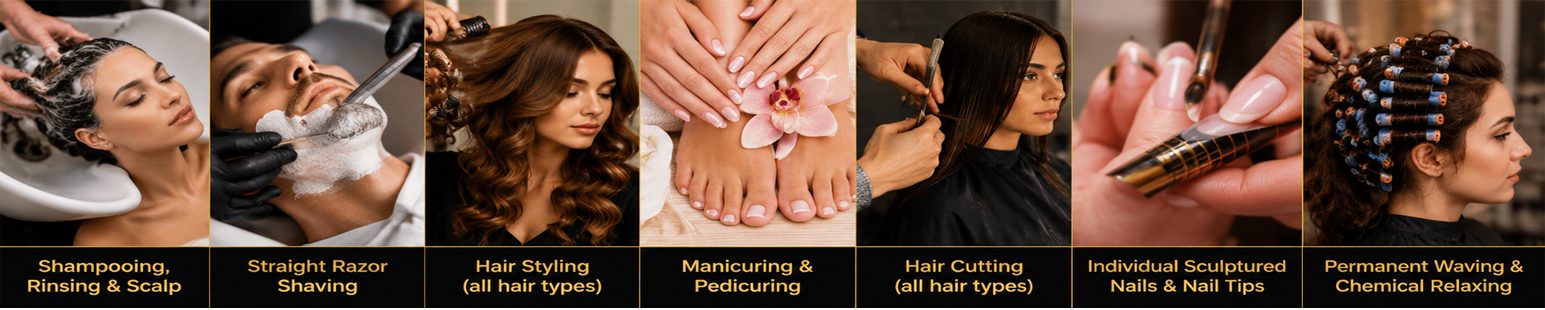
- Cosmetology: 1,000 program hours
- Basic Esthetics: 600 program hours
- Master Esthetics: 750 program hours
- Massage Therapy: 625 program hours (Title IV federal financial aid available)
- Nail Technology: 150 program hours
- Laser Technician: 120 program hours
- Medical Assistant: 600 program hours
- ESL (English as a Second Language): 1,200 program hours
Compare that to four years of college tuition, general education requirements, and prerequisite courses that have nothing to do with your intended career. Career training is focused, purposeful, and designed to move you from student to licensed professional as efficiently as possible.
AVI Career Training is accredited by the Council on Occupational Education (COE), one of the most respected accrediting bodies for career and technical education in the country. That accreditation matters because it tells students, employers, and licensing boards that the school meets rigorous standards for curriculum quality, student outcomes, and institutional integrity.
The Financial Case for Skipping the Four-Year Route
Let’s talk honestly about money. A four-year college education carries a significant price tag, and for many students, that means years of loan repayments before they ever start building wealth. Career school programs, by contrast, are typically shorter in duration and lower in total cost — and many programs qualify for financial assistance that makes them even more accessible.
At AVI Career Training, the Massage Therapy program is approved for Title IV federal financial aid, which means eligible students may be able to access federal grants and loans to help fund their education. Completing your training in months rather than years also means you begin earning your professional income much sooner, which changes the entire financial equation in your favor.
For many students, the combination of lower training costs, faster program completion, and earlier career entry makes career school the smarter financial decision — even before accounting for the satisfaction of working in a field you are genuinely passionate about.
Careers That Reward Skill Over Credentials
The beauty and wellness industry rewards professionals who deliver results for their clients. A skilled esthetician who consistently produces clear, glowing skin results will build a loyal clientele and command premium service prices. A talented cosmetologist with a strong social media presence and proven transformation results can attract clients from across the region. A well-trained massage therapist who understands human anatomy and adapts techniques to individual needs becomes someone clients rebook again and again.
In this industry, your reputation is built appointment by appointment. Your income potential grows as your skills deepen, your client base expands, and your professional network strengthens. None of that requires a college degree. All of it requires excellent training, a professional license, and a genuine commitment to your craft.
The same is true for roles like Laser Technician and Medical Assistant, where employers are primarily interested in whether you can safely perform procedures, follow clinical protocols, and communicate effectively with clients and patients. Certifications and hands-on clinical training tell employers exactly what they need to know.
Ready to take the first step toward a career that rewards your skills? Apply to AVI Career Training today and connect with our team to learn which program is the right fit for you.
Why Accreditation Matters When Choosing a Career School
Not all career schools are created equal, and accreditation is one of the most important factors to evaluate when you are choosing where to train. COE accreditation, which AVI Career Training holds, signals that the school has undergone rigorous external review of its educational standards, faculty qualifications, student support services, and program outcomes.
Accreditation also plays a role in financial aid eligibility, state licensing board acceptance of your training hours, and employer confidence in your credential. When you graduate from a COE-accredited school, you carry a credential that holds up to scrutiny in the real world.
This is one more way that great career training actually outperforms a generic degree for hiring purposes. An employer in the beauty and wellness field recognizes a COE-accredited program credential immediately. It tells them you were trained in a serious, standards-driven environment — and that matters.
Frequently Asked Questions
Do I need any previous experience to enroll in a career training program at AVI Career Training?
Most programs at AVI Career Training do not require prior industry experience. You are expected to come with enthusiasm and a willingness to learn, and the program curriculum is designed to take you from beginner to license-ready through structured hands-on training and instruction. Our admissions team can walk you through the specific entry requirements for the program you are interested in.
How long does it take to complete a program and start working in my new career?
Program length varies depending on the field you choose. Nail Technology clocks in at 150 hours, while Cosmetology requires 1,000 hours. Most students are able to complete their training and sit for their licensing examinations in significantly less time than it takes to earn a two- or four-year college degree, which means you can start earning professional income much sooner.
Is financial aid available to help pay for career training at AVI Career Training?
Yes. The Massage Therapy program at AVI Career Training is approved for Title IV federal financial aid, which means eligible students may be able to access federal grants and loans. We encourage you to contact our team directly to discuss your financial options and learn about any current assistance programs. We never want cost to stand between a motivated student and a rewarding career.
Will my training hours and credential be accepted by Virginia’s state licensing board?
AVI Career Training is a COE-accredited institution, and our programs are designed to meet Virginia state licensing requirements. Our goal is to have every graduate fully prepared to sit for their relevant state licensing examination with confidence. We recommend confirming current state board requirements with our admissions team, as licensing requirements can be updated periodically.
How do I get started with AVI Career Training?
Getting started is straightforward. You can visit us at 112 Lawyers Rd NW Suite 3, Vienna, VA 22180, call us at (571) 520-4417, or go online to begin your application. Our team is here to answer your questions, help you choose the right program, and guide you through every step of the enrollment process. There is no reason to wait when a rewarding career could be just months away.
Your Next Career Starts With One Decision
The idea that great-paying careers require a four-year college degree is fading fast — and the beauty, wellness, and healthcare industries have been leading that shift for years. What employers in these fields want is someone who has been properly trained, holds the appropriate license, and shows up ready to deliver excellent results for clients and patients.
AVI Career Training exists to make that path as clear and accessible as possible. With COE accreditation, a range of focused programs, federal financial aid available for qualifying students, and a team dedicated to your success, we are here to help you move from where you are today to where you want to be professionally.
Stop waiting for the right moment. Start your application at AVI Career Training now and take the first real step toward a career you will be proud of every single day.
AVI Career Training • 112 Lawyers Rd NW Suite 3, Vienna, VA 22180 • (571) 520-4417 • avi.edu/apply