An accredited beauty school is one that meets rigorous national standards set by recognized bodies like NACCAS, giving you access to federal financial aid, state-recognized training hours, and credentials employers trust. If you are considering a career change to the beauty industry, accreditation is not a minor detail. It determines whether your training counts toward licensure, whether you qualify for grants, and whether salons and spas take your resume seriously. Choosing the right school starts with understanding what accreditation actually means and why it protects your investment from day one.
Why choose an accredited beauty school: the financial case
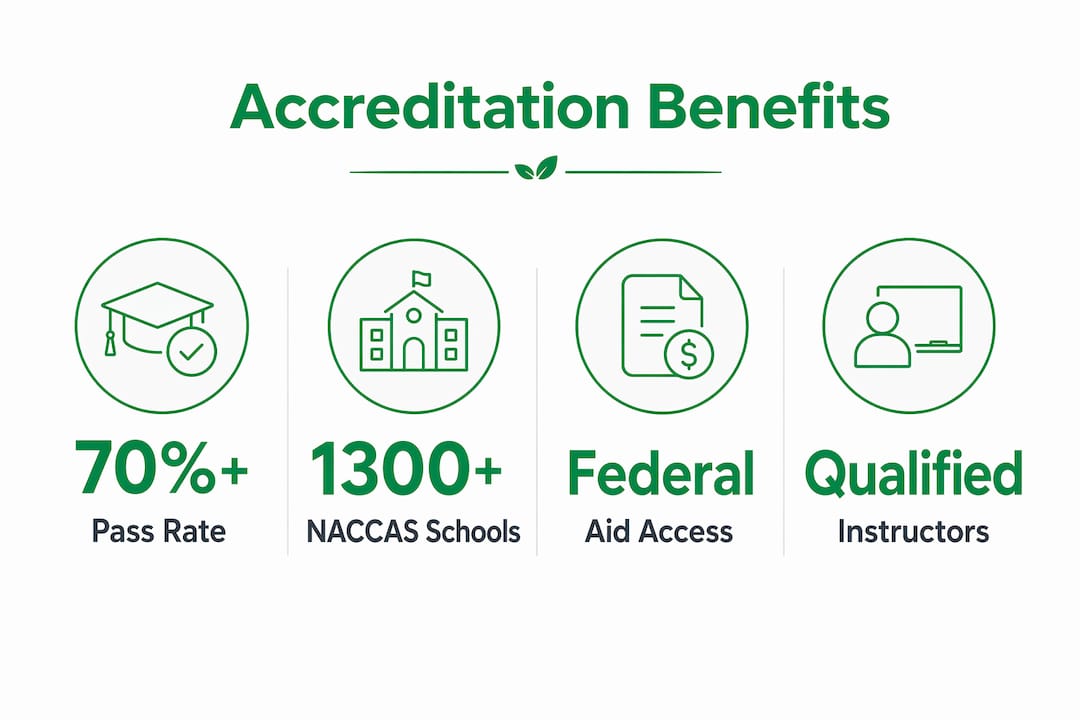
Accreditation is the single factor that determines whether you can use federal financial aid to pay for beauty school. NACCAS-accredited schools are the only U.S. institutions eligible to disburse Title IV federal aid, which includes Pell Grants and subsidized student loans. That distinction can mean the difference between paying entirely out of pocket and covering a significant portion of tuition through grants you never have to repay.

NACCAS currently accredits about 1,300 institutions across the United States. That scale reflects how central this body is to the vocational beauty education system. Without NACCAS status, a school simply cannot process FAFSA applications on your behalf.
The financial risks of attending a non-accredited program are real and often underestimated. Students who enroll in programs not recognized by the U.S. Department of Education lose access to Title IV funds and frequently face the full cost of tuition without any grant support. For career changers who are already managing living expenses and possibly family obligations, that gap can derail the entire plan.
Key financial benefits of attending an accredited program include:
- Pell Grant eligibility: Need-based federal grants that do not require repayment
- Federal student loans: Lower interest rates than private alternatives
- Institutional scholarships: Many accredited schools offer additional aid tied to their federal status
- Work-study programs: Available at some accredited institutions for qualifying students
Pro Tip: File your FAFSA before enrolling anywhere. Confirm the school’s NACCAS status on the official NACCAS website before you submit any application or deposit.
How does accreditation affect your licensure exam results?
State licensing boards require that your training hours come from an accredited institution. If your school is not properly accredited, your hours may not count, and you could be forced to restart your training from zero. One documented case involved a student whose state board rejected all previously earned hours because the program lacked proper accreditation. That student had to restart training entirely, losing both time and tuition money.
Accredited schools must meet minimum outcome thresholds to maintain their status. NACCAS requires:
- A graduation rate of at least 50%
- A job placement rate of at least 60%
- A licensure exam pass rate of at least 70%
These are floors, not ceilings. High-performing programs report graduation rates above 70% and licensure pass rates above 85%. Those numbers tell you a school is preparing students to actually pass the state board exam, not just complete the hours.
Accredited schools also update their curricula regularly and maintain qualified instructors. Mandatory re-evaluations happen every two years and include document audits and in-person visits. That cycle keeps instruction current with state board expectations.
Pro Tip: Ask any school you visit for its most recent licensure pass rate by program, not just the overall school average. A strong cosmetology rate does not automatically mean the esthetics program performs equally well.
Why do employers prefer graduates from accredited programs?
Accreditation functions as third-party verification that a graduate received standardized, quality training. Employers in competitive metropolitan markets, including the Northern Virginia and Washington, D.C. area, actively prefer graduates from accredited programs because accreditation documents that training covered infection control, chemical safety, and professional technique at a recognized standard.
Accredited programs undergo independent curriculum and instructor reviews periodically, which means a salon owner hiring your graduate knows the training was not self-certified. That external review is what makes the credential credible.
“Accreditation tells an employer that your training was evaluated by someone other than the school itself. It is the difference between a school saying ‘we are good’ and an independent body confirming it. For career changers without years of industry experience, that external stamp carries real weight in a job interview.”
The advantages of beauty school certification from an accredited program extend beyond the initial hire. Licensed professionals who trained at accredited schools often find it easier to pursue advanced certifications, since their foundational hours are already recognized by state boards and professional associations.
What are the differences between accreditation types?
Not all accreditation carries the same weight for every goal. NACCAS is the dominant national accrediting body for vocational beauty programs and the one tied directly to federal financial aid eligibility. Regional accreditation, the type held by community colleges and universities, offers a different advantage: better credit transfer options.
Regional accreditation is valued for bachelor-level program credit transfer, particularly in salon management and business administration. If you plan to pursue a degree in business after completing your beauty license, a regionally accredited school gives you a stronger foundation for that path.
| Accreditation type | Best for | Federal aid eligible | Credit transfer |
|---|---|---|---|
| NACCAS (national) | Vocational beauty licensure | Yes | Limited |
| Regional | Academic degree pathways | Yes (if recognized) | Strong |
| State-only approval | Basic compliance | No | Minimal |
Students planning future academic degrees should prioritize schools with regional accreditation for maximum credit transfer. Students focused purely on licensure and employment should confirm NACCAS status first.
Pro Tip: Verify accreditation status directly on the NACCAS website or the U.S. Department of Education’s database. Some schools claim accreditation that is outdated or under probation. A quick search takes two minutes and protects months of your time.
Understanding industry standards for certificate holders also helps you interpret what different credentials mean to employers in 2026, especially as the beauty industry continues to professionalize.
How do you choose the right accredited beauty school?
Accreditation is the starting point, not the finish line. Once you confirm a school holds current NACCAS status, you need to evaluate the actual outcomes that school produces. Here is what to request and review before enrolling:
- Program-level outcome data: Ask for graduation, placement, and licensure pass rates broken down by specific program, such as cosmetology, esthetics, or massage therapy. Aggregate school-level data can mask weak performance in individual programs.
- Externship and placement partnerships: Schools with active relationships with local salons and spas give you a real advantage at graduation. Avi, for example, maintains partnerships with leading spas and salons in Northern Virginia specifically to support student placement.
- Instructor credentials: Ask how many instructors hold active licenses and how long they have worked in the industry. Classroom experience matters, but real-world practice matters more.
- Financial aid transparency: A reputable school walks you through FAFSA before enrollment, not after. If a school is vague about aid options, that is a warning sign.
- Campus visit: Talk to current students, not just admissions staff. Ask them directly about class sizes, equipment quality, and how prepared they feel for the state board exam.
The skills gained at beauty school go far beyond technical technique. Accredited programs build professional communication, client management, and business fundamentals that non-accredited programs often skip entirely.
Key Takeaways
Accreditation is the foundational requirement for federal aid access, state licensure recognition, and employer credibility in the beauty industry.
| Point | Details |
|---|---|
| Federal aid access | Only NACCAS-accredited schools can disburse Title IV grants and loans. |
| Licensure protection | Accredited training hours are recognized by state boards, preventing costly restarts. |
| Employer credibility | Independent curriculum reviews make accredited credentials verifiable to hiring salons. |
| Outcome standards | Look for licensure pass rates above 85%, not just the 70% NACCAS minimum. |
| Accreditation type matters | NACCAS serves vocational goals; regional accreditation supports future degree transfers. |
Accreditation is the floor, not the ceiling
Career changers often ask me whether accreditation alone is enough to pick a school. My honest answer is no, and I think the industry does a poor job of saying that clearly.
Accreditation tells you a school met a minimum standard at its last review. It does not tell you whether the instructors are engaged, whether the equipment is current, or whether graduates actually get hired. I have seen accredited schools with licensure pass rates barely above the 70% threshold and others consistently hitting 90%. Those are not the same experience.
What accreditation does do is protect you from the worst outcomes. It keeps your training hours valid, keeps federal aid on the table, and gives employers a baseline reason to trust your credential. For someone making a career change with real financial stakes, that protection is not trivial.
The educational certificate importance extends beyond the credential itself. It signals to employers, licensing boards, and future clients that your training was held to an external standard. That signal matters most in the first two years of your career, when you have no track record to speak for you.
My advice: use accreditation to filter your list, then use outcome data to make your final choice. Visit the school. Talk to graduates. Ask hard questions about placement rates. Accreditation opens the door. What happens inside the school determines whether you walk through it ready.
— krishna
Avi’s accredited programs in Northern Virginia
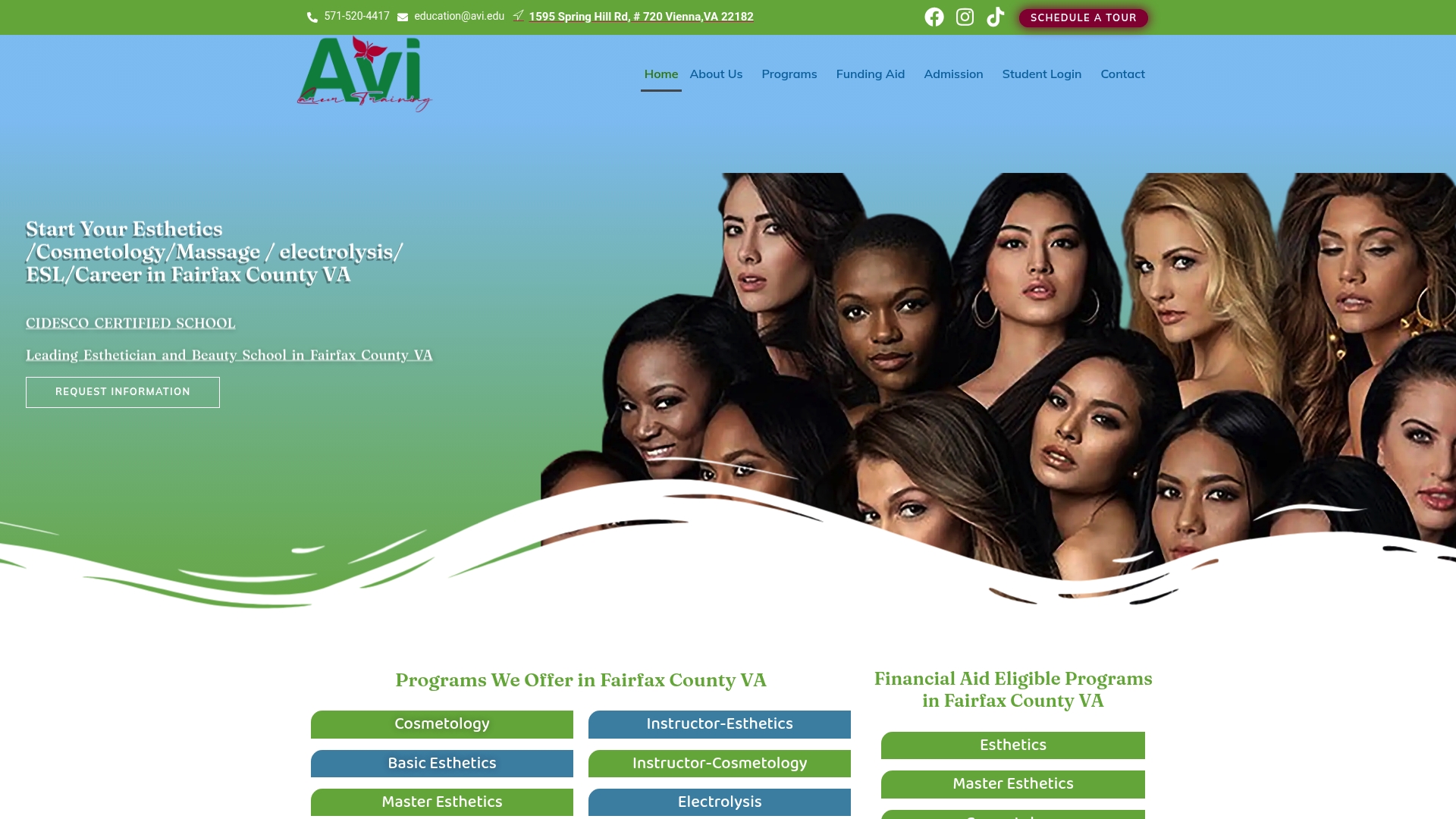
Avi Career Training in Fairfax County holds NACCAS accreditation and offers federally recognized programs in cosmetology, esthetics, and massage therapy. Students at Avi benefit from personalized mentorship, hands-on training in real client settings, and direct externship connections with leading spas and salons across Northern Virginia. Financial aid options are available for qualifying students, making the programs accessible without requiring full out-of-pocket payment. If you are ready to start your beauty career on solid ground, explore the accredited programs at Avi and request your program-level outcome data before you commit. You can also review career placement support to understand what happens after graduation.
FAQ
What is an accredited beauty school?
An accredited beauty school is one that meets standards set by a recognized accrediting body, most commonly NACCAS in the United States. Accreditation confirms that the school’s curriculum, instructors, and outcomes meet minimum national benchmarks.
Can I get financial aid at a non-accredited beauty school?
No. Only NACCAS-accredited schools are eligible to disburse federal Title IV financial aid, including Pell Grants and federal student loans. Students at non-accredited schools must pay entirely out of pocket.
What licensure pass rate should I look for in a beauty school?
NACCAS requires a minimum 70% licensure exam pass rate for accreditation. High-performing schools report pass rates above 85%, which is the benchmark worth targeting when comparing programs.
Does accreditation type matter for transferring credits?
Yes. NACCAS accreditation supports vocational licensure and federal aid but offers limited credit transfer. Regional accreditation provides stronger credit transfer options for students who plan to pursue academic degrees after completing beauty training.
How do I verify a school’s accreditation status?
Check the school’s status directly on the NACCAS website or the U.S. Department of Education’s accreditation database. Some schools list outdated or probationary accreditation, so always confirm the current standing before enrolling.