
A cosmetology portfolio is a professional visual resume that proves your technical skills and accelerates your career growth. In the beauty industry, this curated collection of your best work serves as your most powerful marketing tool. Understanding why a cosmetology portfolio builds career momentum is the first step toward standing out in a competitive field. Salon owners and clients decide based on what they see, not what they read. A strong portfolio communicates your range, your standards, and your ability to deliver results to paying clients before you walk through the door.
Why does a cosmetology portfolio build your career?
A portfolio builds your career because salons hire visual proof of skill, not credentials on paper. A written resume tells a hiring manager you completed a program. A portfolio shows them exactly what you can do with scissors, color, and a client in the chair.
The role of a portfolio in beauty careers goes beyond getting hired. It shapes how employers perceive your value before you negotiate a salary. When you walk into an interview with a polished, organized collection of your best work, you shift the conversation from “Can you do this?” to “How soon can you start?” That shift is the difference between entry-level pay and a position at a premium salon.

The benefits of a strong portfolio also extend to client trust. New clients who find you online or through a referral want to see your work before they book. A portfolio answers their questions visually and removes hesitation. That is how a single well-curated gallery converts browsers into loyal clients.
How does a strong portfolio improve your hiring chances?
Hiring managers spend less than 30 seconds reviewing a portfolio. That fact alone explains why presentation quality matters as much as technical skill. Your first three images must represent your highest-value work, because those images are often the only ones a busy salon owner sees.
A well-curated portfolio does several things at once:
- It skips the resume screening stage and gets you directly into targeted interviews at high-end salons.
- It gives hiring managers visual proof that builds trust faster than any written description.
- It positions you for stronger salary negotiation because your work speaks before you do.
- It demonstrates range, showing that you can handle different hair types, skin tones, and service categories.
The cosmetology career development path moves faster for professionals who present their work clearly and confidently. Salon owners are busy. They want to see that you can deliver results to their clientele, and they want to see it quickly. A portfolio that communicates that within 30 seconds puts you ahead of candidates who rely on credentials alone.
Pro Tip: Tailor your portfolio to the specific salon you are applying to. If the salon specializes in color services, lead with your best color work. If it caters to textured hair, feature those results prominently.
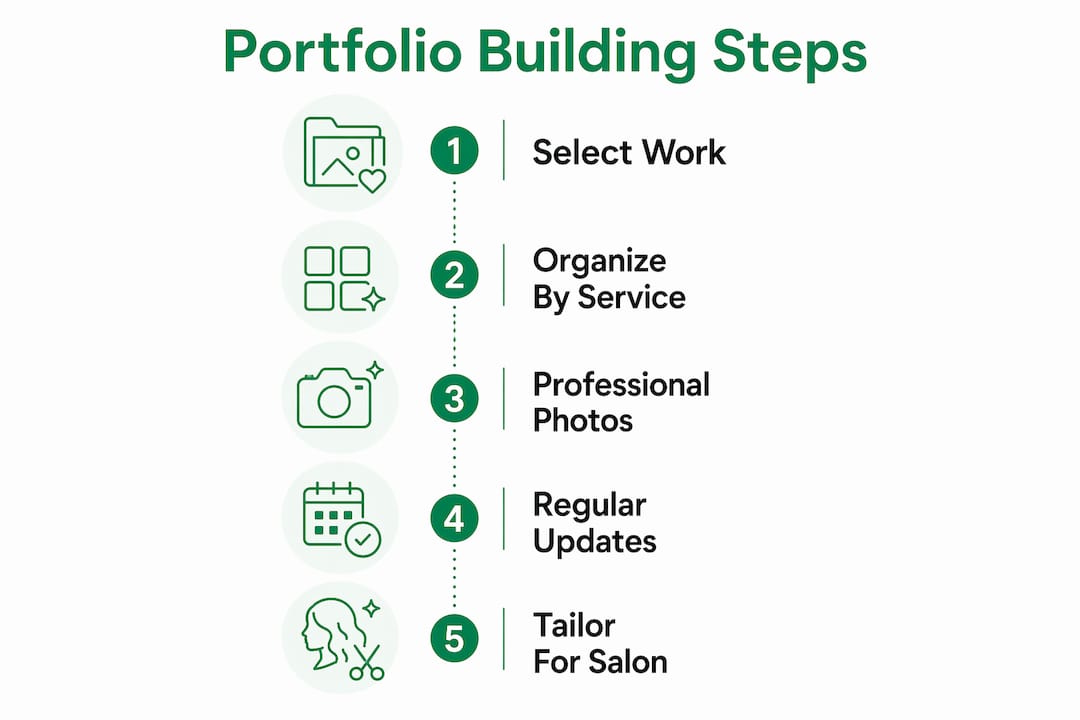
What are the best practices for building a beauty career portfolio?
Treat your portfolio as a marketing document, not a photo album. Every image you include should serve a purpose. If a photo does not show a skill clearly or does not represent your best work, leave it out.
Organize for clarity and impact
Group your work by service category: color, cuts, styling, skincare, or specialty treatments. Within each category, lead with your strongest image. Organizing images into logical groups by service type or complexity helps hiring managers find what they need without effort. A disorganized portfolio signals disorganized work habits.
Invest in professional photography
Phone photos taken in poor lighting undercut even excellent technical work. Natural light or a simple ring light setup makes a significant difference. Before and after shots are especially powerful because they show your problem-solving process, not just the finished result. Honest representation matters here. Never over-edit photos to the point where the actual color or texture is misleading.
Avoid common pitfalls
The most frequent mistakes aspiring cosmetologists make when they build a beauty career portfolio include:
- Including too many photos of the same technique without showing range.
- Using blurry, dark, or heavily filtered images that obscure the actual work.
- Filling space with mediocre work just to make the portfolio look larger.
- Skipping process shots, which establish credibility and professional identity beyond the final result.
Portfolio presentation quality can override technical skill in hire or no-hire decisions. A thoughtfully edited, marketing-oriented collection beats a large, disorganized one every time.
Pro Tip: Update your portfolio every three to six months. Remove older work as your skills improve and replace it with your current best. A stale portfolio signals stagnation.
Digital portfolios vs. social media: which one works better?
Instagram and other social platforms feel like a natural home for beauty work. The reality is more complicated. Instagram alone is insufficient as a portfolio because algorithm changes and personal content dilute your professional narrative and reduce your reach to the people who matter most.
A dedicated portfolio website solves these problems directly. It gives you full control over image quality, layout, and the story you tell about your work. It also allows you to integrate a booking system, which reduces friction for both clients and employers who want to take action immediately after viewing your work.
The cost barrier is lower than most aspiring cosmetologists expect. Portfolio websites cost $10–$25 monthly and place you above the vast majority of candidates who rely on social media alone. That monthly investment pays for itself the first time it lands you a better-paying position or a new client.
Social media still has a role. Use it to stay visible and connect with your community. Pair it with salon SEO strategies to increase your discoverability online. But your portfolio website is your professional home base. It is where serious employers and clients go when they want to evaluate your work without distraction.
Maintaining a portfolio website gives you narrative control, consistent image quality, and a direct booking flow that social media cannot reliably provide.
How does a portfolio attract premium employers and better pay?
Specialization is the fastest path to premium employment in cosmetology. Advanced portfolios showing expertise in color correction, balayage, textured cuts, or aesthetic treatments attract employers who pay accordingly. A generalist portfolio gets you generalist pay. A specialist portfolio opens doors to salons that serve high-end clientele and compensate their staff to match.
Before and after galleries are the most persuasive content you can include. They show a hiring manager exactly how you assess a client’s starting point, plan a service, and execute it to a professional standard. That sequence of images communicates problem-solving ability, not just technical execution.
Certifications and continuing education belong in your portfolio too. A photo of your balayage certification or an advanced color course completion does two things. It proves you invest in your own growth, and it signals to premium employers that you take the craft seriously. The importance of cosmetology certification shows up directly in compensation expectations.
Visual storytelling also influences cultural fit. Premium salons want to hire professionals who understand their brand. A portfolio that reflects clean, consistent, high-quality presentation tells a salon owner that you will represent their brand the same way. That alignment matters as much as technical skill at the top end of the market.
Key Takeaways
A cosmetology portfolio is the single most effective tool for accelerating hiring, increasing earning potential, and building a lasting professional reputation in the beauty industry.
| Point | Details |
|---|---|
| Portfolio beats a resume | Salon owners hire based on visual proof of results, not written credentials. |
| First 30 seconds decide | Lead with your three strongest images; hiring managers rarely look further. |
| Digital presence is non-negotiable | A portfolio website at $10–$25 per month outperforms social media for professional credibility. |
| Specialization drives pay | Portfolios showing advanced skills like color correction attract premium employers and higher salaries. |
| Update consistently | Replacing older work every few months signals growth and keeps your portfolio competitive. |
What I have learned about portfolios after years in this field
The advice most aspiring cosmetologists receive about portfolios focuses on what to include. The harder lesson is learning what to cut. Early in my experience with this industry, I watched talented students undermine themselves by padding their portfolios with average work because they were afraid of looking thin. A portfolio with twelve exceptional images beats one with forty mediocre ones, every single time.
The second thing I have learned is that a portfolio is never finished. The professionals who advance fastest treat their portfolio as a living document. They photograph new work consistently, review their collection quarterly, and remove anything that no longer represents their current standard. That discipline is what separates a professional from someone who is still trying to get noticed.
Local collaboration is underrated. Connecting with a photography student or a local photographer for a portfolio shoot costs far less than hiring a professional studio and produces images that genuinely showcase your work. Mentors at schools like Avi also provide feedback that helps you see your portfolio through an employer’s eyes, which is a perspective you cannot get on your own.
The role of a portfolio in international beauty careers is also worth noting. If you plan to work abroad or attract clients from diverse backgrounds, a portfolio that demonstrates range across hair types, skin tones, and cultural styling preferences becomes a significant differentiator. Build with that breadth in mind from the start.
A portfolio does not just get you hired. It tells the story of who you are as a professional. Build it with that intention.
— krishna
How Avi prepares you to build a career-ready portfolio
Avi Career Training in Fairfax County, VA, builds portfolio development directly into its cosmetology curriculum. Students work on real clients from early in their training, which means they accumulate genuine, photographable results before they graduate.
The cosmetology program at Avi combines hands-on technique with mentorship from experienced professionals who guide students on how to present their work to employers. Externship partnerships with leading spas and salons in Northern Virginia give students access to real-world environments where portfolio-worthy work happens every day. Financial aid options make the program accessible regardless of your starting point. If you are ready to build a portfolio that opens doors, Avi gives you the training and the work to fill it.
FAQ
What is a cosmetology portfolio?
A cosmetology portfolio is a curated visual collection of your best work that functions as a professional resume for salon hiring and client acquisition. It proves your technical skills and creative range faster than any written credential.
How many images should a cosmetology portfolio include?
Quality matters more than quantity. A focused portfolio of 15–25 strong, well-photographed images across multiple service categories outperforms a large collection of inconsistent work.
Should I use Instagram as my portfolio?
Instagram supports visibility but algorithm changes reduce professional reach and personal content dilutes your professional narrative. Use a dedicated portfolio website as your primary professional presence and treat social media as a supplement.
How does a portfolio help with salary negotiation?
A strong portfolio shifts the conversation from whether you can do the job to how much your skills are worth. Visual proof of advanced techniques like color correction or specialty treatments positions you for higher compensation from the start.
How often should I update my cosmetology portfolio?
Update your portfolio every three to six months. Remove work that no longer reflects your current skill level and replace it with recent results that show your growth and specialization.