What Will You Learn in an Esthetics Program?
An esthetics program teaches you the hands-on skincare techniques, skin science theory, and business fundamentals you need to pass the Virginia State Board exam and launch a professional career — typically in four to six months of full-time training.
If you’ve been researching esthetics schools in Northern Virginia and wondering whether the curriculum actually prepares you for real work, this guide breaks it all down. You’ll see exactly what topics are covered, how Virginia’s licensing requirements shape the program, and what career doors open once you graduate.
Key Takeaways
– Virginia requires 600 clock hours of training to sit for the esthetics licensure exam
– A full-time esthetics program can be completed in approximately 4–6 months
– The Virginia State Board exam includes both a written (theory) and practical component
– Entry-level estheticians in Virginia typically earn $35,000–$45,000/year; experienced professionals in DC-metro medical spa settings can earn $55,000–$75,000+
– The U.S. Bureau of Labor Statistics projects skin care specialist employment to grow 17% through 2032 — faster than average for all occupations
Ready to see if AVI Career Training’s Esthetics Program is the right fit? Apply now or keep reading to get the full picture first.
Core Skincare Techniques You’ll Master
The hands-on portion of your esthetics training is where classroom knowledge becomes real skill. Every class, every client, every practice session builds muscle memory and professional confidence. Here’s what that looks like in the treatment room.
Facial Treatments
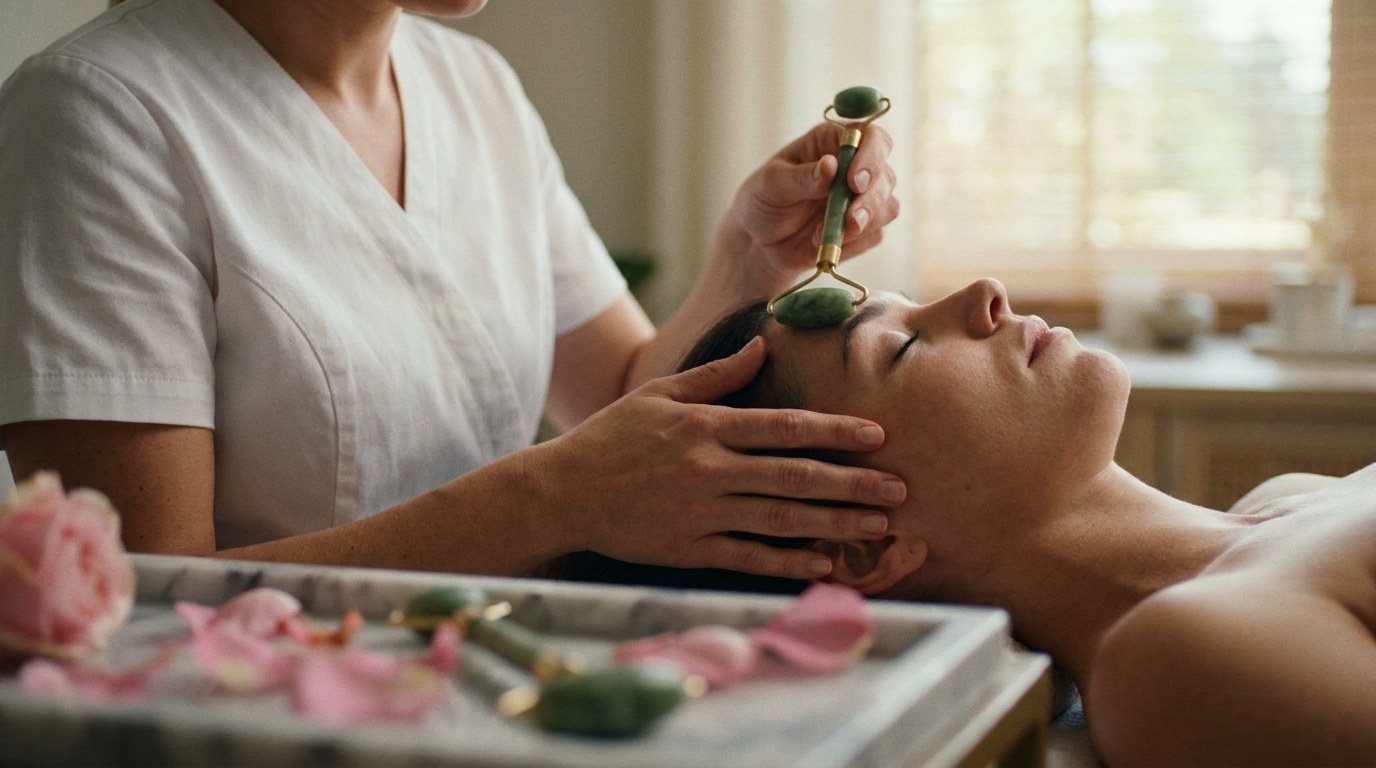
Facials are the foundation of esthetic practice. You’ll learn how to perform a complete facial service from start to finish — client consultation, skin analysis, cleansing, toning, exfoliation, extractions, massage, masking, and product application. You won’t just follow steps. You’ll learn why each step matters and how to adjust the service based on what your client’s skin actually needs that day.
This is where reading skin becomes a skill. You’ll train your eyes and hands to identify skin types — oily, dry, combination, sensitive, mature — and customize every service accordingly.
Exfoliation and Extractions
Mechanical and chemical exfoliation are two of the most requested services in any spa. You’ll learn the difference between physical exfoliants (scrubs, brushes) and enzyme-based or acid-based chemical options — and when to use each safely. Extractions are taught with a strong emphasis on sanitation protocols and proper technique, so you protect your clients’ skin and your professional reputation.
Steaming and Manual Massage
Facial steaming is a staple prep technique for deeper cleansing and product absorption. You’ll understand how steam temperature, distance, and duration affect different skin types and conditions. Manual facial massage — including effleurage, petrissage, and tapotement movements — is taught as both a relaxation technique and a tool for improving circulation and lymphatic drainage.
Waxing Services
Hair removal is a core revenue driver for estheticians. Your training covers facial waxing (brows, lip, chin) as well as body waxing techniques. You’ll learn proper wax temperature, skin preparation, application direction, removal technique, and post-wax care — including how to handle sensitive or reactive skin safely.
Makeup Application
Many esthetics programs include foundational makeup training — covering color theory, skin prep, application tools, and corrective techniques. This adds a meaningful service offering to your professional toolkit, especially for bridal, special occasion, and photoshoot work.
Skin Science: What You Study in the Classroom
Esthetics isn’t just about technique — it’s a science-based field. The classroom hours in your program build the theoretical foundation that makes you a knowledgeable, trustworthy professional. Clients come to you with real skin concerns. You need to understand what’s actually happening beneath the surface.
Anatomy and Physiology
You’ll study the structure of the skin in detail — the epidermis, dermis, and subcutaneous layers — along with the cells, glands, and structures that make up each. You’ll also cover the muscles and bones of the face and neck, which matters for massage technique and facial service precision.
Understanding how the skin functions — how it produces oil, sheds cells, responds to UV damage, and heals itself — gives you a clinical framework for every service you perform.
Skin Conditions and Disorders
This is where you learn to recognize conditions like acne, rosacea, hyperpigmentation, eczema, psoriasis, and aging-related changes — and, critically, to understand what you can treat versus what requires a referral to a dermatologist. Knowing your scope of practice keeps your clients safe and protects your license.
Ingredient Science
Product knowledge is a core curriculum topic. You’ll study active ingredients — retinoids, AHAs, BHAs, vitamin C, niacinamide, hyaluronic acid — and learn how they work, which skin types they benefit, and which combinations or contraindications to avoid. This knowledge translates directly into retail sales and client education, which are major contributors to your earning potential.
Sanitation, Safety, and Infection Control
Virginia State Board exams test heavily on sanitation and infection control. You’ll learn the difference between sterilization, disinfection, and sanitation. You’ll understand bloodborne pathogens, proper disposal procedures, and the legal requirements for maintaining a safe treatment room. This isn’t just exam prep — it’s the foundation of professional practice.
Advanced and Specialty Services in the Curriculum
Once you’ve built a strong foundation, your esthetics training expands into higher-level services that increase your value in the job market and your earning potential as a professional.
Chemical Peels
Chemical exfoliation at a deeper level — using alpha hydroxy acids (AHAs) like glycolic and lactic acid, or beta hydroxy acids (BHAs) like salicylic acid — is one of the more established advanced services in esthetics. You’ll learn about peel depths, client selection criteria, contraindications, neutralization, and post-peel care protocols.
Microdermabrasion
This mechanical resurfacing technique uses a diamond-tip or crystal-based device to remove the outermost layer of dead skin cells. You’ll study the science behind the treatment, the equipment operation, and how to deliver safe, effective results for different skin types and concerns.
LED Light Therapy
LED (light-emitting diode) therapy is a non-invasive treatment that uses different wavelengths of light to address specific skin concerns — blue light for acne, red light for anti-aging, near-infrared for healing and inflammation. Learning to incorporate LED into your services positions you for both spa and medical esthetics settings.
Brow and Lash Services
Tinting and shaping — whether through waxing, threading instruction, or tinting services — round out the facial treatment menu. These services are fast, established, and strong add-ons to facial appointments.
Electrotherapy and Facial Equipment
Modern esthetics practices use a range of electrical devices — high-frequency machines, galvanic current, microcurrent, and ultrasonic tools. You’ll study how these technologies work and how to use them safely and effectively. Understanding facial equipment also gives you a foundation for transitioning into cosmetic laser or medical esthetics later in your career.
Meet Priya.
She spent eight years working as a pharmacy technician before realizing she wanted a career where she could actually connect with people and help them feel good in their skin. She enrolled in AVI Career Training’s Basic Esthetics program on a part-time schedule while still working. The science-heavy curriculum — skin anatomy, ingredient chemistry, contraindications — felt familiar to her. The hands-on clinic hours were what surprised her. “I didn’t expect to feel so confident in the treatment room so quickly,” she said. Within three months of passing her Virginia State Board exam, Priya was working at a medical spa in Tysons Corner, using the LED and chemical peel skills she’d practiced at AVI every week. Her pharmacy background and esthetics license together made her a standout hire.
Virginia State Board Requirements and Clock Hours
Understanding the licensing requirements in Virginia is essential before you choose a school. The program you attend needs to prepare you for the state exam — not just give you a certificate.
The 600-Hour Requirement
The Virginia Department of Professional and Occupational Regulation (DPOR) requires 600 clock hours of esthetics training to sit for the state licensure exam. Those hours must be completed at a licensed school and include both theory instruction and supervised practical work.
This is why accreditation matters. When you train at a COE-accredited school like AVI Career Training, your hours are recognized by the Virginia State Board. Schools without proper accreditation may not meet DPOR requirements, which could prevent you from sitting for the exam at all.
What the State Board Exam Covers
The Virginia esthetics licensure exam has two parts:
Written (Theory) Exam: Covers skin anatomy, infection control, chemistry, equipment, state laws, and regulations. Your classroom hours prepare you directly for this component.
Practical Exam: Tests your ability to perform specific esthetic services in a standardized, evaluated setting. Your clinic hours — practicing on real clients under instructor supervision — are what prepare you here.
License Renewal
Once you earn your Virginia esthetics license, it must be renewed every two years. Continuing education requirements apply at renewal. Your license is the credential that lets you legally practice — protect it by maintaining it.
Full-Time vs. Part-Time Program Timelines
A full-time esthetics program can typically be completed in 4–6 months. Part-time schedules — popular among students who work while training — generally extend the timeline to 8–12 months. Both paths lead to the same 600 hours and the same state board eligibility. The right schedule depends on your life, not a one-size-fits-all timeline.
Skin Science Is Only Half the Education
Esthetics school also prepares you for the business side of professional practice. This is one area where generic articles tend to fall short — they focus on what you’ll do in the treatment room without addressing what it actually takes to build a sustainable career.
Client Consultation and Communication
Learning to conduct a professional intake consultation — reviewing health history, identifying contraindications, discussing goals, setting realistic expectations — is a clinical skill and a relationship skill. It determines client trust, safety, and retention.
Retail and Product Recommendations
Selling retail is a major income source for estheticians. Your training teaches you how to recommend home care products that extend treatment results, explain ingredients in plain language, and build client loyalty. Many estheticians earn as much from retail commission as from service tips.
Professional Ethics and Virginia State Law
Virginia-specific regulations — what you can and cannot legally perform with an esthetics license, scope of practice boundaries, health and safety codes for treatment facilities — are covered in your curriculum and tested on the state board exam.
Meet Marcus.
He came to AVI Career Training after finishing a four-year degree in business that didn’t lead anywhere he wanted to go. He was interested in skincare but assumed esthetics school was “not for him.” What changed his mind was learning that Northern Virginia’s medical spa industry was actively hiring — and paying well. He enrolled in AVI’s Basic Esthetics program, finished his 600 hours in five months on a full-time schedule, and passed both parts of the Virginia State Board exam on his first attempt. He now works at a high-end medical spa in McLean, performing chemical peels and LED treatments. He uses his business degree every day — tracking retail goals, upselling add-on services, and building a loyal client book. “The esthetics training was the piece I was missing,” he said. “I already knew how to think like a business owner. AVI taught me how to be a licensed professional.”
What You Can Do With an Esthetics License in Virginia
Earning your Virginia esthetics license opens more doors than most people expect. The Northern Virginia and DC metro market is one of the highest-demand regions in the country for skincare services — with a dense concentration of high-income clients who invest heavily in their skin.
Day Spa and Salon Employment
This is the most common entry point. Day spas and full-service salons hire licensed estheticians to perform facials, waxing, and body treatments. Entry-level positions typically offer hourly wages plus tips, with opportunities to grow into senior esthetician or lead roles.
Medical Esthetics and Medical Spa Settings
The fastest-growing segment of the industry. Medical spas in Northern Virginia — particularly in Tysons, McLean, Arlington, and Reston — offer services like advanced chemical peels, laser treatments, and skin rejuvenation protocols. A foundation esthetics license is the required credential to enter this space. Some medical spa roles also require additional certification in specific modalities.
The U.S. Bureau of Labor Statistics projects skin care specialist employment to grow 17% through 2032, significantly faster than the average across all occupations. The DC metro market is well-positioned to outpace that national average.
Freelance and Bridal Work
Licensed estheticians can work independently — booking makeup and skincare services for weddings, photo shoots, and events. This path requires business hustle, but it offers flexibility and strong per-hour earning potential.
Product and Brand Sales
Estheticians with deep ingredient knowledge often transition into brand education, product consulting, or territory sales roles with skincare and professional beauty companies. Your clinical training makes you credible in those conversations.
Earning Potential in Northern Virginia
Entry-level estheticians in Virginia typically earn $35,000–$45,000/year. Experienced professionals in medical spa or specialty settings in the DC metro area can earn $55,000–$75,000+, including tips and commission. Estheticians who build strong retail books and loyal client bases often exceed those figures. These numbers reflect market data — they are not guarantees, and your outcomes will depend on your effort, specialization, and employer.
Is AVI Career Training’s Esthetics Program Right for You?
AVI Career Training is a COE-accredited, SCHEV-certified beauty and wellness school in Vienna, Virginia — located at 1595 Spring Hill Rd #720, just minutes from the Tysons/McLean corridor and easily accessible from across Northern Virginia and the DC metro area.
AVI’s Basic Esthetics program is built around Virginia’s 600-hour licensing requirement, with a curriculum that covers every topic tested on the state board exam — and then goes further, preparing you for real client work in real-world settings.
A few things that set AVI apart from generic esthetics programs:
- Inclusive training: AVI’s curriculum is designed to train you to work beautifully on every skin tone. That’s not a marketing phrase — it’s a core part of how AVI teaches skin analysis, product selection, and treatment customization. Beauty is for everyone, and your training should reflect that.
- Hands-on clinical hours: You don’t just watch demonstrations. You practice on real clients in AVI’s student clinic, under licensed instructor supervision, from early in your program.
- Licensed professional instructors: AVI’s instructors are working industry professionals who bring current, real-world knowledge into the classroom.
- Financial aid available: AVI accepts Pell Grants, federal financial aid, and the GI Bill® for eligible students. Tuition shouldn’t be the barrier between you and a career you love.
Whether you’re a career changer, a recent graduate, or someone who has always wanted to work in skincare — esthetics school at AVI is designed to get you licensed, skilled, and job-ready in months, not years.
Your next step is simple. Apply now to start your application, or call AVI directly at (703) 943-9841 to speak with an admissions advisor about scheduling, financial aid, and program options.
The Northern Virginia skincare industry is hiring. The question is whether you’ll be licensed and ready when the right opportunity comes.
AVI Career Training | 1595 Spring Hill Rd #720, Vienna, VA 22182 | (703) 943-9841 | COE Accredited · SCHEV Certified