Summary:
You’re thinking about esthetician classes, but you want to know what you’re actually getting into. Not the glossy brochure version. The real one.
What will you spend 600 hours learning? Will you touch real skin, or just watch demonstrations? Can you fit training around a full-time job? And when it’s over, will you actually feel ready to work with clients?
Those are fair questions. Esthetician classes aren’t all built the same. Some focus heavily on theory. Others throw you into hands-on work early. The best programs do both, and they don’t skip the business side either. Here’s what solid training actually looks like, and how to know if a program will get you where you need to go.
Types of Esthetician Classes and Training Components
Esthetician classes fall into a few main categories, and knowing the difference matters. Basic esthetics programs cover the fundamentals required for state licensure. You’ll learn skin anatomy, facial treatments, hair removal, sanitation protocols, and client consultation. In Virginia, that’s 600 hours of training before you can sit for the state board exam.
Then there’s advanced training. Master esthetics programs build on that foundation with chemical peels, microdermabrasion, advanced exfoliation, and treatments that require deeper knowledge of skin conditions. Some students go straight through both levels. Others start with basic licensure, work in the field, and come back for advanced certifications later.
Medical esthetician school is a different track. It’s not always a separate license in Virginia, but the training focuses on clinical settings like dermatology offices, plastic surgery practices, and medical spas. You’ll learn pre- and post-operative skincare, laser safety, and how to work alongside physicians. The scope is narrower but more specialized.
What You'll Actually Learn in an Esthetician Training Program
The curriculum isn’t a mystery. Virginia’s Board for Barbers and Cosmetology sets minimum requirements, so every state-approved program has to cover specific ground.
You’ll start with skin science. How the skin functions, what each layer does, how the circulatory and lymphatic systems affect skin health. You’ll study common conditions like acne, rosacea, hyperpigmentation, and aging. You’ll learn to identify skin types and analyze what a client needs based on what you see and what they tell you.
Then comes technique. Cleansing, exfoliation, extractions, masks, massage. Manual facials first, then machine-based treatments like steamers, high-frequency devices, and microdermabrasion units. You’ll practice waxing on different body areas, learn proper sanitation between every single client, and get trained on how to handle contraindications or adverse reactions.
Product knowledge is a bigger piece than most people expect. You’ll study ingredient chemistry, pH levels, how actives like retinol or glycolic acid work, and why layering matters. You’ll learn which products to use for different skin types and how to recommend home care routines that actually make sense for your clients’ lives.
And then there’s the business side. How to conduct consultations. How to price services. How to handle difficult clients or manage appointment schedules. How to retail products without being pushy. How to stay compliant with health regulations and maintain liability insurance. Programs that skip this part leave you underprepared for the realities of working in a spa or running your own practice.

Hands-On Training vs. Classroom Theory in Esthetics Programs
Theory is necessary. You can’t treat skin safely if you don’t understand how it works. But esthetics is a hands-on profession, and no amount of reading prepares you for the feel of real skin or the pressure of a client watching you work.
Quality programs split time between classroom instruction and practical application. You’ll practice on mannequins first, then classmates, then real clients in a supervised student clinic. That’s where you learn timing, pressure, how to adjust techniques for sensitive skin, and how to talk to someone while you’re working on their face.
The student clinic experience is critical. You’re performing actual services under the supervision of a licensed instructor. Clients know they’re working with students, so the pressure is lower, but the work is real. You’ll do consultations, recommend treatments, perform facials, handle scheduling, and manage the same workflow you’ll face in a professional spa.
Some schools offer externships with local salons or spas. You’re placed in a working environment, shadowing experienced estheticians and assisting with treatments. It’s not the same as being hired, but it gives you a feel for the pace, the client expectations, and the behind-the-scenes operations that classroom training can’t replicate.
Programs that lean too heavily on theory leave you book-smart but hesitant. Programs that rush you into clinic work without enough foundational knowledge leave you guessing. The balance matters, and so does the quality of supervision during your hands-on hours.
Esthetician Classes Online vs In-Person Learning
Online esthetician classes sound appealing, especially if you’re working full-time or managing family responsibilities. But here’s the reality: you can’t learn esthetics entirely online.
Some programs offer hybrid formats. Theory courses are delivered online, and you complete them at your own pace. Then you come to campus for hands-on lab work and clinic hours. This model works for people who need schedule flexibility but still want quality practical training.
Fully online programs that claim you can become a licensed esthetician without ever stepping into a classroom are not legitimate. Virginia requires hands-on training hours, and you can’t perform facials, waxing, or sanitation protocols through a screen. If a program promises full licensure with zero in-person work, walk away.
The hybrid model can be effective if the in-person component is substantial and well-structured. You’re not just showing up for a weekend crash course. You’re completing the same clinic hours, practicing the same techniques, and working with the same clients as students in traditional programs. The only difference is where you complete your theory coursework.
Flexible Scheduling for Working Adults in Northern Virginia
Most people pursuing esthetician classes in Fairfax County aren’t fresh out of high school with open schedules. They’re working adults, parents, or career-changers who can’t afford to quit their jobs to go back to school.
Evening and weekend programs exist for this reason. You’re completing the same 600 hours, but the schedule is spread out over a longer timeline. Instead of finishing in three to five months, you might take eight to twelve months. The training is identical. The pace is just adjusted.
Some schools offer morning, afternoon, and evening tracks, so you can choose the block that fits around your current work schedule. Others run weekend-intensive formats where you’re in class Saturday and Sunday and complete theory work during the week.
Flexibility doesn’t mean shortcuts. You still have to show up. You still have to complete every required hour. You still have to pass practical evaluations and demonstrate competency before you’re cleared to sit for the state board exam. But a program that offers multiple schedule options makes it possible to pursue licensure without blowing up your life in the process.
If you’re in Northern Virginia, proximity matters too. A school in Tysons Corner or Vienna is a lot more manageable than driving to Richmond twice a week. Location and schedule flexibility go hand in hand when you’re trying to balance training with everything else on your plate.
What Hybrid Esthetician Programs Look Like in Practice
Hybrid programs aren’t new, but they’ve become more refined. The theory portion covers everything you’d normally learn in a classroom setting—skin anatomy, product chemistry, sanitation protocols, client consultation techniques, and business basics. You’re watching recorded lectures, completing quizzes, reading textbooks, and submitting assignments online.
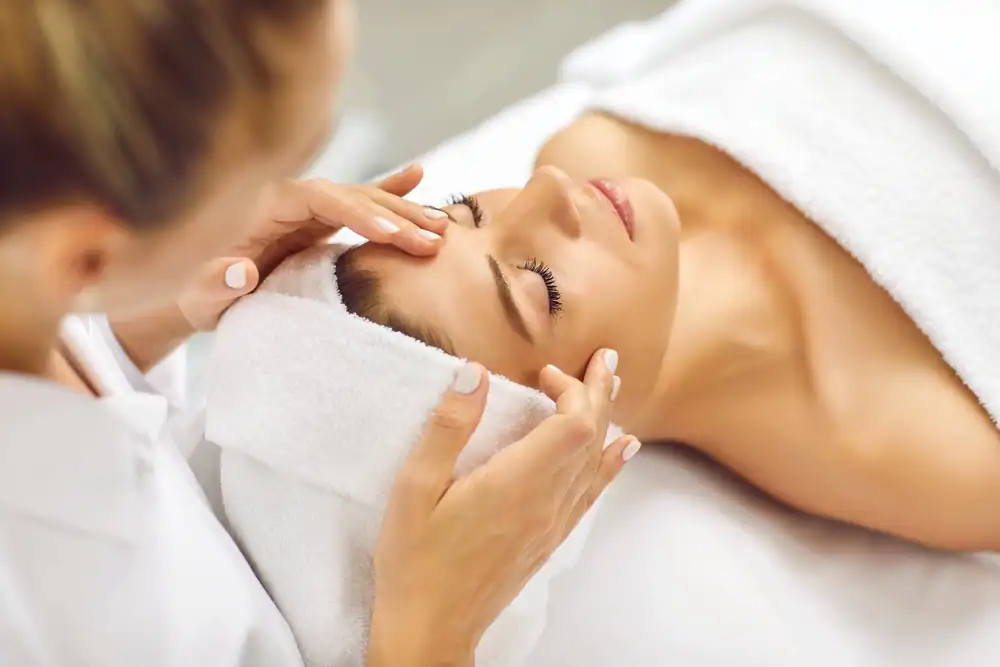
Then you transition to the practical phase. You’re on campus, in a lab or student clinic, working with real equipment and real clients. You’re being observed, corrected, and evaluated by licensed instructors who’ve been doing this for years. You’re building muscle memory, learning how to manage time during a treatment, and figuring out how to stay calm when something doesn’t go as planned.
The key difference between a good hybrid program and a weak one is the quality of the in-person component. If the hands-on portion feels rushed, disorganized, or understaffed, you’re not getting the same experience as a traditional program. But if the clinic hours are structured, the supervision is consistent, and the client volume is high enough to give you real practice, the hybrid model works.
Some students prefer it. They like controlling the pace of their theory work and showing up for labs when they’re mentally ready to focus on technique. Others find it harder to stay disciplined without the structure of regular class meetings. Know yourself before you commit to a format.
Medical Esthetician School and Advanced Esthetics Training
Medical esthetician school isn’t always a separate license in Virginia, but the training is distinct. You’re learning to work in clinical environments where the stakes are higher and the treatments are more aggressive.
Chemical peels, microdermabrasion, dermaplaning, LED light therapy, and microneedling all fall under advanced esthetics. Some of these require a master esthetician license in Virginia. Others can be performed by basic estheticians depending on the depth of the treatment and the setting.
Medical esthetician training also covers working with compromised skin. Pre-op and post-op care for plastic surgery patients. Supporting dermatology treatments for conditions like severe acne, melasma, or eczema. Understanding when a client needs to be referred to a physician instead of treated in a spa.
You’ll learn laser safety, even if you’re not the one operating the laser. You’ll understand how to prep skin before a procedure and how to care for it afterward. You’ll work with medical-grade products that aren’t available in retail spas, and you’ll need to understand their potency and contraindications.
Advanced esthetics training opens doors to higher-paying roles in medical spas, dermatology clinics, and plastic surgery offices. The work is more technical, the client base is different, and the expectations are higher. But the demand is strong, and the career growth potential is real.