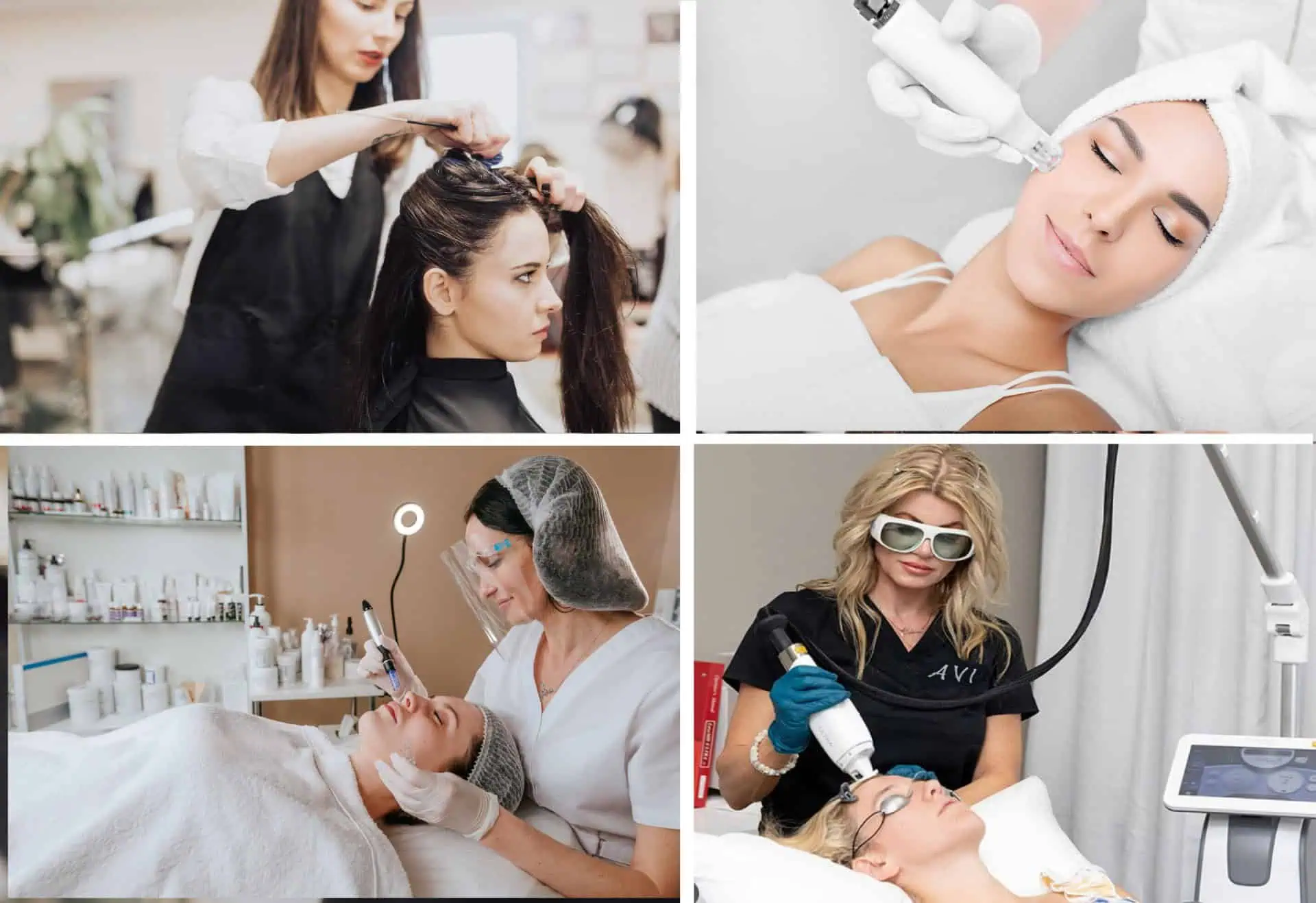
A laser technician (NO FINANCIAL AID FOR THIS PROGRAM) career in the DMV area offers one of the most competitive compensation packages in the beauty and wellness industry — with experienced technicians in Northern Virginia and DC earning $60,000–$90,000 or more in medical spa and clinical settings. If you’re researching this field as a first career or a professional pivot, you’re looking at a fast-growing, technology-driven path that sits squarely at the intersection of healthcare and beauty.
This guide covers everything you need to know: what the job actually involves, how Virginia regulates laser operators, what the local salary landscape looks like, and exactly how to get started — including where to train right here in Northern Virginia.
Ready to take the first step? Apply to AVI Career Training and speak with an admissions advisor about the best pathway for your background.
Key Takeaways
- Laser technicians in the DC metro area can earn an estimated $50,000–$90,000+, significantly above the national median for skincare specialists.
- Virginia does not issue a standalone laser technician license — laser use is regulated under physician oversight protocols through the Virginia Board of Medicine.
- The BLS projects 17% growth for skincare specialists through 2032 — nearly three times the average for all occupations.
- Many laser roles require or strongly prefer candidates with a background in esthetics — Virginia esthetics licensure requires 1,500 clock hours of approved training.
- AVI Career Training in Vienna, VA offers a Cosmetic Laser Technology program with hands-on training, COE accreditation, and GI Bill® acceptance.
What Does a Laser Technician (NO FINANCIAL AID FOR THIS PROGRAM) Actually Do?
Laser technicians use medical-grade laser and light-based devices to treat a wide range of skin and body concerns. This is a clinical, hands-on role that requires technical precision, an understanding of skin physiology, and strong client communication skills.
Common procedures laser technicians perform include:
- Laser hair removal — the most in-demand service, using targeted light energy to reduce or eliminate unwanted hair across all skin tones
- Skin rejuvenation — treating fine lines, texture, and overall skin quality using fractional and non-ablative laser platforms
- Pigmentation treatment — addressing sunspots, melasma, and hyperpigmentation with IPL (intense pulsed light) or specific wavelength lasers
- Tattoo removal — using Q-switched and picosecond lasers to break down ink particles safely
- Acne and vascular treatments — reducing active breakouts, redness, and visible vessels with targeted energy
This is not the same role as a traditional esthetician working with facials and chemical peels. Laser technology is a healthcare-adjacent specialty. Many employers — particularly medical spas and dermatology practices — look for technicians who understand anatomy, tissue response, and contraindications at a clinical level.
That’s what makes this career path both more demanding and more financially rewarding than general esthetics work.
Virginia Licensing Requirements: What You Need to Know Before You Start
This is where many prospective laser technicians get confused — and understandably so. Virginia’s regulatory framework for laser operators is more nuanced than a straightforward state license.
Virginia Does Not Issue a Standalone Laser Technician (NO FINANCIAL AID FOR THIS PROGRAM) License
Unlike some states that have a defined “laser technician” credential, Virginia does not issue a standalone laser operator license through the Department of Professional and Occupational Regulation (DPOR). Instead, laser use in Virginia falls under the oversight authority of the Virginia Board of Medicine.
What this means in practice: laser technicians in Virginia typically must operate under a medical director agreement with a licensed physician. The physician takes legal and clinical responsibility for the protocols used in the facility, and the technician performs treatments within those approved parameters.
If you’re planning to work in a medical spa, dermatology clinic, or any setting that uses Class IV (high-powered) laser devices, you will almost certainly need to work under this kind of physician oversight structure.
Class III vs. Class IV Lasers
Not all lasers are created equal — and the distinction matters for your career path.
- Class III lasers (also called Class IIIb) are lower-powered devices used in some light therapy and lower-energy treatments. These may be operated with fewer restrictions in certain settings.
- Class IV lasers are high-powered medical devices used for hair removal, resurfacing, tattoo removal, and other ablative treatments. Operating Class IV equipment in Virginia virtually always requires physician oversight.
Most laser hair removal and skin treatment roles you’ll find in the DMV area involve Class IV equipment. Plan accordingly.
The Role of Esthetics Licensure
While Virginia doesn’t require a specific laser license, the vast majority of employers — and most reputable training programs — require or strongly prefer candidates who hold a Virginia esthetics license.
Esthetics licensure in Virginia requires 1,500 clock hours of approved training through a SCHEV-certified school, followed by passing both a written and practical exam administered through PSI Exams. That foundation in skin physiology, contraindications, and client safety is directly applicable to laser work.
If you don’t yet hold an esthetics license and want to pursue laser technology, getting that credential first is the most practical and marketable path — and AVI offers b
“`