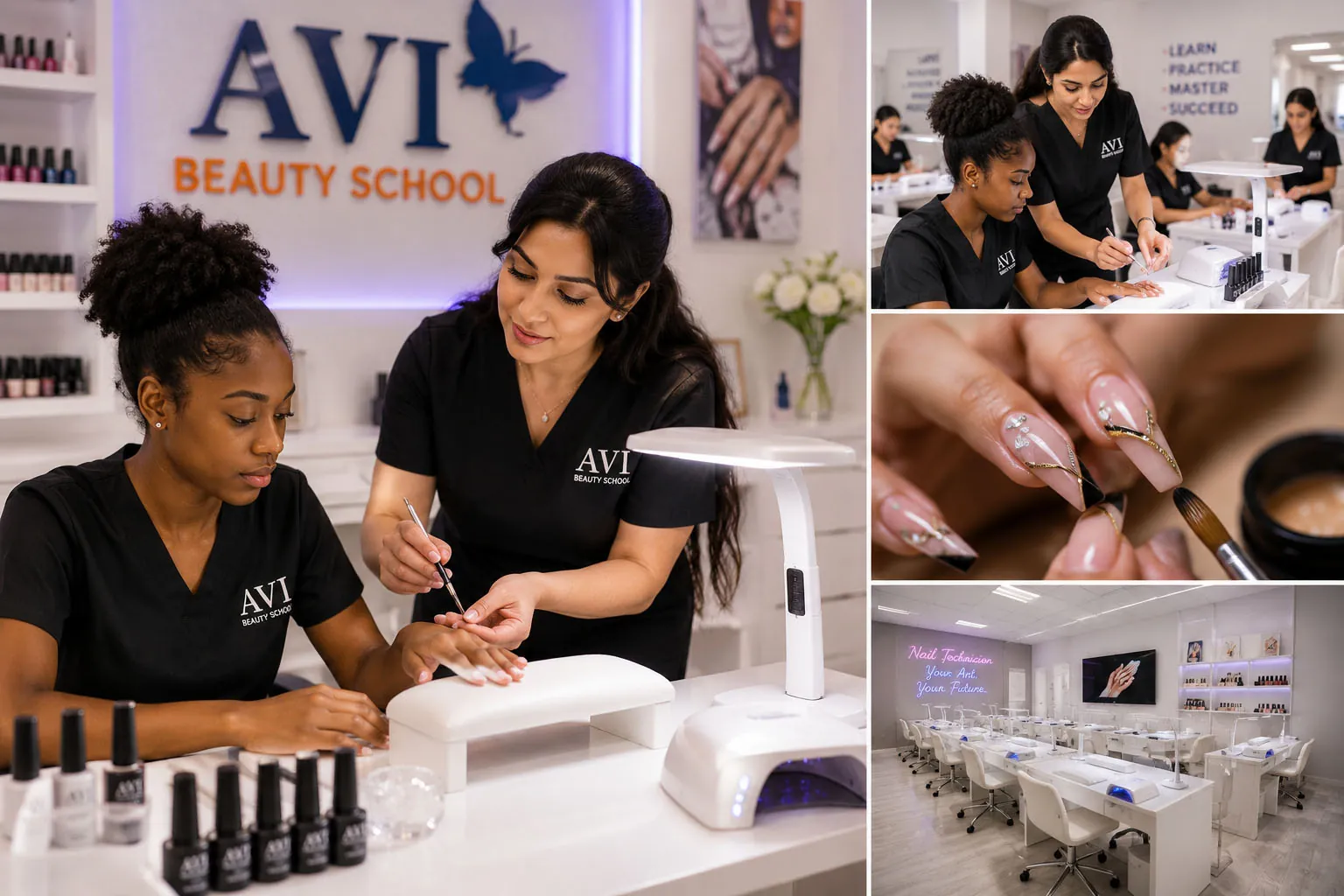
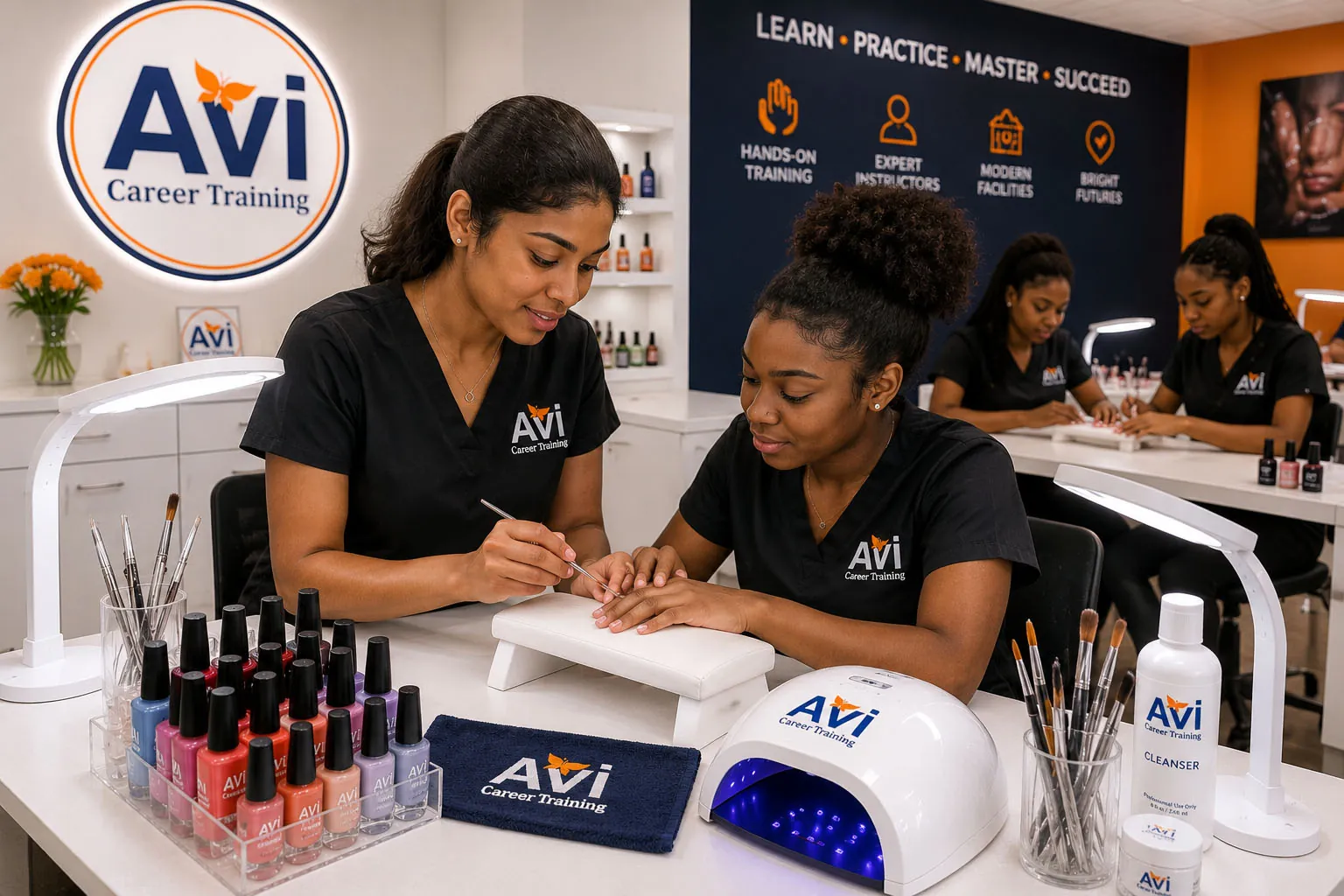
Your Path to Becoming a Licensed Nail Technician
The Nail Technician Program at AVI Career Training is a 150 clock-hour program approved by the Virginia Board of Barbers and Cosmetology (DPOR). It prepares students with the theory, safety knowledge, technical skills, and professional habits needed to perform manicuring, pedicuring, artificial nail enhancement services, nail art, and salon sanitation procedures in compliance with Virginia law.
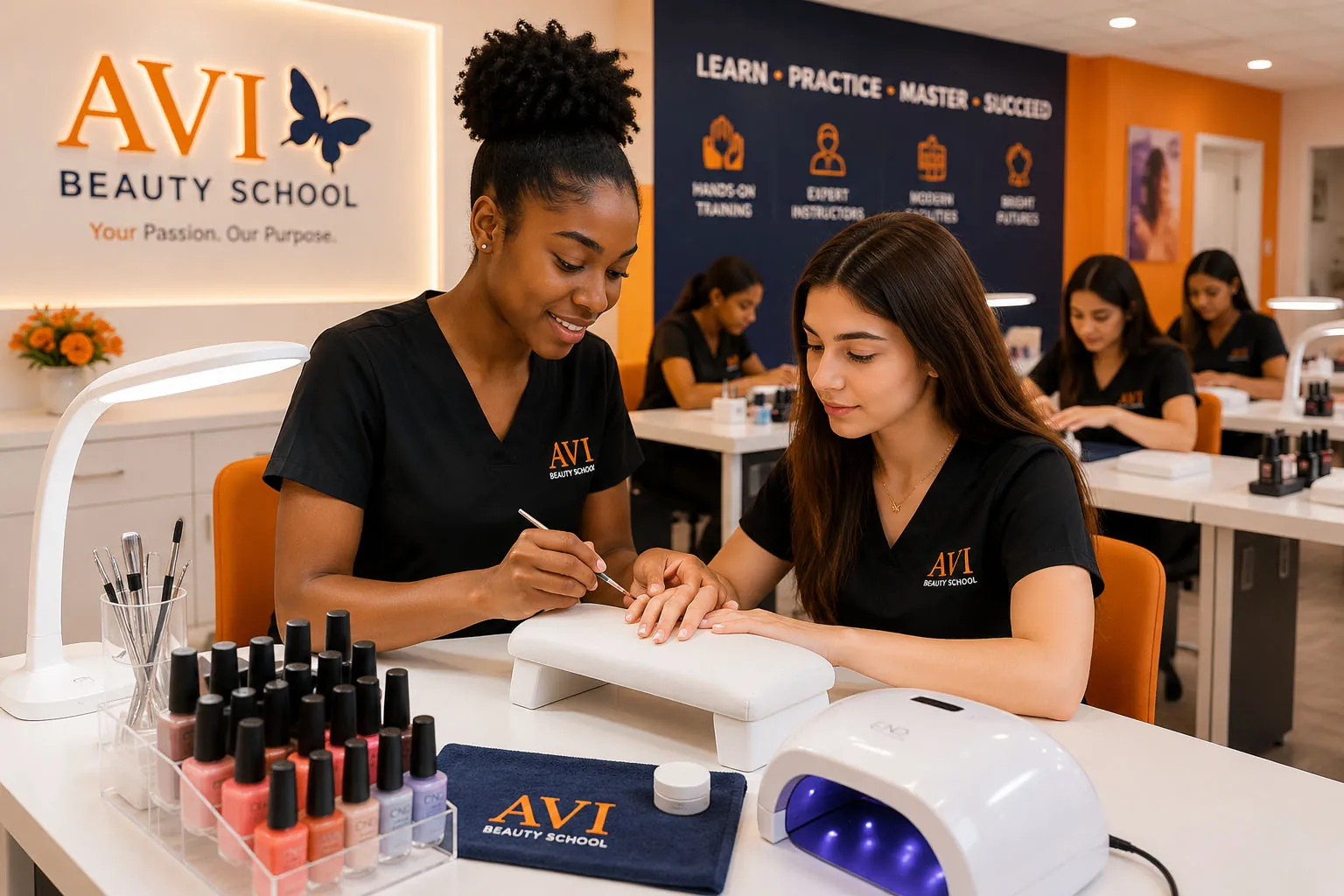
Instruction combines foundational theory, guided demonstration, supervised practical application, client-service simulations, and progressive performance documentation. Theory is supported through Milady CIMA digital learning resources and instructor-led instruction.
Graduates are trained for entry-level employment in salons, spas, nail studios, and related beauty-service environments, and are prepared for the applicable Virginia licensing process.
Nail Tech Quick Answers
How to become a nail tech in Virginia
Complete 150 hours of training at a licensed Virginia school, pass the written and practical nail technician exams, and submit a license application and fee to the Virginia Board for Barbers and Cosmetology (DPOR). AVI's program is 150 clock hours, about 6 to 7 weeks, Monday to Thursday, and prepares you for the Virginia licensing process.Source: Virginia DPOR, Summary of Virginia Licensing Requirements (nail technician: 150 hours of training, written and practical exams)
How to get a nail tech license
Finish an approved program such as AVI's 150-hour course, apply to DPOR, pass the written and practical exams, and pay the required fees. A license is not automatic on graduation, so confirm current steps, fees, and exam details with DPOR before you apply.
How much is nail tech school?
AVI Career Training lists a total cost of $4,000 for the 150-hour Nail Technician program: $3,400 tuition, $500 materials, and a $100 registration fee. This program is not eligible for federal financial aid, so ask admissions how students pay for it.
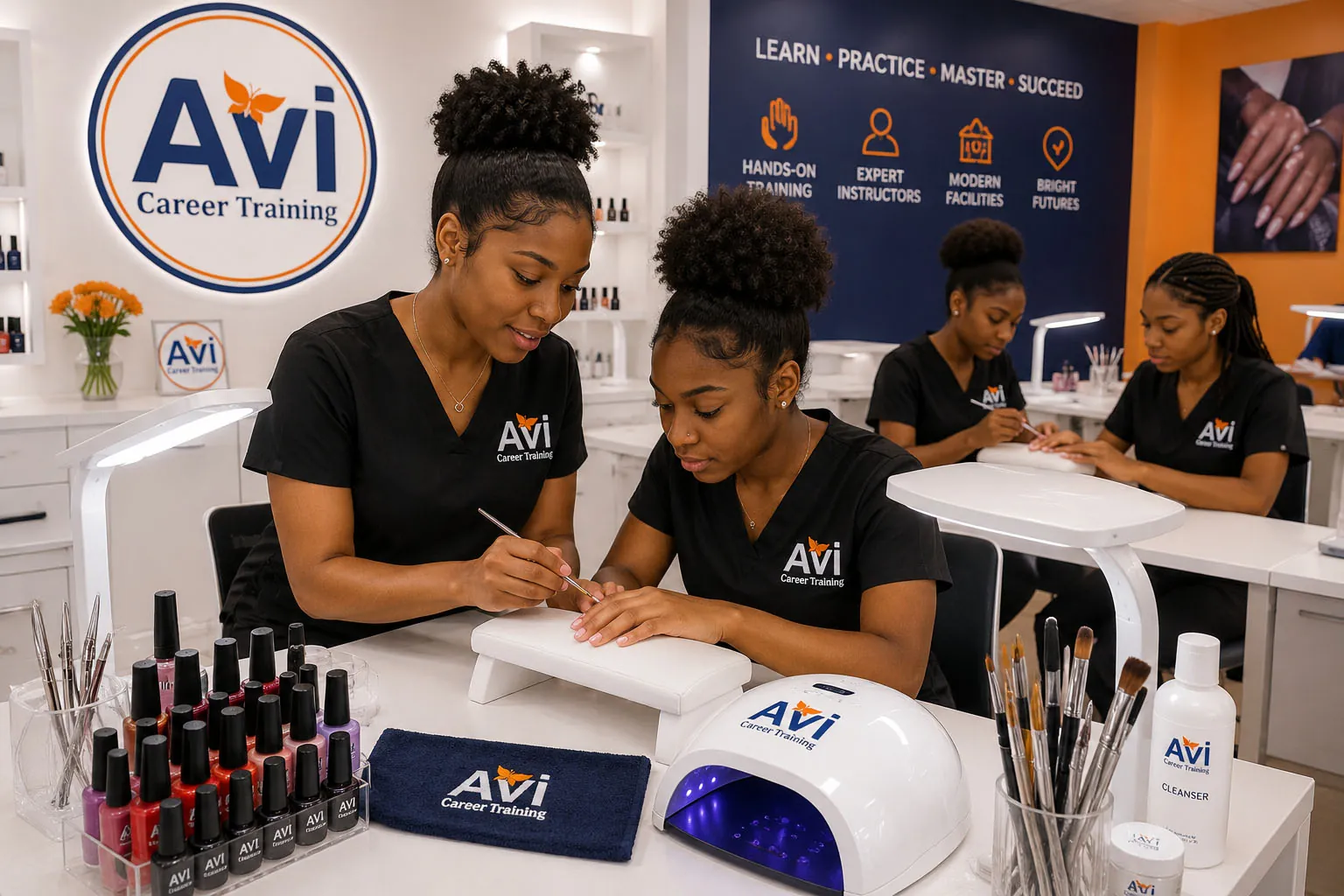
Program Learning Outcomes
Explain and apply Virginia laws, school policies, professional ethics, and client safety expectations relevant to nail services.
Demonstrate correct sanitation, disinfection, sterilization, exposure-incident response, and workstation preparation procedures.
Identify basic anatomy and physiology concepts relevant to skin, nails, and extremities, including nail structure and growth.
Recognize common nail disorders and diseases, determine contraindications, and respond appropriately through consultation or referral.
Safely perform manicures, pedicures, nail tip applications, sculptured nail services, UV/LED gel services, nail removals, and selected advanced nail art techniques.
Use nail products, implements, and electric tools appropriately while following product chemistry and safety guidelines.
Provide professional pre-service, service, and post-service client care, including consultation, documentation, aftercare instruction, and retail or rebooking communication.
Complete the required practical performances and demonstrate readiness for graduation and Virginia licensing review.
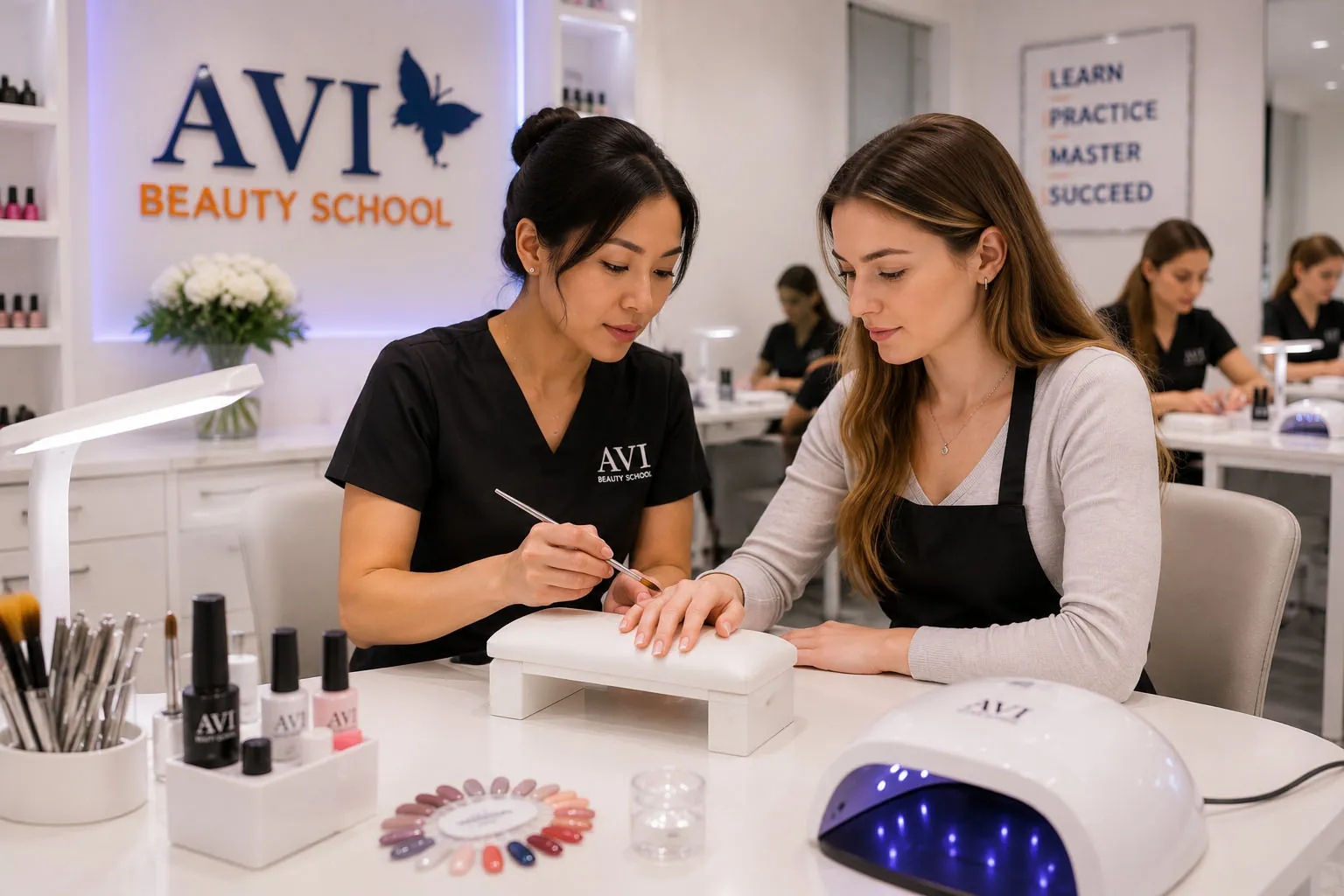
Required Practical Performances
DPOR-approved minimums — AVI may require additional practice to ensure full competency.
Admission & Completion Requirements
- Complete all 150 clock hours per the school's attendance and make-up policy
- Achieve passing scores in all theory and practical evaluations
- Complete all assigned Milady CIMA theory work, quizzes, and instructor assignments
- Demonstrate all required safety, sanitation, and client-service procedures at an acceptable level
- Complete the minimum required practical performances documented by the school
Upon completion, graduates are eligible to sit for the Virginia Nail Technician state board licensing examination administered by DPOR.
Program Schedule
Career Opportunities
Where your NailTech license can take you
Frequently asked questions
Nail Technician Program Frequently Asked Questions
Sources: Virginia DPOR, Summary of Virginia Licensing Requirements (Board for Barbers and Cosmetology); U.S. Bureau of Labor Statistics, Occupational Outlook Handbook: Manicurists and Pedicurists (2025 data). Wages are national figures, not a promise of earnings, and requirements can change, so confirm current rules with DPOR.