ESL Vocational Training vs. a 4-Year Degree: Which Path Is Right for You?
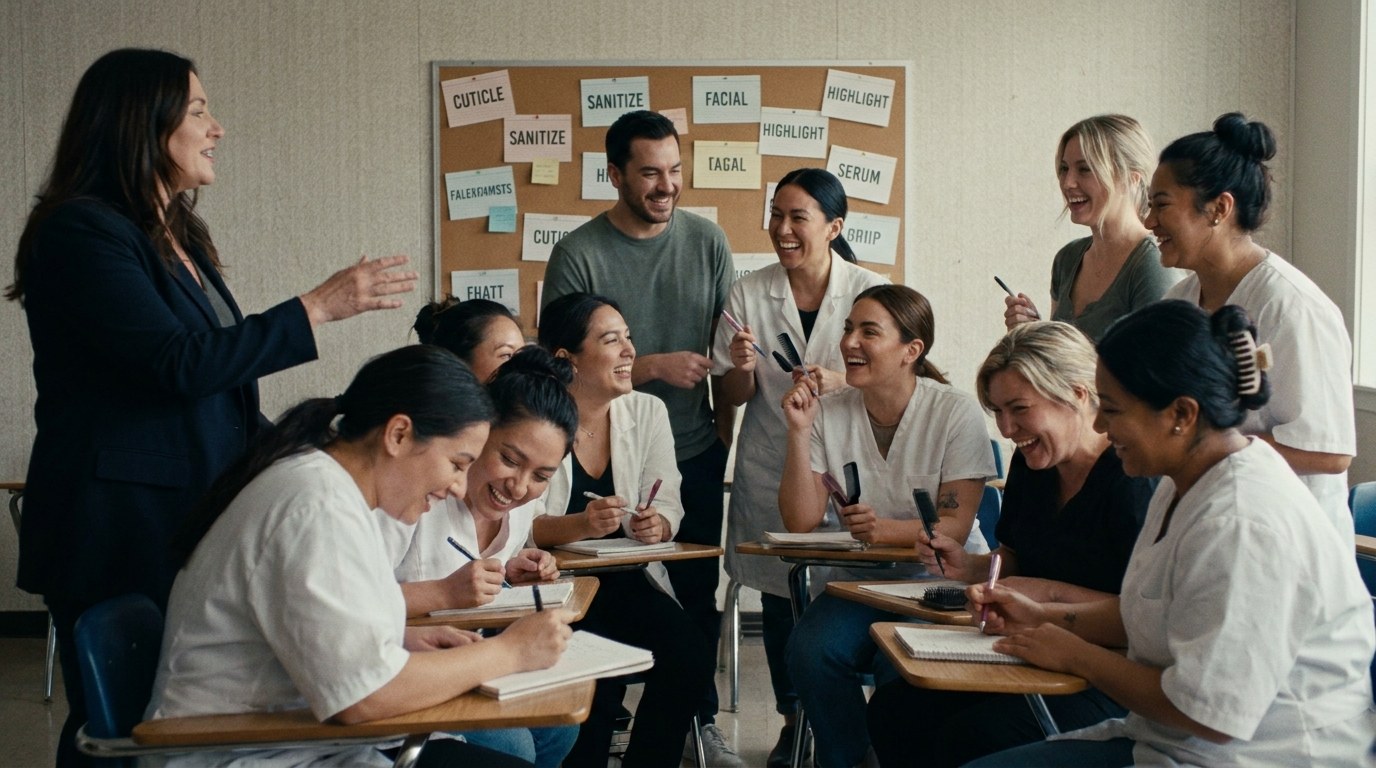
ESL vocational training gets you job-ready English skills in a fraction of the time — and at a fraction of the cost — of a traditional 4-year university degree. If you are an adult learner, an immigrant, or a career-changer in the Northern Virginia or DC metro area trying to decide which path makes the most sense for your life right now, this guide breaks it down clearly and honestly.
Both paths have real value. But they serve very different goals, timelines, and budgets. Understanding the difference can save you years — and tens of thousands of dollars.
⚡ Key Takeaways
- AVI Career Training’s ESL Program (NO FINANCIAL AID FOR THIS PROGRAM) spans 1,200 total hours across 6 proficiency levels — from beginner (A1) to college-preparatory (C1)
- A 4-year degree in Virginia costs an average of $14,000–$16,000 per year in tuition alone — before housing, books, or fees
- Many U.S. students take 4.5–5 years to finish a “4-year” degree, adding significant time and cost
- AVI’s ESL Program is available in-class in Vienna, VA and fully online via Zoom — flexible enough for working adults and parents
- ESL graduates can move directly into licensed beauty and wellness programs, professional workforce roles, or further academic study
Ready to take the first step? Apply to AVI Career Training’s ESL Program today and speak with an admissions advisor about your goals.
—
What Is ESL Vocational Training — and How Is It Different from College?
ESL vocational training is a structured, level-based English language program designed to build real-world communication skills that you can use immediately — at work, in a classroom, and in your daily life.
What is AVI Career Training’s ESL Program? AVI Career Training’s ESL Program in Vienna, Virginia is a 1,200-hour curriculum organized into six proficiency levels (A1 through A6), aligned with the internationally recognized Common European Framework of Reference for Languages (CEFR). Each level contains four courses, and each course covers 50 hours of instruction — 24 courses in total. Students progress from Beginner (A1) all the way to Proficiency/College Preparatory (C1).
The textbook series used is the New English File by Oxford University Press — a globally respected, rigorously tested curriculum used by language schools around the world. That matters because you are not learning from a generic handout. You are learning from the same materials used in professional English programs internationally.
Skills covered include:
- Grammar — sentence structure, tenses, syntax
- Speaking and Listening — real conversation and comprehension
- Reading and Writing — academic and everyday contexts
- Vocabulary — both general English and professional/vocational terminology
Completers are prepared to sit for the TOEFL, IELTS, PTE, and Duolingo English Test — widely accepted by employers, licensing boards, and universities alike.
How is this different from a 4-year college program?
A traditional 4-year university is designed around breadth — general education requirements, declared majors, electives, and research. English language support at a university is typically offered as a supplemental or remedial service, not as a stand-alone career-preparatory track.
ESL vocational training is the opposite: it is entirely focused on building your English proficiency quickly, purposefully, and with a clear outcome in mind. You are not taking history, biology, or philosophy. You are learning English — in a way that directly connects to employment, licensing, and further education.
—
Time and Flexibility — Which Path Gets You Where You’re Going Faster?
ESL vocational training moves faster and fits around your life in ways a traditional 4-year program simply cannot.
The ESL Program timeline at AVI: The program totals 1,200 hours across six levels. Students can move through each level at a structured pace, and the program is available both in-class at AVI’s Vienna, VA campus and fully online via synchronous Zoom sessions — meaning you attend live class remotely, with real interaction, not just pre-recorded videos.
That flexibility is rare. Most formal ESL programs require in-person attendance. AVI’s hybrid model means you can study from home, maintain your work schedule, care for your children, and still receive quality, structured instruction that moves you forward.
The 4-year college timeline in reality: On paper, a bachelor’s degree takes four years. In practice, the National Center for Education Statistics reports that many students take 4.5 to 5 years to graduate — especially when working part-time, managing family responsibilities, or changing majors. That is a significant commitment of time that delays workforce entry.
For a working adult, an immigrant trying to establish financial stability, or a parent in the DMV area balancing multiple responsibilities, five years is a long time to wait before seeing a return on your education investment.
Mini-Story #1 — Fatima’s Situation:
Fatima moved to the Tysons Corner area from Morocco two years ago. Her English was conversational but not strong enough for professional use or for applying to a cosmetology program. She was working part-time and caring for two young children. A 4-year university was not an option — financially or logistically. She enrolled in AVI’s ESL Program online via Zoom, attending sessions on weekday mornings while her kids were at school. Within her first two levels, her reading and writing improved enough that she could follow AVI’s cosmetology course syllabi. She is now progressing through her upper-level ESL courses and plans to enroll in AVI’s Cosmetology program as soon as she completes her language training.
—
The Real Cost Comparison: Tuition, Time, and Opportunity Cost
The financial gap between ESL vocational training and a 4-year university is substantial — and it goes deeper than just tuition.
What a 4-year Virginia university costs:
According to public data from the State Council of Higher Education for Virginia (SCHEV) and the National Center for Education Statistics (NCES), average in-state tuition at Virginia’s public four-year universities runs approximately $14,000–$16,000 per year — and that is tuition only, before room and board, textbooks, transportation, and fees. Over four to five years, a bachelor’s degree in Virginia can cost $60,000–$80,000 or more in total expenses for many students.
What ESL vocational training costs:
> ⚠️ Important Financial Aid Note: AVI Career Training’s ESL Program (NO FINANCIAL AID FOR THIS PROGRAM) is under 600 clock hours per level and does not qualify for federal financial aid (Title IV / FAFSA). Federal student aid is NOT available for this program. AVI offers payment plan options and encourages prospective students to explore private financing options to make enrollment manageable. Please contact AVI admissions at (703) 943-9841 to discuss payment options before enrolling.
AVI’s ESL Program is priced to be accessible for working adults and immigrant learners in the Northern Virginia area. Contact AVI directly for current tuition information by level.
Opportunity cost — the hidden expense of a 4-year degree:
Here is a number most people overlook: every year spent in a full-time college program is a year not earning a professional income. If you spend five years pursuing a bachelor’s degree instead of building your English skills and entering a licensed, in-demand career, you are not just paying tuition — you are also forgoing five years of potential earnings. For many families in the DC metro area, that opportunity cost is the single largest financial factor in this decision.
ESL vocational training is a faster path to workforce readiness, which means a faster path to income.
—
What Can You Do After ESL Vocational Training? Career Pathways to Know
Completing an ESL program opens three clear doors: direct workforce entry, enrollment in licensed vocational programs, and continued academic study.

Door 1: Licensed Beauty and Wellness Careers
For many ESL graduates at AVI Career Training, the most direct and rewarding next step is enrollment in one of AVI’s COE-accredited vocational programs. Strong English skills are a prerequisite for understanding technical coursework, communicating with clients, and passing Virginia State Board licensing exams. Programs available at AVI include:
- Cosmetology — hair, color, chemical services
- Basic Esthetics / Master Esthetics — skincare, facials, waxing
- Massage Therapy — therapeutic bodywork and wellness
- Nail Technician — nail care and nail art
- Cosmetic Laser Technician — laser and light-based treatments
- Electrolysis — permanent hair removal
Each of these programs leads to state licensure through the Virginia Department of Professional and Occupational Regulation (DPOR). Licensed beauty and wellness professionals in the Northern Virginia area work in salons, spas, medical offices, and as independent business owners — often with strong earning potential in a high-demand market.
Door 2: Professional Workforce Re-Entry
Immigrants and internationally trained professionals often have advanced skills and credentials in their home countries that simply cannot be applied in the U.S. without English language proficiency. Completing an ESL program at the C1 level positions you to re-enter the workforce in your field, communicate confidently with employers and clients, and demonstrate your professional capability without the language barrier holding you back.
Door 3: Further Academic Study
AVI’s ESL Program (NO FINANCIAL AID FOR THIS PROGRAM) is explicitly college-preparatory at its upper levels. Students who complete through A6/C1 are prepared to sit for the TOEFL, IELTS, PTE, and Duolingo English Test — the exact exams required for university admission. If your long-term goal is a bachelor’s degree or community college enrollment, ESL vocational training is not an alternative to that path. It is the bridge to it.
Mini-Story #2 — Carlos’s Situation:
Carlos came to Vienna, Virginia from El Salvador with eight years of experience as a massage therapist. His hands-on skills were exceptional. His English was limited to basic phrases, which meant he could not enroll in AVI’s Massage Therapy program, communicate with English-speaking clients, or pass a Virginia State Board practical exam interview. He enrolled in AVI’s ESL Program at Level A2 and worked through Level A5 over the following months. With his professional English now strong and confident, he enrolled in AVI’s Massage Therapy program and is now preparing for Virginia State Board licensure — a career he already had the skills for, finally within reach.
—
Who Should Choose Each Path? An Honest Side-by-Side
Neither path is universally better. The right choice depends entirely on where you are right now, what you need to accomplish in the next 12–24 months, and what your long-term career goal actually looks like.
| Factor | ESL Vocational Training (AVI) | 4-Year University |
|---|---|---|
| Time to Complete | Structured by level; flexible pacing | 4.5–5 years on average |
| Cost | Lower; payment plan options available (no federal aid) | $60,000–$80,000+ total (Virginia public universities) |
| Schedule Flexibility | In-class OR fully online via Zoom | Mostly in-person; limited flexibility |
| Primary Focus | English proficiency for work and vocational licensing | Broad academic degree in a declared major |
| Outcome | TOEFL/IELTS-ready; licensure-eligible; workforce-ready | Bachelor’s degree in chosen field |
| Best For | Working adults, immigrants, career-changers, beauty/wellness aspirants | Students with time, resources, and a field requiring a degree |
Choose ESL vocational training if:
- You need to enter the workforce — or re-enter it — within the next one to two years
- You are an immigrant or international professional whose credentials need English-language support to be recognized
- You want to enroll in a licensed beauty or wellness program and need English proficiency to qualify
- You have family or work commitments that make a five-year university commitment unrealistic
- You want a flexible schedule — including a fully online option — that fits your life
Consider a 4-year university if:
- Your career goal specifically requires a bachelor’s degree (nursing, engineering, law, etc.)
- You have the financial resources and time to commit to a multi-year program without hardship
- You are a recent high school graduate with minimal obligations and strong existing English skills
- You have a clear academic major in mind and access to merit-based scholarships or grants
A Note on Using ESL as a Bridge, Not an Either/Or
Many students in the DC metro area use ESL vocational training as a deliberate step toward both: they build their English proficiency, enter a vocational career in beauty or wellness, establish financial stability, and then — if they choose — pursue academic credentials from a position of strength rather than financial desperation. That is a smart, strategic sequence, and it is one AVI Career Training is proud to support.
—
Frequently Asked Questions About ESL Vocational Training vs. a 4-Year Degree
Q: Is an ESL program worth it instead of going to college?
A: Yes — for many adult learners, an ESL program delivers faster, more targeted outcomes than a 4-year college program. If your goal is to enter the workforce, gain professional English skills, or qualify for a vocational training program, ESL vocational training offers a more direct and affordable path. A university is worth it only if your career goal specifically requires a bachelor’s degree.
Q: How long does an ESL vocational program take compared to a 4-year degree?
A: AVI Career Training’s ESL Program covers 1,200 hours across six levels. A traditional 4-year degree takes most U.S. students 4.5 to 5 years to complete. ESL vocational training is structured to move you forward much faster — especially since you are focused on a single, high-value skill rather than completing broad general education requirements.
Q: Can I get a job with just an ESL certificate?
A: Completing an ESL program significantly improves your professional English proficiency, which makes you more competitive in many entry-level and trade-based roles. However, most career positions also require job-specific credentials. At AVI, ESL graduates who move into cosmetology, esthetics, massage therapy, or other beauty programs then earn state licensure through Virginia DPOR — which is what qualifies them for professional employment.
Q: What is the difference between an ESL program and a college English course?
A: A college English course is typically designed for native speakers and focuses on composition, literature, or rhetoric. An ESL program is designed specifically for non-native English speakers and covers grammar, speaking, listening, reading, writing, and vocabulary from a language-acquisition perspective. AVI’s ESL Program is structured, leveled (A1–C1), and career-preparatory — not a single elective course.
Q: Is vocational ESL training cheaper than a university degree?
A: In most cases, yes — significantly. Virginia public universities average $14,000–$16,000 per year in tuition alone, putting total costs at $60,000–$80,000 or more over four to five years. AVI’s ESL Program is priced to be accessible for working adults and immigrant learners, with payment plan options available. Federal financial aid does not apply to this program, so contact AVI admissions at (703) 943-9841 to discuss payment options before enrolling.