AVI Career Training

Medical Esthetician vs. Medical Assistant: Which Career Is Right for You?

Share:

Medical Esthetician vs. Medical Assistant: Which Career Is Right for You?

A medical esthetician and a medical assistant both work in clinical settings — but they require different training, different licenses, and lead to very different day-to-day careers. If you’re exploring healthcare-adjacent paths in Northern Virginia and wondering which direction makes sense for you, this guide breaks down exactly what each career involves, what it pays, and how fast you can get started.


Key Takeaways

  • Medical estheticians in the DC metro area earn $45,000–$70,000+ per year in medical spa and dermatology settings
  • Virginia requires 600 clock hours of approved esthetics training to sit for the state licensing exam
  • A Cosmetic Laser Technician in Northern Virginia can earn $45,000–$70,000+, with DC metro market demand pushing salaries above the national median
  • AVI Career Training is COE-accredited and SCHEV-certified, making students eligible for federal financial aid and the GI Bill®
  • You could be licensed and working in a Northern Virginia medical spa in under a year

If you’re ready to explore clinical esthetics training in Northern Virginia, apply to AVI Career Training and take the first step toward a clinical aesthetics career.


What Does a Medical Assistant Actually Do?

Medical assistants are versatile allied health professionals who keep clinical offices running smoothly. Their responsibilities typically fall into two categories: clinical tasks and administrative tasks.

On the clinical side, medical assistants take patient vital signs, draw blood, administer injections, prepare examination rooms, and assist physicians during procedures. On the administrative side, they handle patient scheduling, insurance verification, medical coding, and record management.

Most medical assistant programs take one to two years to complete at a community college or vocational school. Some states require medical assistants to hold a certification — such as the Certified Medical Assistant (CMA) credential from the American Association of Medical Assistants — though Virginia does not currently mandate it for all positions.

Salary range for Medical Assistants in Virginia: approximately $38,000–$48,000 per year, according to Bureau of Labor Statistics regional data. The work is steady, meaningful, and in demand — but it’s primarily a support role focused on clinical operations, not beauty or skin care.

If your goal is to work with patients in a clinical environment and you want your work centered on aesthetics, skin health, and appearance-enhancing treatments, a medical assistant path may not be the best fit. That’s where medical esthetics comes in.


What Is a Medical Esthetician — And How Is It Different?

A medical esthetician — sometimes called a clinical esthetician — is a licensed skin care professional who performs advanced aesthetic treatments in medical or spa settings. The work is hands-on, client-facing, and focused entirely on skin health and beauty outcomes.

Medical estheticians perform treatments like:

  • Chemical peels and enzyme exfoliation
  • Microdermabrasion and microneedling (in some settings)
  • Laser and light-based treatments (with proper certification)
  • Electrolysis for permanent hair removal
  • Pre- and post-operative skin care for surgical patients
  • Advanced facials and medical-grade skin care protocols

Unlike medical assistants, estheticians don’t draw blood, administer medications, or perform clinical medical procedures. Their scope is specifically aesthetic — improving the skin’s appearance, health, and function through non-invasive and minimally invasive treatments.

The work environment is also different. Medical estheticians are more likely to work in:

  • Medical spas (med spas)
  • Dermatology offices
  • Plastic surgery practices
  • Laser treatment clinics
  • High-end day spas with clinical service menus

The Clinical Overlap — Where Both Careers Meet

Here’s what many career explorers don’t realize: the closest thing to a “medical assistant in aesthetics” is actually a licensed medical esthetician with laser certification. In Northern Virginia’s booming medical spa market, employers are actively looking for estheticians who can perform laser treatments, manage client consultations, and deliver results-driven skin care — all of which are skills taught in clinical esthetics programs, not medical assistant programs.


Career Paths, Salary, and Job Outlook: Side-by-Side

Let’s look at the numbers. Both careers offer solid earning potential, but the growth trajectories look very different — especially in the Northern Virginia and DC metro market.

Medical Assistant

Factor Details
Median Salary (Virginia) $38,000–$48,000/year
Work Settings Hospitals, clinics, physician offices
Training Duration 1–2 years
Virginia License Required No state license required (certification optional)
Career Ceiling Limited without additional nursing or healthcare degrees

Medical Esthetician / Cosmetic Laser Technician

Factor Details
Median Salary (Virginia med spa) $45,000–$70,000+/year
Work Settings Med spas, dermatology offices, laser clinics, plastic surgery
Training Duration Under 1 year (state-approved program)
Virginia License Required Yes — Virginia Board of Barbering and Cosmetology
Career Ceiling High — especially with laser and electrolysis credentials

The DC metro premium is real. Northern Virginia medical spas and dermatology practices compete for skilled, licensed estheticians in a way that drives compensation well above national medians. Estheticians with laser certification and electrolysis training are especially sought after — these are specialized skills that command higher pay and more consistent full-time employment.

According to BLS Occupational Employment data, estheticians in top-paying metropolitan markets regularly out-earn the national median by a significant margin. The Northern Virginia/DC corridor is one of those markets.


Virginia Licensing Requirements for Clinical Skin Care Careers

One of the most important things to understand before choosing a career path is what it actually takes to get licensed in Virginia. Here’s a clear breakdown of what the state requires.

Esthetics License

To become a licensed esthetician in Virginia, you must:

  1. Complete 600 clock hours of esthetics training at a Virginia Board-approved school
  2. Pass the Virginia State Board written and practical examinations
  3. Submit your application to the Virginia Department of Professional and Occupational Regulation (DPOR)

The 600 hours covers skin analysis, facial treatments, hair removal, chemical exfoliation, sanitation protocols, and client safety. AVI Career Training’s Basic Esthetics program meets this requirement.

Electrolysis License

Electrolysis — the only FDA-recognized method of permanent hair removal — requires separate licensure in Virginia. To become a licensed electrologist in Virginia, you must:

  1. Complete approximately 600 hours of approved electrolysis training
  2. Pass the Virginia State Board electrolysis examination
  3. Maintain licensure through continuing education requirements

This is a highly specialized credential that opens doors to clinical and medical spa settings where permanent hair removal is in demand.

Cosmetic Laser Technology

Virginia regulates cosmetic laser treatments under guidelines from the Virginia Department of Health Professions (DHP). Requirements for laser technicians in Virginia include working under physician supervision or holding applicable state credentials, depending on the specific treatment and device used. Estheticians who add laser certification to their credentials are significantly more competitive in the Northern Virginia medical spa market.

AVI’s Cosmetic Laser Technician program provides hands-on training with laser and light-based devices, positioning graduates to work in supervised clinical settings throughout the region.

Timeline reality check: Many students complete their esthetics training and sit for the Virginia State Board exam in under a year. Adding laser or electrolysis credentials extends the timeline slightly — but even with multiple credentials, you’re looking at a career launch in well under two years, often closer to one.


Two Paths, Two Outcomes: Real Career Scenarios

From Retail to the Treatment Room

Imagine someone who has spent several years in customer service, drawn to healthcare but not to the clinical, medical side of it. She researches medical assistant programs but realizes she’d be spending most of her time on administrative tasks or basic clinical support — not the kind of hands-on, results-driven work she’s envisioning.

She starts researching medical spa careers and discovers that what she actually wants is to perform laser treatments and advanced facials for clients — work that’s both technical and personal. She enrolls in AVI Career Training’s esthetics and Cosmetic Laser Technician programs in Vienna, Virginia. Within the year, she’s licensed, certified, and working at a medical spa in Tysons Corner, earning significantly more than the medical assistant role she originally considered.

The Career Changer with Military Experience

Picture a veteran transitioning out of service, exploring healthcare-adjacent careers that offer stability and upward mobility. He looks into medical assisting but wants a career where his skills directly impact clients — something more specialized than scheduling appointments and processing insurance claims.

He discovers that AVI Career Training accepts the GI Bill® and offers hands-on training in electrolysis and cosmetic laser technology — skills in demand at the growing number of medical spas throughout Northern Virginia. He enrolls using his benefits, completes his training, and enters a market where his credentials are immediately marketable to dermatology offices and med spas in the DC metro area.

These aren’t hypothetical outcomes. They reflect the career shift that’s happening every day in Northern Virginia, where demand for skilled clinical estheticians continues to outpace supply.


How AVI Career Training Prepares You for a Clinical Aesthetics Career

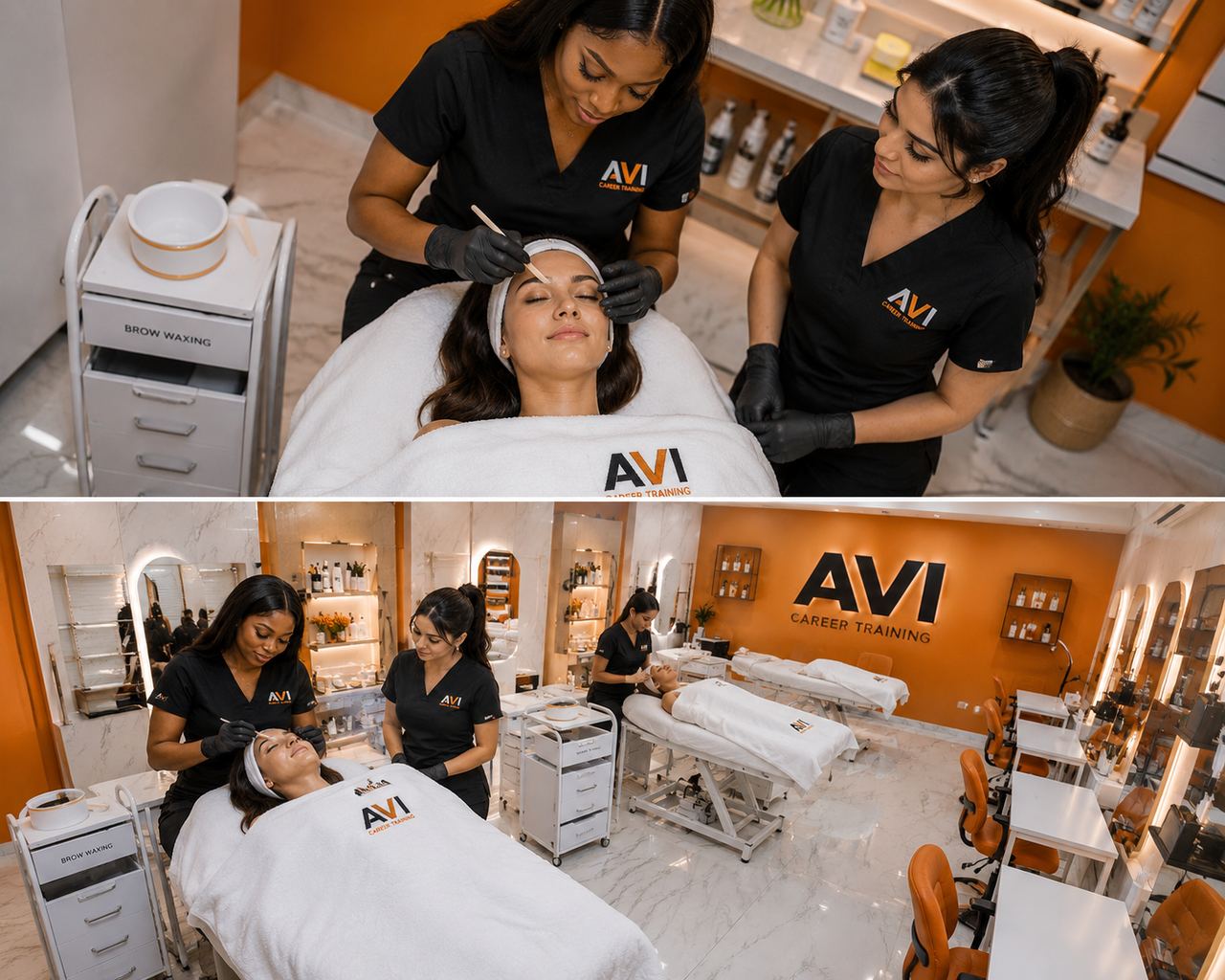
AVI Career Training, located in Vienna, Virginia, is one of the only beauty and wellness schools in Northern Virginia that offers a full suite of clinical esthetics programs — all under COE accreditation and SCHEV certification.

Here’s what that means for you:

  • COE Accreditation: AVI meets rigorous national standards for vocational cosmetology and esthetics education
  • SCHEV Certification: AVI is approved by the State Council of Higher Education for Virginia, which enables federal financial aid eligibility
  • Federal Financial Aid Available: Eligible students can apply for Pell Grants and federal student loans
  • GI Bill® Accepted: Qualifying veterans can use Post-9/11 GI Bill® benefits to fund training

AVI’s Clinical Esthetics Programs

Basic Esthetics
AVI’s esthetics program meets Virginia’s 600-hour licensure requirement. You’ll train in skin analysis, facial treatments, hair removal, chemical exfoliation, and professional client consultation. Graduates sit for the Virginia State Board exam and enter the workforce as licensed estheticians — eligible to work in salons, spas, dermatology offices, and medical spas.

Cosmetic Laser Technician
AVI’s Cosmetic Laser Technician program provides hands-on training in laser and light-based aesthetic devices. This program is designed for students who want to work in medical spa and clinical aesthetics settings, performing laser hair removal, skin rejuvenation, and other energy-based treatments under physician supervision. The DC metro laser market pays a premium for this credential.

Electrolysis
AVI’s Electrolysis program meets Virginia’s training requirements for electrolysis licensure. This is one of the most in-demand clinical credentials in the area — permanent hair removal clients are loyal, and electrologists with medical spa connections build strong, sustainable practices.

All three programs are taught by licensed industry professionals with real-world clinical experience. AVI’s training approach is inclusive by design — students learn techniques that work on every skin tone and hair type, which matters enormously in the diverse Northern Virginia and DC metro client base.

For students considering the esthetics school northern virginia landscape, AVI offers something most schools don’t: a direct path into clinical and medical spa careers, supported by real credentials and real hands-on training.


Frequently Asked Questions

What is the difference between a medical assistant and a medical esthetician?

A medical assistant performs clinical and administrative support tasks in healthcare settings — things like taking vitals, drawing blood, and managing records. A medical esthetician is a licensed skin care professional who performs aesthetic treatments like chemical peels, laser therapy, and electrolysis. Both can work in clinical environments, but their roles, licensing requirements, and day-to-day work are very different.

Can estheticians work in medical offices in Virginia?

Yes. Licensed estheticians in Virginia can work in medical spas, dermatology practices, plastic surgery offices, and other clinical settings. Estheticians who hold additional certifications — like cosmetic laser technology or electrolysis — are especially competitive for positions in these environments.

How long does it take to become a cosmetic laser technician in Virginia?

Program length varies by school. AVI Career Training’s Cosmetic Laser Technician program is designed to be completed efficiently — contact AVI directly at (703) 943-9841 or visit the campus in Vienna, Virginia for current program timing and enrollment details.

What beauty school programs lead to medical spa careers?

Esthetics, Cosmetic Laser Technology, and Electrolysis programs are the primary pathways into medical spa careers. Schools like AVI Career Training that offer all three programs under one roof give students the flexibility to stack credentials and become highly competitive candidates for clinical aesthetics positions.

Does Virginia require a license to perform laser hair removal?

Virginia regulates cosmetic laser treatments through the Department of Health Professions. Operators typically must work under physician supervision or hold applicable certifications depending on device type and treatment. Students interested in laser careers should review current VDPOR and DHP guidelines — and ask AVI’s admissions team about how the Cosmetic Laser Technician program aligns with Virginia’s requirements.


Your Next Step Starts Here

If you started this search looking at medical assistant programs and you’re now thinking about a career in clinical esthetics, laser technology, or electrolysis — that’s not a detour. That’s a discovery.

The Northern Virginia and DC metro market is one of the strongest in the country for licensed medical estheticians and cosmetic laser technicians. Demand is growing. Salaries are strong. And the training path is faster and more affordable than most people expect.

AVI Career Training in Vienna, Virginia offers the programs, the credentials, and the hands-on experience to get you there — with financial aid options and GI Bill® acceptance that make it accessible regardless of your background.

Ready to find out which program is right for you? Apply to AVI Career Training today or call us at (703) 943-9841 to speak with an admissions team member. You can also schedule a tour of our Vienna, VA campus and see the training environment firsthand.

Your clinical aesthetics career is closer than you think.

Article details:

Share: