Medical Assistant vs. Medical Esthetician: Which Career Fits You?
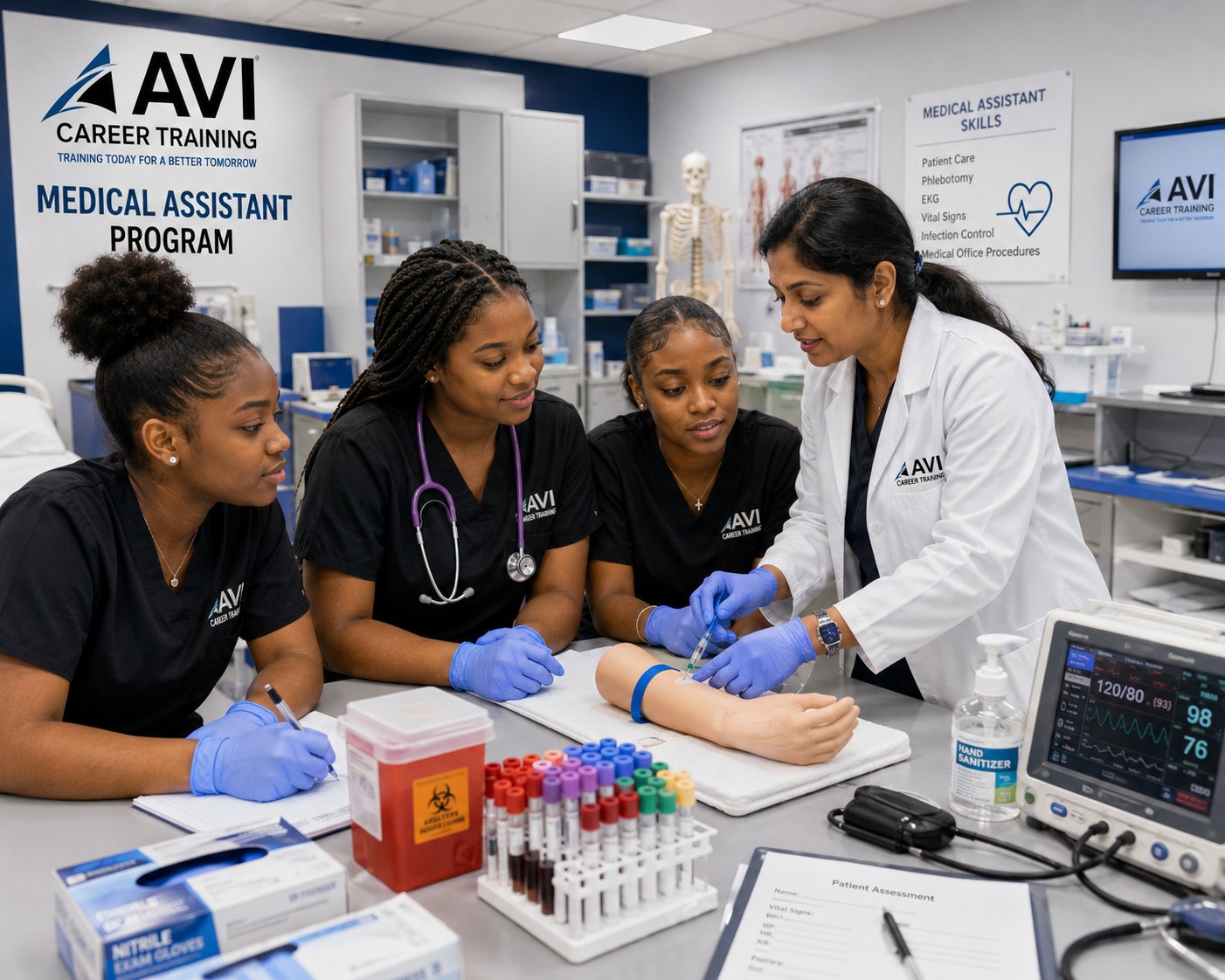
A medical assistant and a medical esthetician follow very different career paths — one is a generalist clinical support role, the other is a licensed skincare specialist working in medspas and clinical beauty settings. Both are in-demand, but they differ dramatically in training time, daily responsibilities, earning potential, and long-term career flexibility.
This comparison is designed to help you make a clear, confident decision. And if you’re somewhere in the Northern Virginia or DC metro area, there’s a specific option worth knowing about: AVI Career Training in Vienna, Virginia offers accredited Esthetics and Cosmetic Laser Technology programs that put graduates directly on the path to medical spa and clinical skincare careers — often faster than a traditional medical assistant program .
Ready to explore the clinical beauty path? Apply at AVI Career Training today.
—
Key Takeaways
- Medical assistants complete 1–2 years of accredited training; medical estheticians can complete licensure training in as few as a few months.
- Virginia requires 600 hours of esthetics training to sit for the State Board exam.
- The DC-Arlington-Alexandria metro area ranks among the highest-paying regions for both careers.
- Cosmetic laser technicians earn an average of $50,000–$75,000+ annually in the Northern Virginia medspa market.
- AVI Career Training is COE Accredited and SCHEV Certified — two credentials that matter when choosing a career school.
—
What Does a Medical Assistant Actually Do?
A medical assistant (MA) is a cross-trained clinical and administrative professional who works primarily in physician offices, outpatient clinics, and hospital settings.
On the clinical side, MAs take patient vital signs, administer injections, draw blood, prepare exam rooms, and assist physicians during procedures. On the administrative side, they handle scheduling, billing, insurance verification, and patient records. It’s a broad, generalist role built around direct patient support in a traditional healthcare environment.
Key facts about the medical assistant path:
Medical assistants do not typically perform cosmetic procedures, laser treatments, or advanced skincare services. Those services fall under a different — and increasingly high-demand — scope of practice.
—
What Is a Medical Esthetician (and How Is It Different)?
A medical esthetician is a licensed esthetician who specializes in clinical skincare — working in medspas, dermatology offices, plastic surgery practices, and wellness clinics rather than traditional day spas.
This is the career path that bridges beauty expertise with a clinical environment. Medical estheticians perform chemical peels, microdermabrasion, pre- and post-procedure skincare, and — with additional certification — cosmetic laser treatments like laser hair removal, skin resurfacing, and photofacials.
The distinction matters: a medical assistant might work beside a physician. A medical esthetician works as the specialist performing high-skill aesthetic services. The scope is narrower but deeper, and in a thriving medspa market like Northern Virginia, that specialization pays well.
AVI Career Training’s Esthetics program in Vienna, Virginia trains students specifically for this clinical direction. The curriculum covers advanced skincare techniques, skin analysis, chemical exfoliation, and the science of skin — building the foundation that medical esthetics employers look for. Graduates are eligible to sit for the Virginia State Board exam and pursue cosmetic laser certification as a next step.
> Mini-Story: Priya had worked as a dental receptionist for four years and wanted to move into something more hands-on in a clinical setting. She researched medical assistant programs but found the 18-month timeline and prerequisite coursework slowed her down. A friend told her about AVI’s Esthetics program. Within months of completing her 600-hour training and passing her Virginia State Board exam, Priya was hired as a licensed esthetician at a Tysons Corner medical spa — performing chemical peels and post-laser skin care for a dermatologist’s aesthetic practice. She was building a client base and earning tips on top of her hourly rate before she would have finished an MA program.
—
Training Time, Cost, and Licensing — Side by Side
Here’s the direct comparison most career researchers want: how long does each path take, what does it cost, and what credentials do you leave with?
| Factor | Medical Assistant | Medical Esthetician (Esthetics + Laser) |
|---|---|---|
| Training Length | 12–24 months | Esthetics: varies by program; Laser cert: add-on |
| Virginia Licensing Requirement | No state license required (certification optional) | 600 hours + Virginia State Board exam (DPOR) |
| Certifying Body | AAMA (CMA) or AMT (RMA) — optional | Virginia DPOR (required); laser cert varies by employer |
| Typical Tuition Range | $8,000–$18,000+ | Varies by school; contact AVI for current rates |
| Financial Aid Eligibility | Often Title IV eligible | Depends on program length; AVI offers payment plans |
| Work Setting After Graduation | Physician offices, clinics, hospitals | Medspas, dermatology offices, plastic surgery, wellness clinics |
| Cosmetic Procedures? | Generally no | Yes — peels, microdermabrasion, laser treatments |
⚠️ Financial Aid Note for Esthetics Programs
AVI Career Training’s Esthetics program is under 600 hours and does not qualify for federal financial aid (Title IV / FAFSA). Federal aid is not available for this program. AVI offers payment plans and private financing options to help make training accessible. Contact AVI admissions to discuss your options.
Virginia is one of the states that requires esthetics licensure through the Virginia Department of Professional and Occupational Regulation (DPOR) — a state agency that sets the 600-hour training standard and administers the State Board exam. Choosing a SCHEV-certified school like AVI Career Training ensures your hours count toward that requirement.
—
Salary and Job Outlook in Northern Virginia and the DC Metro
Earning potential in the DC-Arlington-Alexandria metro area is strong for both career paths — but the trajectories differ.
(BLS, DC-Arlington-Alexandria MSA)
(BLS National Outlook)
According to the U.S. Bureau of Labor Statistics, medical assistants nationally earn a median annual wage around $42,000, with the DC metro pushing that figure higher. Job growth is projected at roughly 15% through 2032 — faster than average.
For estheticians and cosmetic laser technicians, the picture in Northern Virginia is particularly compelling. The DC metro medspa industry is one of the most competitive and highest-paying in the country, driven by high household incomes, a health-conscious professional demographic, and a dense concentration of dermatology and plastic surgery practices throughout Tysons Corner, McLean, Reston, and Arlington.
Estheticians who add cosmetic laser certification increase their value significantly. Many medspa employers in the Northern Virginia market actively recruit laser-certified estheticians and offer compensation packages — including commission structures and tips — that routinely push total earnings above the regional medical assistant average.
> Mini-Story: Marcus spent three years as a fitness trainer in Reston and wanted to pivot into something that blended wellness with a more clinical skill set. He looked into both medical assistant programs and esthetics training. The medical assistant route required prerequisite biology courses he hadn’t taken since high school. When he discovered AVI’s Cosmetic Laser Technology program in Vienna — and learned that laser-certified estheticians were in high demand at Northern Virginia medspas — the decision became obvious. He completed his esthetics training, earned his Virginia license, and added cosmetic laser certification through AVI. Within eight months of starting his training, Marcus was working at a McLean medspa performing laser hair removal and IPL treatments, earning more than he had as a full-time trainer.
—
How to Start a Clinical Beauty Career in Virginia
Starting a medical esthetics career in Virginia comes down to three clear steps — and AVI Career Training is built to walk you through all of them.
Step 1: Complete an Accredited Esthetics Program
Virginia requires 600 hours of esthetics training from a SCHEV-certified school before you can sit for the State Board exam. When choosing a school, look for:
AVI Career Training’s Basic Esthetics program (NO FINANCIAL AID FOR THIS PROGRAM) in Vienna, Virginia checks all of these boxes. The program is designed for career-changers and first-time students alike, with hands-on training that prepares you for the Virginia State Board exam and medspa employment.
Step 2: Pass the Virginia State Board Exam
After completing your 600 hours, you’ll apply through the Virginia Department of Professional and Occupational Regulation (DPOR) to take your written and practical exams. Passing earns you a Virginia esthetics license — the credential that unlocks employment in any spa, medspa, dermatology office, or clinical setting in the state.
Step 3: Add Cosmetic Laser Certification
For those targeting the highest-earning positions in the medspa and clinical esthetics space, cosmetic laser certification is the next logical step. AVI Career Training’s Cosmetic Laser Technology program (NO FINANCIAL AID FOR THIS PROGRAM) trains licensed estheticians on industry-standard laser and light-based devices — covering laser hair removal, skin rejuvenation, IPL, and safe treatment protocols.
Virginia does not require a separate state laser license, but employer demand for certified laser technicians is high — and certification from an accredited school like AVI carries real weight in a competitive job market.
💡 Want to work in a Northern Virginia or DC-area medspa? AVI Career Training’s Vienna campus is steps from the Tysons Corner corridor — one of the most concentrated medspa markets in the DMV area. Start your application here.
—
Frequently Asked Questions
Q: What is the difference between a medical assistant and a medical esthetician?
A: A medical assistant is a clinical and administrative generalist who works in physician offices, handling tasks like vital signs, injections, and patient scheduling. A medical esthetician is a licensed skincare specialist who works in medspas, dermatology offices, and plastic surgery practices, performing clinical treatments like chemical peels, laser procedures, and post-procedure skin care. Medical assistants do not typically perform cosmetic or skincare services.
Q: Do medical assistants perform laser treatments?
A: Generally, no. In most states — including Virginia — laser treatments must be performed by licensed professionals with specific laser training. Medical estheticians with cosmetic laser certification, nurse practitioners, and physicians typically perform laser procedures in a medspa or clinical setting. A standard medical assistant credential does not authorize laser treatments.
Q: How long does it take to become a medical esthetician in Virginia?
A: Virginia requires 600 hours of esthetics training at a SCHEV-certified school, followed by passing the Virginia State Board exam administered through DPOR. Program timelines vary by school and schedule format. After licensure, adding cosmetic laser certification through a program like AVI Career Training’s Cosmetic Laser Technology program adds additional training time. Contact AVI Career Training at (703) 943-9841 for current program schedules.
Q: What jobs can I get with an esthetics license in a medical setting?
A: With a Virginia esthetics license, you can work as a medical esthetician, medspa esthetician, skincare specialist, or laser technician in settings including medical spas, dermatology offices, plastic surgery practices, and wellness clinics. Adding cosmetic laser certification expands your scope to include laser hair removal, IPL, and skin rejuvenation treatments — roles that command higher pay in the Northern Virginia market.
Q: Is a cosmetic laser technician the same as a medical assistant ?
A: No. A cosmetic laser technician is a licensed esthetician with specialized certification in laser and light-based aesthetic treatments. A medical assistant is a general clinical and administrative support professional. The two roles have different training requirements, scopes of practice, and work settings. AVI Career Training in Vienna, Virginia offers a Cosmetic Laser Technology program specifically for licensed estheticians looking to move into clinical beauty careers.
Q: How much does a cosmetic laser technician make in Northern Virginia?
A: Cosmetic laser technicians in the Northern Virginia and DC metro market typically earn between $50,000 and $75,000 or more annually, depending on employer, experience, and whether commission or tip structures are included. The Tysons Corner, McLean, and Arlington medspa corridor represents one of the highest-paying regional markets for this specialty in the Mid-Atlantic.
Q: Does AVI Career Training offer a medical assistant program ?
A: No. AVI Career Training does not offer a medical assistant program . AVI specializes in beauty and wellness career training, including Esthetics, Cosmetic Laser Technology, Massage Therapy, Cosmetology, Nail Technology, and Electrolysis. For those interested in clinical skincare and medspa careers, AVI’s Esthetics and Cosmetic Laser Technology programs offer a direct, accredited path.
Q: Can I use financial aid for esthetics or laser programs at AVI?
A: Federal financial aid (Title IV / FAFSA) is not available for AVI’s Esthetics