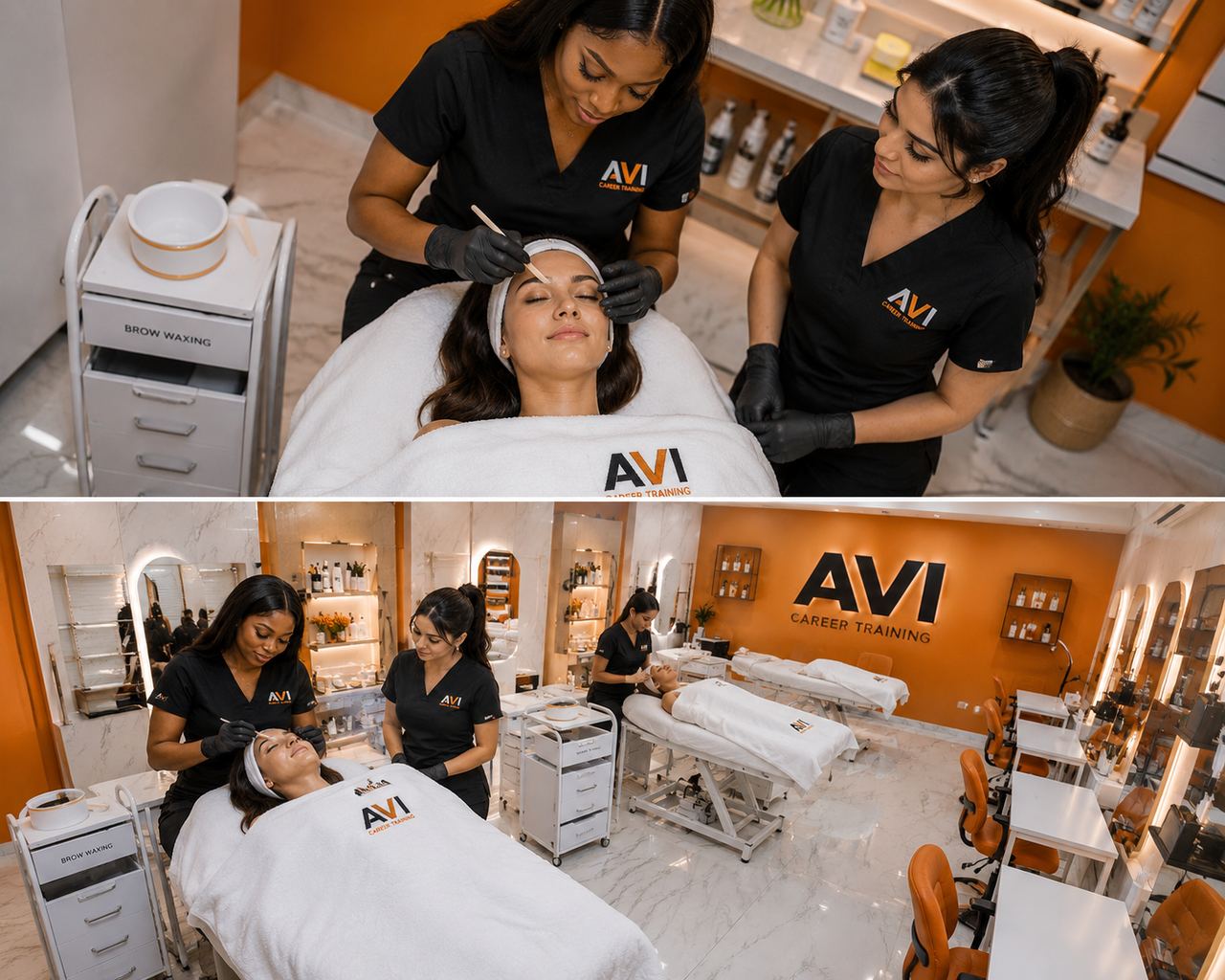
A medical aesthetician in Northern Virginia can earn $45,000–$70,000+ per year — often more than a medical assistant — in less training time and without a four-year degree. If you’re comparing these two career paths, the differences in cost, training length, and earning potential are significant enough to matter before you commit to a program.
Both roles sit at the intersection of healthcare and personal service. But they lead to very different daily work, very different licensing requirements, and very different career trajectories — especially in the Northern Virginia and DC metro market, where demand for aesthetic services is accelerating fast.
This guide breaks down both paths honestly so you can make the right call for your goals, your timeline, and your budget.
—
> Key Takeaways
> – Medical assistant programs typically take 1–2 years and lead to salaries of $38,000–$44,000/year in Virginia
> – Medical aestheticians in the DC metro can earn $45,000–$70,000+ depending on setting and commission structure
> – Virginia’s Cosmetic Laser Technician path does not require a separate state license — you can enter the field faster than most people expect
> – Electrolysis in Virginia is licensed through the Virginia Board for Barbers and Cosmetology and requires a SCHEV-approved program
> – AVI Career Training in Vienna, VA offers both Cosmetic Laser Technology and Electrolysis programs — with financial aid and GI Bill® acceptance available
—
What Does a Medical Assistant Actually Do?
Medical assistants work inside clinical settings — physician offices, urgent care clinics, hospital outpatient departments, and specialty practices. Their responsibilities split across two categories: clinical and administrative.
On the clinical side, a medical assistant might take vital signs, draw blood, administer injections, prepare exam rooms, and assist physicians during procedures. On the administrative side, they schedule appointments, manage patient records, handle insurance paperwork, and coordinate referrals. The role is genuinely useful and deeply embedded in how healthcare operates day-to-day.
The Training Path for Medical Assistants in Virginia
Medical assistant programs are offered at community colleges and vocational schools throughout Virginia. Most programs run 12–24 months and award a certificate or associate degree. Graduates typically sit for a national certification exam — the Certified Medical Assistant (CMA) through the AAMA or the Registered Medical Assistant (RMA) through AMT.
Virginia does not require state licensure for medical assistants, but most employers prefer or require national certification. According to the U.S. Bureau of Labor Statistics, the median annual wage for medical assistants in Virginia is approximately $38,000–$44,000, with the upper end more common in the DC metro market.
It’s a stable, respected career. But it’s also one that keeps you firmly in clinical support — documenting, assisting, and administering under physician supervision. If your interest leans toward aesthetics, skin care, and cosmetic outcomes, the medical assistant role may feel limiting quickly.
—
What Is a Medical Aesthetician — and Why It’s Different?
A medical aesthetician works at the meeting point of skin care and clinical science. Instead of supporting physicians with general medical care, a medical aesthetician focuses entirely on appearance-based treatments — laser hair removal, skin rejuvenation, chemical peels, electrolysis, and other cosmetic procedures.
The work is client-facing, results-driven, and deeply satisfying for people who love seeing visible transformations. You’re not drawing blood or managing insurance claims. You’re helping clients feel confident in their skin.
Two Distinct Specialties in Medical Aesthetics
In Virginia, two credential paths are especially relevant for people interested in medical aesthetics:
Cosmetic Laser Technician: Laser technicians perform treatments using laser and light-based devices — hair removal, skin resurfacing, pigmentation correction, and similar services. Virginia does not require a separate state license specifically for laser technicians, but practitioners typically operate under the oversight of a licensed medical director. This means the path to entering the field is more accessible than many people assume.
Electrologist: Electrolysis is the only FDA-recognized method of permanent hair removal. In Virginia, electrologists are licensed by the Virginia Board for Barbers and Cosmetology and must complete a SCHEV-approved training program. It’s a specialty with strong, consistent demand — and one where skilled practitioners build loyal, long-term client relationships.
Both paths lead to work in medical spas, aesthetic clinics, dermatology offices, and wellness centers — the fastest-growing segment of the beauty and wellness industry.
If you’re ready to explore AVI’s programs, you can apply now or call (703) 943-9841 to talk through your options.
—
Training Time, Cost & Licensing — A Side-by-Side Comparison
Here’s where the comparison gets practical. Before choosing a career path, you need to know what it actually costs in time and money to get there.
Medical Assistant
| Factor | Details |
|—|—|
| Program Length | 12–24 months |
| Credential Type | Certificate or Associate Degree |
| Virginia Licensing | No state license required; national certification preferred |
| Typical Tuition | $8,000–$20,000+ depending on institution |
| Time to Employment | 12–24 months of training + job search |
| Median VA Salary | $38,000–$44,000/year |
Medical Aesthetician (Laser / Electrolysis)
| Factor | Details |
|—|—|
| Program Length | Weeks to a few months (varies by specialty) |
| Credential Type | Diploma / Program Certificate |
| Virginia Licensing | Electrolysis: Licensed by VA Board for Barbers and Cosmetology; Laser: Medical director oversight |
| Typical Tuition | Varies by program; financial aid available at accredited schools |
| Time to Employment | Significantly faster than medical assistant track |
| Northern VA Salary | $45,000–$70,000+/year depending on setting and commissions |
The Honest Takeaway
Medical assistant training is longer, often more expensive when you factor in community college tuition and fees, and leads to a salary floor that aesthetic careers in the DC metro regularly surpass — especially in high-end medical spa environments where commission structures reward skill and client retention.
For people who want to work in a healthcare-adjacent setting without committing to two years of school, the medical aesthetics path offers a faster, more financially rewarding route.
—
Meet Two People Weighing This Decision
Destiny’s Story: From Clinical Curiosity to Laser Technician
Destiny spent two years working as a receptionist at a dermatology office in Fairfax. She considered becoming a medical assistant — she liked the clinical environment and knew the workflow. But what actually excited her was the laser suite down the hall. Every time a patient walked out glowing after a photofacial or laser hair removal session, she wanted to be the person making that happen.
She enrolled in a Cosmetic Laser Technology program, completed her training in a fraction of the time a medical assistant program would have taken, and landed a position at a medical spa in Tysons Corner. Within her first year, her base pay plus commission put her well above the medical assistant salary she would have earned after twice the training time.
Destiny didn’t settle for the adjacent path. She went straight to the one she actually wanted.
—
Marcus’s Story: Using the GI Bill® to Pivot Into Aesthetics
Marcus served in the Army for six years before separating and moving back to the Northern Virginia area. He looked at medical assistant programs because healthcare felt like a stable, practical choice. But the 18-month timeline and the tuition costs gave him pause — especially when he started researching what laser technicians and electrologists in the DC metro were actually earning.
He discovered that his GI Bill® benefits could be applied to a COE-accredited aesthetic program. He enrolled in an Electrolysis program, completed the SCHEV-approved training, passed his Virginia licensing requirements, and started building a clientele at a medical spa near Arlington. His hourly rate — boosted by the premium DC metro market — cleared what he would have made as a medical assistant in year one.
The GI Bill® made it possible. The right program made it fast.
—
Where Do These Careers Actually Lead in Northern Virginia?
Northern Virginia and the broader DC metro area are among the highest-income markets in the United States. That matters for anyone in a service-based career — because client spending power directly affects what practitioners can charge and earn.
The Medical Spa Boom in the DC Metro
Medical spas have expanded aggressively throughout Fairfax County, Tysons Corner, Arlington, and the Loudoun County corridor. These aren’t day spas offering facials. They’re clinically supervised facilities offering laser treatments, body contouring, injectables, and permanent hair removal — high-margin services with premium price points and loyal clientele.
The U.S. medical spa industry is projected to grow significantly through 2030, driven by increasing consumer acceptance of aesthetic treatments and rising disposable incomes in markets exactly like Northern Virginia. According to industry research, the U.S. medical spa market was valued at over $15 billion in recent years and is on a sustained upward growth trajectory.
What Medical Spa Employers Look for in Northern Virginia
Medical spas in this market want practitioners who are:
- Technically proficient with laser and energy-based devices
- Licensed or certified appropriately under Virginia and federal guidelines
- Comfortable with diverse clients and skin tones
- Sales-aware enough to retain clients and support treatment plans
These are skills you build in an aesthetic training program — not a medical assistant curriculum. The career fit is genuinely different, and the DC metro market rewards aesthetic specialization well.
Comparing Career Outcomes
A medical assistant working in a Fairfax County physician’s office earns a reliable income with predictable hours. That’s a legitimate career for people who want clinical structure.
But a cosmetic laser technician or licensed electrologist at a Tysons Corner medical spa — with a strong client book and commission income — regularly outearns that salary, often in a more flexible and entrepreneurially rewarding environment.
For people drawn to aesthetic careers without a degree in Virginia, the medical aesthetics path through laser or electrolysis training is one of the clearest routes to meaningful, sustainable income.
—
How to Start Your Aesthetic Career at AVI Career Training in Vienna, VA
AVI Career Training is a COE-accredited, SCHEV-certified beauty and wellness school located at 1595 Spring Hill Rd #720, Vienna, VA 22182 — in the heart of Northern Virginia, minutes from Tysons Corner and easily accessible from Fairfax, Arlington, and Loudoun County.
AVI offers two programs specifically designed for students targeting the medical aesthetics space:
Cosmetic Laser Technology Program
AVI’s Cosmetic Laser Technology program trains students on the laser and light-based devices used in medical spas and aesthetic clinics throughout the DC metro. You’ll build the technical skills and clinical knowledge needed to perform treatments professionally under medical director oversight — the standard operating model for laser practitioners in Virginia.
The program is built for working adults and career-changers who want to enter the field without spending 18 months in a general healthcare program that won’t actually get them closer to the work they want to do.
Electrolysis Program
AVI’s Electrolysis program meets Virginia’s SCHEV-approved training requirements for licensure through the Virginia Board for Barbers and Cosmetology. Graduates are prepared to sit for licensing and enter one of the most consistently specialties in aesthetic services — permanent hair removal.
Electrolysis is a skill with real staying power. It’s the only FDA-recognized method of permanent hair removal, and skilled practitioners build client relationships that last for years.
Why AVI Over Other Options
COE Accreditation: AVI is accredited by the Council on Occupational Education — a nationally recognized accrediting body that ensures program quality and makes AVI eligible for federal financial aid.
SCHEV Certification: AVI is certified by the State Council of Higher Education for Virginia, which matters specifically for Electrolysis licensing requirements in the Commonwealth.
Financial Aid Available: Eligible students can access federal financial aid, including Pell Grants and other assistance, to offset tuition costs.
GI Bill® Accepted: AVI accepts the GI Bill® — making our programs accessible to veterans and active-duty service members transitioning into civilian careers. If you or someone you know served, this is worth a conversation.
Inclusive Curriculum: AVI’s training is built around working with every skin tone and every client background. In a market as diverse as Northern Virginia, that’s not just a value — it’s a professional advantage.
Hands-On Training: You won’t spend your program in a classroom watching slideshows. AVI’s training is practical, hands-on, and designed to prepare you for the actual work you’ll do on the job.
—
Your Next Step
If you’ve been weighing a medical assistant program against an aesthetic career path, the comparison is clear: aesthetic careers in Northern Virginia offer faster training, comparable or higher earning potential, and work that’s more aligned with the visual, client-facing outcomes that draw most people to this field in the first place.
You don’t need a two-year degree. You need the right program, the right credentials, and a school that’s built to get you working.
AVI Career Training is that school.
Apply now to start your application for the Cosmetic Laser Technology or Electrolysis program. Or call (703) 943-9841 to speak with AVI admissions and get your specific questions answered.
Your aesthetic career in Northern Virginia starts here.
—
Sources: U.S. Bureau of Labor Statistics — Occupational Outlook Handbook; Virginia Board for Barbers and Cosmetology; State Council of Higher Education for Virginia (SCHEV); industry research on U.S. medical spa market growth projections.