Medical Assistant (NO FINANCIAL AID FOR THIS PROGRAM) vs. Esthetics: Which Career Wins?
If you’re comparing a medical assistant (NO FINANCIAL AID FOR THIS PROGRAM) vs. esthetics career, both are legitimate paths — but they lead to very different lives, and in Northern Virginia’s booming medspa market, an esthetics or cosmetic laser career can take you further, faster.
This guide breaks down exactly what each role involves, how long training takes, what you can earn in Virginia, and which path makes the most sense if you want hands-on, client-facing work in a clinical or beauty setting. If you’ve been searching for a career that blends creativity with real medical-adjacent skills, you may find that esthetics is the answer you didn’t know you were looking for.
Ready to explore what’s possible? Apply to AVI Career Training and take the first step toward a licensed career in esthetics or cosmetic laser technology in Northern Virginia.
Key Takeaways
- Virginia esthetics licensure requires 600 clock hours of approved training — completable in as few as 6–8 months full-time
- Medical assistants (NO FINANCIAL AID FOR THIS PROGRAM) in Virginia are not licensed by the state — no standardized state exam or credential is required
- Medical assistants in Virginia earn approximately $38,000–$47,000/year (BLS); estheticians in clinical medspa settings can earn $35,000–$55,000+
- Cosmetic laser technicians in metro markets earn $45,000–$65,000+ — the highest ceiling in this comparison
- AVI Career Training’s esthetics program in Vienna, VA is COE-accredited and SCHEV-certified, with flexible payment plans and private financing options available
What Does a Medical Assistant (NO FINANCIAL AID FOR THIS PROGRAM) Actually Do?
A medical assistant (NO FINANCIAL AID FOR THIS PROGRAM) supports physicians and clinical staff in outpatient settings — think doctor’s offices, urgent care clinics, and hospital outpatient departments. The role splits between administrative tasks and basic clinical duties.
On the administrative side, medical assistants schedule appointments, update patient records, handle billing codes, and manage insurance paperwork. On the clinical side, they may take vital signs, draw blood, prepare exam rooms, administer injections, and assist with minor procedures.
It’s a support role by design. Medical assistants (NO FINANCIAL AID FOR THIS PROGRAM) work under the direct supervision of licensed physicians or nurses. They don’t diagnose, prescribe, or treat — and in Virginia, they are not regulated by any state licensing board. There is no state exam, no state-issued license, and no Virginia credential to earn.
That last point matters more than most people realize. Because there’s no standardized state licensure requirement in Virginia, the quality of medical assistant programs varies significantly. You could complete a program at one school and find that your credential carries a different level of recognition than a graduate from another program. There’s no single benchmark employers can point to the way they can with a Virginia State Board license.
Medical assistant training programs in Northern Virginia typically run 9–14 months for a certificate, and some associate degree programs stretch to two years. After completing a program, many graduates pursue optional national certification — such as the CMA through the AAMA or the RMA through AMT — but these are voluntary, not required by Virginia law.
What Is a Medical Esthetician — and Is It the Same Thing?
No — and this is a distinction that trips up a lot of career researchers.
A medical esthetician (NO FINANCIAL AID FOR THIS PROGRAM) (also called a clinical esthetician) is a licensed esthetician who works in a medical or clinical setting: a medspa, a dermatology practice, a plastic surgery office, or a cosmetic laser clinic. The “medical” in their title describes their work environment — not a separate license or certification track.
The pathway to becoming a medical esthetician in Virginia starts with completing a state-approved esthetics training program and passing the Virginia State Board written and practical examinations. That license is your credential. Once licensed, you can pursue additional training in specialized treatments — chemical peels, microdermabrasion, laser procedures, microneedling — that are commonly performed in clinical settings under physician oversight.
A general esthetician working at a day spa and a medical esthetician working at a Botox clinic in McLean both hold the same foundational Virginia esthetics license. What separates them is where they work and what additional skills they’ve developed on top of that foundation.
This is important: esthetics training is the direct pipeline into medspa work. A medical assistant certificate is not. Medspas hiring for skin treatment roles are looking for licensed estheticians — not MAs. If your goal is to perform facials, laser treatments, chemical peels, or advanced skincare procedures, the esthetics path is the one that opens that door.
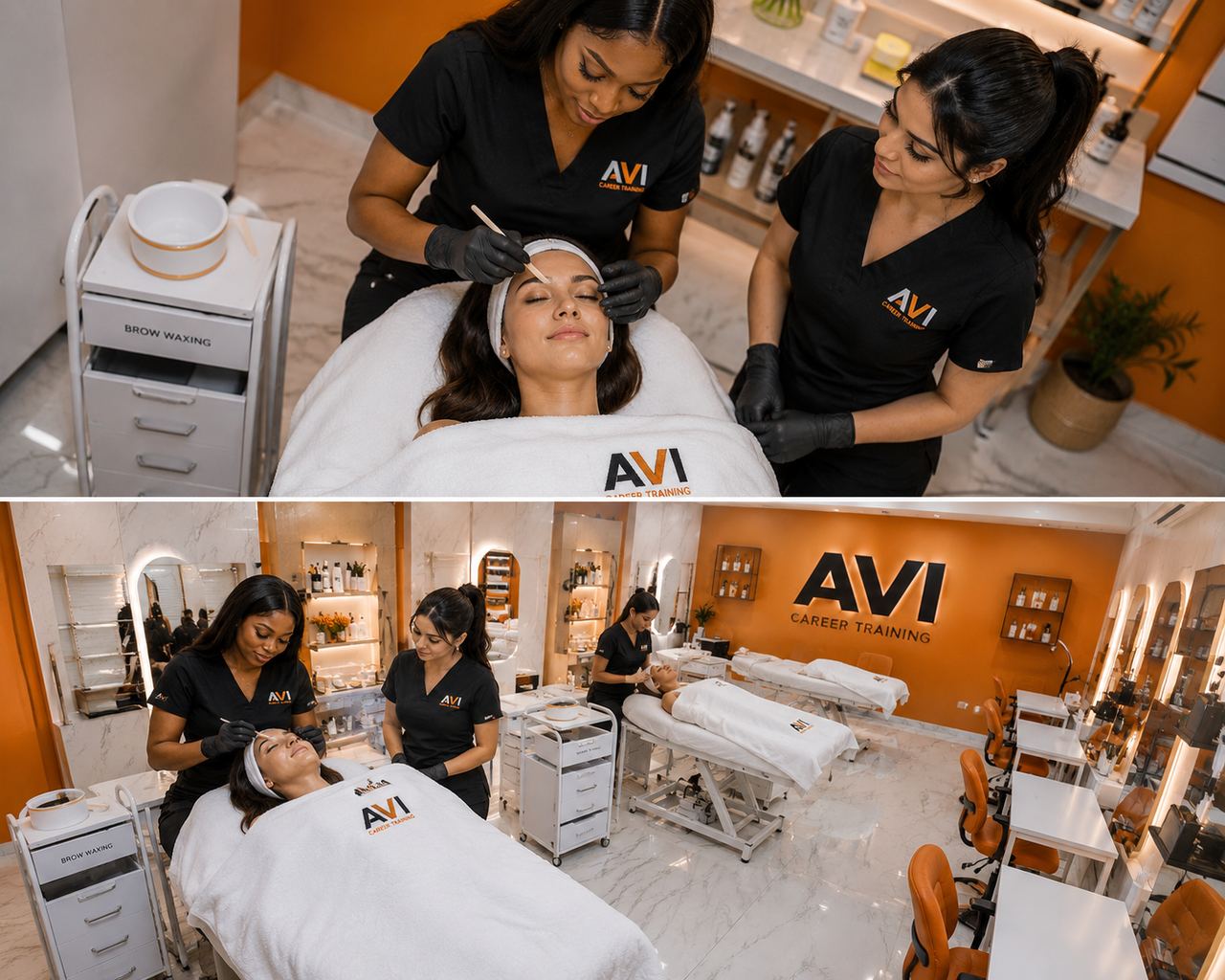
If you want to learn more about how AVI prepares students for clinical and medspa work, explore AVI Career Training’s esthetics and cosmetic laser programs.
Training Time, Cost, and Licensing Compared
This is where the comparison gets concrete. Let’s put the two paths side by side.
Virginia Esthetics Licensing Requirements
Virginia requires 600 clock hours of approved esthetics training from a state-approved school. After completing those hours, students must pass two Virginia State Board examinations: a written theory exam and a practical skills exam. Pass both, pay the licensing fee, and you’re a licensed esthetician in Virginia — with a credential recognized by every employer in the state.
AVI Career Training’s esthetics program in Vienna, VA is SCHEV-certified and COE-accredited, meeting all Virginia State Board requirements. Full-time students can complete the 600 hours and be licensure-eligible in approximately