Medical Assistant vs Esthetician Career: Which Is Better? |
The medical assistant (NO FINANCIAL AID FOR THIS PROGRAM) path leads to clinical settings like doctor’s offices and urgent care; the esthetician path leads to medical spas, dermatology clinics, and laser suites — and in Northern Virginia, both offer stable income and a clear road to licensure without a four-year degree. The difference comes down to where you want to work, what you want to do all day, and how quickly you want to start earning.
If you’re weighing these two paths, you’re asking the right question. This guide breaks down both careers honestly — training timelines, Virginia licensing requirements, salary data, and day-to-day reality — so you can make a decision based on facts, not guesswork.
Key Takeaways
- Esthetics training in Virginia requires 600 clock hours — most full-time students complete it in five to six months
- Medical assistant (NO FINANCIAL AID FOR THIS PROGRAM) certificate programs typically run nine to 12 months; associate degree programs take two years
- Medical estheticians and cosmetic laser technicians in the DC metro area commonly earn $50,000–$75,000+ depending on setting and tips
- Virginia estheticians must pass the Virginia State Board exam (written + practical) before practicing
- AVI Career Training in Vienna, VA offers COE-accredited Esthetics, Cosmetic Laser Technology, Massage Therapy, and Electrolysis programs
What Does a Medical Assistant Actually Do?
A medical assistant (NO FINANCIAL AID FOR THIS PROGRAM) (MA) works in clinical settings — doctor’s offices, urgent care facilities, hospital outpatient departments, and specialty practices. The role splits roughly between administrative and clinical duties, and the balance varies by employer.
On the clinical side, MAs take vital signs, draw blood, administer injections, prepare exam rooms, and assist physicians during procedures. Administratively, they handle scheduling, insurance paperwork, and medical records. It’s a supporting role by design — MAs work under the direct supervision of a licensed physician or other credentialed provider at all times.
In Virginia, medical assistants (NO FINANCIAL AID FOR THIS PROGRAM) are not separately licensed by the state. There is no Virginia-specific MA license requirement. However, most employers strongly prefer — and many require — graduates of accredited programs and candidates who hold a national certification such as the CMA (Certified Medical Assistant ) through the AAMA or the RMA through AMT. Certification exams add cost and prep time on top of your program.
The work environment is fast-paced and task-driven. Your day is built around the provider’s schedule. You will rarely have a sustained one-on-one relationship with a single patient — most interactions are brief and procedural.
Who thrives as a medical assistant (NO FINANCIAL AID FOR THIS PROGRAM): People who prefer structured clinical environments, enjoy variety across many patients daily, and want to work inside a hospital or medical office setting.
What Does a Medical Esthetician or Cosmetic Laser Technician Do?
Here’s where things get interesting — especially if you live in Northern Virginia.
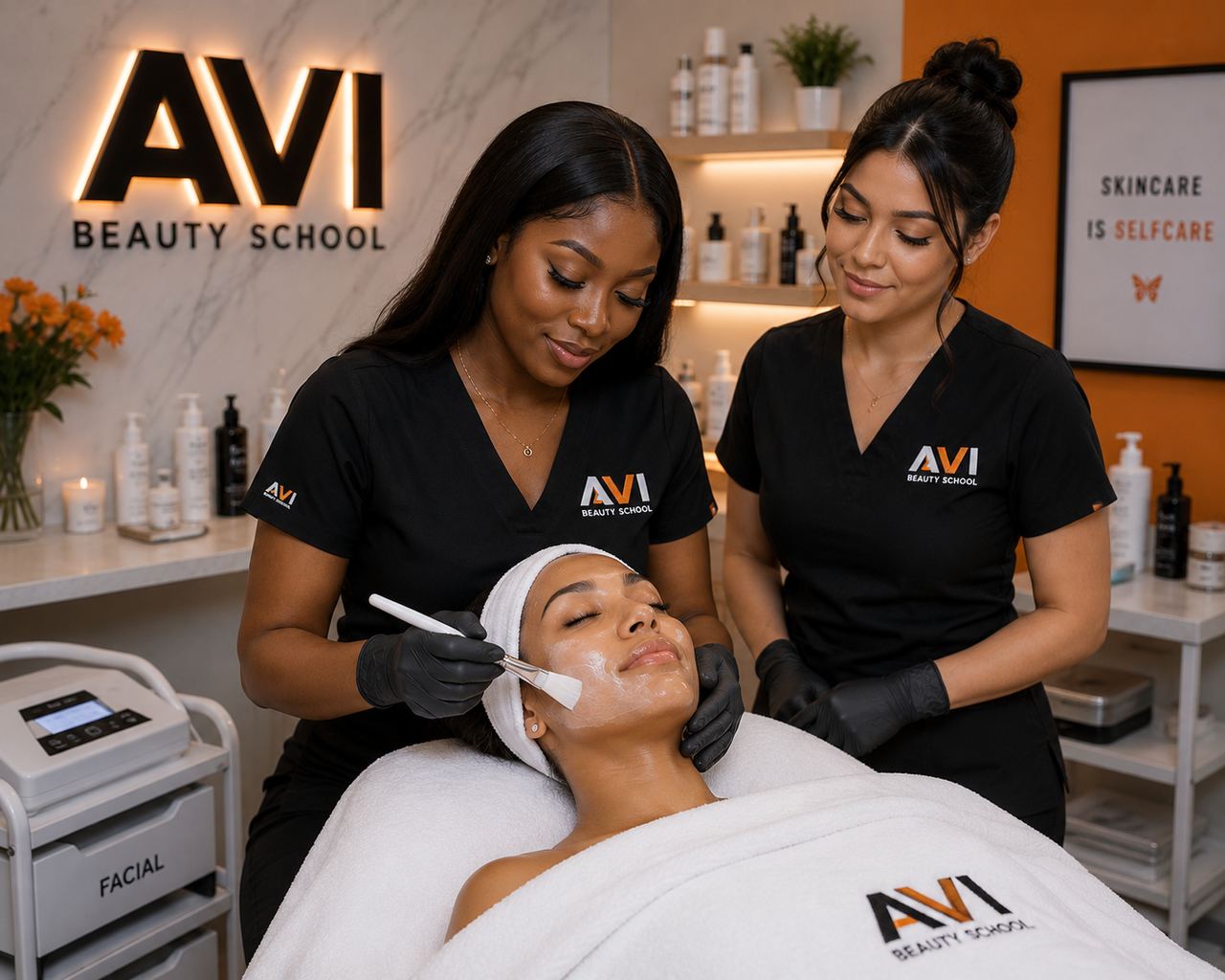
A standard esthetician provides skin care services: facials, chemical peels, waxing, extractions, and body treatments. But the field has expanded significantly. Medical estheticians (NO FINANCIAL AID FOR THIS PROGRAM) and cosmetic laser technicians work in medical spas, dermatology practices, and plastic surgery clinics — performing treatments that cross into clinical territory.
Medical estheticians commonly perform:
– Advanced chemical peels (including deeper clinical-grade peels)
– Microdermabrasion and dermaplaning
– Microneedling (in some states, under physician oversight)
– Pre- and post-surgical skin preparation
– Medical-grade facials and corrective treatments
Cosmetic laser technicians operate equipment like:
– Laser hair removal devices
– IPL (Intense Pulsed Light) for pigmentation and vascular treatments
– Fractional resurfacing lasers
– Body contouring technologies
This is the “medical esthetician vs. medical assistant ” (NO FINANCIAL AID FOR THIS PROGRAM) distinction that many searchers get confused about. A medical esthetician is not a medical assistant . The esthetician focuses entirely on skin and appearance-based treatments. The medical assistant supports clinical procedures across all medical specialties. The training paths, licensing requirements, and day-to-day work are fundamentally different.
In Virginia, cosmetic laser technicians do not hold a standalone state license — but operators must work under a licensed physician’s or medical director’s oversight, and facilities must meet compliance requirements. Your esthetics license is the foundation credential; specialized laser training builds on top of it.
This is exactly what programs like AVI Career Training’s Cosmetic Laser Technology program prepare you for — client-focused, appearance-based clinical work in one of the highest-demand beauty markets in the country.
Who thrives as a medical esthetician or laser tech: People who want lasting client relationships, prefer a spa or clinic environment over a hospital, enjoy skincare science, and want income that can grow with their skills and clientele.
Training Time, Cost, and Licensing — Side by Side
This is the comparison most people want before they commit to anything. Here’s how the two paths stack up in Virginia.
Esthetician / Medical Esthetics Path
| Factor | Details |
|---|---|
| Required Training Hours | 600 clock hours (Virginia requirement) |
| Program Length (Full-Time) | Approximately 5–6 months at AVI Career Training |
| Virginia License Required? | Yes — Virginia State Board exam (written “` |