Medical Assistant vs Esthetician Careers: Northern Virginia |
Both the medical assistant (NO FINANCIAL AID FOR THIS PROGRAM) and esthetician paths offer stable, hands-on careers in the DC metro area — but the training requirements, day-to-day work, earning potential, and career ceiling look very different depending on which direction you choose.
If you’re weighing these two options in Northern Virginia, you’re not alone. The region’s booming healthcare corridor and rapidly expanding medical spa industry have put both careers on the radar of career-changers and first-time students alike. This guide breaks down what each path actually looks like — training timelines, Virginia licensing, local salary data, and job outlook — so you can make a decision based on real information, not guesswork.
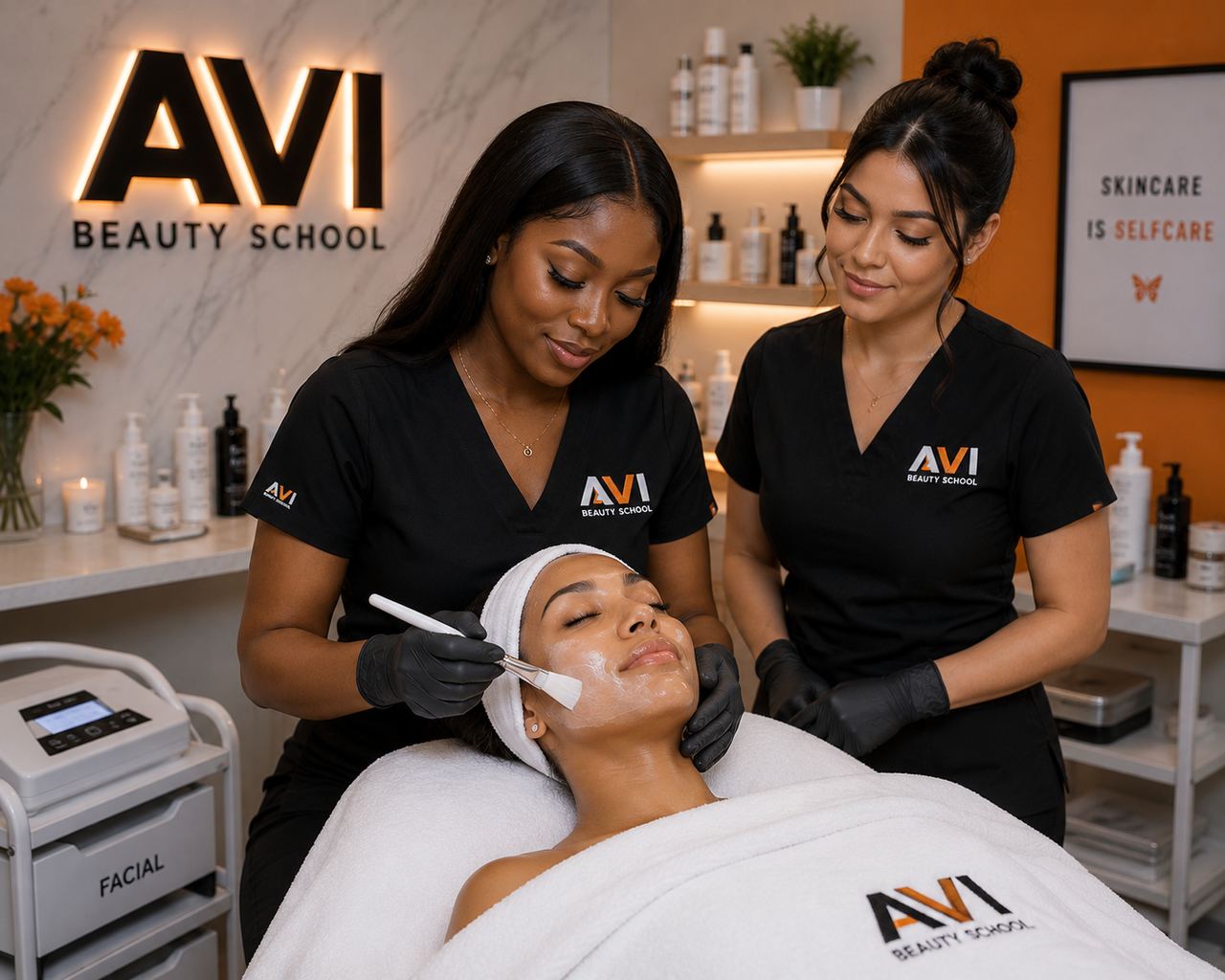
And if the clinical side of beauty is what’s pulling you in, you’ll want to know about AVI Career Training’s Esthetics and Cosmetic Laser Technology programs — a direct bridge between beauty school training and medical spa careers right here in Vienna, VA.
Apply to AVI Career Training today or call (703) 943-9841 to speak with an admissions advisor.
Key Takeaways
- Medical assistant (NO FINANCIAL AID FOR THIS PROGRAM) programs in Virginia typically take 10–12 months and cost $8,000–$20,000+ at community colleges or private career schools
- Virginia esthetics licensure requires 600 hours of training; AVI’s Esthetics program can be completed in as few as 5 months
- Medical assistants (NO FINANCIAL AID FOR THIS PROGRAM) in the DC metro area earn a median wage of approximately $42,000–$48,000 per year
- Licensed estheticians in Northern Virginia — especially those working in medical spas — can earn $45,000–$70,000+ with tips, commission, and retail income
- Estheticians with cosmetic laser certifications command premium wages in one of the fastest-growing segments of the aesthetics industry
- AVI Career Training is COE Accredited and SCHEV Certified, accepts the GI Bill®, and offers financial aid for qualifying students
What Does a Medical Assistant (NO FINANCIAL AID FOR THIS PROGRAM) Actually Do — and What Does Training Look Like?
A medical assistant (NO FINANCIAL AID FOR THIS PROGRAM) (MA) is a multi-role healthcare worker who supports physicians and clinical staff in outpatient settings — think private medical practices, urgent care clinics, and specialty offices. The job splits into two main areas: clinical duties (taking vital signs, drawing blood, administering injections, preparing exam rooms) and administrative duties (scheduling appointments, managing patient records, handling insurance documentation).
It’s a genuinely useful role that sits at the intersection of patient care and office operations. MAs are not nurses, and they don’t hold prescribing authority — but they’re a critical part of how most outpatient medical offices function.
Training Requirements in Virginia
Virginia does not require medical assistants to hold a state license, which surprises many people. However, most employers in Northern Virginia expect applicants to have completed a formal MA training program — and many prefer candidates who hold a national certification like the Certified Medical Assistant (CMA) credential from the AAMA or the Registered Medical Assistant (RMA) credential from AMT.
Typical MA programs in Virginia run 10–12 months at the certificate level, offered through community colleges (Northern Virginia Community College, for example) and private career schools. Associate’s degree programs run 18–24 months for students who want more depth or a credential that stacks toward further healthcare education.
Estimated tuition costs for Virginia MA programs range from approximately $8,000 at community colleges to $15,000–$20,000+ at private career schools, not including textbooks, clinical supplies, or certification exam fees. Federal financial aid (FAFSA/Title IV) is NOT available for this program as it does not meet the minimum 600-hour requirement. AVI offers flexible payment plans and private financing options.
Graduates typically move into roles at medical offices, urgent care clinics, hospital outpatient departments, and specialty practices throughout the DC metro area.
What Is an Esthetician — and Why Does the Medical Spa Industry Change Everything?
Here’s where the conversation gets more interesting than most people expect.
When most people picture an esthetician, they think of someone giving facials at a day spa. That picture is incomplete — and increasingly outdated. The modern esthetics industry has expanded dramatically into clinical and medical settings, and Northern Virginia is one of the most active markets in the country for this shift.
Licensed estheticians today work in:
- Medical spas (med spas) — providing laser hair removal, chemical peels, microdermabrasion, and advanced skin treatments
- Dermatology offices — supporting dermatologists with pre- and post-procedure skin care
- Plastic surgery clinics — preparing patients for procedures and managing post-op skin recovery
- Oncology wellness programs — providing therapeutic skin care for patients undergoing cancer treatment
- High-end hotel spas and resort properties — a major employer in the DC metro corridor
The Medical Aesthetics Shift in Northern Virginia
The DC metro area — including Fairfax County, Arlington, McLean, Tysons, and Bethesda — has one of the highest concentrations of med spas per capita in the Mid-Atlantic. Affluent Northern Virginia residents are consistent, high-frequency consumers of aesthetic services: laser treatments, injectables, skin rejuvenation, body contouring.
Estheticians with clinical training and laser certification aren’t competing in the same