Medical Assistant vs Esthetician Careers in Virginia |
If you’re weighing a medical assistant career against becoming an esthetician, esthetics licensure in Virginia gets you into a medical spa setting faster — with a stronger salary ceiling. Both careers serve people in hands-on environments, and both require formal training. But the licensing timelines, daily work, and long-term earning potential look very different depending on which direction you choose.
This guide breaks down both paths honestly so you can make a confident decision — and if medical spa and aesthetic work is what draws you, you’ll see exactly how to get there through Virginia’s esthetics and cosmetic laser licensing routes. Apply to AVI Career Training today if you’re ready to get started.
—
> Key Takeaways
> – Virginia requires 600 clock hours of training for esthetician licensure — a timeline most students complete in under a year
> – Medical assistant programs typically run 9–12 months and lead to a separate clinical credential not connected to beauty and wellness licensing
> – Licensed estheticians in Virginia earn a median of $38,000–$52,000/year, with medical spa roles often paying significantly more
> – Cosmetic laser technicians in metro markets like Northern Virginia can earn $50,000–$75,000+
> – AVI Career Training in Vienna, VA offers both Esthetics and Cosmetic Laser Technician programs — two of the most direct routes into medical spa careers in the region
> – GI Bill® benefits are accepted at AVI, and financial aid is available
—
What Does a Medical Assistant Actually Do?
Medical assistants work in clinical settings — physician offices, urgent care clinics, hospitals, and outpatient facilities. Their daily responsibilities split between administrative and clinical tasks.
On the clinical side, medical assistants take patient vitals, draw blood, prepare exam rooms, administer injections, and assist physicians during appointments. On the administrative side, they manage patient records, schedule appointments, handle insurance paperwork, and coordinate referrals.
It’s a meaningful career that keeps healthcare operations running. But it’s important to understand what it is not: medical assisting is not a beauty or wellness credential. In Virginia, medical assistants are not licensed through the Department of Professional and Occupational Regulation (DPOR) the way estheticians and cosmetologists are. They operate under a separate healthcare regulatory framework entirely.
Training for medical assisting typically looks like this:
- Programs run 9–12 months at community colleges or vocational schools
- Graduates may pursue optional certification through organizations like the American Association of Medical Assistants (AAMA)
- Work is based in clinical healthcare environments, not spas, salons, or aesthetic clinics
If your goal is patient-centered care in a doctor’s office or hospital, medical assisting is a legitimate path. But if what draws you is skin care, aesthetics, laser treatments, or working in a medical spa — you’re likely thinking about a different career altogether.
—
What Is a Medical Esthetician — and Is It the Same Thing?
No — and this confusion trips up a lot of people researching careers online.
A medical esthetician is a licensed esthetician who works in a clinical or medical spa setting rather than a traditional day spa or salon. The credential that qualifies them to do this work is a Virginia esthetics license, issued by the Virginia Board of Cosmetology through DPOR.
Medical estheticians perform advanced skin treatments — chemical peels, microdermabrasion, microneedling (in some contexts), and skincare services that go deeper than what you’d find in a typical spa menu. Many also work alongside plastic surgeons, dermatologists, or aesthetic nurses to support patient care before and after procedures.
The key distinction: a medical esthetician is an esthetician, not a medical assistant . The “medical” in their title reflects their work environment and skill level — not a clinical healthcare credential.
This matters enormously when you’re choosing a school and a training path. If you want to work in a medical spa doing skin treatments and aesthetic services, you need an esthetics license. That path runs through beauty and wellness education — not healthcare training.
Cosmetic laser technology takes this one step further. Virginia regulates laser and light-based treatments, and estheticians who want to perform services like laser hair removal, photofacials, or skin resurfacing typically need additional training and credentials in cosmetic laser technology. This is a growing specialty that commands some of the strongest salaries in the aesthetics industry.
If you’re drawn to that kind of work, AVI Career Training’s Esthetics and Cosmetic Laser Technician programs in Vienna, VA are built specifically to get you licensed and career-ready in the Northern Virginia and DC metro market.
—
Salary and Career Outlook: Comparing Both Paths in Virginia
Let’s look at the numbers side by side.
Esthetician Salaries in Virginia
According to Bureau of Labor Statistics data, estheticians in Virginia earn a median of approximately $38,000–$52,000 per year. Entry-level positions in traditional spa or salon settings typically start closer to the lower end of that range.
Medical spa roles shift that picture. Estheticians working in medical aesthetics — performing advanced skin treatments, chemical peels, or assisting with post-procedure care — often earn above that median, particularly in established metro markets like Northern Virginia and the DC area.
Cosmetic laser technicians sit at the top of the earnings range. In metro markets, qualified laser technicians can earn $50,000–$75,000 or more, depending on the services offered, the practice setting, and their level of experience.
Medical Assistant Salaries in Virginia
Medical assistants in Virginia earn a median of approximately $38,000–$45,000 per year, based on BLS figures. The salary ceiling in this role is generally lower than in medical esthetics, and advancement often requires additional clinical education or a shift into healthcare administration.
What This Means for You
Both paths start in a similar salary range. The difference is the ceiling — and the timeline to get there.
An esthetics license in Virginia requires 600 clock hours of training. Many students complete that in less than a year. With an esthetics license in hand, you can pursue additional credentials in cosmetic laser technology and move into higher-earning medical spa roles on a relatively fast timeline.
Medical assisting takes a comparable amount of time to complete but keeps you in a clinical track with a lower earnings ceiling and a career path that does not overlap with aesthetic or beauty services.
—
How to Become a Licensed Esthetician in Virginia
Virginia’s esthetics licensing requirements are straightforward. Here’s what the path looks like:
Step 1: Complete an Approved Esthetics Program
The Virginia Board of Cosmetology requires 600 clock hours of training from a state-approved school. Your program must cover skin analysis, facial treatments, hair removal, sanitation and safety protocols, product chemistry, and client consultation skills.
AVI Career Training’s Basic Esthetics program meets these requirements and is taught by licensed industry professionals with real-world experience in both traditional and medical spa settings.
Step 2: Pass the Virginia State Board Exams
After completing your program, you’ll sit for two exams administered through the Virginia State Board:
- A written (theory) exam covering skin science, safety, and regulations
- A practical exam demonstrating hands-on technique
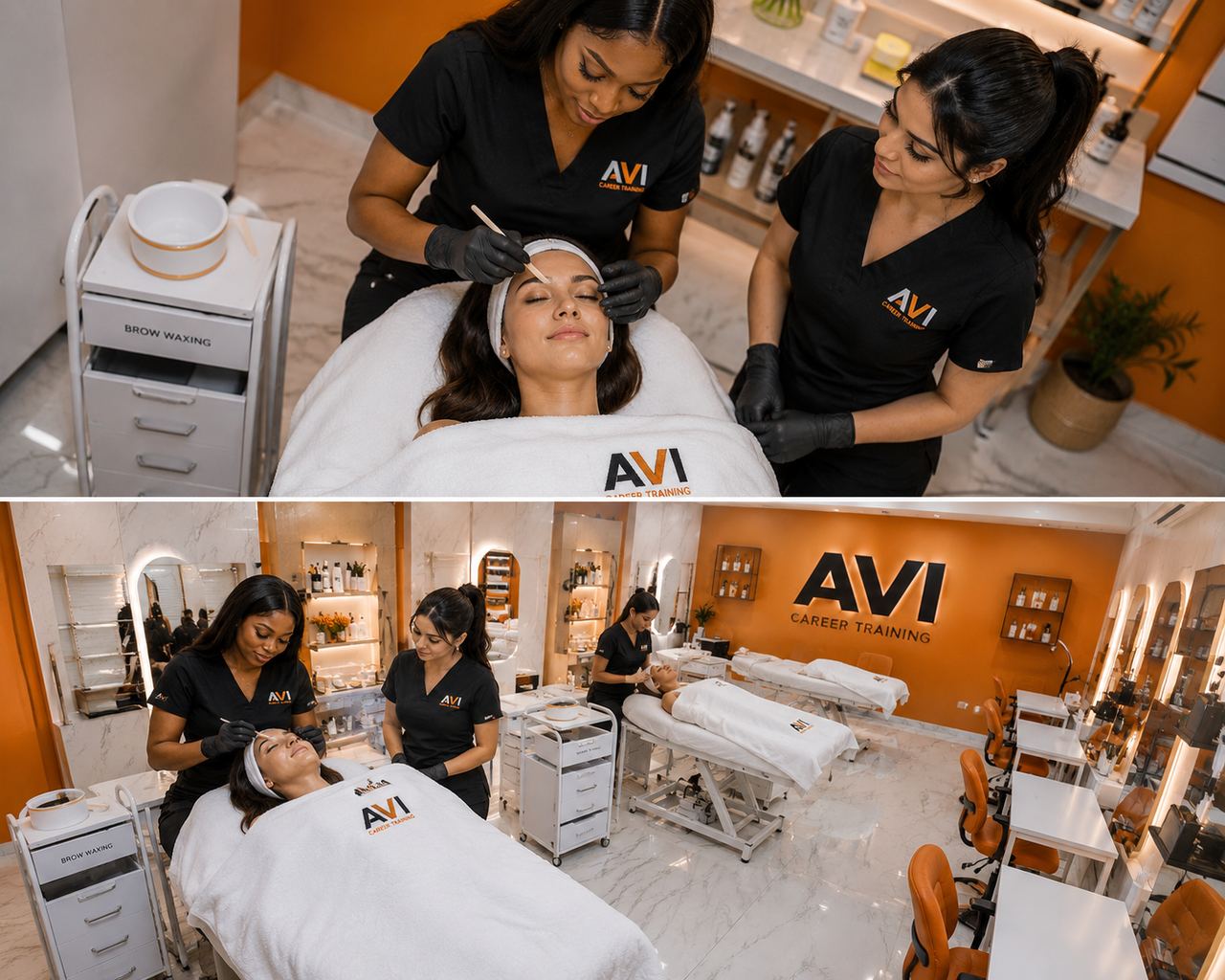
Your school’s training should prepare you for both. At AVI, students practice on real clients in a supervised environment so that exam day feels like an extension of what they’ve already been doing.
Step 3: Apply for Your Virginia Esthetics License
Once you pass both exams, you apply to DPOR for your esthetics license. Virginia licenses must be renewed every two years, with continuing education required to maintain your credentials.
Step 4: Build Toward Medical Spa Work
A Virginia esthetics license opens the door to spas, salons, dermatology offices, and medical spas. Students who want to specialize in cosmetic laser treatments can pursue additional training in Cosmetic Laser Technology — a program AVI offers as a natural next step for licensed estheticians ready to expand their career options.
—
Meet Two Students Who Had to Choose
From Healthcare Curiosity to Esthetics License
Monique worked as a dental office receptionist for four years. She liked being around people and was genuinely interested in wellness, but she didn’t want to spend two or three years in a nursing or medical assistant program . What she kept coming back to was skin — her clients, her friends, and her own skincare routine.
After researching options in Northern Virginia, she enrolled in AVI’s Esthetics program. Within a year, she had her Virginia esthetics license and a position at a medical spa in Tysons Corner. She now performs facials, peels, and advanced skin treatments — and earns more than she did in her receptionist role. The 600-hour training requirement felt manageable, and the licensing process was clear from the start.
From the Military to Medical Aesthetics
After separating from the Army, Marcus wanted a career in healthcare-adjacent work but didn’t want a desk job. He looked into medical assisting but kept reading about laser technicians and medical spas paying $60,000 and up in the DC metro area. He wasn’t sure what training he needed or whether his GI Bill® benefits would apply.
AVI Career Training accepts GI Bill® benefits. Marcus enrolled in the Cosmetic Laser Technician program, completed his training, and now works at a medical aesthetics clinic in Virginia. The career move made sense financially and professionally — and the path from enrollment to working was shorter than he expected.
—
Thinking About a Medical Spa Career? Here’s Where to Start in Northern Virginia
If you’ve read this far, you probably already sense that esthetics — not medical assisting — is the career path that aligns with your goals. Medical spa careers, cosmetic skin treatments, laser services, and advanced aesthetics all run through esthetics licensure in Virginia. That credential is your foundation.
AVI Career Training in Vienna, VA offers two programs that directly serve students pursuing medical spa and aesthetic careers:
Basic Esthetics: The 600-hour program that qualifies you to sit for the Virginia State Board exams and earn your esthetics license. Coursework covers skin science, facial techniques, chemical exfoliation, hair removal, and professional client care — with hands-on practice built in from day one.
Cosmetic Laser Technician: For students who want to specialize in laser hair removal, photofacials, skin resurfacing, and other light-based treatments. This program is designed to prepare you for one of the fastest-growing specialties in the medical aesthetics industry.
Both programs are taught by licensed professionals. AVI is COE Accredited and SCHEV Certified, financial aid is available, and GI Bill® benefits are accepted.
You don’t need a four-year degree. You don’t need a clinical healthcare background. You need the right training, the right license, and a school that takes your career seriously.
Apply to AVI Career Training today and take the first step toward a licensed career in esthetics or cosmetic laser technology. You can also call us at (703) 943-9841 or reach out to our admissions team to ask questions and schedule a tour of our Vienna, VA campus.
—
Frequently Asked Questions
What Is the Difference Between a Medical Assistant and a Medical Esthetician?
A medical assistant is a healthcare worker trained for clinical and administrative duties in medical settings. A medical esthetician is a licensed esthetician — trained through a beauty and wellness program — who works in a medical spa or clinical aesthetics environment. They hold different credentials, train through different programs, and perform completely different types of services.
Can an Esthetician Work in a Medical Spa in Virginia?
Yes. A licensed esthetician in Virginia can work in a medical spa performing skin treatments, facials, chemical peels, and related services. The specific scope of practice depends on Virginia regulations and the services offered at a given location. Laser treatments typically require additional credentials in cosmetic laser technology.
How Long Does It Take to Become a Medical Esthetician?
Virginia requires 600 clock hours of esthetics training to qualify for licensure. Many students complete this in under a year. After earning an esthetics license, additional training in cosmetic laser technology can expand your service menu and earning potential.
Is Medical Assisting or Esthetics a Better Career?
That depends entirely on what you want your daily work to look like. If you want to work in clinical healthcare — taking vitals, assisting physicians, and managing patient records — medical assisting may be the right fit. If you’re drawn to skin care, aesthetics, and medical spa work, esthetics licensure is the more direct and often higher-earning path.
What License Do You Need to Do Laser Treatments in Virginia?
Virginia regulates laser and light-based treatments, and operators typically work under physician supervision or hold relevant credentials in cosmetic laser technology. Requirements can vary based on the treatment type and practice setting. For current guidance, refer to the Virginia Department of Professional and Occupational Regulation (DPOR) directly. AVI’s Cosmetic Laser Technician program is designed to prepare students for this specialty.
—
AVI Career Training is a COE-Accredited, SCHEV-Certified beauty and wellness school located at 1595 Spring Hill Rd #720, Vienna, VA 22182. Financial aid is available. GI Bill® benefits accepted.