Medical Assistant vs. Esthetician: Which Career Fits You?
The medical assistant vs esthetics career decision comes down to this: both paths offer real opportunity in Northern Virginia without a four-year degree or years of debt, but they suit very different types of people. The question isn’t which one is more legitimate. It’s which one fits your goals, your schedule, and the kind of work that actually energizes you.
This guide breaks both paths down honestly: what you’ll do day to day, how long training takes, what you can earn in the DC metro market, and how to decide which direction makes sense for where you want to go. If you’re ready to get started now, apply at AVI Career Training or call (703) 943-9841.
—
Key Takeaways
—
What Does a Medical Assistant Actually Do?
Medical assistants support physicians, nurses, and other licensed healthcare providers in clinical and administrative settings. In Virginia, MAs work in private practices, urgent care clinics, hospitals, and specialty offices.
The role splits into two main areas:
Clinical duties include taking patient vitals, drawing blood, preparing patients for exams, administering injections under supervision, and assisting with minor procedures. Administrative duties include scheduling appointments, handling billing and insurance paperwork, updating electronic health records, and managing front-office operations.
It’s real, meaningful work. But here’s a detail that surprises many people researching this career: Virginia does not require MAs to hold a state license. There is no Virginia board that regulates medical assistants the way the Virginia State Board of Cosmetology regulates estheticians. National certifications — like the Certified Medical Assistant (CMA) through the AAMA or the National Certified Medical Assistant (NCMA) through the NHA — are widely respected and often preferred by employers. But they are not legally required to work in the field.
That means the “clinical credibility” edge many people assume MAs have over wellness professionals is more employer-driven than regulatory. It’s worth knowing before you commit.
—
What Does an Esthetician or Cosmetic Laser Tech Do?
Here’s where many comparison articles get it wrong. They treat esthetics like a soft alternative — a fallback for people who couldn’t handle healthcare. That framing doesn’t hold up when you look at what licensed estheticians and cosmetic laser technicians actually do.
Licensed Estheticians
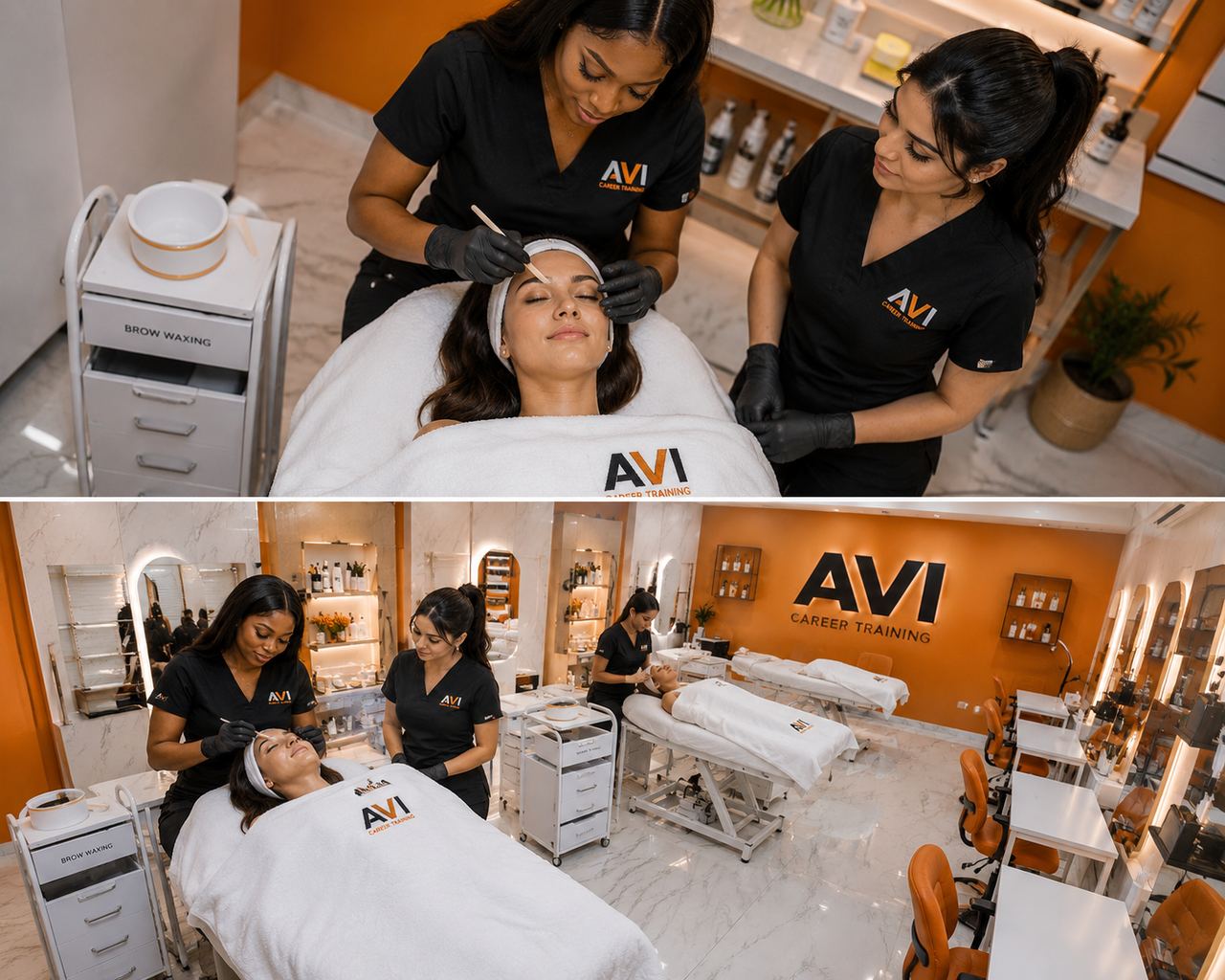
Estheticians are licensed skin care specialists. They perform skin analysis, chemical exfoliation treatments, microdermabrasion, professional facials, waxing, and advanced skin therapies. In medical spa and dermatology settings, estheticians work directly alongside physicians and nurse practitioners — applying clinical protocols, managing pre- and post-treatment skin care plans, and operating professional-grade equipment.
This is not retail beauty. It is applied skin science with real clinical overlap.
Cosmetic Laser Technicians
Cosmetic laser technicians operate light-based and energy-based devices used for laser hair removal, skin resurfacing, photofacials, and other non-invasive aesthetic procedures. In Virginia, the Virginia Department of Professional and Occupational Regulation (DPOR) does not currently mandate a specific state license solely for laser operation. However, the facilities where these services are performed — medical spas, dermatology offices, plastic surgery practices — typically require documented training and certification before allowing technicians to work with clients.
At AVI Career Training, the Cosmetic Laser Technician program covers device operation, safety protocols, skin type assessment, and treatment planning — preparing graduates to meet the real-world expectations of employers in this growing field.
Electrologists
Electrolysis is the only FDA-recognized method of permanent hair removal. Virginia requires licensure for electrologists, making this one of the most clearly credentialed clinical-adjacent roles in the wellness space. AVI’s Electrolysis program prepares students for that licensure pathway.
—
Training Time and Cost — Side-by-Side Comparison
This is where the two paths diverge most sharply — and where your time and money matter most.
Esthetics Training in Virginia
The Virginia State Board of Cosmetology requires 600 clock hours of training to qualify for an Esthetics license. Full-time students at AVI Career Training can complete those 600 hours in approximately 16–20 weeks. That’s roughly four to five months.
After completing the program, graduates sit for the Virginia State Board licensing exam. Once licensed, they can work immediately in salons, spas, medical spas, or any esthetics setting in Virginia.
Medical Assistant Training in Northern Virginia
There is no Virginia-mandated training requirement for MAs — but most employers expect at least a certificate, and most certificates take significantly longer to earn. The Medical Assistant certificate program at Northern Virginia Community College (NOVA) runs approximately 12–18 months, depending on course load and scheduling.
Many MA programs also include an externship component, adding additional time before a graduate is ready to apply for full-time positions.
Cosmetic Laser Technician Training at AVI
AVI’s Cosmetic Laser Technician program is designed as a focused, accelerated training pathway. Contact AVI at (703) 943-9841 or reach out directly for current program length and scheduling options.
Estimated Cost Comparison
Tuition varies by school, financial aid eligibility, and program format. AVI Career Training offers financial aid for those who qualify, and the school accepts the GI Bill® — making it accessible for veterans and military-connected students. The shorter program length at AVI also means fewer months without full-time income during training — a real financial factor that often gets overlooked in cost comparisons.
| Factor | Esthetics (AVI) | Medical Assistant (NOVA) |
|—|—|—|
| Training Hours / Length | 600 hours / ~16–20 weeks | ~12–18 months |
| Virginia State License Required | Yes — VSBCE | No state license required |
| National Certification | Optional (advanced credentials available) | Optional (CMA, NCMA) |
| Financial Aid Eligible | Yes | Yes |
| GI Bill® Accepted | Yes (AVI) | Yes (NOVA) |
| Self-Employment Path | Yes | Rarely |
If time-to-employment is a priority — and for many career changers, it is — the esthetics path at AVI can get you licensed and working in a fraction of the time.
—
Salary and Job Outlook in Northern Virginia and the DC Metro
Let’s be direct: neither path makes you rich overnight. But both offer solid earning potential, and the DC metro market tends to pay above national medians for both roles.
Esthetician Earnings in Virginia
According to the U.S. Bureau of Labor Statistics, the median annual wage for skin care specialists nationally is in the range of $38,000–$52,000. In the Northern Virginia and DC metro market, where demand for medical esthetics and cosmetic procedures is strong, licensed estheticians working in medical spa or clinical settings commonly earn $55,000–$70,000+, especially when you factor in gratuities, retail commissions, and performance bonuses.
The earnings picture for estheticians also includes a dimension the MA career path does not: self-employment. Licensed estheticians can rent booth space, open their own studios, or build an independent clientele. Some build higher businesses over time. That entrepreneurial ceiling matters if long-term income growth is part of your goal.
It’s worth being honest: starting wages for estheticians fresh out of school are typically lower, and building a full clientele takes time. Specializing in laser, medical esthetics, or electrolysis accelerates income growth significantly.
Medical Assistant Earnings in Virginia
Virginia MAs earn a median wage in the range of $38,000–$44,000, consistent with BLS data for the region. The role is typically salaried or hourly with standard benefits — predictable, stable income in a structured employment setting. Advancement opportunities exist (lead MA, office manager, clinical coordinator), but the ceiling in the MA role is tied to employer structure, not individual production or specialization the way esthetics is.
The Honest Bottom Line
If you want a stable hourly or salaried job with a clear employment structure, both paths offer that. If you want a path with upside tied to your own skills, specialization, and ambition — medical esthetics, laser technology, and electrolysis offer income growth that the traditional MA role simply does not.
—
Two Paths, Two Real People
Kezia spent six years as a pharmacy technician and liked healthcare but was burning out on the clinical environment. She wanted something more personal — one-on-one client relationships, creative work, and a schedule she could eventually control. She researched medical assisting but balked at 12+ months of training for a role she wasn’t sure she’d love. She enrolled in AVI’s Basic Esthetics program, completed her 600 hours in about four months, passed her Virginia State Board exam, and took a position at a medical spa in Tysons Corner. Within a year, she had a full client schedule and was training toward advanced laser certification.
Marcus came to AVI after leaving the military. He’d considered a medical assistant program but learned through research that Virginia doesn’t require MA licensure — and that the 12–18 month community college timeline wasn’t practical for his family situation. Using his GI Bill® benefits, he enrolled in AVI’s Cosmetic Laser Technician program. The accelerated format fit his timeline, the clinical focus matched his background, and he graduated with documented credentials that satisfied employer requirements at a dermatology group in Northern Virginia.
Neither story is a fairy tale. Both required hard work, real training, and commitment after graduation. But both people found a faster, more flexible path than the one they originally assumed they had to take.
—
Which Path Is Right for You? A Decision Framework
Use these four questions to guide your thinking — honestly, without anyone pushing you in a predetermined direction.
1. What Kind of Work Environment Do You Want?
Choose MA if: You want to work inside a physician’s office or hospital, assist licensed providers directly, and operate within a structured clinical hierarchy. The role is grounded in that specific setting.
Choose esthetics or laser if: You want a clinical-adjacent role where you are the primary service provider. You prefer one-on-one client relationships over supporting a larger clinical team.
2. How Important Is Your Timeline?
If you need to be working in a new career within six months, esthetics at AVI is the realistic path. MA programs typically require a year or more — and that’s before externship and national certification prep.
3. What Are Your Income Goals — Now and Later?
If predictable hourly or salaried income with benefits is the priority, both paths offer that. If you want a realistic path to self-employment or specialization-driven income growth, esthetics and laser create options the MA role does not.
4. Are You Drawn to Skin, Wellness, and Aesthetics?
Be honest with yourself here. Estheticians work with skin — its health, appearance, texture, and treatment. If you find skin science genuinely interesting, if you’re drawn to helping people look and feel better in their own skin, this career will sustain you. If you’re primarily drawn to the healthcare setting itself and clinical assisting, MA is the more direct path to that.
—
AVI Career Training: Where Wellness Careers Begin in Northern Virginia
If the esthetics or cosmetic laser path resonates with you, AVI Career Training in Vienna, Virginia is the place to start. AVI is COE Accredited and SCHEV Certified, offering hands-on training in Basic Esthetics, Master Esthetics, Cosmetic Laser Technology, Massage Therapy, Electrolysis, and more.
AVI’s programs are built around inclusive techniques — training students to work effectively on every skin tone and every client. Financial aid is available for those who qualify, and the GI Bill® is accepted, making this a real option for veterans and military-connected students across the Northern Virginia area.
The admissions team is ready to answer your questions about program length, scheduling, costs, and what licensing looks like after graduation. There’s no pressure and no commitment required to have that conversation.
Start your application today — or call AVI directly at (703) 943-9841 to speak with someone about which program fits your goals.
Your career in wellness and aesthetic medicine can start sooner than you think.