Medical Assistant vs. Esthetician: Which Career Fits You?
The medical assistant vs. esthetician career comparison comes down to this: both paths offer hands-on work, real earning potential, and entry without a four-year degree — but they lead to very different daily realities, licensing requirements, and income ceilings in the Northern Virginia market.
If you’ve been researching both options, this guide breaks it down honestly: what each role actually does, how long training takes, what you can earn in the DC metro area, and which path makes the most sense depending on your specific goals.
Key Takeaways
- Medical assistant training takes 9–24 months; an esthetics license in Virginia requires 600 clock hours (roughly 4–6 months full-time)
- Virginia estheticians in medspa settings can earn $45,000–$70,000+ per year, depending on specialization
- Medical assistants in Virginia earn an average of $38,000–$46,000 annually (BLS)
- A licensed esthetician can work in a medical spa, dermatology office, or plastic surgery practice — no additional medical degree required
- AVI Career Training offers COE-accredited Esthetics and Cosmetic Laser Technician programs in Vienna, VA — designed specifically for the medspa market
What Does a Medical Assistant Actually Do?
Medical assistants work in physician offices, urgent care clinics, hospitals, and outpatient facilities. The role blends clinical and administrative tasks — taking vital signs, drawing blood, preparing exam rooms, scheduling appointments, updating patient records, and assisting physicians during procedures.
It’s a stable, respected career. Most medical assistant positions don’t require a nursing degree, which makes the role appealing to people who want to work in healthcare without committing to a four-year program.
That said, the scope of practice is defined — and limited — by the clinical setting. Medical assistants work under physician supervision. They follow established protocols. The work is consistent, but it’s less creative and less client-driven than many healthcare-adjacent careers in aesthetics.
Typical work settings for medical assistants:
– Primary care and family medicine offices
– Urgent care and walk-in clinics
– Specialty practices (cardiology, pediatrics, orthopedics)
– Hospital outpatient departments
Common daily tasks:
– Recording patient medical histories
– Measuring and recording vital signs
– Preparing and administering medications (where permitted by state law)
– Assisting with minor surgical procedures
– Handling billing, coding, and scheduling
Medical assisting is a solid career. But if your interest leans toward aesthetics, skin care, and client transformation — you may find the clinical environment doesn’t fully match what you’re drawn to.
What Is a Medical Esthetician — and How Is It Different?
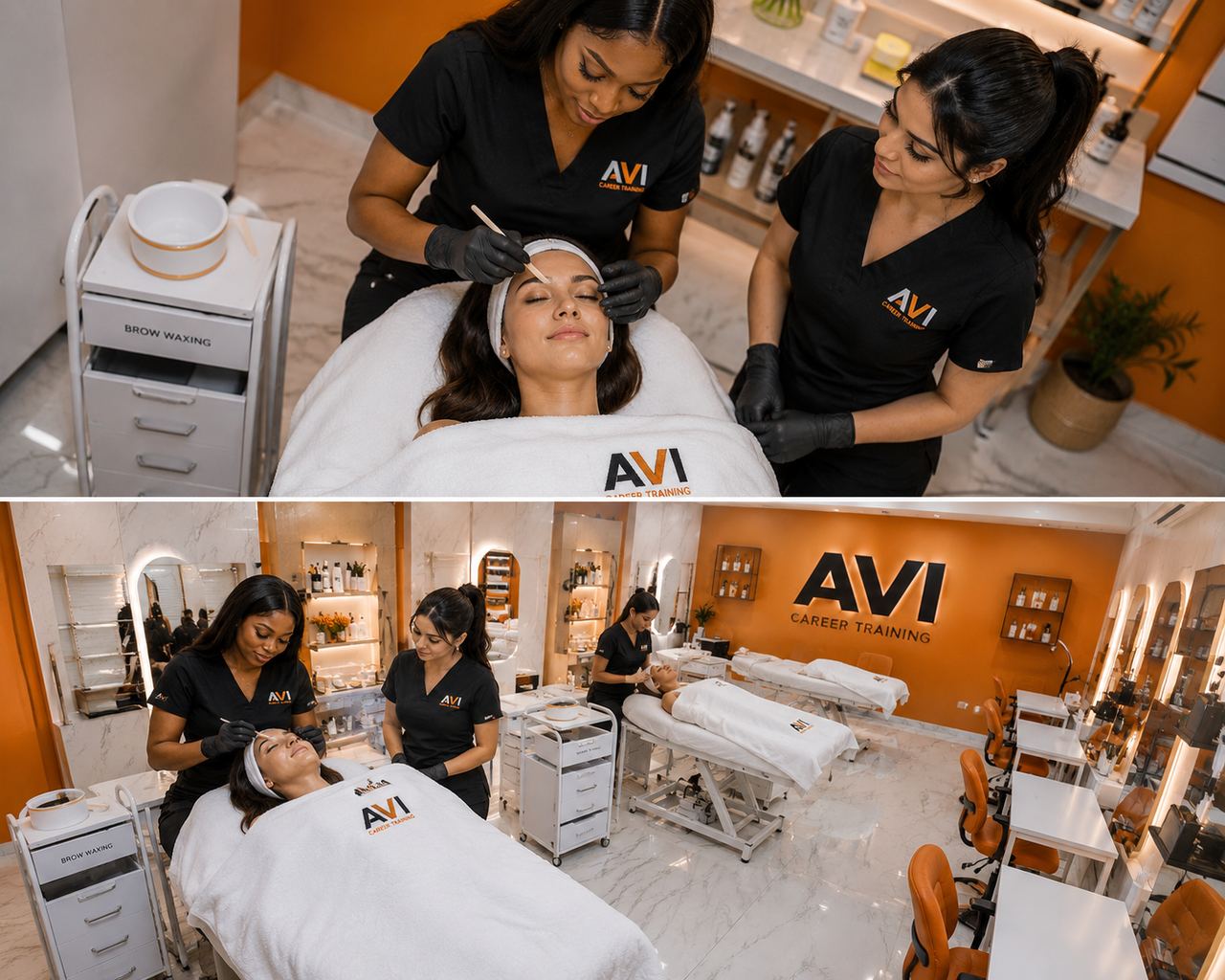
A medical esthetician is a licensed esthetician who works in a clinical or medical setting — typically a medspa, dermatology practice, or plastic surgery office. The title “medical esthetician” isn’t a separate license in Virginia; it describes how a standard esthetics license is applied.
This distinction matters. The foundation is the same 600-hour esthetics license required by the Virginia Department of Professional and Occupational Regulation (DPOR). What makes someone a “medical esthetician” is where they work and what additional training they pursue after licensure.
Medical estheticians perform treatments that sit at the intersection of beauty and clinical care:
- Pre- and post-surgical skin preparation and recovery care
- Chemical peels and enzyme treatments
- Microdermabrasion and microneedling
- Laser and light-based treatments (with additional laser certification)
- Acne treatment protocols
- Hyperpigmentation and skin tone correction
This is where the comparison with medical assisting gets interesting. Both roles work alongside physicians. Both require training and certification. But the medical esthetician role gives you significantly more autonomy over the client experience — and a direct line to the booming medspa industry.
Want to explore what an esthetics career in a medspa could look like for you? Learn more about AVI Career Training’s Esthetics programs and see how students are moving into Northern Virginia’s fastest-growing clinical beauty market.
Training Time, Cost, and Licensing in Virginia
This is where the two paths diverge most sharply — and where the esthetics route offers a real advantage for career changers and first-time students alike.
Medical Assistant Training in Virginia
Medical assistant programs vary widely in format and length:
- Certificate programs: Typically 9–12 months at community colleges or vocational schools
- Associate degree programs: 18–24 months, often at community colleges
- Cost range: $6,000–$20,000+ depending on the institution
After completing a program, many employers prefer or require candidates to hold a certification such as the Certified Medical Assistant (CMA) credential through the American Association of Medical Assistants (AAMA). That requires passing an additional exam.
Virginia does not require medical assistants to hold a state license — but employers in hospital systems and larger practices increasingly expect national certification.
Esthetics Licensing in Virginia
To become a licensed esthetician in Virginia, you must:
- Complete 600 clock hours of training at a state-approved esthetics school
- Pass both the written and practical Virginia State Board examinations
- Receive your license through the Virginia Department of Professional and Occupational Regulation (DPOR)
Full-time students can complete 600 hours in approximately 4–6 months. Part-time and flexible schedules are often available for students balancing work or family.
At AVI Career Training in Vienna, VA, the Esthetics program is built to meet Virginia State Board requirements while preparing graduates for real-world work in medspas, dermatology offices, and high-end skin care environments. COE accreditation means the program meets rigorous national quality standards — and that financial aid may be available to eligible students.
Adding Cosmetic Laser Certification
If your goal is to work in a medspa performing laser treatments, cosmetic laser certification is the next step after your esthetics license. AVI’s Cosmetic Laser Technician program provides hands-on training in laser and light-based treatments — exactly the skills that command premium salaries in the DC metro medspa market.
| Medical Assistant | Esthetician (Virginia) | + Cosmetic Laser | |
|---|---|---|---|
| Training Length | 9–24 months | ~4–6 months (600 hours) | Additional weeks post-licensure |
| State License Required | No (certification preferred) | Yes — DPOR license | Separate certification |
| Avg. Cost | $6,000–$20,000+ | Varies by school | Additional program cost |
| Financial Aid Eligible | Varies | Yes (at COE-accredited schools like AVI) | Yes |
Salary and Career Outlook in Northern Virginia / DC Metro
Compensation is one of the most Googled aspects of this comparison — and the honest answer is that both careers offer a livable wage without a four-year degree. But the ceiling looks different.
Medical Assistant Salaries in Virginia
According to the U.S. Bureau of Labor Statistics, medical assistants in Virginia earn approximately $38,000–$46,000 per year on average. The DC metro area tends to run slightly above the state average due to cost of living and demand. Growth in this field is steady, driven by healthcare expansion — but wages are largely standardized within healthcare systems, with limited variation based on performance or specialization.
Esthetician Salaries in Virginia
Esthetician earnings vary more widely — and that variation works in your favor if you position yourself strategically.
- Day spa / salon setting: $32,000–$42,000/year
- Medspa / clinical setting: $45,000–$60,000/year
- Cosmetic laser technician (DC metro): $50,000–$70,000+/year
- Self-employed / suite rental: Earnings can exceed $80,000+ annually depending on clientele and services
The Northern Virginia and DC metro market is particularly strong for licensed estheticians. Tysons Corner, McLean, Bethesda, and the surrounding areas have a high concentration of dermatology practices, plastic surgery offices, and high-end medspas that actively recruit licensed skin care professionals.
The Medspa Industry Is Growing Fast
The global medical spa market has been growing at a compound annual rate of over 12% and shows no signs of slowing. Consumers are increasingly turning to medspas for non-surgical cosmetic treatments — injectables, laser resurfacing, skin rejuvenation — that sit at the boundary of medical care and beauty. That growth creates direct demand for trained, licensed estheticians who can perform and support those treatments.
In Northern Virginia specifically, the density of high-income households, proximity to major medical centers, and concentration of plastic surgery and dermatology practices makes this one of the strongest medspa markets on the East Coast.
A COE-accredited credential — like the programs offered at AVI Career Training — signals to employers that your training met national quality standards. That matters when you’re applying to a dermatology group or a medspa that takes clinical credibility seriously.
Mini-Story: From Career Crossroads to Medspa Chair
Take someone like Danielle — a 29-year-old who spent three years as a dental receptionist in Fairfax County. She liked the clinical environment but felt disconnected from the patient experience. She researched medical assistant programs and nursing school, but the time commitment and cost gave her pause.
A friend told her about medical esthetics. She started looking at what licensed estheticians actually do inside medspas. Within a month, she enrolled in AVI’s Esthetics program in Vienna. Six months later, she passed her Virginia State Board exam. Within 90 days of graduating, she was hired as a lead esthetician at a medspa in McLean — performing chemical peels, laser prep treatments, and skin consultations alongside a board-certified dermatologist.
The clinical setting she wanted. The client connection she craved. And a salary that was already tracking toward $52,000 in her first year.
Mini-Story: Transitioning Out of a Desk Job
Marcus had spent a decade in IT project management in Reston. Good salary, no passion. He’d always been drawn to working with people in a tangible way — he just hadn’t found the right path. He explored medical assistant programs and realized the administrative overlap would feel too much like what he was already doing.
What caught his attention was AVI’s Cosmetic Laser Technician program. Precision. Technology. Visible results. He enrolled, completed his training, and landed a position at a high-volume medspa near Tysons. The technology background he brought to reading client skin assessments and calibrating laser equipment made him an asset from day one.
Two years in, Marcus is one of the highest-earning technicians at the practice — and fielding offers from two competing medspa groups.
Which Path Is Right for You — and How to Get Started in Virginia
Here’s an honest decision framework based on your priorities:
Choose the medical assistant path if:
– You want to work specifically within a traditional clinical or hospital setting
– Your long-term goal is nursing or another clinical healthcare credential (MA experience can serve as a stepping stone)
– You prefer a highly structured, protocol-driven role with consistent hours
Choose the esthetics / medical esthetician path if:
– You’re drawn to skin care, aesthetics, and helping people look and feel their best
– You want to work in a medspa, dermatology office, or clinical beauty setting
– You want a shorter training timeline and faster entry into the workforce
– You value client relationships, creativity, and visible, immediate results
– You want the option to specialize further — with cosmetic laser certification, for example — or eventually build your own clientele
Choose the Cosmetic Laser Technician path if:
– You want the highest earning potential in this comparison
– You’re interested in advanced technology and clinical treatments
– You want to work at the intersection of medical and beauty in the DC metro’s fastest-growing sector
AVI Career Training in Vienna, VA offers both the Basic Esthetics and Cosmetic Laser Technician programs — COE-accredited, SCHEV-certified, and built for the Northern Virginia medspa market. Financial aid is available for eligible students, and the GI Bill® is accepted.
If you’ve been sitting at the crossroads of this decision, the next step is simple. Apply now or call AVI directly at (703) 943-9841 to talk through which program fits where you’re headed.
Frequently Asked Questions
What is the difference between a medical assistant and a medical esthetician?
A medical assistant performs clinical and administrative tasks under physician supervision in healthcare settings. A medical esthetician is a licensed esthetician who works in a medspa or clinical beauty setting, providing skin care treatments — often alongside dermatologists or plastic surgeons. The roles serve different functions, though both work in clinical environments.
Can an esthetician work in a medical setting in Virginia?
Yes. A Virginia esthetics license — issued through the DPOR after completing 600 hours of accredited training and passing State Board exams — qualifies you to work in medspas, dermatology offices, and plastic surgery practices. Additional cosmetic laser certification expands the treatments you can perform.
How long does it take to become a medical esthetician vs. a medical assistant ?
An esthetics license in Virginia typically takes 4–6 months of full-time training (600 hours). Medical assistant certificate programs take 9–12 months; associate degree programs take 18–24 months. The esthetics path is generally the faster route to employment.
Do estheticians make more money than medical assistants?
It depends on the setting. Medical assistants in Virginia earn roughly $38,000–$46,000/year. Estheticians in day spa settings may earn similarly, but those in medspas or specializing in cosmetic laser technology can earn $50,000–$70,000+ in the Northern Virginia/DC metro market.
What beauty school programs lead to medical spa careers in Northern Virginia?
An esthetics license is the foundation. AVI Career Training in Vienna, VA offers a COE-accredited Esthetics program and a Cosmetic Laser Technician program — both designed with medspa career outcomes in mind. Financial aid is available for eligible students.
Ready to explore the esthetics path? Start your application at AVI Career Training — or call us at (703) 943-9841. Our Vienna, VA campus is in the heart of Northern Virginia’s growing medspa market, and we’re here to help you figure out if this is the right fit.