Medical Assistant vs. Esthetician: Which Career Wins?
When comparing a medical assistant vs. esthetician career, the esthetician path — especially in a medical spa setting — often wins on training speed, earning upside, and day-to-day job satisfaction. Both roles sit inside healthcare-adjacent environments, but they follow very different roads to get there, and the destination looks quite different too.
Before you commit to a nine-to-twelve-month medical assistant certificate program, you owe it to yourself to understand what a licensed esthetician — and specifically a medical esthetician — actually does, what they earn in the Northern Virginia and DC metro market, and how fast you can get licensed and working.
AVI Career Training in Vienna, Virginia trains students for exactly the careers that medical spa employers are hiring for right now: Basic Esthetics, Master Esthetics, and Cosmetic Laser Technician. If a clinical, results-driven beauty environment is your goal, there is a faster, more affordable route than the MA track — and it starts here.
Apply to AVI Career Training today →
—
- Virginia requires 600 hours of esthetics training to sit for the State Board exam — comparable in time to most MA certificate programs.
- Medical estheticians and cosmetic laser technicians working in Northern Virginia med spas routinely out-earn the national MA median salary of ~$42,000 once tips, commission, and specialization are factored in.
- A licensed esthetician with laser credentials can work in a medical spa without a medical degree or nursing license.
- AVI Career Training is COE Accredited and SCHEV Certified — Virginia State Board approved for esthetics and laser licensure.
- The GI Bill® is accepted at AVI for eligible veterans and service members.
—
What Does a Medical Assistant Actually Do?
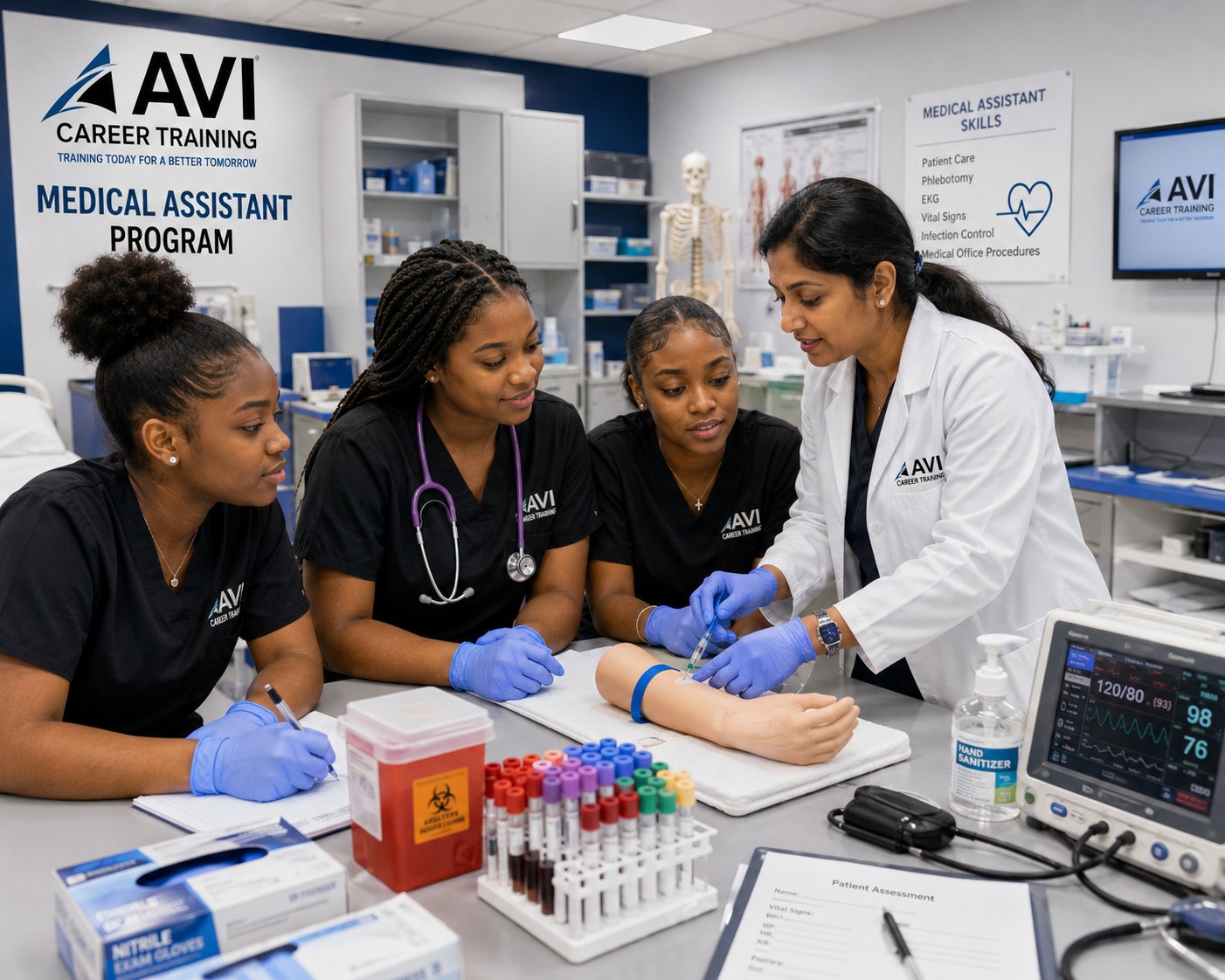
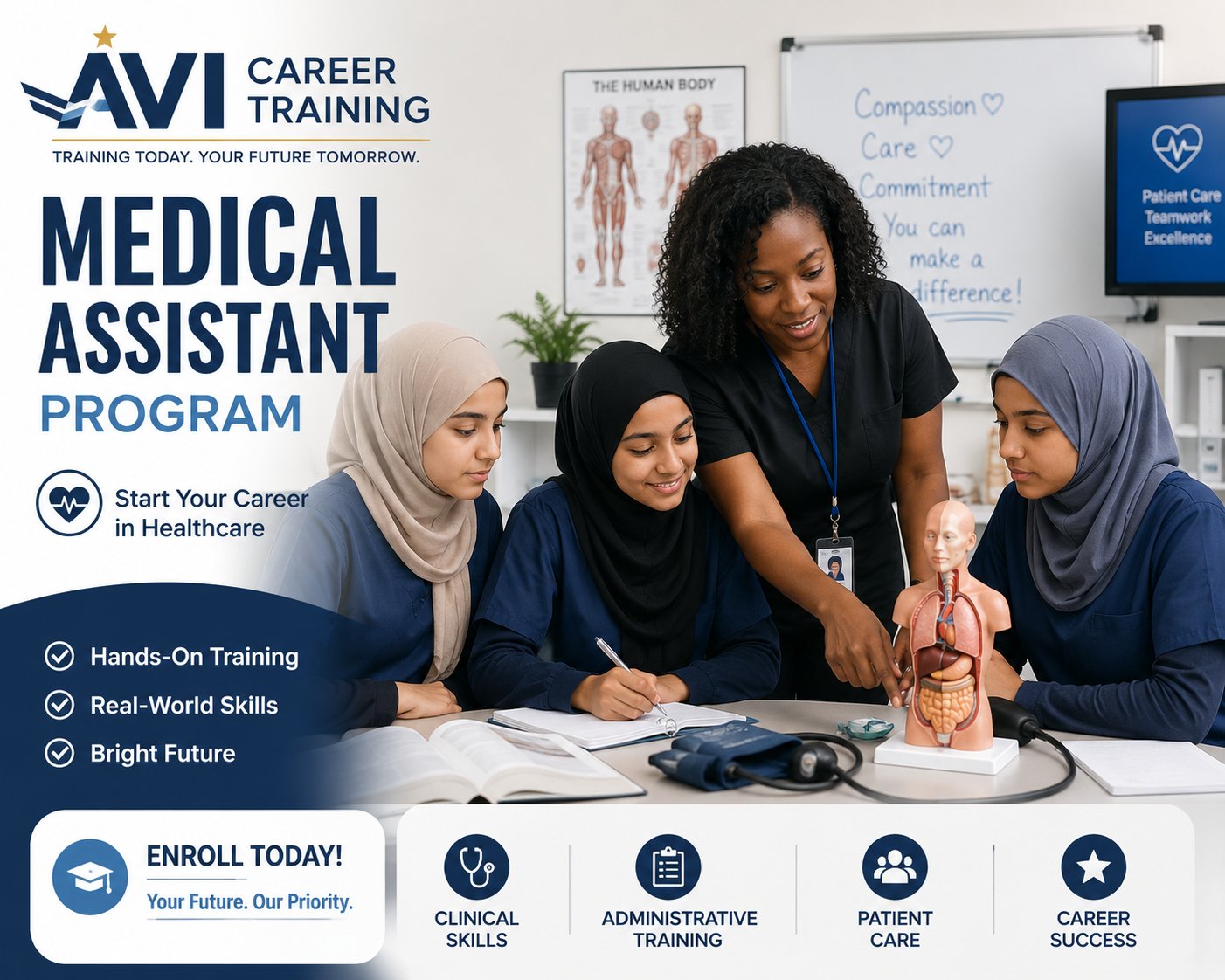
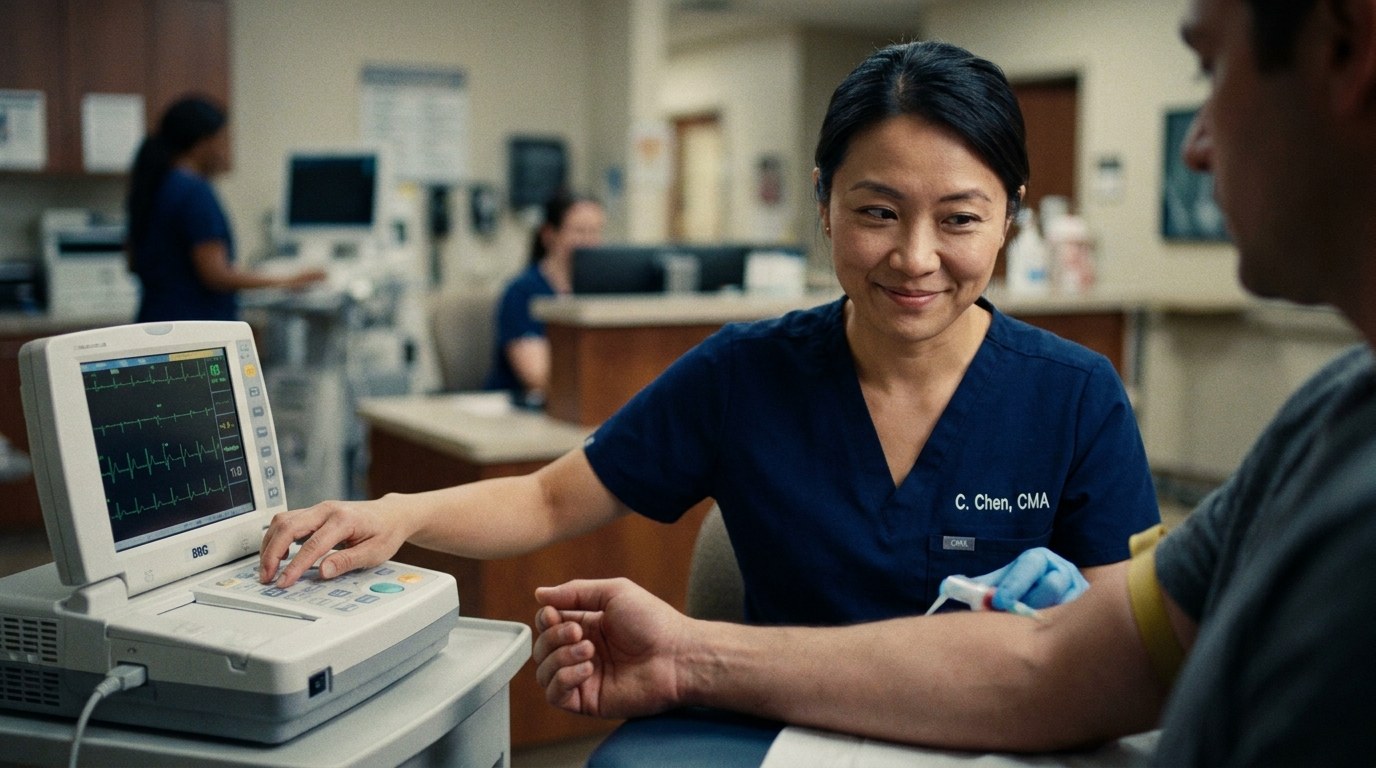
A medical assistant handles both clinical and administrative tasks inside a physician’s office, urgent care clinic, or hospital outpatient department — making them a versatile but often stretched support role.
On any given day, a medical assistant might take vital signs, prepare patients for examinations, draw blood, administer injections, update electronic health records, schedule appointments, handle billing codes, and answer phones. It’s a genuinely demanding job that keeps clinics running.
The limitations, however, are real:
If your vision of healthcare work involves hands-on, results-focused treatments in a beautiful environment — rather than taking blood pressure readings and filing charts — the medical assistant path may leave you feeling under-used.
—
What Is a Medical Esthetician — and How Is It Different?
A medical esthetician is a licensed esthetician who specializes in clinical-grade skin treatments — and this is where the medical assistant vs. esthetician career comparison gets genuinely interesting.
Medical esthetics is healthcare-adjacent beauty, not bedside nursing. Medical estheticians work in plastic surgery offices, dermatology practices, and medical spas performing treatments like:
Is a Medical Esthetician the Same as a Medical Assistant ?
No — and the distinction matters enormously. A medical esthetician holds a state-issued esthetics license (in Virginia, granted through the Virginia Department of Professional and Occupational Regulation — DPOR) and is trained specifically in skin health and cosmetic treatments. A medical assistant , by contrast, holds a certificate in clinical support tasks and cannot independently perform cosmetic or skin procedures.
The medical esthetician’s scope of practice includes aesthetic treatments the MA is not trained for and cannot legally perform. And in a medical spa — which is now one of the fastest-growing healthcare-adjacent work environments in Northern Virginia — it’s the esthetician, not the MA, who is in the treatment room with clients.
Can You Work in a Medical Spa Without a Medical Degree?
Yes — absolutely. Licensed estheticians and cosmetic laser technicians work in medical spas every day without a medical degree or nursing license. The treatments they perform fall within their licensed scope of practice, often supervised by a medical director on-site. This is one of the most common misconceptions among career-changers who assume clinical environments require clinical degrees. They don’t — not for the beauty and laser services that drive med spa revenue.
—
—
Training Time & Cost: Beauty School vs. Medical Assistant Programs
Training timeline is one of the top decision factors for career-changers — and here the esthetics path holds its own surprisingly well against the MA track.
How Long Does It Take to Become a Medical Assistant ?
A medical assistant certificate program typically runs 9–12 months at a community college or vocational school. Associate’s degree programs take two years. After completing the program, many employers expect or require candidates to pass a certification exam such as the CMA (AAMA) or RMA, adding preparation time.
How Long Does Esthetician School Take?
The Virginia State Board of Cosmetology requires 600 hours of training to qualify for the esthetics licensure exam. At AVI Career Training in Vienna, Virginia, the Basic Esthetics program is structured to get students through those 600 hours efficiently — so you can sit for your boards and enter the workforce without an unnecessary wait.
For students who want to go further, AVI’s Master Esthetics program builds on the foundational license with advanced clinical techniques. And AVI’s Cosmetic Laser Technician program adds laser and energy-based device credentials that are specifically in demand at medical spas throughout the Tysons Corner area and greater Northern Virginia.
Side-by-Side Training Comparison:
| | Medical Assistant | Esthetics (Virginia) | Cosmetic Laser Technician |
|—|—|—|—|
| Training Hours / Time | 9–12 months | 600 hours | Varies by program |
| Degree Required? | Certificate or Associate’s | State Board License | State-approved cert |
| Works in Med Spa? | Limited / admin support | Yes — treatment provider | Yes — laser treatments |
| Performs Cosmetic Treatments? | No | Yes | Yes |
What About Cost?
Medical assistant programs at community colleges in Northern Virginia typically run $6,000–$15,000 for certificate programs, with associate’s degree programs ranging higher. Private MA training schools can exceed $20,000.
AVI Career Training offers competitive tuition for its esthetics and laser programs, with financial aid available and the GI Bill® accepted for eligible veterans and service members. Speak with AVI admissions at (703) 943-9841 to get current tuition details and explore payment options.
Ready to take the first step? Apply to AVI today →
—
Where Do These Careers Lead? Salary, Growth & Work Environment
Salary data tells one part of the story — but work environment, career trajectory, and daily experience tell the rest.
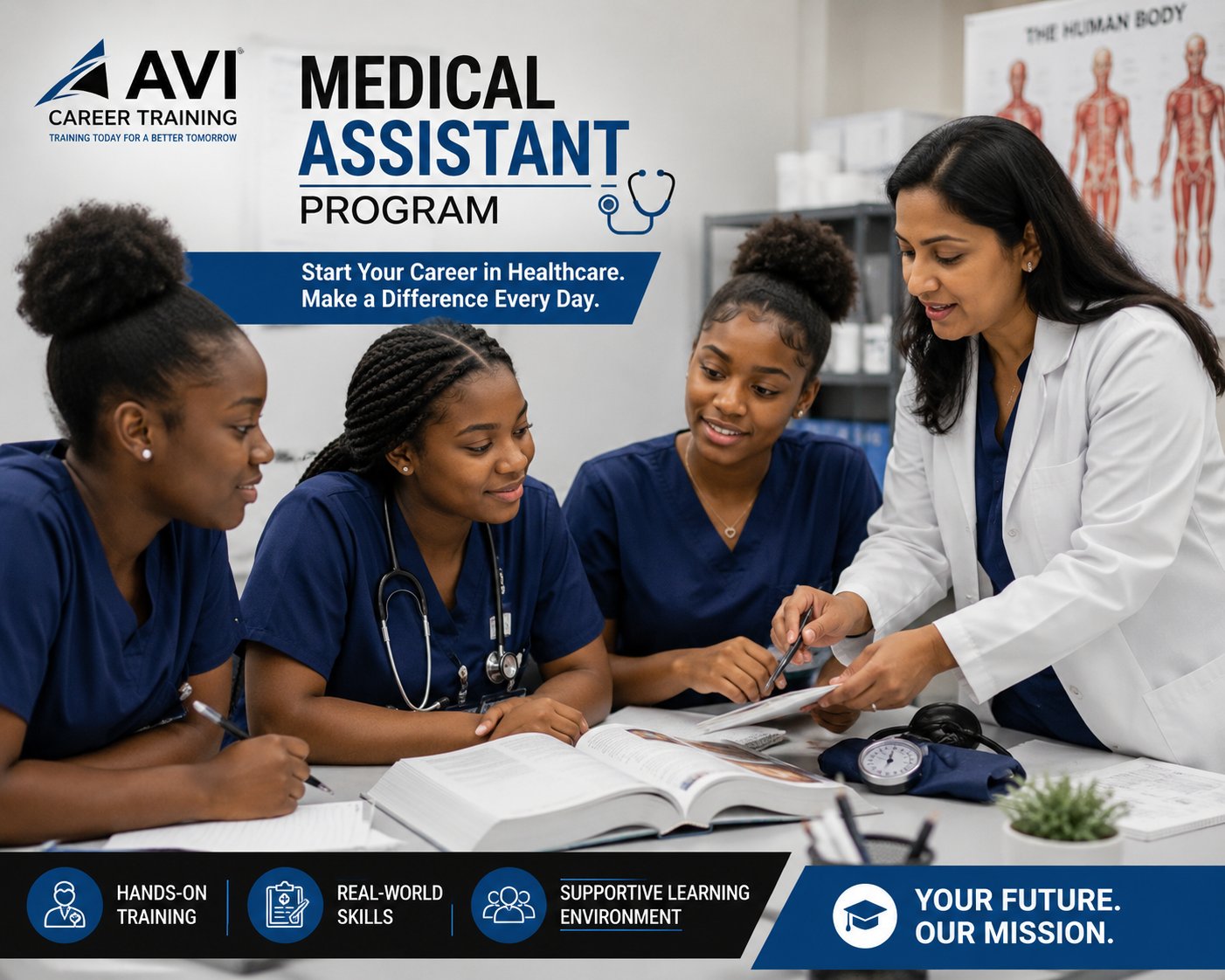
Medical Assistant Salary & Career Path
The Bureau of Labor Statistics reports the national median annual wage for medical assistants at approximately $42,000, with Virginia’s median slightly higher at around $44,000–$46,000. Job growth is solid — around 14–16% over the next decade — driven by an aging population and expanded healthcare access.
But growth in this role is largely credential-driven. To meaningfully increase income as an MA, you typically need to pursue additional clinical credentials (phlebotomy certification, EKG tech certification, or an LPN/RN license). Each of those requires more time and more tuition.
The work environment is often fast-paced in ways that feel more clerical than clinical — managing patient flow, handling insurance disputes, and keeping up with documentation demands. For people drawn to healthcare because they want to care for people in a hands-on way, the reality of an MA role can feel disappointing.
Medical Esthetician & Cosmetic Laser Technician Salary in Northern Virginia
This is where the comparison becomes compelling. Esthetician median salary nationally sits around $37,000–$40,000 — but that national figure hides the real story for licensed professionals in specialized, high-demand markets.
Medical spa estheticians in the Northern Virginia and DC metro market — one of the highest-income regions in the country — regularly earn well above the national median. When you add:
…the earning picture shifts significantly. Many licensed estheticians with med spa experience and laser credentials in the DMV area report total compensation well above the MA median — and with significantly more autonomy and client-facing satisfaction in their daily work.
What Careers Are Similar to Medical Assistant but Pay More?
Cosmetic laser technician is one of the clearest answers to this question. With the right training and state-approved certification, cosmetic laser technicians perform laser hair removal, skin rejuvenation treatments, and other energy-based procedures in med spa settings — often earning more than MAs with comparable or shorter training timelines. AVI’s Cosmetic Laser Technician program in Vienna, VA is built precisely for this market.
—
> Real Student Story: Marissa had been working in a hospital admissions office for three years and was considering an MA certificate to move into a more clinical role. A friend suggested she look into esthetics first. After researching the Virginia State Board requirements and visiting AVI Career Training’s campus near Tysons Corner, she enrolled in the Basic Esthetics program. Within months of graduating and passing her boards, she was hired at a dermatology-affiliated medical spa in McLean — doing chemical peels and laser-prep treatments, serving clients directly, and earning more than the MA salary she’d been targeting. “I didn’t realize I could work in a medical environment doing something this creative,” she said. “It felt like a completely different world from the front desk.”
—
If the Medical Spa Is Your Goal, Here’s the Faster Path
Here’s what most career-comparison articles won’t tell you directly: if your end goal is working in a clinical, results-focused beauty environment — a medical spa, dermatology office, or plastic surgery practice — you don’t need an MA credential to get there. You need an esthetics license, and possibly a laser certification on top of it.
The MA path trains you to support physicians across all clinical settings. But med spas aren’t general clinical settings. They’re specialized, treatment-focused environments where licensed estheticians and laser technicians are the revenue-generating service providers — not the support staff.
AVI Career Training’s Path to Medical Spa Careers
AVI Career Training in Vienna, Virginia offers three programs that feed directly into Northern Virginia’s growing medical spa market:
AVI is COE Accredited (Council on Occupational Education) and SCHEV Certified, which means the programs meet Virginia’s highest standards for professional beauty and wellness education. Instructors are licensed industry professionals — not just classroom teachers — with real med spa and clinical experience.
> Real Student Story: James had four years of service in the Army and was transitioning out with the Post-9/11 GI Bill® in hand. He’d looked at MA programs and PA school, but the timeline and cost felt prohibitive. A career counselor at his installation mentioned that AVI Career Training in Vienna accepted the GI Bill®. He enrolled in the Cosmetic Laser Technician program, completed his training, and was hired at a medical spa in the Tysons Corner area before his transition leave ended. “I wanted something medical but something I’d actually enjoy showing up for,” he said. “Laser work in a high-end spa? That’s exactly what I was looking for.”
Beauty Careers in Healthcare Settings: What Employers Actually Want
Medical spas in Northern Virginia are hiring for esthetics and laser skills — not administrative clinical support. When a Tysons Corner med spa posts a job opening, they’re looking for candidates with:
AVI’s curriculum is built around exactly these competencies — with inclusive training across all skin tones, which matters deeply in the diverse Northern Virginia and DC metro client base.
—
—
Frequently Asked Questions
Q: Is a medical esthetician the same as a medical assistant ?
A: No. A medical esthetician holds a state-issued esthetics license and performs skin treatments in clinical and med spa settings. A medical assistant holds a clinical support certificate and assists physicians with administrative and basic clinical tasks. They are different roles with different training, licensing, and job functions.
Q: What careers are similar to medical assistant but pay more?
A: Cosmetic laser technician and medical esthetician are two careers that sit in healthcare-adjacent environments, require comparable or shorter training timelines, and offer earning upside through tips, commission, and specialization — particularly in high-income markets like Northern Virginia and the DC metro area.
Q: Can you work in a medical spa without a medical degree?
A: Yes. Licensed estheticians and cosmetic laser technicians work in medical spas every day without medical degrees or nursing licenses. Their scope of practice — skin treatments, laser services, and cosmetic protocols — is covered by their state-issued beauty and wellness licenses, typically under a supervising medical director on-site.
Q: How long does esthetician school take compared to medical assistant training?
A: Virginia requires 600 hours of esthetics training to qualify for the State Board licensure exam. A medical assistant certificate program typically takes 9–12 months. The timelines are broadly comparable, but esthetics training leads to a different — and for many people, more fulfilling and higher-upside — career path.
Q: What is the difference between an esthetician and a medical assistant in a medical spa?
A: In a medical spa, the esthetician is the treatment provider — performing facials, chemical peels, laser prep, and skin services directly with clients. The medical assistant , if present, provides administrative and clinical support to the supervising physician. The esthetician typically has more direct client contact and is central to the spa’s revenue-generating services.
Q: Does AVI Career Training in Vienna, VA offer programs for med spa careers?
A: Yes. AVI Career Training offers Basic Esthetics (600 hours), Master Esthetics, and Cosmetic Laser Technician programs that prepare students for careers in medical spas, dermatology offices, and clinical beauty settings throughout the Northern Virginia and DC metro area. AVI is COE Accredited and SCHEV Certified.
Q: Does AVI accept the GI Bill® for esthetics programs?
A: Yes. AVI Career Training accepts the GI Bill® for eligible veterans and service members enrolled in qualifying programs. Contact AVI admissions at (703) 943-9841 or visit the campus in Vienna, VA to confirm eligibility for your specific program.