Medical Assistant vs. Esthetician: Which Career Is Right for You?
If you’re weighing a medical assistant vs. esthetics career, both paths lead to real, in-demand jobs — but they require different training, different licenses, and suit very different working styles. This guide breaks down exactly what each path looks like in Virginia, side by side, so you can make an informed decision without wasting time or money going in the wrong direction.
- Virginia esthetics licensure requires 600 clock hours of accredited training.
- Medical assistant programs in Virginia typically run 9–12 months with no state license required.
- Med spa estheticians and cosmetic laser techs in the Northern Virginia market can earn $45,000–$65,000+ per year.
- AVI Career Training in Vienna, VA accepts the GI Bill® for eligible programs — a meaningful advantage many medical assistant programs cannot match.
- Cosmetic laser technicians work in clinical settings alongside nurses and physicians — this is not a traditional “beauty school” path.
Not sure which direction fits your goals? Talk to AVI admissions today — no pressure, just real answers.
—
What Does a Medical Assistant Actually Do?
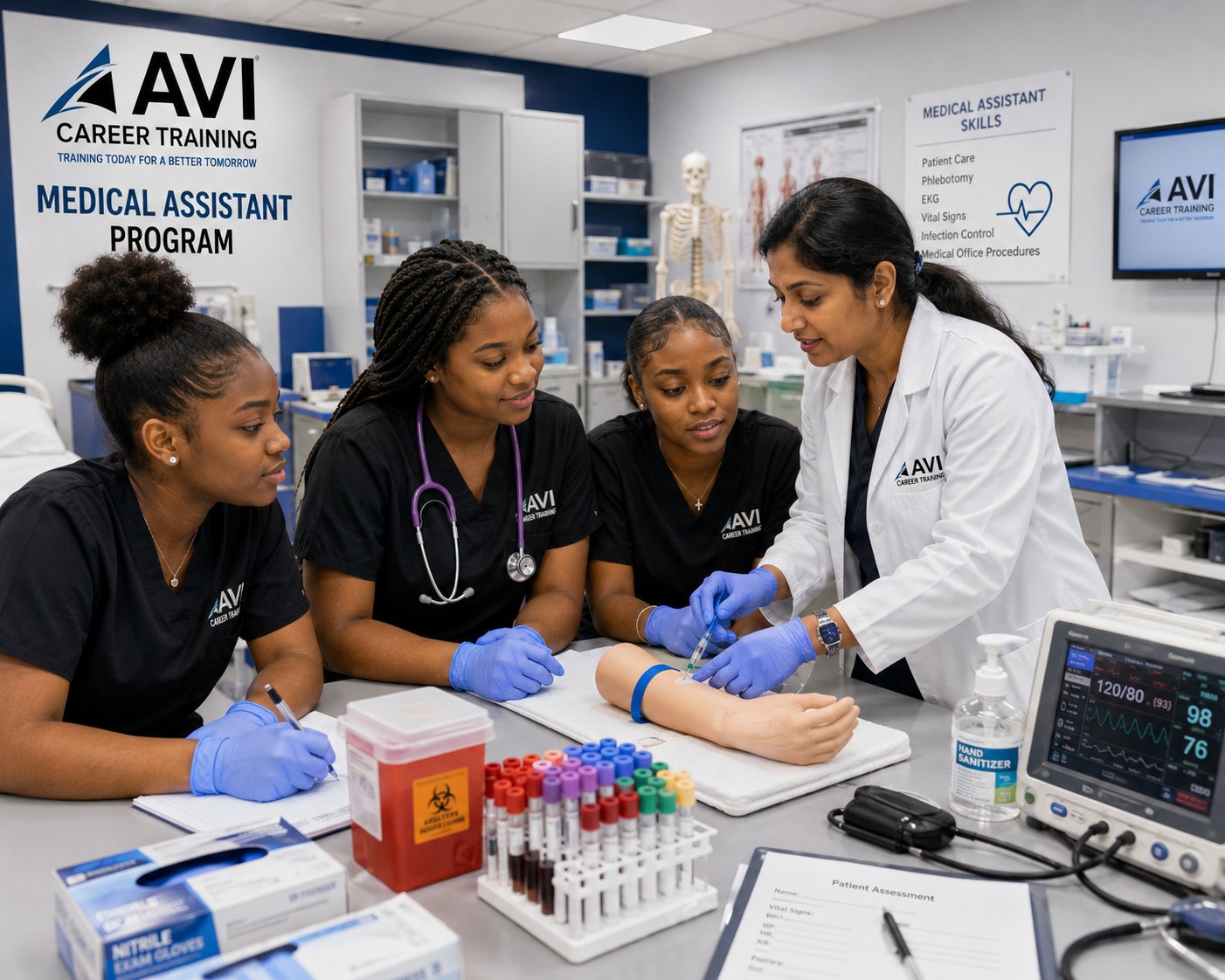
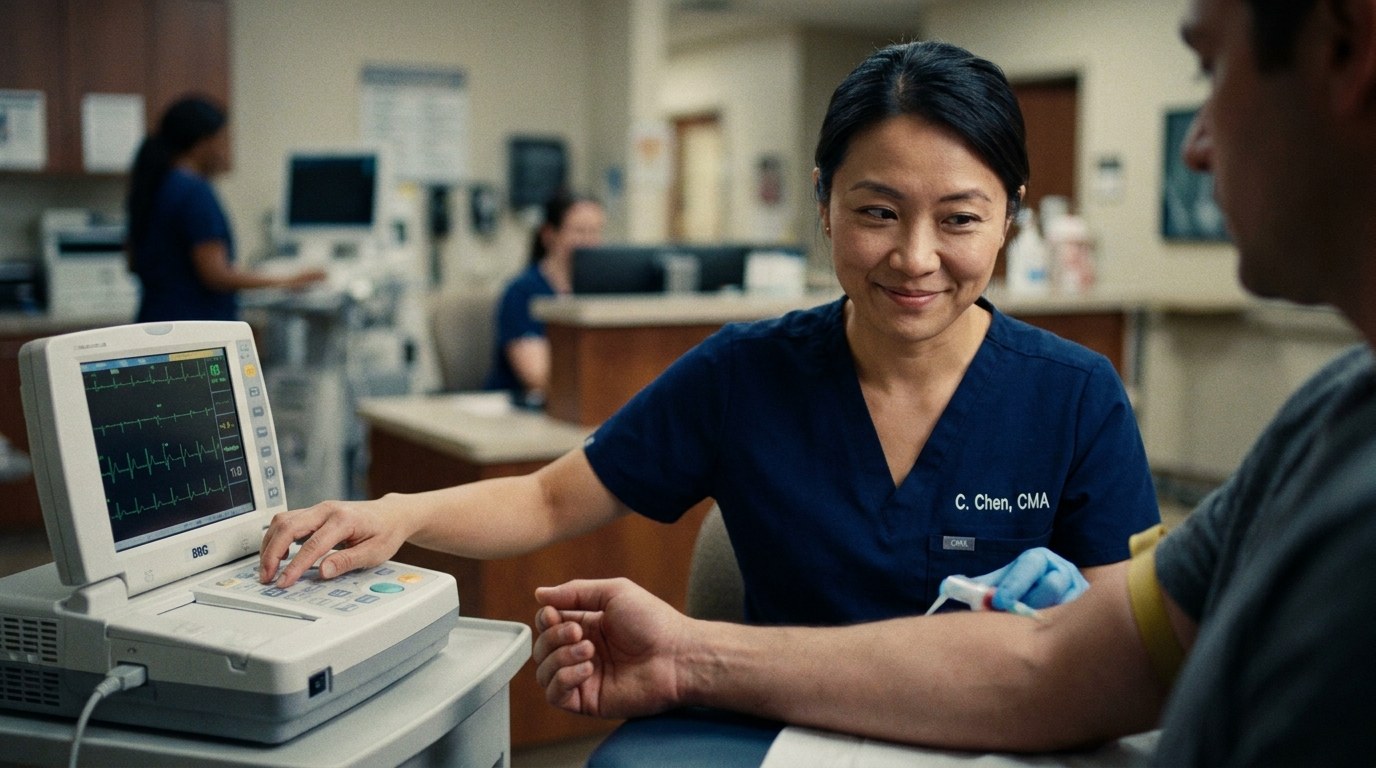
A medical assistant supports physicians and clinical staff by handling both patient-facing and administrative tasks in a healthcare setting. They are the backbone of most outpatient clinics, family practices, and urgent care centers.
On the clinical side, medical assistants take patient vital signs, assist with minor procedures, administer injections, draw blood, and prepare exam rooms. On the administrative side, they schedule appointments, handle patient records, process insurance forms, and manage billing workflows. Most medical assistants do both — sometimes in the same shift.
The work environment is almost always clinical: hospital systems, physician offices, specialty clinics, or outpatient surgery centers. If you’re drawn to the structure of a traditional healthcare environment — scrubs, shift schedules, direct patient care — this path may appeal to you.
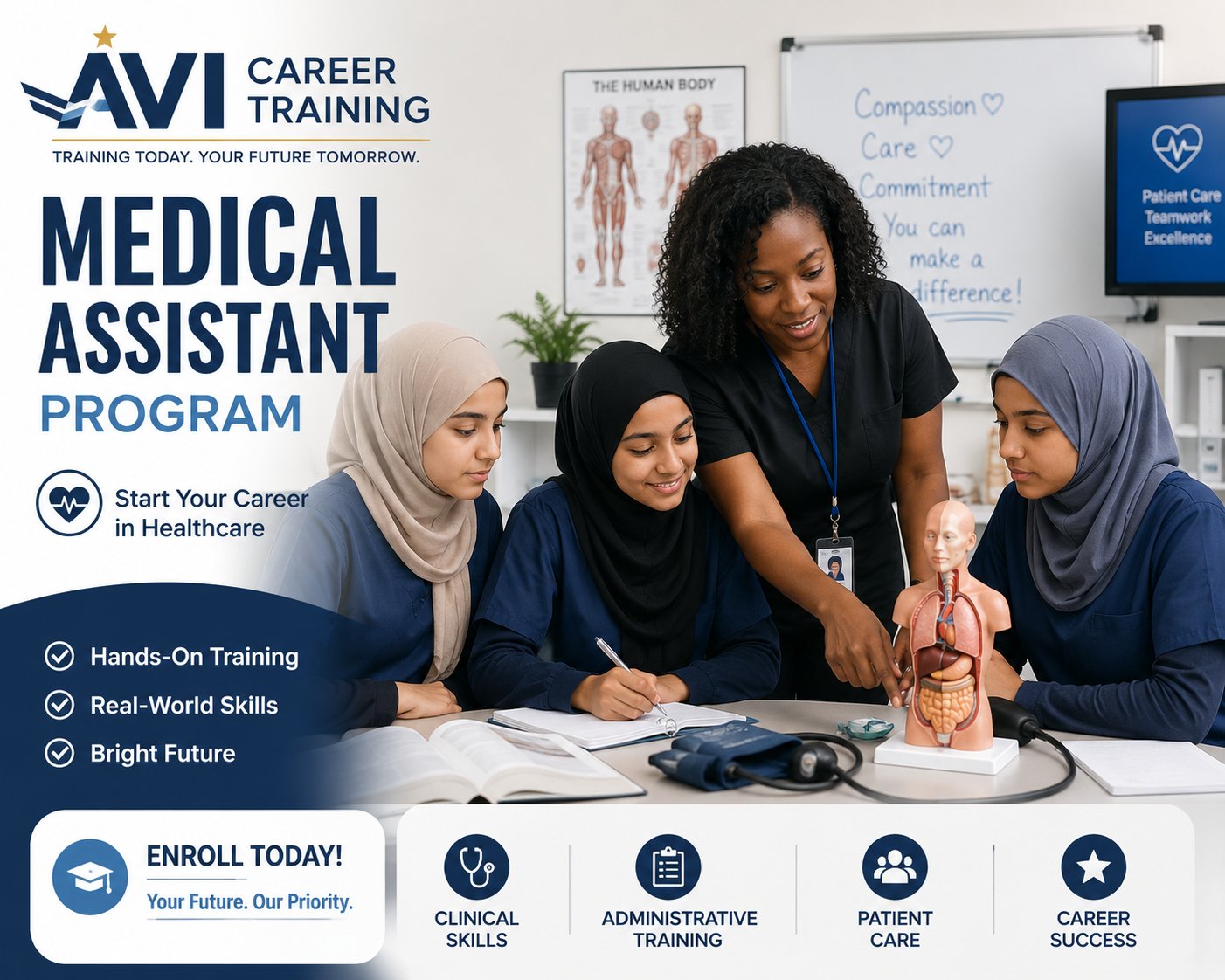
One important note: Virginia does not require medical assistants to hold a state license. Certification is optional but valued. The two most recognized credentials are the Certified Medical Assistant (CMA) through the American Association of Medical Assistants (AAMA) and the Registered Medical Assistant (RMA) through the American Medical Technologists (AMT). Most employers prefer or require at least one.
—
What Does an Esthetician — or Cosmetic Laser Tech — Actually Do?
An esthetician is a licensed skin care specialist trained to assess and treat skin conditions using professional-grade products, tools, and techniques. The scope is broader than most people expect.
Estheticians perform facials, chemical peels, microdermabrasion, waxing, lash and brow services, and advanced skin treatments. In a med spa or dermatology office, they work directly alongside physicians and nurse practitioners, performing clinical-grade treatments like high-frequency therapy, dermaplaning, and light-based therapies. This is not the same as working in a day spa — the clinical environment brings more responsibility, higher earnings, and a career profile that overlaps significantly with healthcare roles.
Cosmetic Laser Technicians take this even further. They operate laser and light-based devices — IPL, fractional laser, laser hair removal systems — in supervised clinical settings. They work with clients who have specific skin concerns: unwanted hair, pigmentation, vascular lesions, and skin texture issues. In Northern Virginia, this role is closely associated with the thriving med spa industry concentrated around the Tysons Corner and DC metro corridor.
The Clinical-Adjacent Reality
Here’s something most career comparison articles miss: estheticians and cosmetic laser technicians in medical settings interact with the same patient population as medical assistants. They review intake forms, document treatment notes, follow infection control protocols, and work within a clinical chain of command that includes licensed medical providers. The environment is clinical. The outcomes matter clinically. The distinction between “beauty” and “healthcare” is far thinner than most people assume.
—
Training Time, Cost, and Licensing — Side by Side
This is the section that matters most if you’re actively deciding between these two paths. Here’s how they compare specifically in Virginia.
| Factor | Medical Assistant | Esthetician / Laser Tech |
|---|---|---|
| Training Length | 9–12 months (certificate) | 600 hours / ~6–9 months (esthetics); varies for laser |
| State License Required? | No (Virginia) — certification voluntary | Yes — Virginia Board of Cosmetology license required |
| Licensing Body | AAMA (CMA) or AMT (RMA) — optional | Virginia DPOR / Board of Cosmetology — required |
| Median Salary (Virginia) | ~$38,000–$44,000/year* | ~$36,000–$65,000+/year* (med spa/laser higher end) |
| Federal Financial Aid | Often not available at for-profit schools | Available at COE-accredited schools like AVI (600-hour program) |
| GI Bill® Eligible? | Varies by school | Yes — at AVI Career Training |
| Work Setting | Physician offices, hospitals, urgent care | Med spas, dermatology offices, laser clinics, salons |
*Salary data sourced from U.S. Bureau of Labor Statistics. Ranges reflect Virginia market conditions and vary by setting, experience, and specialization.
The Financial Aid Difference No One Talks About
This is a practical factor that significantly impacts your real cost of training. Many medical assistant certificate programs — especially at for-profit schools — do not qualify for federal financial aid (Title IV/FAFSA). That means students often finance the entire cost out-of-pocket or through private loans.
AVI Career Training’s Esthetics program (600 hours) at our Vienna, Virginia campus is COE-accredited and SCHEV-certified, which means eligible students can access federal financial aid and the GI Bill® to reduce out-of-pocket costs substantially. If you’re a veteran, active-duty service member, or a working adult on a tight budget, this difference alone can determine which path is financially realistic for you.
—
Where These Careers Overlap: The Medical Esthetics Opportunity
The most exciting career space in Northern Virginia right now sits exactly at the intersection of beauty and clinical healthcare — and it’s where trained estheticians and cosmetic laser technicians are in highest demand.
Northern Virginia and the greater DC metro area have one of the highest concentrations of med spas per capita on the entire East Coast. These are not nail salons. They are physician-owned or physician-supervised facilities offering injectables, laser treatments, advanced chemical peels, body contouring, and skin rejuvenation services. They need clinical-grade staff who understand skin science, device safety, and patient care protocols.
Real Story: From Retail to a Med Spa Treatment Room
Consider someone like Janelle — a former retail manager in her early 30s from Fairfax County who spent months researching both medical assistant programs and esthetics school. She wanted clinical work but didn’t want to spend a full year in a hospital environment doing administrative tasks. After comparing training costs, financial aid options, and earning potential, she enrolled in AVI’s Esthetics program. Within eight months of graduating, she was working at a Tysons Corner med spa performing chemical peels and laser prep treatments alongside a licensed nurse practitioner — earning more than the median medical assistant salary in her first year.
Her path isn’t unusual. It reflects exactly what the Northern Virginia market is producing right now: demand for licensed estheticians who want clinical environments and are trained to deliver results.
—
How to Choose the Right Program for Your Goals in Northern Virginia
Choosing between these paths comes down to four practical questions.
1. What Work Environment Do You Actually Want?
If you want to work in a hospital, manage electronic health records, take blood pressure readings, and assist physicians with procedures — the medical assistant path aligns with that. If you want to work hands-on with clients in a med spa, dermatology practice, or laser clinic — focused on skin outcomes and results-driven treatments — esthetics or cosmetic laser technology is your lane.
2. How Quickly Do You Need to Be Earning?
A 9–12 month medical assistant certificate program means you’re not earning in your new career for the better part of a year. AVI’s Esthetics program runs approximately six to nine months depending on your schedule, and graduates are eligible to sit for the Virginia Board of Cosmetology exam immediately upon completion. Faster training means faster earning.
3. Does Financial Aid Availability Matter to You?
As covered above, AVI’s accredited programs qualify for federal financial aid and the GI Bill®. Many medical assistant programs at for-profit schools do not. If you’re financing your own training, this is not a minor consideration — it’s potentially the difference between graduating debt-free and carrying private loan obligations for years.
4. Do You Want Career Flexibility?
A Virginia esthetics license is portable and versatile. You can work in a day spa, a med spa, a dermatology office, on a cruise line, in a resort, or build your own clientele independently. Medical assistants are largely tied to employer settings. Estheticians have more options — including self-employment and suite rental — that give you control over your schedule and income ceiling.
- Basic Esthetics — 600 clock hours, Virginia Board of Cosmetology licensure track, federal financial aid eligible
- Master Esthetics — Advanced skin care techniques for spa and clinical settings
- Cosmetic Laser Technician — Device operation training for laser hair removal, IPL, and skin rejuvenation in supervised clinical environments
- Massage Therapy — 500+ hours, clinical and wellness applications, federal financial aid eligible
Real Story: The Career Changer Who Found His Clinical Niche
Marcus spent two years working as an administrative medical assistant at a primary care office in Herndon, Virginia. He liked the clinical environment but felt limited — his role was largely clerical, and advancement required additional nursing or PA education, which meant more years of school and significant expense. He came to AVI to explore Cosmetic Laser Technology. After completing training, he transitioned into a laser clinic in the Tysons Corner area where he now performs laser hair removal and skin treatments for a diverse client base — using hands-on skills every single day, in a clinical setting, earning significantly more than his previous role.
His background in healthcare gave him a foundation. AVI’s training gave him a license and a specialty.
—
—
Frequently Asked Questions
Q: Is a medical assistant or esthetician a better career choice?
A: It depends on your work environment preference and goals. Medical assistants work in traditional clinical settings with structured hours. Estheticians — especially those in med spas and clinical practices in Northern Virginia — can earn comparable or higher salaries with more scheduling flexibility and a faster training timeline.
Q: How long does it take to become a medical assistant in Virginia?
A: Most medical assistant certificate programs in Virginia run 9–12 months. Virginia does not require a state license, but many employers prefer candidates with the CMA (AAMA) or RMA (AMT) certification, which requires passing a national exam after completing an accredited program.
Q: Can an esthetician work in a medical setting?
A: Yes. Licensed estheticians regularly work in dermatology offices, plastic surgery practices, med spas, and laser clinics across Virginia. In these settings, they perform clinical-grade treatments under physician supervision and often work alongside nurses and medical assistants.
Q: What is the difference between a medical esthetician and a medical assistant ?
A: A medical esthetician holds a Virginia esthetics license and performs advanced skin treatments in clinical or medical spa settings. A medical assistant handles both clinical tasks (vitals, injections, specimen collection) and administrative duties (scheduling, records) in a physician’s office or hospital. The roles serve different functions — estheticians focus exclusively on skin care outcomes; medical assistants support broader patient care workflows.
Q: What beauty school programs lead to medical or clinical careers?
A: AVI Career Training in Vienna, Virginia offers Esthetics (600 hours), Master Esthetics, and Cosmetic Laser Technician programs that directly prepare graduates for careers in med spas, dermatology offices, and laser clinics — all clinical-adjacent environments. These are not traditional salon programs; they are designed for students who want clinical results-driven careers.
Q: Does AVI Career Training accept GI Bill® benefits?
A: Yes. AVI Career Training accepts the GI Bill® for eligible programs. This is a significant advantage for veterans and active-duty service members comparing training options, as many medical assistant certificate programs at for-profit schools do not qualify for GI Bill® benefits or federal financial aid.
Q: Is esthetics school in Northern Virginia a good investment?
A: With the Northern Virginia and DC metro area hosting one of the highest concentrations of med spas on the East Coast, and with cosmetic laser technicians in the region earning $45,000–$65,000+, a 600-hour esthetics program at a COE-accredited school like AVI is a strong investment — especially when federal financial aid and the GI Bill® can reduce out-of-pocket training costs.
—
Ready to Train for a Clinical Career in Northern Virginia?
If you came here researching medical assistant programs in Northern Virginia and you’re still deciding