Medical Assistant Programs in Northern Virginia: A Career Guide
Medical assistant programs in Northern Virginia take between nine months and two years to complete and can open the door to a stable healthcare career — but they’re not the only path worth exploring if you’re changing careers or entering the workforce for the first time.
If you’re weighing your options in the DC metro area, this guide covers everything you need to know: what medical assistants actually do, how to get certified in Virginia, what you can expect to earn in NoVA, and how wellness careers like esthetics or massage therapy compare on every dimension that matters — time, cost, earning potential, and day-to-day work life.
—
Key Takeaways
- Medical assistant programs in Northern Virginia run 9–24 months at most community colleges and vocational schools.
- Virginia does not require state licensure for medical assistants — but most employers expect CMA or RMA certification.
- NoVA medical assistants earn approximately $42,000–$58,000/year, higher than the national average due to proximity to major health systems.
- Esthetics licensure in Virginia requires only 260 hours of training — one of the fastest paths to a licensed healthcare-adjacent career in the state.
- AVI Career Training in Vienna, VA offers COE-accredited wellness programs including Esthetics, Massage Therapy, and Cosmetic Laser Technology — with programs starting in weeks, not years.
—
What Does a Medical Assistant Do in Virginia?
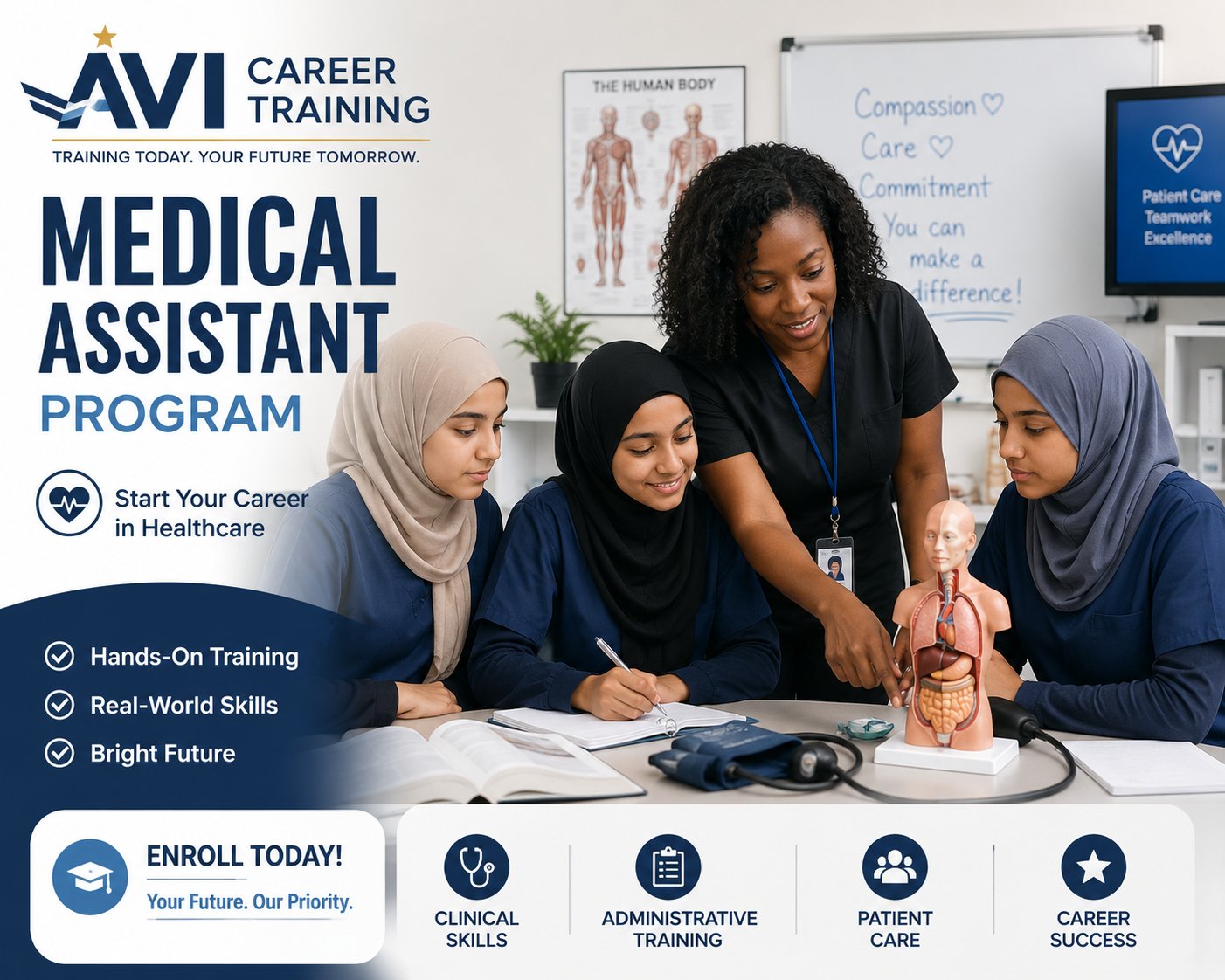
A medical assistant is a multi-role healthcare professional who works in clinical and administrative settings — typically in physician offices, urgent care clinics, and outpatient facilities.
The role splits into two core areas:
Clinical Duties
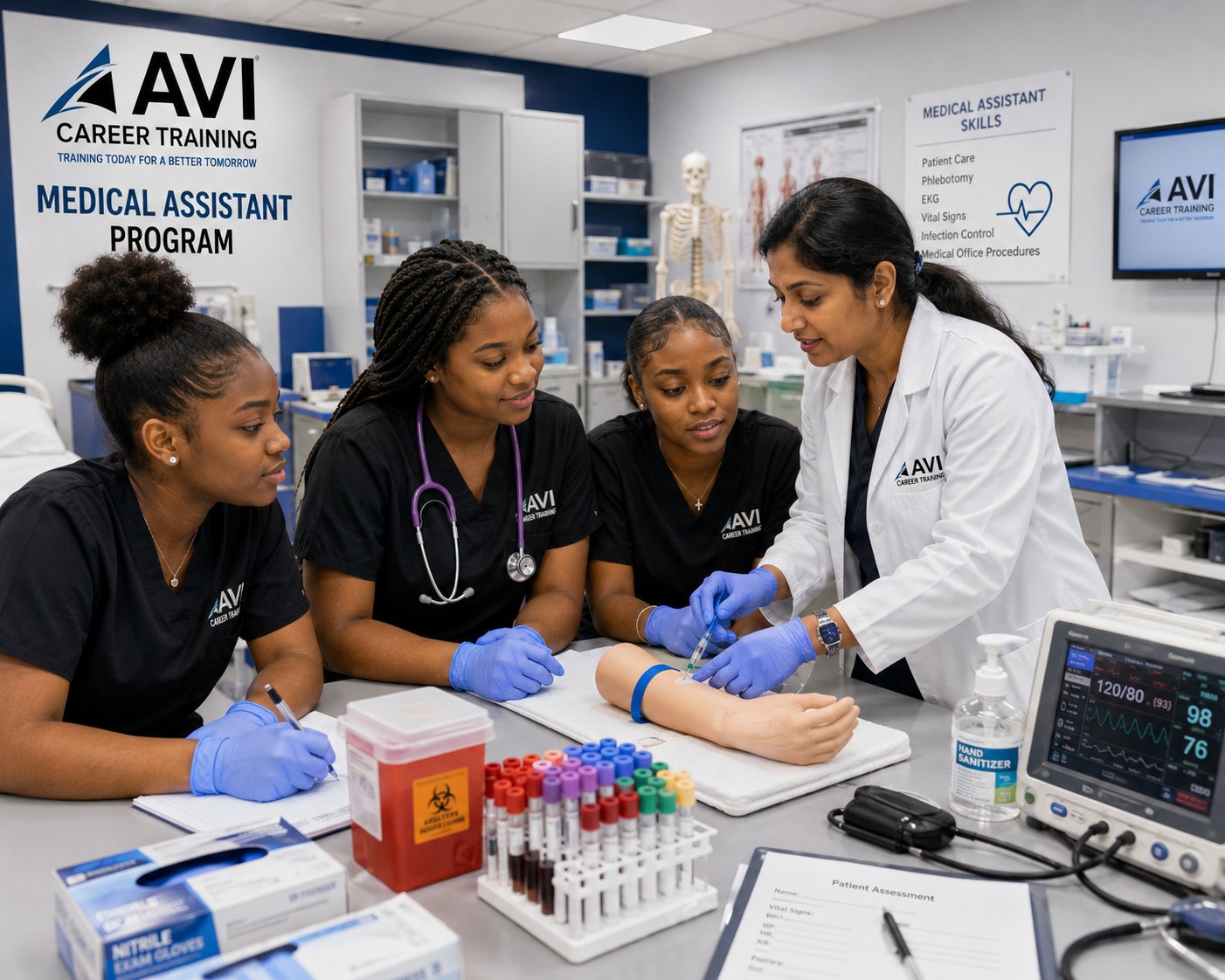
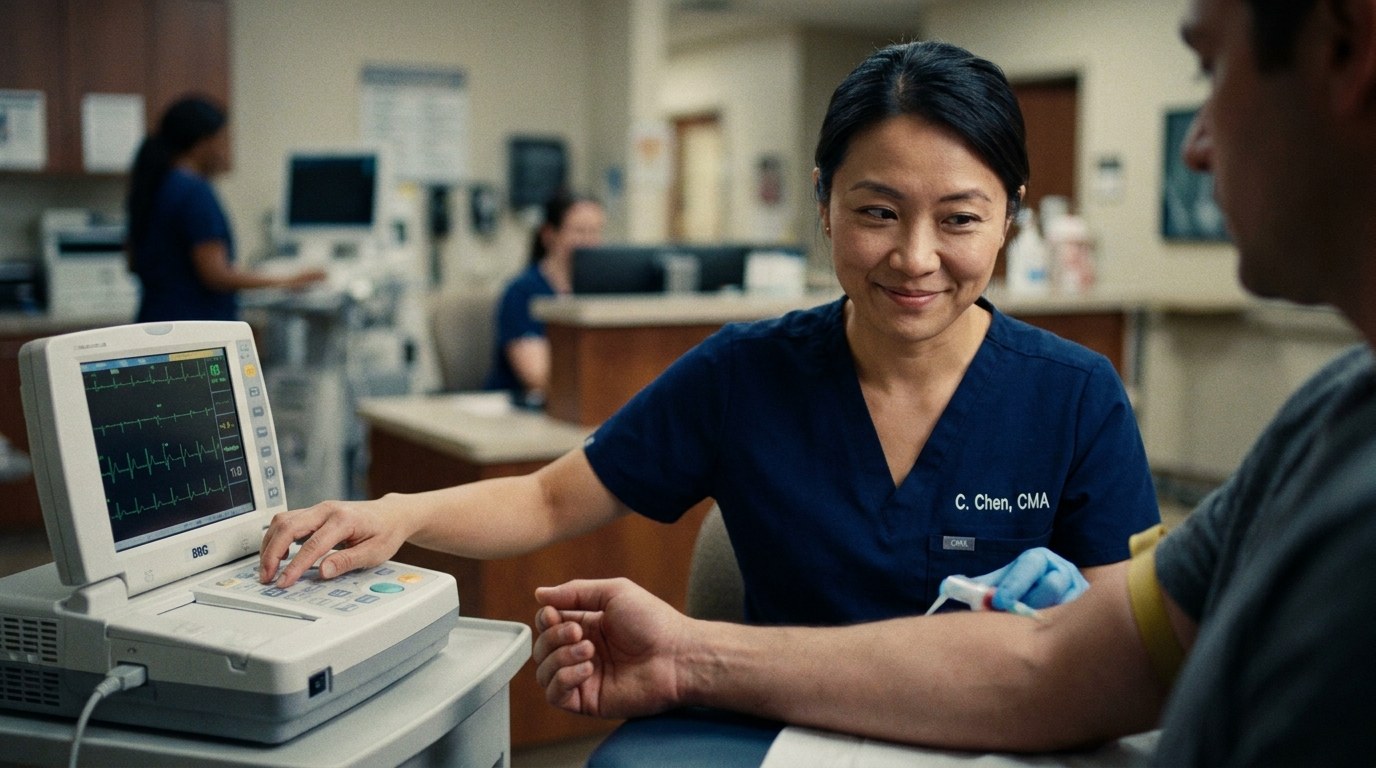
On the clinical side, medical assistants take patient vitals, prepare exam rooms, assist physicians during procedures, draw blood for lab work, administer medications under supervision, and perform basic diagnostic tests like EKGs. In a busy NoVA clinic near a system like Inova Health or Kaiser Permanente, this part of the job moves fast.
Administrative Duties
On the administrative side, medical assistants handle patient scheduling, insurance verification, medical billing codes, electronic health records (EHR) entry, and patient intake documentation. Some positions are blended; others specialize in one side or the other depending on the practice size.
Important for self-qualification: This career is firmly rooted in traditional medical settings — physician offices, clinics, and hospitals. If you picture yourself working in a spa, wellness studio, or client-facing aesthetic environment, that’s a meaningfully different work life. Both are valid; they just suit different personalities.
—
How to Become a Medical Assistant in Virginia
Becoming a medical assistant in Virginia does not require a state license — but that doesn’t mean you can walk into a job without credentials.
Virginia Licensing Requirements
The Virginia Board of Medicine does not issue a separate license for medical assistants. This distinguishes the role from cosmetologists, massage therapists, and estheticians, who must all pass state board exams administered through the Virginia Department of Professional and Occupational Regulation (VA DPOR) before working professionally.
However, the absence of a state license doesn’t mean employers skip credentialing. Most practices in Northern Virginia — especially those affiliated with major health systems — require one of the following national certifications:
Program Length & Training Timeline
Here’s what program timelines look like across Northern Virginia:
After completing a program, candidates schedule and sit for the CMA or RMA exam. Add one to three months for exam prep and scheduling, and you’re realistically looking at 10–27 months from enrollment to first paycheck as a credentialed MA in Virginia.
Tuition Costs in Northern Virginia
Tuition for medical assistant programs in the NoVA area ranges from approximately $6,000–$20,000 depending on whether you attend a community college, private vocational school, or online institution. Community college programs tend to be less expensive but run longer. Shorter trade programs may cost more per month but get you into the workforce faster.
—
Medical Assistant Salary & Job Outlook in Northern Virginia
Northern Virginia medical assistants earn more than the national average — and that gap is meaningful.
NoVA/DC Metro Area
(BLS, 2023)
2022–2032 (BLS)
According to the U.S. Bureau of Labor Statistics, medical assistants nationwide earned a median annual wage of approximately $40,700 in 2023. In the Washington-Arlington-Alexandria DC-VA-MD metro area, that figure trends notably higher — estimated between $42,000 and $58,000 annually — driven by the density of large healthcare employers like Inova Health System, MedStar Health, Kaiser Permanente Mid-Atlantic, and numerous federal health agencies in the DC corridor.
Entry-Level vs. Experienced Pay
Entry-level MAs in Northern Virginia — those with under two years of experience — typically start between $38,000 and $44,000. With three to five years of experience, specialization in a clinical niche (like cardiology or dermatology), or movement into a supervisory role, salaries can reach $55,000–$62,000 or beyond.
Job Outlook for Medical Assistants in the DC Metro
Nationally, BLS projects 14% job growth for medical assistants through 2032 — much faster than average. The DC metro market mirrors this trend, with demand fueled by an aging population, expansion of outpatient care facilities, and the region’s high concentration of federal health workers and their dependents.
It’s a stable career with genuine demand. The question is whether it’s the right career for you — and that’s worth examining honestly.
—
Medical Assistant vs. Wellness & Esthetics Careers — How Do They Compare?
This is the comparison most career explorers in Northern Virginia aren’t making — but should be. Medical assisting and wellness careers like esthetics, massage therapy, and cosmetic laser technology share important traits: hands-on work, client interaction, and growing demand in the NoVA market. But they differ significantly in training time, work environment, and income potential.
Here’s an honest, side-by-side look:
| Factor | Medical Assistant | Esthetics (Virginia) | Massage Therapy (Virginia) | Cosmetic Laser Tech |
|---|---|---|---|---|
| Training Length | 9–24 months | 260 hours (~2–4 months) | 500 hours (~5–6 months) | Varies by program |
| State License Required? | No (certification recommended) | Yes — VA State Board | Yes — VA Board of Nursing | Verify with VA DPOR |
| Est. Annual Salary (NoVA) | $42,000–$58,000 | $38,000–$65,000+ | $45,000–$70,000+ | $45,000–$75,000+ |
| Income Ceiling | Moderate — tied to employer | High — suite rental/self-employment | High — private practice potential | High — med spa demand growing |
| Work Environment | Clinic, hospital, physician office | Spa, med spa, salon, suite | Spa, private practice, wellness center | Med spa, dermatology, aesthetics clinic |
| Schedule Flexibility | Limited — clinic hours | High — especially self-employed | High — set your own hours | Moderate to high |
What the Numbers Actually Mean
Esthetics and massage therapy have lower salary floors than medical assisting — but higher ceilings, especially for those who move into suite rental, build a loyal clientele, or specialize in high-demand services like chemical peels, microneedling, or medical-grade facials. In Northern Virginia’s affluent market (Tysons Corner, McLean, Great Falls, Reston), experienced estheticians and massage therapists consistently out-earn entry-level medical assistants.
The other key difference is time to licensure. Virginia requires just 260 hours for esthetics licensure — meaning a motivated career-changer could be licensed and working in four months or less. That’s compared to a nine-month minimum for even the shortest MA programs.
A real scenario to consider: A former retail manager from Vienna starts an esthetics program in September. By January, she’s completed her 260 hours, passed her Virginia State Board exam, and is working at a med spa near Tysons Corner — while an MA student she enrolled alongside is still in classroom training with six more months to go.
—
Exploring Wellness Career Training in Northern Virginia
If the comparison above caught your attention — especially the faster timelines and income flexibility — you have options in Northern Virginia worth knowing about.
AVI Career Training, located at 1595 Spring Hill Rd #720 in Vienna, Virginia (minutes from Tysons Corner), is a COE-accredited, SCHEV-certified beauty and wellness school offering hands-on career programs in:
Basic Esthetics
Virginia requires 260 hours for esthetics licensure — AVI’s Basic Esthetics program meets this requirement with a curriculum built around inclusive techniques that work on every skin tone. You’ll learn facials, chemical exfoliation, waxing, lash and brow services, and skin analysis in a real clinic environment.
Meet Priya: A healthcare administrative worker from Fairfax, Priya spent two years scheduling appointments for a busy dermatology office. She loved the skincare side of what she saw every day but felt stuck in a support role. She enrolled in AVI’s Basic Esthetics program, completed her 260 hours, passed her Virginia State Board exam, and landed a position at a Tysons-area med spa within 90 days of graduating. She now earns more per hour than she did managing scheduling — and she’s building a clientele.
Master Esthetics
For those who want advanced clinical techniques — microneedling, advanced chemical peels, lymphatic drainage, and medical-grade skin treatments — AVI’s Master Esthetics program builds on foundational licensure with deeper clinical skills suited for med spa and dermatology settings.
Massage Therapy
Virginia requires 625 hours for massage therapy licensure. AVI’s Massage Therapy program covers Swedish, deep tissue, and therapeutic modalities, preparing graduates to sit for the MBLEx licensing exam. Massage therapists in the DMV area who build private practices consistently report strong income — and meaningful schedule flexibility.
Meet Marcus: A personal trainer from Arlington, Marcus had been thinking about massage therapy for years as a natural extension of the wellness work he already did. After a single conversation with AVI’s admissions team, he enrolled in the Massage Therapy program. About five months later, he passed his MBLEx and opened a part-time private practice alongside his training clients. Within a year, his massage income had grown enough that it became his primary focus.
Cosmetic Laser Technician
Cosmetic laser technology sits squarely in the med spa and aesthetic clinic space — one of the fastest-growing segments of the healthcare-adjacent market in Northern Virginia. Services like laser hair removal, skin resurfacing, and photorejuvenation command premium pricing. AVI’s Cosmetic Laser Technician program trains students on clinical laser systems used in real professional settings.
Why AVI?
—
Frequently Asked Questions
Q: How long does it take to become a medical assistant in Virginia?
A: Most medical assistant programs in Virginia take between nine months and two years depending on the program type. Community college associate degree programs typically run 18–24 months. Vocational certificate programs can be completed in as few as nine months. Add one to three months for certification exam prep after graduation.
—
Q: Do medical assistants need to be licensed in Virginia?
A: No. Virginia does not require state licensure for medical assistants. However, most employers in Northern Virginia expect candidates to hold a CMA (Certified Medical Assistant ) credential from the AAMA or RMA (Registered Medical Assistant ) credential from the AMT before hiring.