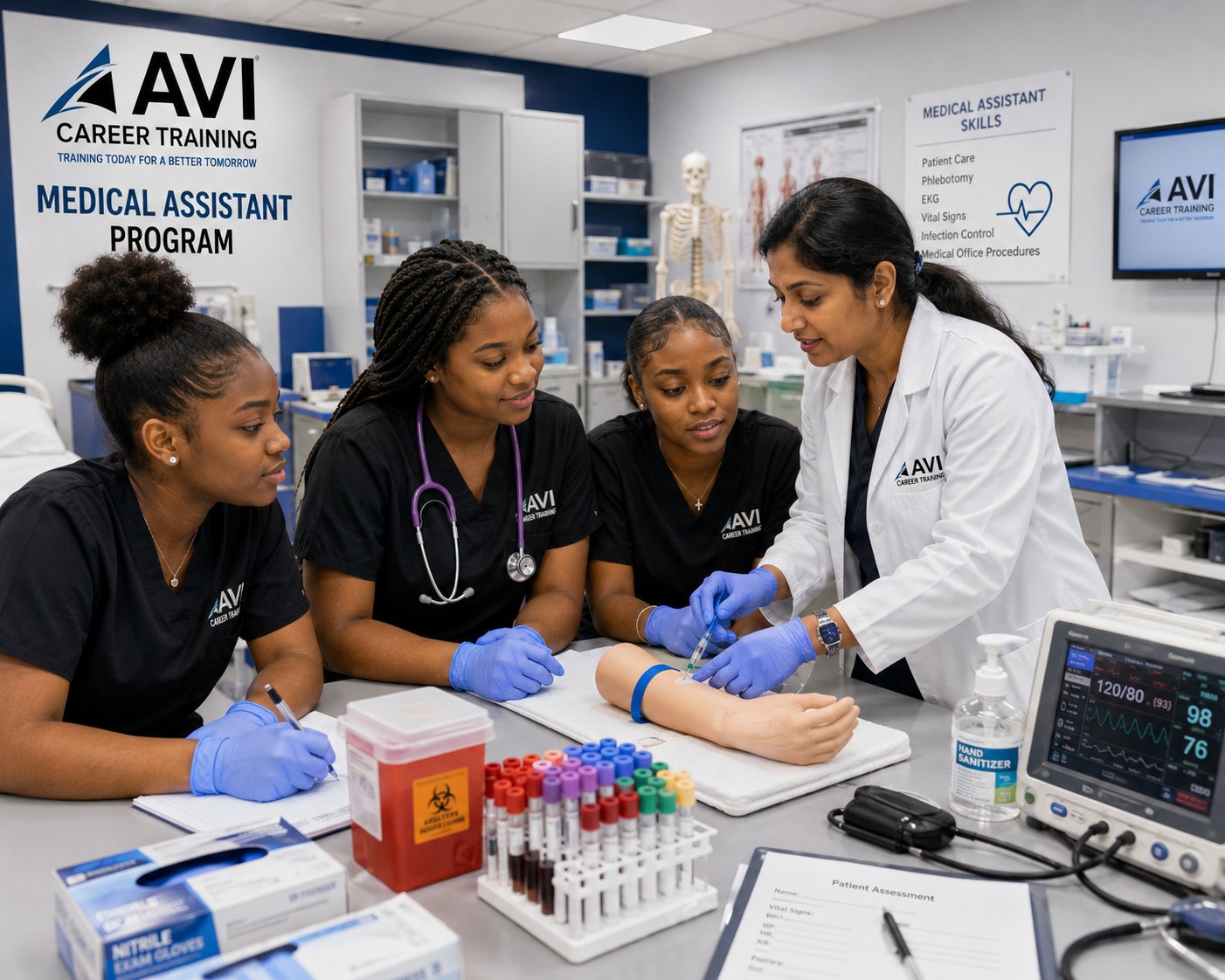
Medical Assistant Programs in Northern Virginia: What to Know Before You Enroll
Northern Virginia has some of the strongest demand for medical assistants in the entire country — and if you’re researching training programs in the area, you’re asking exactly the right questions at exactly the right time. Before you commit to a program, a timeline, or a tuition payment, here’s what you actually need to know: how the training works, what certification looks like in Virginia, what you’ll earn, and whether an MA career is truly the right fit for your goals.
This guide covers all of it honestly — including some alternatives worth considering if your interests lean toward the client-facing, wellness, or aesthetics side of healthcare.
Key Takeaways
- Medical assistant certificate programs in Virginia typically take 9–12 months to complete; associate degree programs take approximately 2 years
- Virginia does not require state licensure to work as a medical assistant — but most employers in the NoVA market prefer nationally certified candidates
- Median annual salary for MAs in the Washington DC–Arlington–Alexandria metro area ranges from approximately $42,000–$48,000
- If you’re drawn to skin health, aesthetics, or hands-on wellness work, programs like Esthetics, Cosmetic Laser Technology, and Massage Therapy may be a stronger — and faster — path
- AVI Career Training in Vienna, VA offers COE-accredited, hands-on wellness programs with financial aid and GI Bill® acceptance
What Does a Medical Assistant Actually Do?
Medical assistants work in physician offices, outpatient clinics, specialty practices, and urgent care centers. The role is genuinely dual-track — part clinical, part administrative — and your day-to-day duties depend heavily on the size and type of practice you’re in.
On the clinical side, MAs typically:
– Take and record patient vital signs
– Assist physicians during examinations
– Perform phlebotomy (drawing blood)
– Administer injections and medications as directed
– Conduct EKG tests
– Collect and process lab specimens
– Prepare examination rooms between patients
On the administrative side, MAs often:
– Schedule and confirm patient appointments
– Manage medical records and electronic health systems
– Handle insurance verification and prior authorizations
– Process medical billing and coding documentation
– Greet patients and manage front-desk workflows
The Bureau of Labor Statistics classifies medical assistants under the healthcare support occupations category. The BLS projects 14% job growth for MAs through 2032 — significantly faster than average for all occupations. That number reflects real demand, not marketing language.
What it also reflects is a job that requires both people skills and procedural accuracy. If you thrive in fast-paced clinical environments and find genuine satisfaction in coordinating patient care, the role can be deeply rewarding.
Medical Assistant Program Requirements and Timelines in Virginia
How Long Does It Take to Become a Medical Assistant in Virginia?
Most students in Virginia complete a medical assistant certificate program in 9–12 months through a community college or accredited vocational school. If you pursue an associate degree in medical assisting, expect closer to 2 years of full-time study.
Certificate programs tend to be the more popular choice for career-changers and working adults — they move faster, cost less, and still qualify graduates to sit for national certification exams.
Does Virginia Require Licensure for Medical Assistants?
No — Virginia does not require a state license to work as a medical assistant . The Virginia Department of Health Professions does not issue a separate MA credential. You can legally be employed as a medical assistant in Virginia without any certification at all.
That said, most employers in the Northern Virginia and DC metro corridor expect — and often require — national certification. The three most widely recognized credentials are:
- CMA (Certified Medical Assistant ) — issued by the American Association of Medical Assistants (AAMA)
- RMA (Registered Medical Assistant ) — issued by American Medical Technologists (AMT)
- CCMA (Certified Clinical Medical Assistant ) — issued by the National Healthcareer Association (NHA)
Each certification has its own eligibility requirements and exam format. The CMA through AAMA is generally considered the most competitive credential and requires graduation from a CAAHEP- or ABHES-accredited program.
What to Look for in a NoVA Medical Assistant Program
If you’re evaluating programs in the Northern Virginia area, look for:
- Accreditation through CAAHEP or ABHES (required for CMA eligibility)
- A curriculum that includes both clinical and administrative training
- A hands-on externship component in a real healthcare setting
- Transparent tuition costs and available financial aid
- Clear pass rates on national certification exams
Northern Virginia Community College (NOVA) is the most well-known local option. Several private career schools also offer accelerated certificate programs. Compare total program costs carefully — not just tuition, but fees, supplies, and exam costs.
Medical Assistant Salary and Job Outlook in Northern Virginia
What Do Medical Assistants Earn in Northern Virginia?
According to BLS data, the median annual wage for medical assistants in the Washington–Arlington–Alexandria DC metro area is approximately $42,000–$48,000 per year, which runs higher than the national median of around $37,000–$40,000. The region’s cost of living and concentration of major health systems drive wages up relative to the national average.
Entry-level MAs typically start closer to $35,000–$38,000 annually. Experienced MAs with specialty certifications — particularly in cardiology, dermatology, or surgical settings — can move into the $50,000+ range over time.
The Northern Virginia Healthcare Market
The NoVA corridor is home to some of the most significant health systems in the Mid-Atlantic:
- Inova Health System — one of the largest healthcare networks in the region, with major facilities in Falls Church, Fairfax, and Manassas
- Kaiser Permanente — a major employer with clinics throughout NoVA
- MedStar Health — spanning Northern Virginia and the broader DC region
This density of healthcare employers creates strong, consistent hiring demand for qualified MAs — particularly those with national certification and EHR (electronic health record) experience.
Is a Medical Assistant Career the Right Fit for You? Questions to Ask First
Here’s where it’s worth slowing down. The MA field is strong — but it’s not the right fit for everyone. Before you enroll in any program, ask yourself these questions honestly.
Do you prefer working in clinical, hospital-adjacent environments?
Medical assistants work almost exclusively in physician offices, clinics, and outpatient settings. If the idea of a structured healthcare environment energizes you, that’s a strong signal. If you’re drawn to more creative, client-driven, or spa-style environments, that’s a signal too.
Are you comfortable with administrative work as a core part of your role?
Many MA positions involve significant scheduling, billing, and records management. If you want a role that’s primarily hands-on and client-facing, you might find the administrative duties frustrating over time.
Are you interested in skin health, aesthetics, or body wellness?
This is an important one. A significant number of people who search for medical assistant programs are actually drawn to the skin health, aesthetics, and personal wellness side of healthcare — not necessarily the phlebotomy and EKG side. If your interest is rooted in facial treatments, laser skin care, or therapeutic bodywork, there’s a faster, more direct career path available to you.
Do you want to be working — and earning — in less than a year?
Certificate MA programs run 9–12 months. But some allied health and wellness programs run even shorter — and lead to state licensure with strong earning potential in growing fields.
Does the idea of owning your own practice or working independently appeal to you?
Medical assistants work under physician supervision. They cannot practice independently. Estheticians, massage therapists, and cosmetic laser technicians, by contrast, can build independent client bases, work in private studios, or open their own businesses.
A Quick Story: When the Research Leads Somewhere Unexpected
Priya came to a career information session looking for medical assistant programs. She’d spent months researching timelines and certification options. But when the conversation turned to what specifically drew her to healthcare, her answer was immediate: “I love skin. I love helping people feel better about how they look. I’ve always wanted to work in skincare.”
She didn’t need a medical assistant program . She needed an esthetics program.
Within 10 months of enrolling in an esthetics training program, Priya was licensed by the Virginia State Board, working at a medical spa, and building a clientele. Her path was faster, more targeted, and more aligned with what she actually wanted to do.
She’s not unique. A lot of people searching for medical assistant programs are really searching for something adjacent — a hands-on, people-centered healthcare career that leads to licensure, independence, and real earning potential.
Hands-On Healthcare and Wellness Training Near You in Northern Virginia
If any part of the self-assessment above resonated — if you’re drawn to skin health, body wellness, or aesthetics — AVI Career Training in Vienna, Virginia offers a direct path to a licensed career in those fields.
AVI is COE-accredited and SCHEV-certified, with hands-on training programs designed to get you working in your field as fast as possible. Financial aid is available for those who qualify, and AVI accepts the GI Bill® for eligible veterans and military-connected students.
Here’s a look at three programs that attract students who initially come in asking about medical assistant training:
Basic Esthetics and Master Esthetics
Estheticians are licensed skin care professionals who perform facials, chemical peels, waxing, and advanced skin treatments. In Virginia, the career pathway is clear: complete a state-approved esthetics program, pass the Virginia State Board written and practical exams, and you’re licensed.
AVI’s esthetics programs go further than most. The curriculum is built around inclusive techniques that work on every skin tone — a meaningful differentiator in a diverse market like Northern Virginia. AVI trains you to serve everyone, not just a narrow slice of the client population.
Medical spas in Northern Virginia increasingly hire licensed estheticians to perform non-invasive skin treatments alongside physicians and nurses. The overlap between medical aesthetics and traditional esthetics is growing — and it creates strong career opportunities for licensed estheticians who want clinical-adjacent environments.
Earning potential: Licensed estheticians in the DC metro area can earn $40,000–$60,000+ annually, with experienced professionals in medical spa settings often exceeding that range.
Apply now to learn more about AVI’s Esthetics programs and upcoming start dates.
Cosmetic Laser Technology
If your interest is in advanced skin treatments — laser hair removal, photofacials, laser skin resurfacing — Cosmetic Laser Technology is one of the most exciting and fastest-growing fields in the wellness-to-medical continuum.
AVI’s Cosmetic Laser Technician program trains you on the equipment and techniques used in medical spas and cosmetic clinics throughout Northern Virginia and the DC metro area. This is a niche credential with strong demand and relatively limited supply of trained professionals — a combination that translates directly to hiring advantage.
Cosmetic laser technicians work alongside dermatologists, plastic surgeons, and medical spa physicians. The work is precise, technical, and highly client-focused. If the clinical side of aesthetics appeals to you — but you want to work in a spa or cosmetic clinic rather than a physician’s office — this could be exactly the right fit.
Massage Therapy
Massage Therapy is a licensed healthcare profession in Virginia. The Virginia Board of Nursing regulates massage therapy licensure, and the pathway is straightforward: complete a state-approved program, pass the MBLEx (Massage & Bodywork Licensing Exam), and apply for your Virginia license.
AVI’s Massage Therapy program prepares students for exactly that path — with hands-on training in Swedish massage, deep tissue, and additional modalities used in therapeutic and clinical settings.
Massage therapists work in spas, wellness centers, chiropractic offices, physical therapy practices, and sports medicine facilities. They can also build independent practices. Median annual wages for massage therapists in Virginia track similarly to entry-level medical assistants — but with a licensing pathway that’s typically faster to complete.
A Second Story: The Career-Changer Who Needed a Faster Path
Marcus had been working in office administration for eight years when he decided he wanted a complete career change — something hands-on, something in health and wellness, something with a clear credential at the end. He started researching medical assistant programs and quickly realized a 12-month certificate program still felt like a long runway for someone who needed to be working sooner.
A friend told him about massage therapy. He looked into AVI Career Training, scheduled a tour of the Vienna campus, and enrolled in the Massage Therapy program. Within his program, he was working with real clients in AVI’s supervised clinic environment. After graduating and passing the MBLEx, he was hired by a sports medicine and rehabilitation center in Tysons Corner.
He now has a stable, growing career — and a Virginia license that gives him options: clinic work, independent clients, and eventually his own practice if he chooses.
Ready to Explore Your Options?
Researching medical assistant programs in Northern Virginia is a smart starting point — it means you’re thinking seriously about a career in health and wellness. That instinct is right. The question worth asking next is: which specific path gets you to the work you actually want to do, as efficiently as possible?
If your answer involves skin health, laser treatments, or therapeutic bodywork, AVI Career Training has a direct, accredited path waiting for you. Our programs are built for working adults and career-changers who want hands-on training, a real credential, and a clear shot at employment in the growing Northern Virginia wellness economy.
AVI Career Training
1595 Spring Hill Rd #720, Vienna, VA 22182
(703) 943-9841
Start your application today — or reach out to our admissions team with your questions. We’ll help you figure out which program is the right fit for where you want to go.
Sources: U.S. Bureau of Labor Statistics, Occupational Outlook Handbook — Medical Assistants (bls.gov); Virginia Department of Health Professions (dhp.virginia.gov)