Massage Therapy School in Northern Virginia: Your Questions Answered
AVI Career Training’s Massage Therapy program in Vienna, Virginia gives you the hands-on hours, state-mandated training, and real-world clinical experience you need to earn your Virginia massage therapy license — right in the heart of the Northern Virginia/DC metro area. If you’ve been researching schools and still have questions, this guide answers them directly.
Key Takeaways
- Virginia requires 500 clock hours of massage therapy training from a state-approved school
- Graduates must pass the MBLEx (Massage & Bodywork Licensing Examination) to become licensed
- The Virginia Board of Nursing regulates massage therapy licenses in the Commonwealth
- AVI Career Training is COE-accredited and SCHEV-certified — institutional markers of quality and state approval
- Federal financial aid (Title IV / FAFSA) is NOT available for this program because it is under 600 hours — payment plans and private financing options are available
Ready to take the next step? Start your application at AVI Career Training and get on the path to a licensed massage therapy career in Northern Virginia.
—
What Is AVI Career Training’s Massage Therapy Program?
AVI Career Training is a COE-accredited, SCHEV-certified career school located at 1595 Spring Hill Rd #720, Vienna, VA 22182 — minutes from the Tysons Corner corridor and accessible across Fairfax County and the broader DMV area.
The Massage Therapy program (NO FINANCIAL AID FOR THIS PROGRAM) at AVI is a 625-clock-hour, state-approved curriculum designed to prepare students for Virginia licensure. Training covers anatomy and physiology, Swedish massage, deep tissue techniques, clinical assessment, business fundamentals, and inclusive bodywork practices for clients of all backgrounds and body types. AVI’s instructors are licensed professionals — not just credentialed teachers, but working practitioners who bring current industry knowledge into the classroom.
What sets AVI apart from generic massage therapy schools in Northern Virginia is its commitment to inclusive training. Students learn to work with diverse client populations from day one — because real careers in the DMV area demand exactly that.
—
What Is Massage Therapy School Actually Like?
Massage therapy school is more demanding — and more rewarding — than most people expect. It is not a passive experience.
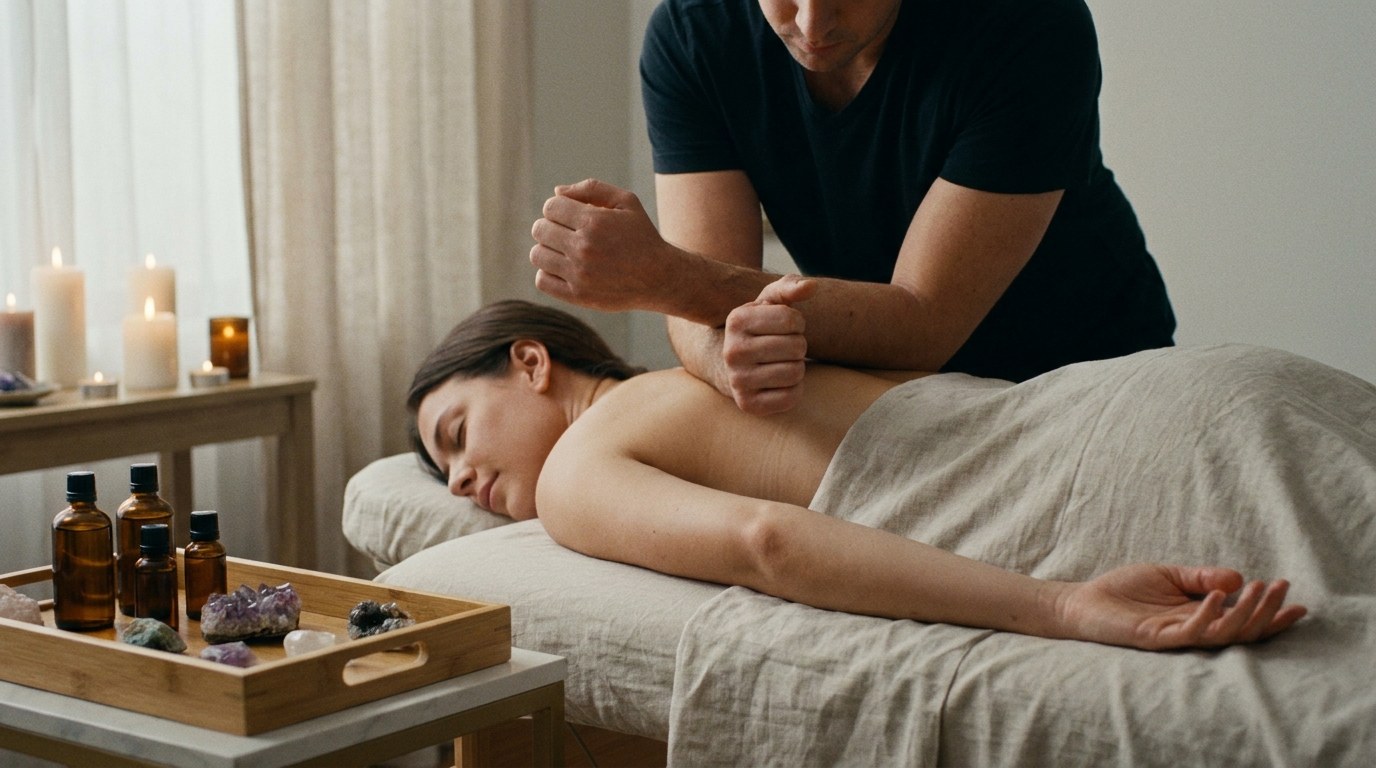
From your first week at AVI’s Vienna, Virginia campus, you’re working with your hands. You learn muscle groups, practice strokes, give and receive sessions, and build the physical and analytical skills that licensed massage therapists use every day. A typical training week at AVI includes lecture instruction (anatomy, physiology, pathology, ethics), hands-on technique labs, and supervised clinic hours where you work with real clients under instructor guidance.
What You’ll Study
The curriculum covers:
Is Massage Therapy School Hard?
Honestly? It’s rigorous. The anatomy and physiology content requires real study — you’re learning the body at a professional level. The physical demands of giving multiple sessions per week build endurance over time. Students who come in motivated and consistent do well. The work is hands-on and tangible, which makes it engaging for people who learn by doing rather than sitting in lecture halls.
Mini-Story — Career Changer:
Consider someone like a former office administrator in her late 30s who had been commuting into DC for over a decade. She wanted work that felt meaningful — something hands-on and client-focused. She enrolled in the Massage Therapy program (NO FINANCIAL AID FOR THIS PROGRAM) at AVI Career Training in Vienna, Virginia, not knowing exactly what to expect. Within the first two weeks of anatomy labs, she was surprised by how much she was retaining — because the content connected directly to what her hands were doing. By the time she completed her 500 hours and passed the MBLEx, she had already lined up interviews at two chiropractic clinics in Fairfax County. She now works four days a week and earns more per hour than she did in her office role.
That kind of outcome is exactly what AVI’s Massage Therapy program is built to produce.
—
How Many Hours Do You Need — And How Long Will It Take?
Virginia requires 500 clock hours of massage therapy training from a state-approved school to be eligible for licensure. That number comes directly from the Virginia Department of Health Professions (Board of Nursing), which oversees massage therapy licensing in the Commonwealth. Do not let any school quote you a lower hour requirement — 500 hours is the standard.

How Long Does Massage Therapy School Take in Virginia?
Your total program length depends on how many days per week you train. AVI Career Training offers schedule options designed to accommodate working adults and career changers in the Northern Virginia area. Students who train consistently can complete all 500 required hours within several months — contact AVI directly at (703) 943-9841 or request schedule details through the application form to confirm current scheduling cadence.
After completing 500 hours, graduates are eligible to sit for the MBLEx (Massage & Bodywork Licensing Examination). The MBLEx is the standard licensing exam accepted by the Virginia Board of Nursing. Passing it is required before you can legally practice as a massage therapist in Virginia.
Once licensed, Virginia massage therapists must renew on a biennial basis and complete continuing education (CE) hours to maintain licensure.
—
What Does Massage Therapy School Cost — And Can You Get Financial Aid?
Cost is the number one question prospective students ask — and it deserves a straight answer.
⚠️ Important: Financial Aid Availability for This Program
Federal financial aid (Title IV / FAFSA) is NOT available for AVI’s Massage Therapy program. Because the program is under 600 clock hours, it does not meet the federal threshold for Title IV eligibility. This applies to all massage therapy programs of this length, regardless of school accreditation. Do not enroll expecting FAFSA or Pell Grant funding for this program.
AVI does offer payment plans and can connect students with private financing options to help make tuition manageable. Contact AVI admissions at (703) 943-9841 to discuss what works for your budget.
What Should You Ask Any School About Cost?
When comparing massage therapy programs in Northern Virginia, ask every school these questions:
1. What is the total tuition — including fees, books, and supplies?
2. Are you COE-accredited or SCHEV-certified? (These are markers of institutional quality and regulatory compliance)
3. Do you offer payment plans or financing?
4. Are there any hidden costs — uniforms, licensing exam fees, background checks?
AVI Career Training is transparent about costs. The Massage Therapy program (NO FINANCIAL AID FOR THIS PROGRAM) is priced to be competitive within the Northern Virginia market. Reach out directly for current tuition figures — they’re a phone call away at (703) 943-9841.
A note on accreditation and cost: AVI’s COE accreditation (Council on Occupational Education) is a federally recognized marker of institutional quality. While it does not change financial aid eligibility for sub-600-hour programs, it does mean AVI meets rigorous educational standards that non-accredited schools are not required to meet. You’re paying for a program with real oversight behind it.
—
What Can You Do With a Massage Therapy License in Virginia?
A Virginia massage therapy license opens doors across a wide range of settings — and the Northern Virginia/DC metro market is one of the strongest in the country for this career.

Where Do Licensed Massage Therapists Work?
How Much Do Massage Therapists Make in Northern Virginia?
According to the U.S. Bureau of Labor Statistics (BLS) Occupational Outlook Handbook, the national median annual wage for massage therapists was approximately $49,860 as of recent data. The Northern Virginia and DC metro area typically runs above the national median — driven by higher cost of living, concentrated demand from a wellness-focused professional workforce, and the density of medical offices and luxury service providers in the region.
Self-employment is the real income expander. Licensed massage therapists who build a private client base in Northern Virginia can set their own rates and schedules, often earning significantly more per hour than employed therapists at spas or clinics. Your Virginia license is what makes that legally possible — unlicensed practice is a violation of state law.
Mini-Story — Recent Graduate:
A former personal trainer based in the Tysons area recognized that his clients wanted more recovery support than he could legally provide without a massage license. He enrolled in AVI Career Training’s Massage Therapy program (NO FINANCIAL AID FOR THIS PROGRAM) in Vienna, Virginia, completing his 625 hours while continuing to train clients part-time. After passing the MBLEx, he added licensed massage sessions to his existing personal training business — immediately differentiating himself from every other trainer in his network. Within six months of licensure, massage bookings accounted for nearly a third of his monthly revenue.
That’s what a Virginia massage therapy license actually unlocks: a legal credential that expands what you can offer, where you can work, and how much you can earn.
—
Why Choose AVI Career Training for Massage Therapy in Northern Virginia?
There are several massage therapy programs in the Northern Virginia area. Here’s why AVI Career Training stands out.
COE Accreditation & SCHEV Certification
AVI Career Training is accredited by the Council on Occupational Education (COE) — a federally recognized accrediting body that holds schools to rigorous standards for curriculum quality, student outcomes, and institutional integrity. AVI is also certified by the State Council of Higher Education for Virginia (SCHEV). These aren’t just logos on a website — they represent real oversight that protects your investment as a student.
When you train at a COE-accredited, SCHEV-certified school, you’re training at a program with verified credibility. That matters when you’re applying for jobs and when you submit your licensure application to the Virginia Board of Nursing.
Inclusive Training Philosophy
AVI’s curriculum is built around the reality of practicing massage therapy in the diverse DMV area. Students learn bodywork techniques and adaptations for clients of all body types, backgrounds, and health profiles. This isn’t a footnote in the curriculum — it’s woven throughout. When you graduate from AVI, you’re prepared to serve every client who walks through your door.
Location — Vienna, VA / Tysons Corridor
AVI’s campus at 1595 Spring Hill Rd #720, Vienna, VA 22182 sits in one of the most accessible locations in Northern Virginia. The Tysons Corner corridor puts you near the Silver Line Metro, major commuter routes, and the professional networks where your massage therapy career will actually unfold. You’re training in the market you’ll work in.
Instructors Who Practice What They Teach
AVI’s massage therapy instructors are licensed professionals — not just educators. They bring current clinical and industry experience into every session, which means the techniques you learn reflect how massage therapy is actually practiced in Northern Virginia’s medical offices, spas, and wellness centers today.
—
Massage Therapy School FAQ — Quick Answers
Q: How many hours do you need to become a massage therapist in Virginia?
A: Virginia requires 625 clock hours of training from a state-approved massage therapy school. AVI Career Training’s program meets this requirement exactly.
—
Q: How long does massage therapy school take?
A: At AVI Career Training in Vienna, Virginia, program length depends on your weekly schedule. Students who train consistently can complete 500 hours within several months. Contact AVI at (703) 943-9841 for current schedule options.
—
Q: Is massage therapy school hard?
A: It’s rigorous — especially the anatomy, physiology, and clinical assessment coursework. The physical demands of hands-on practice also build over time. Students who show up consistently and engage with the material do well. AVI’s instructors support you throughout.
—
Q: How much do massage therapists make in Northern Virginia?
A: The national median annual wage for massage therapists is approximately $49,860 (BLS). Northern Virginia and the DC metro area typically pay above that median. Self-employed therapists who build private practices can earn more by setting their own rates.
—
Q: What is the Virginia State Board exam for massage therapy?
A: Virginia requires graduates to pass the MBLEx (Massage & Bodywork Licensing Examination) before receiving a license. The Virginia Board of Nursing accepts MBLEx scores as the standard licensure pathway.
—
Q: Is federal financial aid available for massage therapy school?
A: Not for AVI’s Massage Therapy program. Because the program is under 600 clock hours, it does not qualify for federal Title IV financial aid (FAFSA, Pell Grant). AVI offers payment plans and can connect students with private financing options.
—
Q: Is AVI Career Training accredited?
A: Yes. AVI Career Training is accredited by the Council on Occupational Education (COE) and certified by the State Council of Higher Education for Virginia (SCHEV). These credentials confirm that AVI meets rigorous institutional quality standards.
—
Q: Can I work for myself after getting a massage therapy license in Virginia?
A: Absolutely. A Virginia massage therapy license legally permits you to operate a private practice, set your own rates, and build an independent client roster — one of the most effective ways to increase your earning potential in the DMV area.
—
Ready to Start Your Massage Therapy Career in Northern Virginia?
AVI Career Training’s 625-hour Massage Therapy program in Vienna, VA prepares you for Virginia licensure with hands-on, inclusive training from licensed instructors. Your next career is closer than you think.