Massage Therapy School in Northern Virginia
AVI Career Training’s Massage Therapy program in Vienna, Virginia is one of the most accessible, career-focused paths to licensure in the DC metro area — built for students who are ready to work. If you want to become a licensed massage therapist in Northern Virginia, you’re in the right place. AVI sits minutes from Tysons Corner, right in the heart of one of the fastest-growing wellness and medspa corridors on the East Coast.
Whether you’re switching careers, entering the workforce for the first time, or looking for a flexible profession that puts your hands-on skills to real use, massage therapy is a field that rewards dedication — and Vienna, Virginia is an excellent market to build that career.
Key Takeaways
- Virginia requires 500 clock hours of massage therapy education for licensure (verify current requirements at dhp.virginia.gov)
- Licensure requires passing the MBLEx — the national massage therapy licensing examination
- Massage therapists in the DC-Arlington-Alexandria metro earn a median annual wage in the $62,000–$72,000 range
- National job growth for massage therapists is projected at ~18–20% over the next decade — much faster than average
- AVI is COE Accredited and SCHEV Certified — Virginia state-approved to train and prepare you for licensure
- Federal financial aid is not available for this program — payment plan and private financing options are available
Ready to take the first step? Apply to AVI’s Massage Therapy program today and find out how quickly you can get started.
—
What Does a Massage Therapist Actually Do?
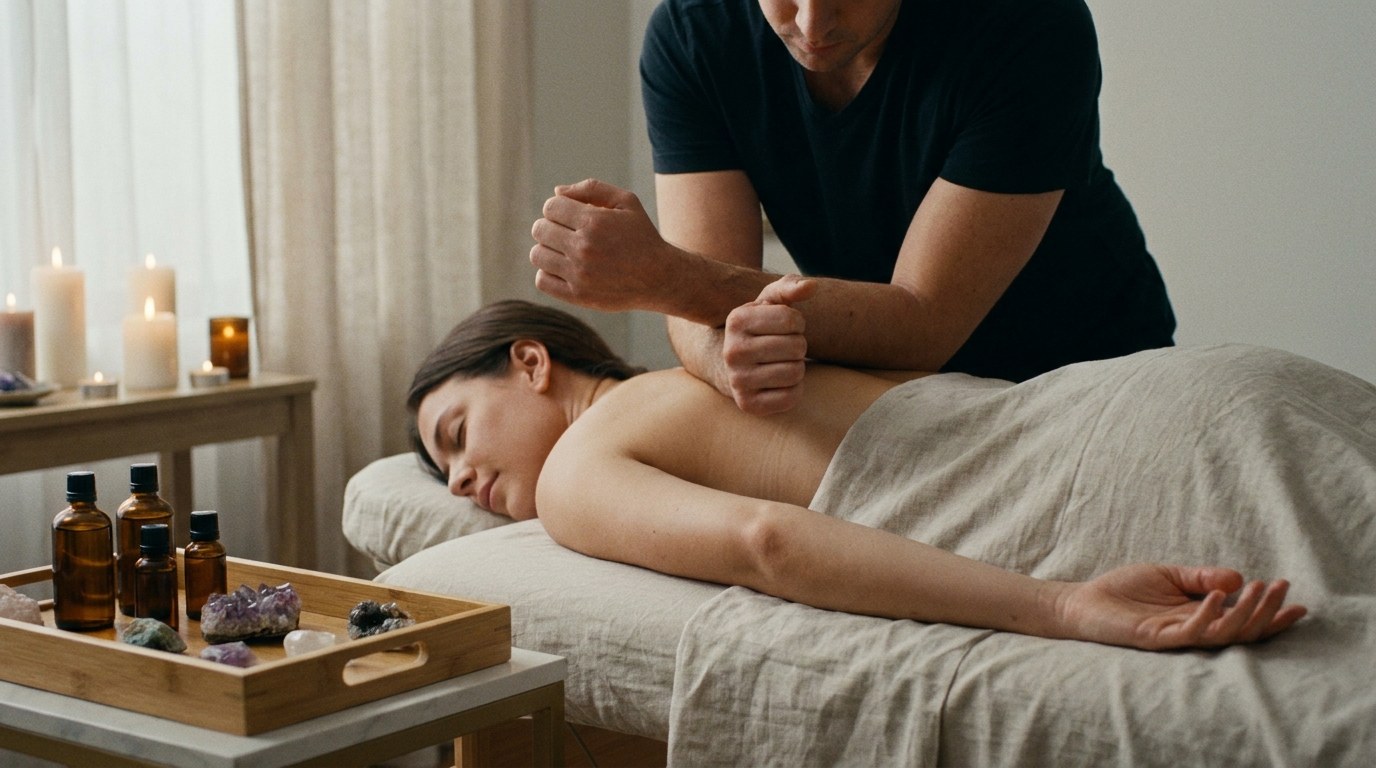
A massage therapist uses structured, hands-on techniques to manipulate soft tissue — muscles, connective tissue, tendons, and ligaments — to reduce pain, relieve tension, support recovery, and promote overall wellness.
That’s the clinical definition. In practice, it looks like this: you could spend a Tuesday morning at a physical therapy clinic helping a post-surgical patient regain range of motion. Wednesday afternoon, you’re at a luxury medspa in Tysons Corner, delivering a deep tissue session to an executive who carries chronic neck tension. Friday evening, you’re working out of your own private practice with a loyal client base you’ve built over years.
The scope of massage therapy in Virginia is broad. Licensed therapists can work in:
The modalities you’ll master vary by employer and specialty. Swedish massage, deep tissue, sports massage, prenatal massage, trigger point therapy, and myofascial release are among the most in-demand techniques in the Northern Virginia and DC metro market.
One thing that separates massage therapists in the NoVA/DMV area from practitioners in less diverse markets: your clients will come from an extraordinarily wide range of backgrounds, body types, ages, and wellness traditions. That diversity demands a curriculum that prepares you for all of it — not just a narrow slice.

—
Virginia Massage Therapy License Requirements
To practice as a massage therapist in Virginia, you must meet the requirements set by the Virginia Board of Nursing (VBN), which oversees massage therapy licensure under the Virginia Department of Health Professions (DHP).
Here is the current licensure roadmap for Virginia:
1. Complete an Approved Education Program
Virginia requires a minimum of 500 clock hours of massage therapy education from a state-approved school. These hours must include instruction in:
> ⚠️ Important: Always verify the current hour requirement directly at dhp.virginia.gov before enrolling, as state requirements are subject to change.
2. Pass the MBLEx
After completing your education, you’ll sit for the MBLEx — the Massage & Bodywork Licensing Examination, administered by the Federation of State Massage Therapy Boards (FSMTB). The MBLEx is the national standard licensing exam accepted in Virginia and most U.S. states. Your school’s curriculum is specifically designed to prepare you for this exam.
3. Submit Your Application to the Virginia Board of Nursing
Once you’ve passed the MBLEx, you apply for your Virginia Massage Therapy License through the Virginia Department of Health Professions. You’ll submit proof of your completed education, your exam results, and the required application fee.
4. Maintain Your License
Virginia licensed massage therapists must complete continuing education requirements to renew their license. Your school will cover the specifics of renewal during your program.
The bottom line: the path from zero experience to Virginia-licensed massage therapist is clearly defined and achievable. With the right school and consistent effort, most students complete the educational requirement and sit for the MBLEx within months — not years.
—
What You’ll Learn in AVI’s Massage Therapy Program
AVI Career Training’s Massage Therapy program (NO FINANCIAL AID FOR THIS PROGRAM) is built around one core belief: the best massage therapists are trained on real people, using real technique, under real supervision — not just watching demonstrations or reading textbooks.
Hands-On Modalities
AVI’s curriculum covers the modalities employers actually want when they hire. You’ll develop proficiency in:
Science Foundation
Every great massage therapist understands what’s happening beneath the skin. AVI’s science curriculum covers anatomy, physiology, and pathology — giving you the knowledge to work safely, adapt your technique to each client’s condition, and communicate effectively with healthcare providers when you work in clinical settings.
Inclusive Technique Training
Northern Virginia is one of the most racially and culturally diverse regions in the United States. Your clients will reflect that diversity — different body types, skin conditions, cultural wellness expectations, and varying physical needs. AVI’s training is specifically designed to prepare you for all of it.
You won’t graduate knowing how to serve only one demographic. You’ll graduate ready to serve the actual DMV client base — confidently, skillfully, and respectfully.
Clinic Hours With Real Clients
A meaningful portion of your training at AVI happens in a supervised clinic environment where you work with real clients. This is where classroom knowledge becomes actual skill. You’ll develop the confidence, communication habits, and technique consistency that employers notice immediately.
Meet Priya. She came to AVI after years working in healthcare administration — she’d always been drawn to wellness work but assumed a career change at 34 was too complicated. She enrolled in AVI’s Massage Therapy program, completed her clinic hours, passed her MBLEx on the first attempt, and landed a position at a medspa in Reston within weeks of receiving her Virginia license. “The clinic hours were everything,” she said. “I showed up to my first job already knowing what it felt like to have 50 real client hours behind me.”
Explore AVI’s Massage Therapy Program →
—
Program Length, Tuition, and Financial Aid at AVI
AVI’s Massage Therapy program (NO FINANCIAL AID FOR THIS PROGRAM) is designed to move efficiently — giving you the hours required for Virginia licensure without stretching the timeline longer than necessary.
How Long Does Massage Therapy School Take at AVI?
Most students complete AVI’s Massage Therapy program within several months, depending on their schedule and pace. The program is structured to fit around real life — whether you’re transitioning from another career, managing family responsibilities, or working while you train. Contact AVI’s admissions team at (703) 943-9841 for current schedule options and exact program length.
Tuition
Contact AVI directly for current tuition figures. Pricing is transparent — there are no hidden fees or surprises. AVI’s admissions team will walk you through the full cost breakdown before you commit to anything.
Financial Aid — What You Need to Know
- Payment plans — AVI offers payment plan options to spread your tuition over time
- Private financing — third-party financing options may be available to qualified students
- GI Bill® — AVI is an approved GI Bill® institution, making this program accessible for eligible veterans and service members
Call (703) 943-9841 or contact admissions to discuss your specific situation before enrollment.
Meet Marcus. He served eight years in the Army and was stationed at Fort Belvoir before transitioning out. He’d always been interested in physical wellness but had no idea that massage therapy could be a real career path. When he learned AVI accepted GI Bill® benefits, he didn’t hesitate. He completed the Massage Therapy program, earned his Virginia license, and now works at a sports performance facility in Alexandria — serving a client base that includes fellow veterans managing service-related injuries. “This was the most practical thing I did after the military,” he said.
—
Massage Therapist Career Outlook in Northern Virginia
The Northern Virginia and DC metro area is one of the strongest markets in the country for licensed massage therapists — and the numbers back that up.

What Do Massage Therapists Earn in Virginia?
Wage data comes from the U.S. Bureau of Labor Statistics Occupational Employment and Wage Statistics program. Verify current figures directly at BLS.gov, as data is updated annually.
Where Do Massage Therapists Work in Northern Virginia?
Fairfax County and the Tysons Corner corridor are home to a dense concentration of wellness employers actively hiring licensed massage therapists. Realistic employment destinations for AVI graduates include:
Why the NoVA Market Is Particularly Strong
Northern Virginia’s population is highly educated, health-conscious, and has above-average disposable income. The region’s dense concentration of federal contractors, tech professionals, military families, and healthcare workers creates consistent, year-round demand for therapeutic massage services — both clinical and wellness-focused.
AVI sits less than 5 miles from Tysons Corner — putting you, as a graduate, within immediate reach of some of the most active wellness hiring in the DMV area.
—
Frequently Asked Questions
Q: How many hours do you need to become a massage therapist in Virginia?
A: Virginia currently requires a minimum of 625 clock hours of massage therapy education from a state-approved school. This includes instruction in anatomy, physiology, pathology, massage theory, and supervised hands-on practice. Always verify the current requirement at dhp.virginia.gov before enrolling, as requirements can change.
Q: How long does massage therapy school take?
A: At AVI Career Training in Vienna, VA, most students complete the Massage Therapy program within several months. The exact timeline depends on your schedule and pace. Because the program is focused and hands-on — not stretched into a multi-year commitment — most students are exam-eligible and job-ready faster than they expect. Contact AVI at (703) 943-9841 for current schedule options.
Q: How much does a massage therapist make in Virginia?
A: In the DC-Arlington-Alexandria metropolitan area, massage therapists earn a median annual wage in the $62,000–$72,000 range, according to U.S. Bureau of Labor Statistics data. Earnings vary based on setting (clinical vs. spa), years of experience, specialization, and whether you work for an employer or run your own private practice. Northern Virginia’s above-average cost of living is offset by correspondingly higher wages in the wellness sector.
Q: Is massage therapy school hard?
A: Massage therapy school is demanding — but manageable with the right support. The science coursework (anatomy, physiology, pathology) requires genuine study. The hands-on hours require physical stamina and focus. Most students find that once they’re doing real work on real people during clinic hours, everything clicks. AVI’s instructors are licensed professionals who teach with real-world context, not just theory. If you’re willing to put in consistent effort, you will succeed.
Q: Can I get financial aid for massage therapy school in Virginia?
A: Federal financial aid (Title IV / FAFSA) is not available for AVI’s Massage Therapy program because it is under 600 clock hours. However, AVI offers payment plan options, private financing may be available, and eligible veterans can use GI Bill® benefits. Call (703) 943-9841 to discuss what works for your situation.
Q: What exam do I need to pass to become a licensed massage therapist in Virginia?
A: Virginia requires the MBLEx — the Massage & Bodywork Licensing Examination, administered by the Federation of State Massage Therapy Boards (FSMTB). It is the national standard licensing exam accepted in Virginia and most U.S. states. AVI’s curriculum is specifically designed to prepare you to pass it.