Massage Therapy School in Northern Virginia | AVI Career Training
AVI Career Training in Vienna, VA is one of the only COE-accredited massage therapy (NO FINANCIAL AID FOR THIS PROGRAM) schools in Northern Virginia — offering hands-on training, flexible payment plans, and GI Bill® acceptance for students ready to launch a licensed career in the DC metro area.
If you’ve been researching massage therapy (NO FINANCIAL AID FOR THIS PROGRAM) programs, you already know the DC metro area is one of the best places in the country to build this career. What you need now is a clear picture of the licensing path, what the work actually pays, and which school will get you there without wasting your time or money.
This guide covers all of it — Virginia’s licensing requirements, realistic salary expectations for the NoVA market, and what makes AVI’s Massage Therapy (NO FINANCIAL AID FOR THIS PROGRAM) program a strong choice for career-changers, veterans, and first-time students alike.
Key Takeaways
– Virginia requires 500 clock hours of supervised massage therapy training for state licensure eligibility
– Graduates must pass the MBLEx (Massage & Bodywork Licensing Examination) to apply for their Virginia license
– Massage therapists in the DC-Arlington-Alexandria metro area earn above the national median wage of approximately $49,860/year (BLS, 2023)
– Employment of massage therapists is projected to grow roughly 19% through 2032 — much faster than average
– AVI Career Training is COE Accredited and SCHEV Certified, and GI Bill® benefits may be available for eligible veterans
What Does a Licensed Massage Therapist Do in Virginia?
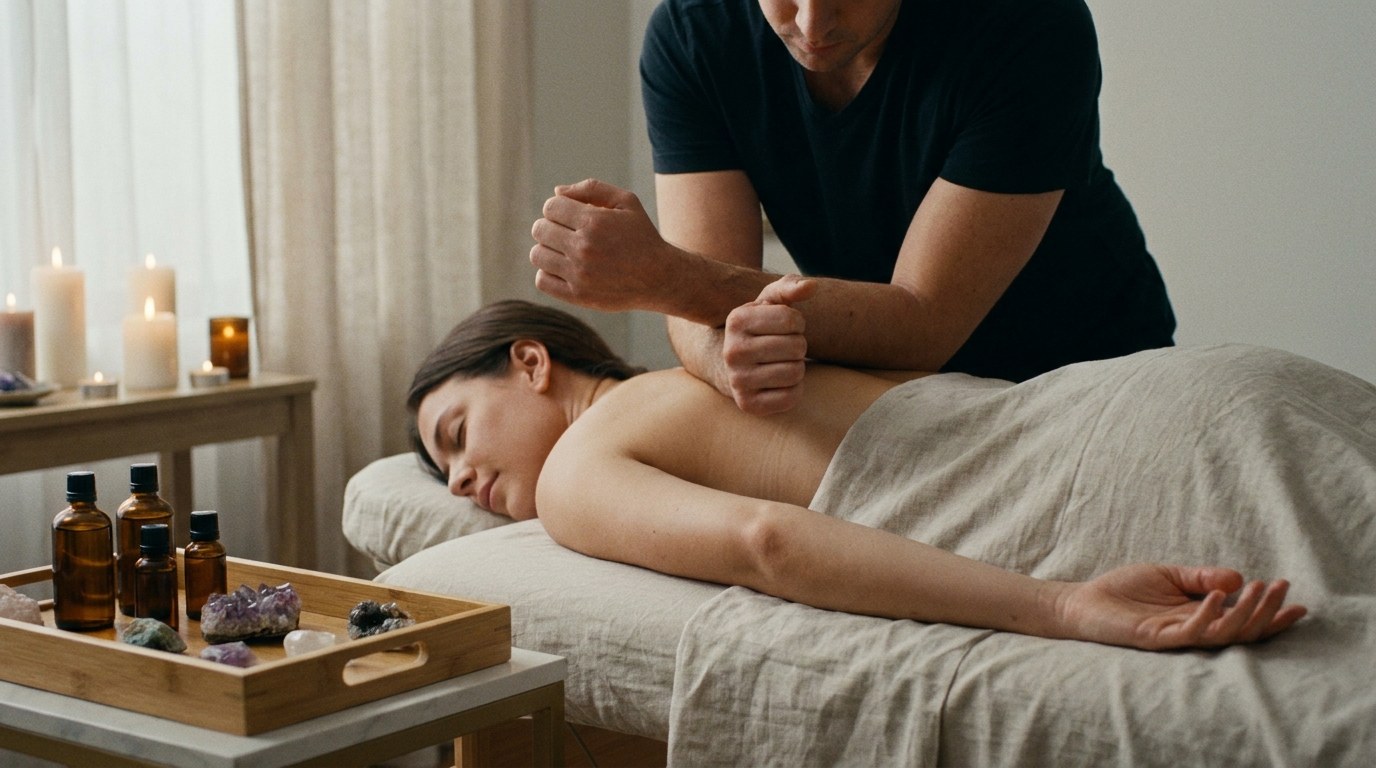
A licensed massage therapist (NO FINANCIAL AID FOR THIS PROGRAM) uses manual techniques — applied pressure, soft tissue manipulation, and structured movement — to reduce pain, improve circulation, and support overall physical wellness for clients. In Virginia, that word licensed matters. The Commonwealth treats massage therapy as a regulated healthcare-adjacent profession, meaning you cannot legally practice or call yourself a massage therapist without a state license issued by the Virginia Board of Nursing (BON).
The scope of practice for a Virginia-licensed massage therapist is broad. You can work with clients seeking relaxation through Swedish massage, help athletes recover with sports massage techniques, provide prenatal massage for pregnant clients (with proper training), and address chronic muscle tension through deep tissue work. Many therapists build specialties over time — myofascial release, trigger point therapy, lymphatic drainage — that allow them to serve a more targeted clientele and often command higher session rates.
This is not a one-size-fits-all career. The techniques you master in school become tools you adapt based on the client in front of you — their body, their goals, and their needs. That’s exactly why Virginia requires formal, supervised training rather than self-study: the work is skilled, the liability is real, and clients deserve practitioners who know what they’re doing.
Choosing a COE-accredited program like AVI’s Massage Therapy (NO FINANCIAL AID FOR THIS PROGRAM) program in Vienna, VA means your training will be held to national standards from day one — which matters when you sit for the MBLEx and apply for your Virginia license.
Ready to start? Apply to AVI’s Massage Therapy program today.
Virginia Licensing Requirements for Massage Therapy
Before you enroll anywhere, you need to understand exactly what Virginia requires — because your school choice directly affects whether you can sit for the exam and get licensed.
The 500-Hour Training Requirement
The Virginia Board of Nursing requires applicants for a massage therapy (NO FINANCIAL AID FOR THIS PROGRAM) license to complete a minimum of 500 clock hours of supervised massage therapy training from an approved program. Those hours must cover a structured curriculum that includes anatomy and physiology, massage theory and technique, ethics and professional standards, and hands-on clinical practice with real clients.
Not all programs are built equally within that 500-hour framework. A school that spends the bulk of its curriculum time on hands-on practice will produce a more job-ready graduate than one that leans heavily on lectures and written coursework. Ask any school you’re considering: how many of those 500 hours are spent with your hands on actual clients?
The MBLEx Exam
After completing your training hours, you must pass the MBLEx — the Massage & Bodywork Licensing Examination — administered by the Federation of State Massage Therapy Boards (FSMTB). Virginia accepts the MBLEx as the standard licensing exam for new applicants.
The MBLEx covers:
- Anatomy, physiology, and kinesiology
- Pathology, contraindications, and areas of caution
- Benefits and physiological effects of massage therapy
- Client assessment, reassessment, and treatment planning
- Ethics, boundaries, laws, and regulations
A well-structured school curriculum maps directly to these content areas. When your classroom instruction covers the same topics the exam tests, you’re not cramming separately — you’re graduating prepared.
License Renewal and Continuing Education
Virginia massage therapy (NO FINANCIAL AID FOR THIS PROGRAM) licenses are renewed every two years. Renewal requires completing continuing education (CE) hours as specified by the Board of Nursing. This is worth knowing upfront: licensure isn’t a one-time milestone. It’s an ongoing professional commitment — which also means ongoing opportunities to expand your skills and specialties throughout your career.
⚠️ Licensing requirements can change. Always verify current Virginia