Massage Therapy School in Northern Virginia
AVI Career Training’s Massage Therapy program in Vienna, VA gives you the hands-on hours, inclusive curriculum, and accredited credentials you need to earn your Virginia massage therapy license and launch a career in one of the fastest-growing healthcare fields in the DC metro area.
If you’re exploring a career change, looking for a faster path than a four-year degree, or simply want work that directly improves people’s lives — massage therapy is worth a serious look. And if you’re in Northern Virginia, AVI is worth a serious look as your school.
Apply now to AVI’s Massage Therapy program →
—
Key Takeaways
—
What Does a Massage Therapist Do?
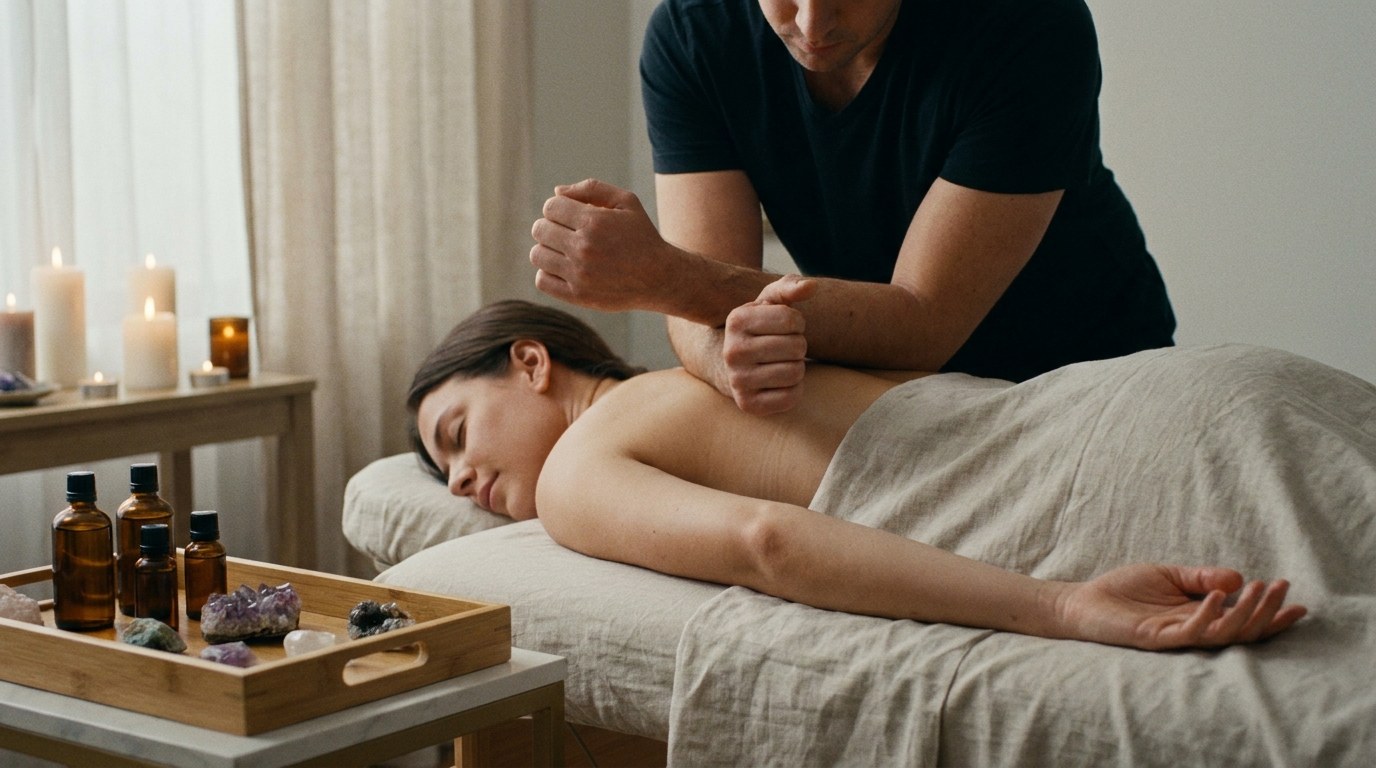
Massage therapists assess soft tissue conditions and apply manual techniques — pressure, movement, and manipulation — to reduce pain, relieve tension, improve circulation, and support overall wellness. It’s skilled, physical work that requires strong anatomical knowledge, sharp assessment skills, and the ability to adapt your approach to every individual client.
In Virginia, licensed massage therapists practice in a wide range of settings. Many work in medical clinics and physical therapy offices, supporting patients recovering from injury or managing chronic conditions. Others build careers in luxury day spas, resort wellness centers, sports performance facilities, chiropractic offices, or hotel spas. Some build independent practices with their own clientele.
The Northern Virginia and DC metro market is especially strong for massage therapy. The region has a high concentration of medical offices, government and military wellness programs, premium spa brands, and a large, health-conscious population. Veterans and active-duty service members represent a significant share of the client base — many of whom seek massage therapy for service-related injuries, chronic pain, and stress management. That demand makes this one of the better metro areas in the country to start a massage therapy career.
Scope of practice in Virginia is defined by the Virginia Board of Nursing (VBON), which oversees massage therapy licensure. Licensed massage therapists in Virginia can assess, treat, and refer clients within the musculoskeletal and connective tissue systems. They do not diagnose medical conditions — but they do collaborate regularly with physicians, chiropractors, and physical therapists as part of an integrated care team.
—
Virginia Massage Therapy License Requirements
Becoming a licensed massage therapist in Virginia is a clear, achievable process. Here’s exactly what the state requires.
Training Hours
Virginia requires a minimum of 500 clock hours of massage therapy education from a school approved by the State Council of Higher Education for Virginia (SCHEV). Those hours must cover specific subject areas — you can’t simply log 625 hours of Swedish massage practice and call it done.
Required curriculum areas include:
Each of these areas is weighted in the curriculum and tested on the licensing exam. AVI’s Massage Therapy program is built around Virginia’s requirements, so every hour you spend in training counts toward your 625-hour total.
The MBLEx Exam
After completing your 500 hours, you must pass the MBLEx — the Massage & Bodywork Licensing Examination — administered by the Federation of State Massage Therapy Boards (FSMTB). The MBLEx is a computer-based exam covering anatomy, kinesiology, pathology, guidelines for massage, ethics, and business practices. Most states, including Virginia, accept the MBLEx as the standard licensing exam.
AVI’s curriculum is aligned to MBLEx content areas, so your classroom and clinic preparation directly feeds your exam readiness.
Applying to the Virginia Board of Nursing
Once you pass the MBLEx, you submit your licensure application to VBON along with proof of completed training hours, your exam score, and the required fees. The Virginia Board of Nursing oversees massage therapy licensing in the state — you can verify current requirements directly at the Virginia Department of Health Professions website.
Virginia massage therapy licenses must be renewed every two years. Renewal requires continuing education hours, so staying current in your field is an ongoing professional expectation — not a one-time hurdle.
—
What to Expect in AVI’s Massage Therapy Program
AVI Career Training’s Massage Therapy program at our Vienna, VA campus is structured to take you from no experience to license-ready in a focused, supportive environment. Here’s what the training actually looks like.
Curriculum and Techniques
The program covers all Virginia-required subject areas: anatomy and physiology, pathology, massage theory and assessment, hydrotherapy, business practices, and supervised clinic practice. You’ll build a strong foundation in Swedish massage — the baseline technique that underpins everything else — and progress into deep tissue work, neuromuscular techniques, and advanced assessment skills.
One area where AVI’s curriculum stands out is its emphasis on working with diverse populations. Most generic massage programs teach technique on a narrow range of body types and skin tones. AVI specifically trains students to assess and adapt their approach for clients of every size, age, and background — including clients with chronic conditions, older adults, and the ethnically diverse community that defines Northern Virginia.
This isn’t just a nice-to-have. It’s a practical skill that makes you more effective, more confident, and more marketable the moment you graduate.
Hands-On Clinic Hours
A significant portion of your 500 hours takes place in AVI’s student clinic, where you work on real clients under licensed instructor supervision. These aren’t simulated exercises — they’re actual client sessions with intake consultations, treatment planning, and hands-on practice. By the time you graduate, you’ll have logged real clinical experience that most entry-level massage therapists simply don’t have.
Instructors
AVI’s massage therapy instructors are licensed professionals with real-world industry experience. They’re not just teaching from a textbook — they’re bringing clinical and spa knowledge directly into the classroom. That means you learn not just how to perform a technique, but why it works, when to modify it, and how to explain it to a client.
What a Typical Training Week Looks Like
Your weeks at AVI will combine classroom instruction — covering anatomy, pathology, and theory — with hands-on practice in the clinic. As you progress through the program, the balance shifts toward more clinic time. You’ll build client intake skills, learn how to document sessions professionally, and develop the kind of client communication that turns a first appointment into a regular booking.
See everything AVI’s Massage Therapy program includes — apply today →
—
How Long Does It Take — and What Can You Earn?
These are two of the most common questions prospective students ask. Here are honest, specific answers.
Program Timeline
Full-time students in a 625-hour Massage Therapy program can typically complete training in approximately 5–6 months. Part-time pathways — for students balancing work, family, or other commitments — generally extend to 9–12 months.
After completing your program hours, you’ll schedule and sit for the MBLEx exam. Most students prepare for and pass the exam within a few weeks of graduation. Once you pass, you submit your VBON application. Total time from graduation to licensed massage therapist is typically 4–8 weeks, depending on exam scheduling and processing time.
So realistically? A full-time student who starts today could be a licensed massage therapist and actively employed within 6–7 months.
Compare that to a two- or four-year degree, and the timeline advantage is clear. Massage therapy is one of the genuinely accessible healthcare careers — you don’t need years of prerequisites to get started.
Meet Jasmine: A Career Changer Who Made It Work
Jasmine worked in retail management for six years before deciding she wanted a career with more direct human impact. She’d been getting regular massages herself for years and kept thinking, I could do this — and I’d be good at it. She enrolled in AVI’s Massage Therapy program while transitioning out of her retail job, completed her 625 hours in just under six months, passed the MBLEx on her first attempt, and accepted a position at a medical spa in Tysons within weeks of getting her Virginia license. She now books full client hours and brings home significantly more per hour than she earned in retail — doing work she actually loves.
Jasmine’s story is common among AVI graduates. The timeline is real. The outcomes are real.
Salary and Earning Potential in Northern Virginia
According to the U.S. Bureau of Labor Statistics, the national median annual wage for massage therapists is approximately $49,860. (Verify the current figure at BLS.gov before publishing — figures are updated annually.)
In Northern Virginia and the DC metro area, wages consistently trend above the national median. Several factors drive this:
Many massage therapists in Northern Virginia supplement employed positions with private clients, increasing their effective hourly rate substantially. Self-employed and independent practice massage therapists can earn significantly more than median figures suggest, particularly once they build a strong client base.
The BLS currently projects massage therapy employment to grow approximately 18–19% through 2032 — well above average for all occupations. That growth is driven by increasing recognition of massage therapy’s role in pain management, mental health, sports recovery, and integrative medicine.
—
Is Massage Therapy School Worth It in Virginia?
For the right person, absolutely. Here’s the honest calculation.
A 500-hour program at an accredited school is a manageable investment of time and money compared to most healthcare career paths. You’re not committing to years of school — you’re committing to months of focused, hands-on training. The licensing pathway is clear and achievable. The job market in Northern Virginia is genuinely strong.
Meet Marcus: A Veteran Finding a New Career Path
Marcus served eight years in the Army before separating and returning home to Northern Virginia. He knew he wanted to work in healthcare but wasn’t ready for a multi-year degree program. A friend mentioned AVI. Marcus used his Post-9/11 GI Bill® to cover his training costs at AVI — which is one of the reasons AVI’s GI Bill® acceptance matters. He completed the Massage Therapy program, passed the MBLEx, and now works in a Veterans Affairs-affiliated wellness clinic, doing exactly the kind of work he wanted: helping other veterans manage chronic pain and recover from service-related injuries.
His experience highlights something important: massage therapy isn’t just spa work. It’s clinical, it’s meaningful, and in Northern Virginia, the demand for therapists who can work effectively with veterans, older adults, and medically complex clients is real and growing.
The honest answer to “is it worth it” comes down to this: if you want hands-on healthcare work, value flexible career settings, and want to be licensed and earning within a year, massage therapy in Virginia is one of the smartest career moves available.
—
How to Enroll in AVI’s Massage Therapy Program
Getting started at AVI Career Training is straightforward. Here’s what the process looks like.
Admissions Steps
1. Submit your application — Apply online here or call AVI admissions at (703) 943-9841
2. Meet with an admissions advisor — You’ll discuss your goals, review the program schedule, and get your questions answered
3. Explore financial aid — AVI’s financial aid team will help you understand your options, including federal financial aid and GI Bill® benefits
4. Enroll and start — Once paperwork is complete, you’ll receive your start date and program materials
Financial Aid and GI Bill®
AVI Career Training accepts the GI Bill® — including the Post-9/11 GI Bill® — for qualifying veterans and active-duty service members. If you served, your education benefits may cover a significant portion of your training costs. Contact AVI’s admissions team to verify your specific benefit eligibility.
Federal financial aid is also available for students who qualify. AVI’s admissions staff can walk you through the FAFSA process and help you understand what funding options apply to your situation.
Accreditation You Can Trust
AVI Career Training is COE Accredited (Council on Occupational Education) and SCHEV Certified (State Council of Higher Education for Virginia). These aren’t marketing claims — they’re the specific credentials that make your diploma and training hours valid for Virginia licensure and financial aid eligibility. When you graduate from AVI, your 500 hours count.
Location
AVI’s campus is located at 1595 Spring Hill Rd #720, Vienna, VA 22182 — in the heart of the Tysons corridor, easily accessible from Fairfax County, Arlington, McLean, Reston, and the broader Northern Virginia area. If you’re searching for an accredited massage therapy school in Fairfax County, AVI is right in your backyard.
—
There’s never been a better time to build a career in massage therapy in Northern Virginia. The demand is strong, the licensing path is clear, and AVI Career Training gives you the accredited, inclusive, hands-on training you need to walk into that career ready to work on every client who sits across from you.
Ready to start? Apply to AVI’s Massage Therapy program today →
Or call us directly at (703) 943-9841 — our admissions team is here to answer your questions and help you take the next step.