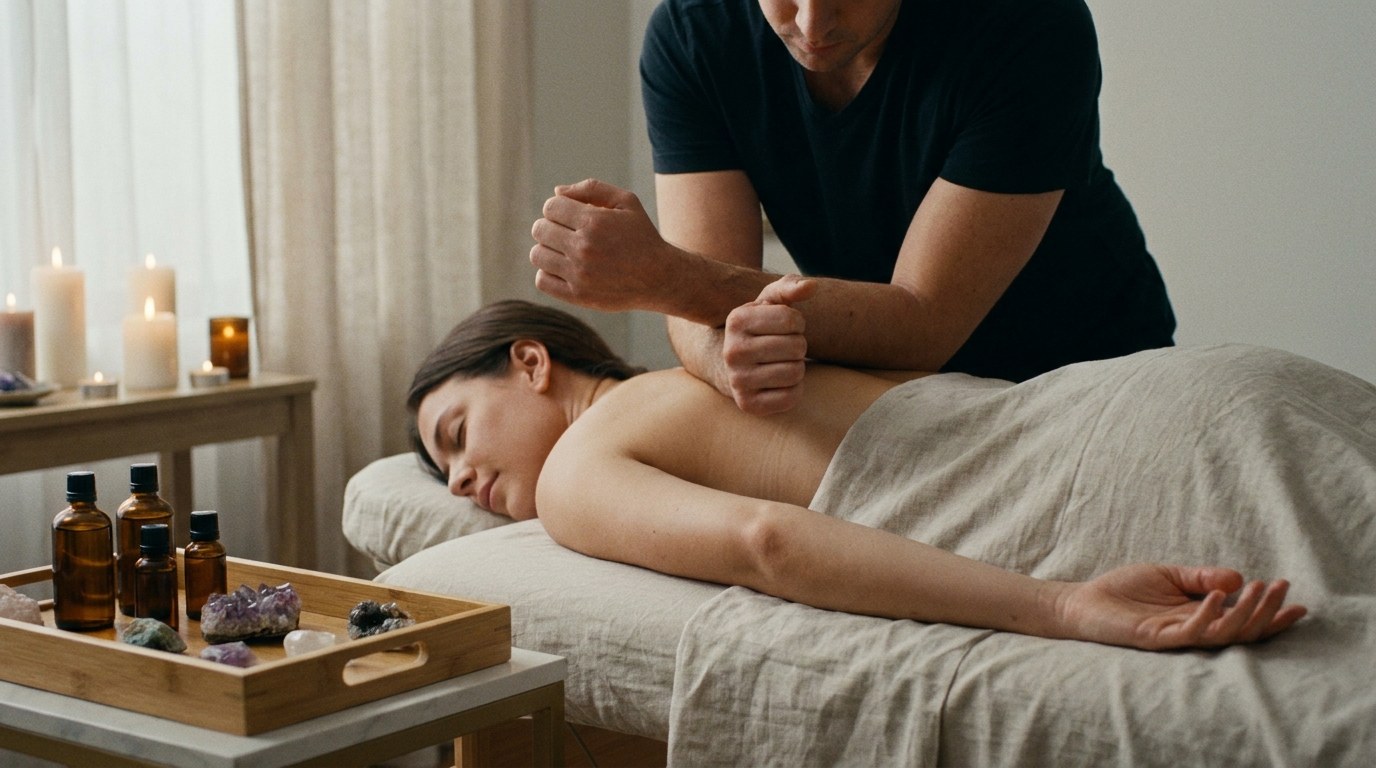
Massage Therapy School in Northern Virginia
AVI Career Training in Vienna, VA is a COE-accredited massage therapy school in Northern Virginia that trains students to meet Virginia’s licensure requirements through hands-on, career-focused instruction — no four-year degree required.
If you’ve been researching massage therapy programs in the DC metro area, you’re already past the “should I do this” stage. You want to know where to train, how long it takes, what it costs, and what you’ll earn on the other side. This page answers all of that — directly.
Key Takeaways
- Virginia requires 500 clock hours of supervised massage therapy training for licensure
- Most students complete AVI’s Massage Therapy program in a matter of months — not years
- Virginia massage therapists are licensed through the Virginia Board of Nursing
- The DC-metro area offers some of the strongest demand and earning potential for massage therapists in the country
- AVI is COE Accredited and SCHEV Certified, with financial aid and GI Bill® options available
What Does Massage Therapy Training Actually Look Like?
Massage therapy school is nothing like watching technique videos online. A structured, accredited program puts you in a real clinical environment — working on actual clients under the supervision of licensed instructors — from your very first weeks of training.
At AVI Career Training, your Massage Therapy program covers the foundational modalities employers expect: Swedish massage, deep tissue, sports massage, and more. You’re not just learning where to place your hands. You’re learning anatomy and physiology, contraindications, proper body mechanics, and how to build a therapeutic session that serves each individual client’s needs.
That last point matters more than most students expect. Massage therapy is healthcare-adjacent work. A well-trained therapist understands when pressure should be modified, which techniques benefit specific conditions, and how to communicate effectively with clients about their goals and comfort. That professional depth is what separates a licensed massage therapist from someone who took a weekend workshop.
AVI’s curriculum is also built to reflect the diversity of the Northern Virginia community. You’ll train to work with clients of all backgrounds, body types, and wellness needs — because the clientele you’ll serve here is as varied as the DC metro area itself. That inclusive approach isn’t a checkbox. It’s built into how we teach.
By the time you complete your training hours, you’ll have real clinical experience, working knowledge of multiple modalities, and the preparation you need to pass your licensing exam and walk into your first professional setting with confidence.
Ready to see the program for yourself? Apply to AVI’s Massage Therapy program and take the first step toward licensure.
Virginia Massage Therapy Licensing Requirements
Understanding Virginia’s licensing requirements before you enroll is the smartest move you can make. Here’s exactly what the state requires.
How Many Hours Do You Need to Become a Massage Therapist in Virginia?
Virginia requires 500 clock hours of supervised massage therapy training from an approved program before you can apply for licensure. These hours must come from a school that meets the state’s standards — not self-study, informal apprenticeship, or online-only instruction.
AVI’s program is structured to fulfill those 500 hours through a combination of classroom instruction, technique labs, and supervised clinical practice. Every hour counts toward your licensure eligibility.
What Is the Difference Between a Massage Therapist and a Massage Practitioner in Virginia?
This is one of the most common questions prospective students ask — and it’s worth clarifying before you commit to a program.
Virginia licenses Massage Therapists through the Virginia Board of Nursing. This is a full professional license that authorizes you to practice massage therapy in clinical, spa, chiropractic, sports medicine, and self-employment settings.
A “Massage Practitioner” is a lower-tier credential that exists in some states but does not confer the same professional standing or scope of practice as a Virginia Massage Therapy License. In Virginia, the massage therapist license is the credential that matters — and it’s the credential AVI’s program prepares you to earn.
How Do I Get My Massage Therapy License in Virginia?
The Virginia licensure pathway has four straightforward steps:
- Complete 500 clock hours of training from a board-approved program (AVI qualifies)
- Pass a board-approved licensing exam — most Virginia graduates sit for the MBLEx (Massage & Bodywork Licensing Examination), though the NCBTMB is also accepted
- Submit your license application to the Virginia Department of Health Professions (DHP) with required documentation and fees
- Maintain your license through biennial renewal, which includes continuing education requirements
Virginia’s massage therapy license is regulated by the Virginia Board of Nursing — not the cosmetology board. This distinction sometimes surprises students, but it reflects how seriously Virginia treats massage therapy as a healthcare profession. You can verify current requirements directly through the Virginia Department of Health Professions.
How Long Does It Take — and What Does It Cost?
How Long Does Massage Therapy School Take in Virginia?
Here’s the direct answer: most students complete AVI’s Massage Therapy program in a matter of months. Because the Virginia licensure requirement is 500 clock hours — not a two- or four-year degree — a focused, accredited program gets you trained and exam-ready far faster than a traditional academic path.
Compare that to a two-year associate degree program where general education requirements push out your start date and your first paycheck. AVI’s program is designed to move efficiently from enrollment to clinical hours to graduation and exam prep — without unnecessary padding.
The exact program length depends on your schedule and enrollment status. Contact AVI’s admissions team at (703) 943-9841 or reach out online to get current schedule options and a realistic timeline for your situation.
What Does Massage Therapy School Cost?
Tuition is a real consideration, and we don’t want to gloss over it. AVI believes in being straightforward about the financial picture — including the resources available to help you get there.
Financial aid is available for students who qualify, including federal aid options. AVI also accepts the GI Bill® for eligible veterans and active-duty service members — making it one of the more accessible massage therapy schools in Northern Virginia for military-connected students.
When you’re weighing the cost, consider the timeline. Completing a program in months — rather than years — means you’re earning sooner. For career-changers especially, that compressed timeline directly affects your return on investment.
To get specific tuition figures and discuss financial aid options, contact AVI’s admissions office at (703) 943-9841 or start your application here.
Massage Therapist Salary and Career Outlook in Northern Virginia
Is Massage Therapy a Good Career in Northern Virginia and the DC Area?
The short answer: yes — and the data backs it up.
According to the U.S. Bureau of Labor Statistics, the national median annual wage for massage therapists is approximately $49,860 (BLS, May 2023). In the DC-Maryland-Virginia metro area, demand and compensation trends consistently run above the national average, driven by the region’s density of wellness clinics, sports facilities, luxury hotels, and healthcare-adjacent practices.
Employment for massage therapists is projected to grow 19 percent nationally through 2033 — significantly faster than the average for all occupations. In a metro area with Northern Virginia’s income levels, corporate wellness culture, and military/veteran health infrastructure, that national trend looks even stronger locally.
Where Do Massage Therapists Work in Northern Virginia?
Licensed massage therapists in the DC metro area work across a wide range of settings:
- Day spas and resort spas in Tysons, Reston, and Alexandria
- Chiropractic and physical therapy clinics throughout Fairfax County
- Sports performance and athletic training facilities — particularly relevant near national sports teams and military bases
- Hotel and hospitality wellness centers in the DC corridor
- Self-employment and private practice — many experienced therapists build their own client base and set their own hours
That last option — self-employment — is one of the most appealing aspects of a massage therapy career for people who want schedule flexibility or entrepreneurial control. Your license is portable. Your skills travel with you. And your earning potential scales with the clientele and setting you target.
A Real Career Path: Marcus’s Story
Marcus was a security contractor in his mid-30s who had been dealing with chronic back pain for years. What started as personal interest in therapeutic massage turned into something more serious when he kept hearing from his physical therapist that “hands-on work is where the real demand is.”
He enrolled in AVI’s Massage Therapy program while still wrapping up his previous job — using his GI Bill® benefits to cover tuition. Within a few months, he completed his 500 training hours, passed the MBLEx, and started picking up shifts at a Fairfax County physical therapy practice while building a weekend private client base. Within a year of graduating, he had crossed the $55,000 mark combining both income streams — and was reducing his clinic hours as private bookings grew.
Marcus’s path isn’t unusual for Northern Virginia. The region rewards skilled, licensed practitioners — and AVI’s program is designed to get you there.
Why Train at AVI Career Training in Vienna, VA?
There are several massage therapy programs in Northern Virginia. Here’s why prospective students consistently choose AVI.
COE Accreditation and SCHEV Certification
AVI Career Training is COE Accredited (Council on Occupational Education) and SCHEV Certified (State Council of Higher Education for Virginia). These aren’t marketing buzzwords. They’re the credentials that determine whether your training hours count toward Virginia licensure, whether you can access federal financial aid, and whether employers will recognize your diploma.
A program without these credentials can waste your time and money. AVI has both.
Hands-On Training from Licensed Industry Professionals
AVI’s massage therapy instructors are licensed practitioners — not adjunct educators with theoretical knowledge and no recent clinical experience. Your training reflects real-world expectations: professional communication with clients, proper session structure, adaptive techniques, and the clinical judgment that separates good therapists from great ones.
Location: Vienna, VA — Central to Northern Virginia
AVI’s campus is located at 1595 Spring Hill Rd #720, Vienna, VA 22182 — accessible from Tysons, Reston, Falls Church, McLean, and Fairfax. For students coming from across Fairfax County, Prince William County, or DC itself, the Vienna location puts professional training within reach without a long commute.
Financial Aid, GI Bill®, and Flexible Enrollment
AVI offers financial aid for qualifying students and accepts the GI Bill® for veterans and eligible service members. If cost has been the factor keeping you from moving forward, talk to AVI’s admissions team about what you actually qualify for — not just what the sticker price says.
Training That Serves Every Client
Northern Virginia is one of the most diverse regions in the country. Your future clients will reflect that — different backgrounds, different bodies, different therapeutic needs. AVI’s curriculum is built to prepare you to serve all of them with skill and cultural competency. That’s not a minor detail. It’s the difference between a therapist who thrives in this market and one who’s limited by the narrowness of their training.
Frequently Asked Questions
How many hours do you need to become a massage therapist in Virginia?
Virginia requires 500 clock hours of supervised training from a board-approved program to qualify for licensure.
How long does massage therapy school take in Virginia?
With a focused, accredited program like AVI’s, most students complete their training in a matter of months — far faster than a two-year degree path.
Is massage therapy a good career in Northern Virginia and the DC area?
Yes. The DC metro area offers above-average demand and compensation for licensed massage therapists, with diverse employment settings across healthcare, hospitality, and self-employment.
How do I get my massage therapy license in Virginia?
Complete 500 hours at an approved school, pass the MBLEx or NCBTMB exam, and submit your application to the Virginia Department of Health Professions through the Virginia Board of Nursing.
What is the difference between a massage therapist and a massage practitioner in Virginia?
Virginia licenses massage therapists through the Board of Nursing — a full professional license. A “massage practitioner” credential exists in some states but does not carry the same scope of practice or professional standing as Virginia’s massage therapy license.
Start Your Massage Therapy Career at AVI
You’ve done the research. You understand the licensing path, the earning potential, and what quality training actually looks like. The next move is yours.
AVI Career Training is a COE-accredited massage therapy school in Northern Virginia with the credentials, curriculum, and career focus to get you from enrolled to licensed in months — not years. Financial aid is available, the GI Bill® is accepted, and a team of licensed instructors is ready to help you build the skills that Northern Virginia employers and private clients are actively hiring for.
Apply to AVI’s Massage Therapy program today — or call (703) 943-9841 to talk through your options with the admissions team.
Your next career starts at 1595 Spring Hill Rd #720, Vienna, VA 22182. Come train with us.