Massage Therapy (NO FINANCIAL AID FOR THIS PROGRAM) School in Northern Virginia
AVI Career Training in Vienna, VA is a COE-accredited massage therapy (NO FINANCIAL AID FOR THIS PROGRAM) school in Northern Virginia — offering a hands-on program built around Virginia’s licensure requirements and designed for students who want to get trained, get licensed, and get working. Whether you’re switching careers or entering the workforce for the first time, the path to becoming a licensed massage therapist in Virginia is more achievable than most people realize.
Key Takeaways
– Virginia requires 500 clock hours of approved massage therapy education to qualify for licensure
– Graduates must pass the MBLEx (Massage & Bodywork Licensing Examination) to become licensed in Virginia
– Virginia massage therapists earn a median of $52,000–$58,000/year; DC metro professionals frequently earn $60,000–$75,000+
– AVI’s program is COE-accredited and SCHEV-certified
– Programs can typically be completed in 5–6 months — no four-year degree required
What Does a Massage Therapist Actually Do?
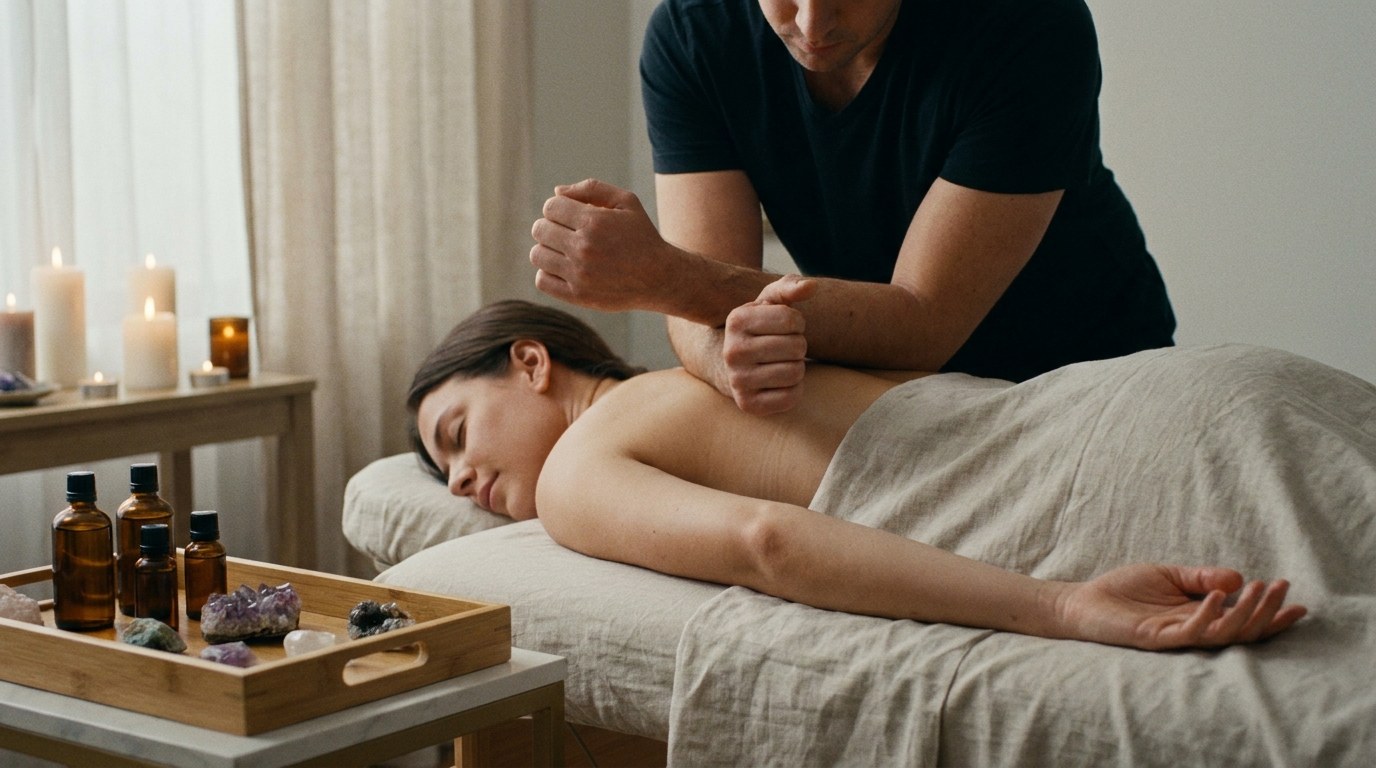
Massage therapy (NO FINANCIAL AID FOR THIS PROGRAM) is a medically adjacent, hands-on career — and it’s far broader in scope than most people assume. Licensed massage therapists work across a wide range of settings and modalities, serving clients with real health and wellness needs.
Common techniques you’ll learn and apply include:
- Swedish massage — the foundational technique focused on relaxation and circulation
- Deep tissue massage — targeting deeper muscle layers to address chronic tension and injury recovery
- Sports massage — used before and after athletic performance to improve flexibility and reduce soreness
- Prenatal massage — specialized work for pregnant clients requiring modified positioning and pressure
- Neuromuscular and clinical massage — applied in medical, chiropractic, and physical therapy settings
This isn’t just a spa career. Massage therapists work in chiropractic offices, sports medicine clinics, hospitals, corporate wellness programs, military and VA facilities, and private practice. In Northern Virginia — home to a dense population of federal workers, military personnel, and active professionals — demand for skilled, clinically capable massage therapists is strong and consistent.
That’s exactly why choosing the right massage therapy (NO FINANCIAL AID FOR THIS PROGRAM) school in Northern Virginia matters. The program you attend shapes not just what you learn, but how prepared you are to serve that client base.
Virginia Licensing Requirements for Massage Therapists
Before you can practice massage therapy (NO FINANCIAL AID FOR THIS PROGRAM) professionally in Virginia, you must meet specific state-mandated requirements. Here’s what you need to know.
Hours of Training Required
Virginia requires 500 clock hours of approved massage therapy education. Those hours must be completed through a school approved by the Virginia Department of Health Professions (DHP). This is a non-negotiable prerequisite — you cannot sit for the licensing exam without verifying completion of an approved program.
Which Board Governs Massage Therapy in Virginia?
Here’s a detail that surprises many prospective students: massage therapy (NO FINANCIAL AID FOR THIS PROGRAM) in Virginia is regulated by the Virginia Board of Nursing, not a stand-alone massage board. This is uncommon compared to other states and reflects how Virginia classifies massage therapy as a healthcare-adjacent profession. It’s worth understanding because it signals how seriously Virginia takes consumer protection and professional standards in this field.
You can review current requirements directly at dhp.virginia.gov.
The MBLEx Exam
After completing your 500 hours, you must pass the MBLEx — the Massage & Bodywork Licensing Examination — administered by the Federation of State Massage Therapy Boards (FSMTB). The MBLEx is the national licensing exam accepted by Virginia and most other states. It covers anatomy, physiology, kinesiology, pathology, ethics, and massage application.
A quality massage therapy (NO FINANCIAL AID FOR THIS PROGRAM) program doesn’t just teach you techniques — it prepares you specifically to pass this exam.
License Renewal
Virginia massage therapy (NO FINANCIAL AID FOR THIS PROGRAM) licenses must be renewed every two years. Renewal requires completing continuing education hours, keeping your knowledge and skills current throughout your career.
What to Expect from AVI’s Massage Therapy Program
AVI Career Training’s Massage Therapy (NO FINANCIAL AID FOR THIS PROGRAM) program is built around one clear outcome: preparing you to become a licensed, job-ready massage therapist in Virginia.
Accreditation That Matters
AVI is COE-accredited (Council on Occupational Education) and SCHEV-certified (State Council of Higher Education for Virginia). These aren’t just credentials on a wall — they directly affect your experience as a student.
COE accreditation means AVI meets rigorous national standards for educational quality. SCHEV certification means AVI is formally recognized by the Commonwealth of Virginia as an approved postsecondary institution. When you train at an accredited school, you’re training at a program Virginia’s licensing board will recognize.
Not every massage school in the region carries both of these credentials. It’s one of the clearest ways to evaluate a program before you commit.
Hands-On Curriculum
AVI’s program is structured around the 500 clock hours Virginia requires, with a curriculum that integrates:
- Anatomy, physiology, and kinesiology
- Massage theory and technique (Swedish, deep tissue, sports, prenatal, and more)
- Pathology and contr