Massage Therapy (NO FINANCIAL AID FOR THIS PROGRAM) School in Northern Virginia
AVI Career Training in Vienna, VA is a COE-accredited massage therapy (NO FINANCIAL AID FOR THIS PROGRAM) school in Northern Virginia that prepares you to earn your Virginia massage therapy license and launch a hands-on wellness career — without a four-year degree.
If you’re researching massage therapy (NO FINANCIAL AID FOR THIS PROGRAM) programs in the DC metro area, you’re in the right place. This guide covers exactly what Virginia requires for licensure, what to expect inside AVI’s program, what massage therapists earn in Northern Virginia, and how to pay for your training.
Ready to take the first step? Apply to AVI’s Massage Therapy Program today.
Key Takeaways
- Virginia requires 500 clock hours of training from a Board-approved program to qualify for licensure
- Graduates must pass the MBLEx (Massage & Bodywork Licensing Examination) to obtain a Virginia license
- The U.S. Bureau of Labor Statistics reports a national median annual wage of ~$49,860 for massage therapists — Northern Virginia wages typically run above that figure
- Virginia massage therapy licenses renew every two years and require 24 continuing education hours
- AVI Career Training is COE-accredited and SCHEV-certified, and offers flexible payment plans and private financing options
What Does a Massage Therapist Actually Do?
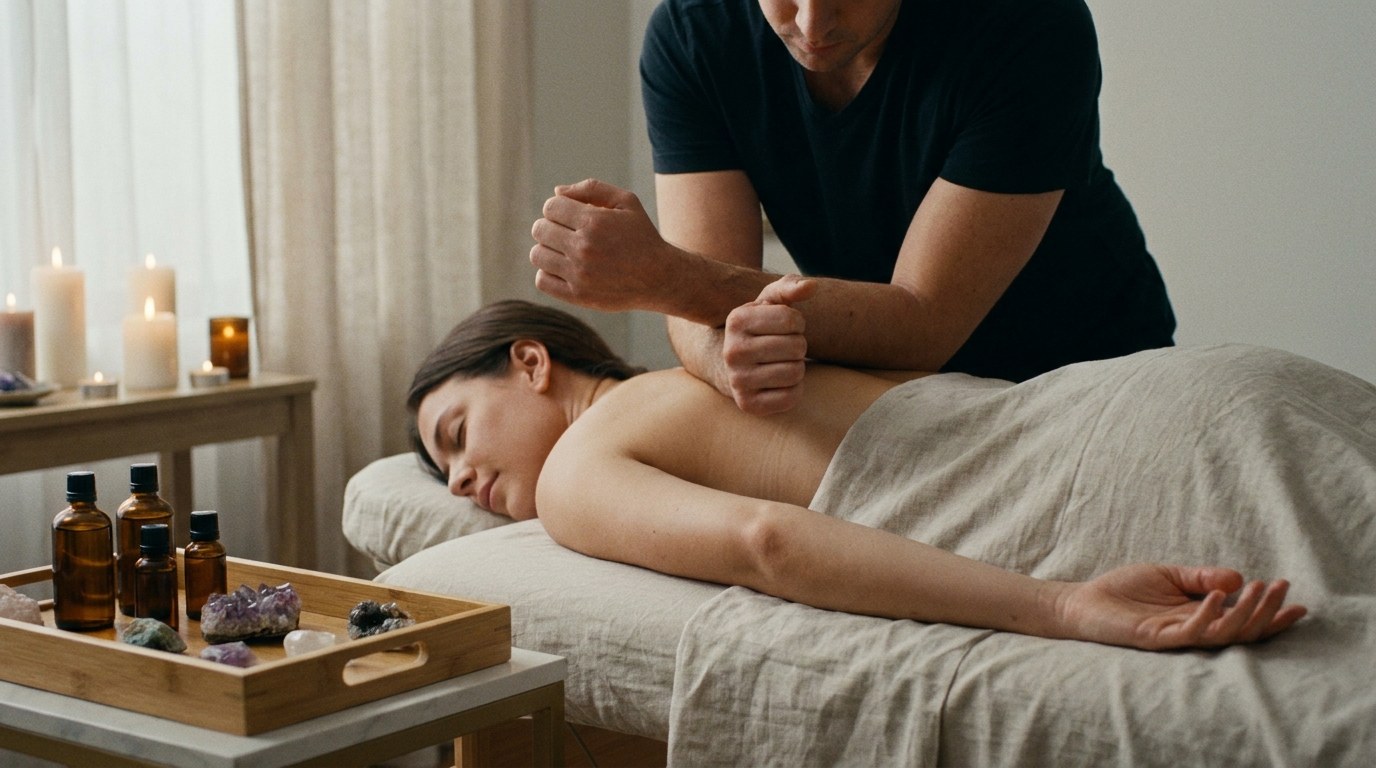
Massage therapists (NO FINANCIAL AID FOR THIS PROGRAM) assess soft tissue and joint function, then apply hands-on techniques to reduce pain, relieve tension, and support overall wellness. It is skilled, purposeful work — not just a service industry job.
Most licensed massage therapists (NO FINANCIAL AID FOR THIS PROGRAM) specialize in one or more modalities depending on their clientele and work setting. Common techniques you’ll train on include:
- Swedish massage — the foundational technique: long gliding strokes that improve circulation and promote relaxation
- Deep tissue massage — sustained pressure targeting deeper muscle layers, commonly used for chronic pain and injury recovery
- Sports massage — focused on athletes before, during, and after activity to enhance performance and speed recovery
- Therapeutic/medical massage — used in clinical settings like chiropractic offices and physical therapy practices to support treatment plans
- Hydrotherapy — the use of water applications (hot, cold, steam) as a therapeutic complement to hands-on work
The scope of practice is broader than most people expect. Massage therapists work alongside chiropractors, physical therapists, and physicians. They operate in luxury spas, sports medicine clinics, corporate wellness programs, hotel resorts, and private practices. Some build entirely self-employed businesses with a loyal client roster.
This is a career path with real range — and it starts with the right training.
Virginia Licensing Requirements for Massage Therapists
To practice massage therapy (NO FINANCIAL AID FOR THIS PROGRAM) legally in Virginia, you must obtain a license from the Virginia Board of Nursing. Here’s exactly what that requires.
Required Training Hours
Virginia mandates 500 clock hours of training from a Board-approved school. Those hours must cover specific subject areas — it’s not just hands-on technique time. The required curriculum components include:
- Anatomy and physiology
- Kinesiology
- Pathology
- Massage theory and technique
- Hydrotherapy
- Business practices and professional ethics
Every one of these subject areas is built into AVI’s Massage Therapy (NO FINANCIAL AID FOR THIS PROGRAM) Program. When you graduate, you’ll have completed the full 500-hour requirement in an accredited, SCHEV-certified environment — which means your hours will be recognized by the Virginia Board of Nursing.
The MBLEx Exam
After completing your training, you must pass the MBLEx — the Massage & Bodywork Licensing Examination — administered by the Federation of State Massage Therapy (NO FINANCIAL AID FOR THIS PROGRAM) Boards (FSMTB). The MBLEx is the national licensing exam accepted by Virginia and most U.S. states.
The exam tests your knowledge across anatomy, physiology, kinesiology, pathology, client assessment, and ethical/legal standards. AVI’s curriculum is structured to prepare you for it — not just get you through the program hours.
License Renewal and Continuing Education
Once licensed, your Virginia massage therapy (NO FINANCIAL AID FOR THIS PROGRAM) license must be renewed every two years. Renewal requires 24 hours of continuing education, which keeps practicing therapists current on techniques, safety protocols, and professional standards.
AVI also offers massage therapy (NO FINANCIAL AID FOR THIS PROGRAM) continuing education in Virginia for licensed professionals looking to renew or expand their skills. This matters if you’re planning a long-term career — your education doesn’t stop at graduation.
Why This Section Matters
Most people searching “how to become a licensed massage therapist in Virginia” get a surface-level answer. The real path looks like this:
- Complete 500 hours at a Board-approved school
- Graduate and apply to sit for the MBLEx
- Pass the MBLEx
- Submit your licensure application to the Virginia Board of Nursing
- Receive your license and begin practicing
That’s it. No bachelor’s degree. No prior healthcare experience required. A focused, achievable timeline from first day of class to licensed professional.
What to Expect in AVI’s Massage Therapy Program
AVI Career Training’s Massage Therapy (NO FINANCIAL AID FOR THIS PROGRAM) Program is built around one goal: getting you to graduation ready to pass your boards and work confidently as a licensed professional.
Curriculum and Hands-On Training
From your first week, you’re learning hands-on massage therapy (NO FINANCIAL AID FOR THIS PROGRAM) techniques in real-world scenarios with supervised practice on real clients.