
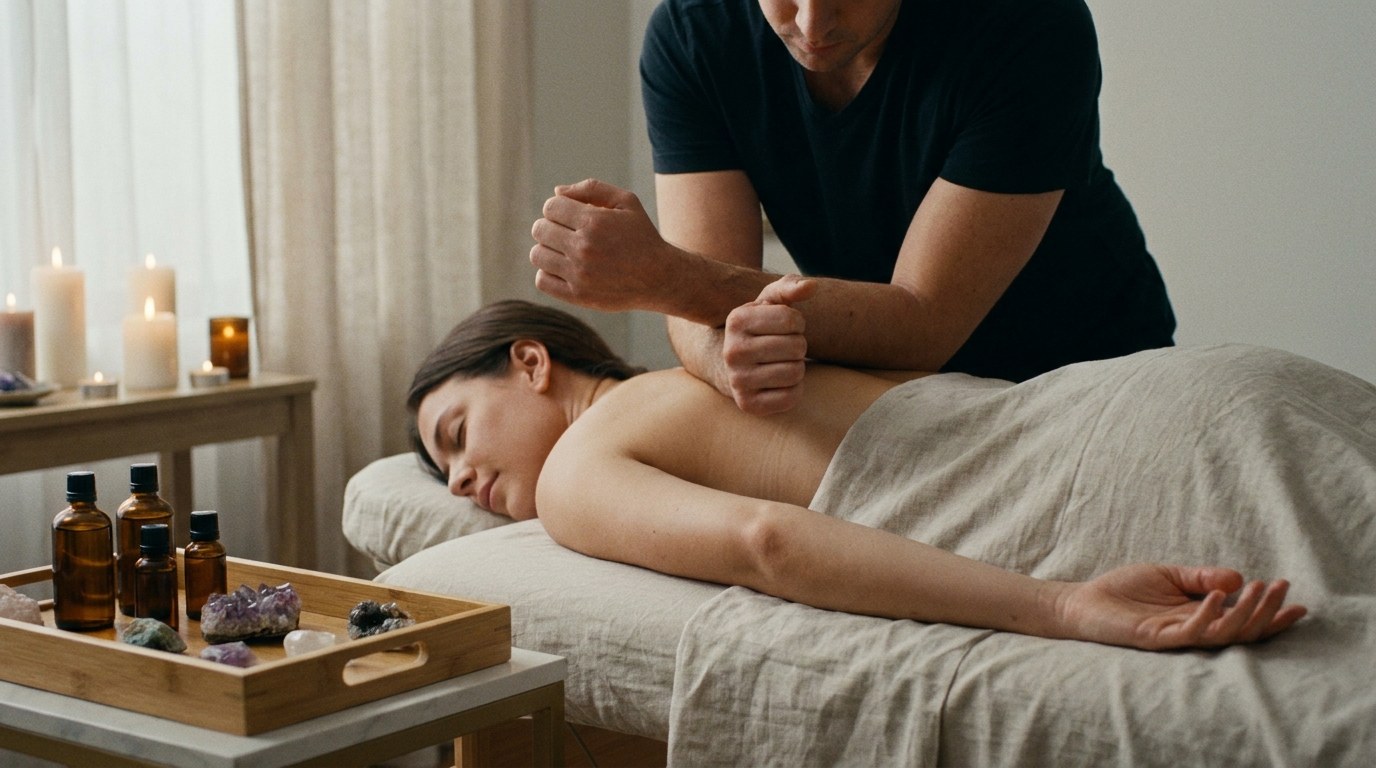
Massage Therapy School in Northern Virginia
AVI Career Training in Vienna, VA offers a hands-on Massage Therapy program that prepares you to meet Virginia’s 500-hour licensing requirement and launch a career in one of the fastest-growing wellness fields in the DC metro area.
If you’re looking for an accredited massage therapy school in Northern Virginia, you’re in the right place. This page covers everything you need to know — what you’ll learn, what Virginia requires for licensure, how long training takes, what you can earn, and why AVI graduates are working in top spas and clinics across Fairfax County and beyond.
Ready to take the first step? Apply now at AVI Career Training and find out when the next class starts.
Key Takeaways
- 500 clock hours of approved education are required to become a licensed massage therapist in Virginia
- Virginia licensing is administered by the Virginia Board of Nursing; most candidates sit for the MBLEx national exam
- AVI Career Training is COE-accredited and SCHEV-certified, making students eligible for federal financial aid and the GI Bill®
- Massage therapists in the DC metro area earn a median wage above the national average, with strong self-employment income potential
- The U.S. Bureau of Labor Statistics projects ~19% employment growth for massage therapists over the next decade — well above average
What You’ll Learn in AVI’s Massage Therapy Program
Massage therapy is equal parts science and skill. AVI’s curriculum builds both — from the foundational knowledge that supports every technique to the hands-on practice that makes you job-ready on day one.
Core Techniques and Clinical Skills
You’ll train in Swedish massage, the foundational modality that every licensed therapist must master. From there, the curriculum moves into deep tissue massage, addressing the muscle layers and connective tissue that clients seek relief from most.
You won’t just read about these techniques. You’ll practice them on real clients in AVI’s student clinic, where supervised sessions build your confidence and your professional instincts at the same time.
Anatomy, Kinesiology, and Pathology
Good massage therapists understand what’s happening under the skin. AVI’s program covers anatomy and physiology — bones, muscles, and systems — alongside kinesiology, the study of how the body moves. You’ll also study pathology so you can identify contraindications and adapt your approach to each client’s needs safely.
This science foundation isn’t just academic. It’s what separates a technically capable therapist from one who earns client trust, generates referrals, and builds a lasting career.
Inclusive Practice
AVI’s training philosophy is built around working with every client — regardless of body type, background, or ability. You’ll graduate prepared to serve a genuinely diverse clientele, which matters in a market as varied as Northern Virginia and the DC metro area. That kind of readiness is something most schools don’t name explicitly. AVI owns it.
Virginia Massage Therapy License Requirements
Before you can practice as a massage therapist in Virginia, you need a state license. Here’s exactly what that process looks like.
The 500-Hour Requirement
Virginia requires 500 clock hours of massage therapy education from a school approved by the state. AVI’s program is designed to meet this requirement fully. Every hour of instruction — classroom, lab, and clinic — counts toward your total.
⚠️ Hour requirements and licensing rules can change. Always confirm current requirements directly with the Virginia Board of Nursing at dhp.virginia.gov before enrolling.
The Licensing Exam
After completing your program, you’ll sit for a national licensing exam. The most common pathway in Virginia is the MBLEx — the Massage & Bodywork Licensing Examination, administered by the Federation of State Massage Therapy Boards (FSMTB). Some candidates may also test through the NCBTMB (National Certification Board for Therapeutic Massage & Bodywork), though the MBLEx is the standard route.
Virginia’s licensing process is overseen by the Virginia Board of Nursing, which may seem surprising — but massage therapy licensure falls under that board’s jurisdiction in this state. You’ll apply for your license through the Department of Health Professions.
Additional Requirements
In addition to completing your hours and passing the exam, Virginia applicants must:
- Submit a criminal background check
- Provide documentation of completed education from an approved school
- Pay the applicable state licensing fees
CPR certification may also be required — confirm the current requirement with the Virginia Board of Nursing before your graduation date.
Why This Matters for Choosing a School
Not every school offering massage training in Northern Virginia is state-approved or nationally accredited. AVI Career Training is both — SCHEV-certified (approved by the State Council of Higher Education for Virginia) and COE-accredited. That means your hours count, your credential is recognized, and you’re eligible to sit for the board exam.
How Long Does It Take — and What Does It Cost?
These are the two questions every prospective student deserves a straight answer to.
Program Length
AVI’s Massage Therapy program is structured to take you from your first day of class through graduation and board exam eligibility in a focused, realistic timeframe. Contact AVI admissions for the current schedule options, including whether day and evening tracks are available, so you can find a timeline that fits your life.

Tuition and Financial Aid
Massage therapy training at an accredited school is an investment — but it’s one with a clear return. AVI’s COE accreditation makes students eligible for federal financial aid, including Pell Grants for those who qualify. If you’ve served in the military, AVI also accepts the GI Bill®, including the Post-9/11 GI Bill®.
Speak with AVI’s admissions team about the current tuition structure, payment plans, and what aid you may be eligible for before you enroll. You shouldn’t have to guess at the numbers.
One Student’s Story: A Career Change That Clicked
Marcus spent eight years managing a retail warehouse in Fairfax County before a back injury — and his own experience recovering through massage therapy — changed how he thought about work. He enrolled in AVI’s Massage Therapy program at 34, initially unsure whether he was too old to start over.
He wasn’t. Within months of completing his training, Marcus passed the MBLEx, earned his Virginia license, and accepted a position at a wellness clinic in Tysons. He’s now building a private client list on weekends. “I waited years to do something that took less than a year to change everything,” he said.
What Massage Therapists Earn in Northern Virginia
Salary is a real factor in any career decision. Here’s what the data shows for this market.
Local and National Wage Data
According to the U.S. Bureau of Labor Statistics, the median annual wage for massage therapists nationally is approximately $49,000–$52,000. In the Washington, DC metro area — which includes Northern Virginia — median wages run higher than the national figure, reflecting the region’s cost of living and the concentration of high-end spas, wellness centers, and medical practices.
Massage therapists in Virginia working in medical or chiropractic settings often earn at the higher end of the local range. Those working in luxury hotel spas or resort properties — well-represented in the NoVA/DC corridor — may also command stronger per-session rates.
Verify current wage figures at bls.gov/ooh/healthcare/massage-therapists.htm for the most recent data.
Self-Employment and Private Practice
A significant number of licensed massage therapists work for themselves — either as independent contractors at spas and clinics or in private practice. Self-employed therapists set their own rates, control their schedule, and keep a larger share of each session fee. In the DC metro market, experienced therapists with strong reputations charge $100–$180+ per hour for private sessions.
Building a private practice takes time. But the path there starts with the license, the skills, and the professional reputation you build in school.
Employment Outlook
The BLS Occupational Outlook Handbook projects approximately 19% employment growth for massage therapists over the next decade — roughly four times the average growth rate for all occupations. Demand is being driven by expanded use of massage in medical and rehabilitative settings, growing consumer interest in wellness, and the aging of the U.S. population.
Starting your training now means you graduate into a market that’s growing, not contracting.
Another Student’s Story: From Part-Time to Full-Time
Yolanda had been working part-time as a receptionist at a Reston spa for two years. She watched the therapists she scheduled clients for, did her own research on Virginia’s licensing requirements, and realized the barrier to entry was lower than she expected. She enrolled at AVI’s Vienna campus and completed the Massage Therapy program while continuing to work her front desk shifts.
After passing the MBLEx and getting her Virginia license, Yolanda transitioned to a full-time therapist role at the same spa — earning significantly more than she had as a receptionist. “I already knew the clients,” she said. “I just needed the credential to serve them.”
Why Train at AVI Career Training in Vienna, VA?
There are several massage therapy programs in the DC metro area. Here’s why AVI is worth your attention.
Accreditation That Protects Your Investment
AVI is COE-accredited — accredited by the Council on Occupational Education, one of the most respected accrediting bodies for career and technical schools. COE accreditation signals that the school meets rigorous standards for curriculum, faculty, student outcomes, and financial accountability. It also means your education is eligible for federal Title IV financial aid, including Pell Grants.
AVI is also SCHEV-certified, confirming state approval from the Virginia State Council of Higher Education. Your 500 hours at AVI count toward Virginia licensure. That’s non-negotiable when choosing a school.
Instructors Who Are Practitioners
AVI’s instructors are licensed, working professionals — not academics who left the field years ago. They bring real clinical experience into every class and every supervised session. When you graduate from AVI, you’ve learned from people who’ve done the work.
Location in the Heart of NoVA
AVI’s campus is located at 1595 Spring Hill Rd #720, Vienna, VA 22182 — in the core of Fairfax County, accessible from Tysons, Reston, McLean, Falls Church, and throughout the NoVA metro. The job market you’ll graduate into is right outside the door. Major employers — spa chains, medical practices, wellness centers, and hotels — are within a short drive.
That proximity isn’t just convenient. It creates real opportunities for externships, part-time work during training, and full-time placement after graduation.
Inclusive Training Philosophy
AVI trains students to work on clients of every background, body type, and skin tone. In a market as diverse as Northern Virginia, that isn’t optional — it’s professional competence. Most schools don’t address this explicitly. AVI builds it into the curriculum.
Financial Access for Every Student
Whether you’re using federal financial aid, the GI Bill®, a payment plan, or out-of-pocket funds, AVI works with you to make the program financially accessible. Military-connected students — active duty, veterans, and qualifying dependents — are welcome and supported.
Your Next Step
You’ve read through the licensing requirements, the program structure, the salary data, and what sets AVI apart. The information is in front of you. What happens next is up to you.
AVI Career Training’s Massage Therapy program in Vienna, VA is designed for people who are ready to work — and ready to build something that lasts. If that’s you, don’t wait for a better time.
Apply now and take the first step toward your Virginia massage therapy license. Or call AVI admissions directly at (703) 943-9841 if you have questions before you start.
GI Bill® is a registered trademark of the U.S. Department of Veterans Affairs. More information about education benefits offered by VA is available at the official U.S. government website at benefits.va.gov/gibill.