
Massage Therapist Salary in Virginia: 2025 Guide
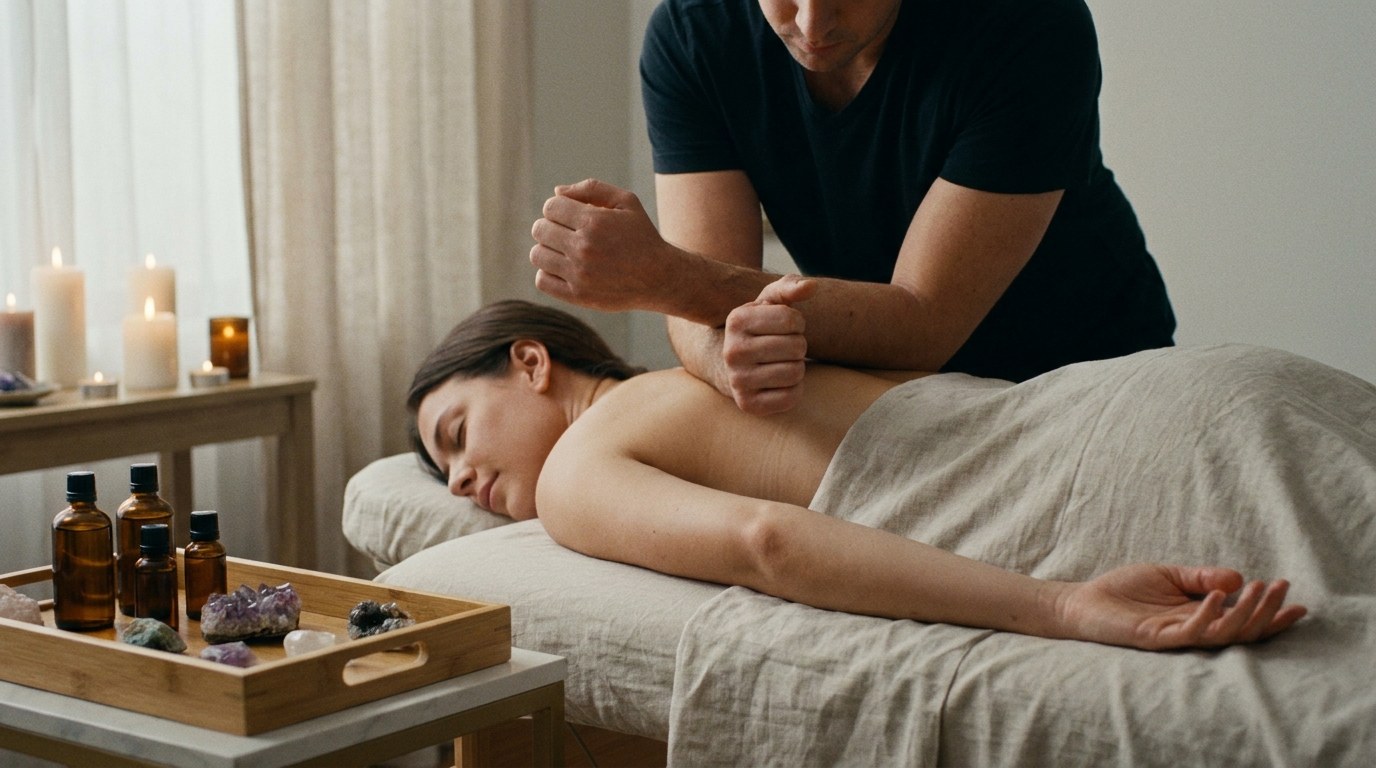
Massage therapists in Virginia earn a median annual wage of approximately $49,860 — and those working in the Northern Virginia / DC metro corridor consistently earn above that statewide figure. If you’re researching whether a massage therapy career is worth the investment of time and training, this guide gives you the real numbers: what you can expect to earn when you start, how income grows with experience and specialization, and what the path from student to licensed professional actually looks like in Virginia.
Ready to start your massage therapy career in Northern Virginia? Apply now at AVI Career Training.
—
📋 Key Takeaways
—
What Do Massage Therapists Earn in Virginia in 2025?
Virginia massage therapists earn wages that track closely with — and in many regions exceed — the national median. According to Bureau of Labor Statistics (BLS) Occupational Employment and Wage Statistics data, the U.S. national median annual wage for massage therapists is approximately $49,860. Virginia’s statewide figure sits in a similar range, with the Washington-Arlington-Alexandria Metropolitan Statistical Area (MSA) — which includes Northern Virginia — pulling the regional average meaningfully higher.
Here’s a practical breakdown of what licensed massage therapist salary virginia 2025 data looks like across the pay spectrum:
The massage therapist hourly rate in Virginia varies significantly based on your employment setting. A new graduate working at a franchise spa chain might start around $18–$22/hr before tips. An experienced therapist at a chiropractic clinic or medical spa in Tysons Corner or Bethesda can clear $35–$40/hr. And self-employed therapists who set their own rates often charge $80–$150+ per session — more on that in a moment.
One factor that drives Virginia wages above many other states: the density of high-income households, healthcare facilities, and corporate wellness programs in the DC metro region. Demand for skilled, licensed massage therapists here is not slowing down.
If you’re ready to explore how to enter this field, learn more about AVI Career Training’s Massage Therapy program — located right in Vienna, Virginia, in the heart of the Northern Virginia market.
—
Massage Therapy Salaries in Northern Virginia vs. the Rest of the State
Where you work in Virginia matters — and the Northern Virginia / DC metro advantage is real, data-supported, and worth understanding before you choose where to train.

Massage therapy salary in Northern Virginia consistently runs above the statewide median. The Washington-Arlington-Alexandria MSA — which encompasses Fairfax County, Arlington, Alexandria, and parts of Maryland and DC — is one of the highest-compensating markets for massage therapists in the entire country. BLS MSA-level data routinely places this metro area among the top-paying regions for the occupation nationally.
Here’s how Virginia’s major markets compare:
Northern Virginia / DC Metro
This is the premium market. Average wages here run 10–20% above the Virginia statewide median, driven by high household incomes, a dense concentration of medical and wellness facilities, and strong corporate demand for on-site and employee wellness services. Therapists working in Fairfax County, Tysons, McLean, Reston, and Alexandria benefit directly from this wage premium.
Richmond Metro
Richmond’s massage therapy market is solid and growing. Wages tend to track closer to the state median, with strong demand in medical and chiropractic settings. The market is less competitive than Northern Virginia, which can be an advantage for newer graduates building a client base.
Hampton Roads (Virginia Beach / Norfolk)
Hampton Roads has a robust hospitality and tourism economy, which drives demand for resort and hotel spa therapists. Wages in this market are generally near or slightly below the state median, but tip income at resort properties can supplement hourly pay meaningfully.
The bottom line: if you train in Northern Virginia — and build your client relationships and professional network here — you’re entering the highest-earning regional market in the state from day one.
—
How Your Work Setting Affects Your Income
Your employment setting shapes your income as much as your skill level does — especially in the early years of your massage therapy career in Virginia.
Day Spas and Franchise Chains
Day spas and national franchise chains (like Massage Envy) are common first employers for new graduates. Base hourly pay typically ranges from $18–$25/hr, with gratuities adding $5–$15/hr on top. Volume is high, which means your hands get a lot of practice quickly. Commission structures vary — some chains offer per-service rates rather than hourly wages.
Chiropractic and Physical Therapy Clinics
Healthcare-adjacent settings tend to pay on the higher end of the employed range — $25–$40/hr — because the work is often insurance-billable and the clinical setting requires more specialized skill. Therapists here frequently develop expertise in deep tissue, myofascial release, or sports massage, which increases their value to the practice.
Hotels and Resorts
Hotel and resort spas offer a mix of base hourly pay and gratuities. High-end properties in the Northern Virginia / DC metro area can provide strong income, particularly on weekends and during busy travel seasons. Some resort positions also include benefits.
Hospital and Medical Settings
Hospitals, oncology centers, and integrative medicine clinics represent a growing segment of massage therapy employment. Pay in these settings often comes with the benefits of healthcare employment — stable hours, employer-paid health insurance, retirement contributions. Hourly rates in hospital settings typically range from $22–$35/hr.
Self-Employment and Private Practice
Many Virginia massage therapists eventually move toward self-employment — either renting suite space, working out of a home studio, or building a private client roster. Self-employed therapists typically charge $80–$150+ per 60-minute session, which can translate to significantly higher earnings than an employed wage. That said, it comes with real costs: self-employment taxes (roughly 15.3% on top of income tax), supplies, marketing, business insurance, and the effort of building and retaining a client base. Self-employment is a genuine path to higher income, but it rewards therapists who treat it like a business from day one.
—
> 💡 Mini-Story: Keisha came to AVI Career Training after seven years working retail management in Fairfax County. She was drawn to massage therapy because she wanted hands-on work that actually helped people. After completing AVI’s 625-hour Massage Therapy program (NO FINANCIAL AID FOR THIS PROGRAM) and passing the MBLEx, she landed a position at a chiropractic clinic in Vienna at $28/hr. Within 18 months, she had built enough of a private client base on weekends to consider transitioning to full self-employment.
—
Experience, Specialization, and Licensing — How They Move the Needle
A Virginia massage therapy license is your foundation. What you build on top of it determines your earning ceiling.

Years of Experience
Experience is the single most reliable income accelerator for massage therapists. Entry-level therapists in Virginia typically start in the $37,000–$42,000 range. By years three to five, therapists who have built a consistent client base and reputation often cross the $50,000–$60,000 threshold. The top 10% of Virginia massage therapists — those with established practices, specialized skills, or premium clientele — earn $75,000 and above.
Specialized Modalities
General Swedish massage gets you licensed and employed. Specialized skills get you paid more. Modalities that command premium rates in the Virginia / Northern Virginia market include:
Each modality you add to your toolkit is a legitimate income lever. A therapist charging $90/session for Swedish can often charge $120–$130/session for specialized clinical work.
Holding an Active Virginia License
Virginia regulates massage therapy through the Virginia Department of Professional and Occupational Regulation (DPOR). Holding an active, current license is not optional — it’s the legal requirement to practice. Your license also signals professionalism and credibility to employers and clients alike. Virginia requires ongoing continuing education (CE) hours for license renewal, which also keeps your skills and earning potential current. Verify the exact CE requirements with Virginia DPOR at the time of your renewal.
—
> 💡 Mini-Story: Marcus had been working as a personal trainer in Arlington for four years when a client suggested he look into massage therapy. His existing knowledge of anatomy gave him a head start in the classroom. After completing the 625-hour program, he passed the MBLEx on his first attempt, got licensed, and immediately positioned himself as a sports massage specialist. Within his first year of practice, he was charging $115 per session and maintaining a consistently full schedule.
—
How to Start Your Massage Therapy Career in Virginia
Starting a massage therapy career in Virginia follows a clear, achievable sequence — and it does not require a four-year degree.
Step 1: Complete a State-Approved Training Program
Virginia requires a minimum of 500 clock hours of massage therapy training from a state-approved school. This is not a vague requirement — every hour matters, and your school must be recognized by the state for your training to count toward licensure.
AVI Career Training’s Massage Therapy program (NO FINANCIAL AID FOR THIS PROGRAM) meets this requirement exactly. The 500-hour curriculum is delivered at AVI’s Vienna, Virginia campus, in the heart of the Northern Virginia market where wages trend highest. AVI is accredited by the Council on Occupational Education (COE) and certified by the State Council of Higher Education for Virginia (SCHEV). The program accepts GI Bill® funding for eligible veterans.
> Important note on financial aid: Because this program is under 600 hours, it qualifies for federal financial aid (Title IV / FAFSA). Payment plan and private financing options are available — contact AVI’s admissions team to discuss what works for your situation.
Step 2: Pass the MBLEx
The Massage & Bodywork Licensing Examination (MBLEx) is the national licensing exam required to practice in Virginia. It covers anatomy, physiology, pathology, massage assessment, and ethics. AVI’s curriculum is built to prepare you for this exam — not just to check a box, but to pass with confidence.
Step 3: Apply for Your Virginia License
Once you’ve passed the MBLEx, you apply for licensure through the Virginia Department of Professional and Occupational Regulation (DPOR). With your license in hand, you are legally authorized to practice massage therapy in the Commonwealth of Virginia.
Step 4: Enter the Market
Your first job is the beginning — not the ceiling. Whether you start at a chiropractic clinic in Fairfax, a luxury spa near Tysons Corner, or a hospital wellness program in Arlington, you’re entering a market where the BLS projects ~19% employment growth through 2032 — far faster than the national average for all occupations.
That growth is being driven by expanding demand in healthcare settings, growing consumer awareness of massage therapy’s clinical benefits, and the aging population’s need for pain management and recovery support.
Ready to take the first step? AVI Career Training’s 625-hour Massage Therapy program is enrolling now in Vienna, Virginia. You’ll train with licensed professionals, build hands-on skills from day one, and graduate positioned to work in one of the highest-paying regional markets in the country.
—
Frequently Asked Questions About Massage Therapist Salary in Virginia
Q: How much does a massage therapist make per hour in Virginia?
A: Massage therapists in Virginia typically earn between $18 and $40+ per hour, depending on their work setting, experience level, and geographic location. Therapists in the Northern Virginia / DC metro area tend to earn toward the higher end of that range. Tips and commissions can add meaningfully to hourly take-home pay in spa settings.
Q: Is massage therapy a good career in Virginia?
A: Yes — massage therapy is a strong career choice in Virginia, particularly in the Northern Virginia / DC metro market. The BLS projects approximately 19% employment growth for massage therapists through 2032, which is much faster than average. Virginia’s high-income population and density of healthcare and wellness facilities create consistent, well-paying demand for licensed therapists.
Q: How long does it take to become a licensed massage therapist in Virginia?
A: Virginia requires 500 clock hours of training from a state-approved program, plus passing the MBLEx licensing exam. Depending on your program’s schedule, training can be completed in several months. After passing the MBLEx, you apply for licensure through Virginia DPOR. The full process — from first day of class to licensed professional — is typically achievable within six to twelve months.
Q: What is the job outlook for massage therapists in Northern Virginia?
A: The Northern Virginia / DC metro market is one of the strongest in the country for massage therapy employment. High household incomes, a concentration of healthcare facilities, corporate wellness programs, and luxury spas drive consistent demand. The BLS’s national projection of ~19% growth through 2032 applies particularly well to high-density metro markets like Northern Virginia.
Q: Do massage therapists make more working for themselves or at a spa?
A: Self-employed massage therapists in Virginia often charge $80–$150+ per session, which can translate to higher gross income than an employed position. However, self-employment comes with real costs — self-employment taxes, supplies, marketing, business insurance, and the time investment of building a client base. Many therapists build toward self-employment after establishing experience and a client network in an employed setting first.
Q: What license do you need to practice massage therapy in Virginia?
A: You must hold an active Virginia massage therapy license, issued by the Virginia Department of Professional and Occupational Regulation (DPOR). To qualify, you must complete 625 clock hours of training from a state-approved program and pass the MBLEx (Massage & Bodywork Licensing Examination). Continuing education is required for license renewal.
Q: Does AVI Career Training’s Massage Therapy program qualify for financial aid?
A: AVI Career Training is COE-accredited and accepts GI Bill® funding for eligible veterans. However, because the Massage Therapy program is 625 hours — under the 600-hour threshold — it qualifies for federal financial aid (Title IV / FAFSA). Payment plans and private financing options are available. Contact AVI’s admissions team at (703) 943-9841 to discuss your options.
Q: Where is AVI Career Training located?
A: AVI Career Training is located at 1595 Spring Hill Rd #720, Vienna, VA 22182 — in the Tysons Corner area of Northern Virginia, conveniently accessible from Fairfax County, Arlington, Alexandria, and the broader DC metro area.
—
About AVI Career Training
AVI Career Training is a COE-accredited, SCHEV-certified beauty and wellness career school located at 1595 Spring Hill Rd #720, Vienna, VA 22182 — in the heart of Northern Virginia’s Tysons Corner corridor. AVI offers hands-on career training in Massage Therapy, Cosmetology, Basic and Master Esthetics, Nail Technology, Cosmetic Laser Technology, and Electrolysis.
AVI’s instructors are licensed industry professionals. The school’s curriculum is built around inclusive techniques that work on every skin tone and hair texture — because beauty education should serve every client. AVI is proud to serve students from across the DMV, including Fairfax County, Arlington, Alexandria, Reston, McLean, and Washington, D.C.