Laser Technician Training in Virginia: Your Complete Guide
Laser technician training in Virginia prepares you to perform some of the more established treatments in the beauty and wellness industry — and AVI Career Training in Vienna, VA gives you a direct path to get there. Whether you’re starting from scratch or building on an existing esthetics license, this guide walks you through exactly what it takes: Virginia’s licensing requirements, what quality training looks like, realistic earning potential, and how to take the first step toward enrolling.
Apply to AVI Career Training and get started today.
—
> ## Key Takeaways
> – Virginia does not issue a standalone “laser technician” license — cosmetic laser operators typically hold an esthetics license and work under physician or medical director supervision
> – Virginia State Board esthetics licensure requires 600 clock hours of approved training
> – Laser and light-based treatment specialists in the DC metro area earn approximately $45,000 – $75,000+ annually, with additional tips and commission in many med spa settings
> – AVI Career Training is COE-accredited, meaning students may qualify for federal financial aid and GI Bill® benefits
> – AVI’s Cosmetic Laser Technology program trains students to perform treatments safely on all Fitzpatrick skin types, including deeper skin tones — a critical clinical skill that many programs overlook
—
What Does a Laser Technician Actually Do?
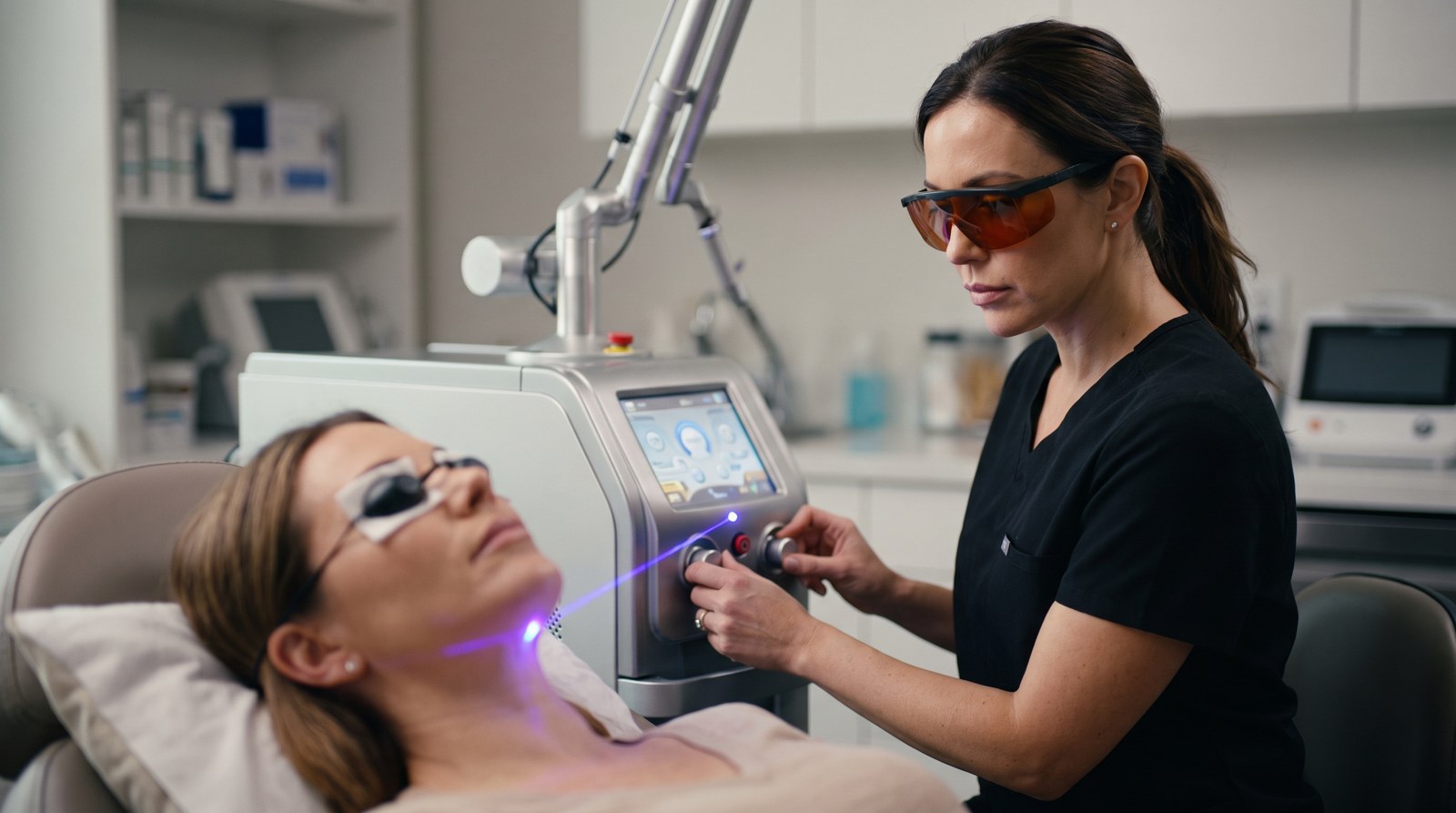
A laser technician — sometimes called a cosmetic laser specialist or laser esthetician — uses laser and light-based devices to perform aesthetic treatments on the skin. These professionals work in medical spas, dermatology clinics, laser treatment centers, and private practices. Their services typically include:
This is not the same as general esthetics. A licensed esthetician may perform facials, chemical peels, and waxing. A laser technician works with medical-grade devices that penetrate deeper layers of the skin — which means higher risk, higher reward, and a more specialized skill set.
That specialization is exactly why the demand is growing. Clients are increasingly turning to laser treatments for results they can’t get from traditional spa services. And employers — especially in high-income markets like Northern Virginia — are actively looking for trained, credentialed laser professionals.
Ready to explore what that path looks like for you? Apply to AVI Career Training and get started.
—
Virginia Licensing Requirements for Laser Technicians
Here’s something most generic articles won’t tell you: Virginia does not currently issue a standalone “laser technician” license.
That’s an important distinction. Unlike some states that have a separate credential for cosmetic laser operators, Virginia’s regulatory framework places the operation of laser and light-based devices under the umbrella of esthetics licensure — typically in conjunction with physician or medical director supervision requirements, depending on the treatment setting.
What this means practically for you:
Step 1: Earn Your Esthetics License
To legally perform laser and light-based treatments in Virginia, you’ll typically need to hold a Virginia esthetics license issued through the Virginia Department of Professional and Occupational Regulation (DPOR) and the Virginia Board of Cosmetology. To qualify for the state board exam, you must complete 600 clock hours of approved esthetics training at a licensed school.
Once you complete your training, you’ll sit for the Virginia State Board written and practical exams. Passing both earns you your esthetics license — your foundation credential.
Step 2: Add Cosmetic Laser Certification
A dedicated cosmetic laser technology program — like the one offered at AVI Career Training — builds on that esthetics foundation. This specialized training covers laser physics, device safety, client assessment, contraindications, and hands-on clinical practice. It’s what separates a licensed esthetician from a laser-qualified professional that med spas and dermatology clinics actively want to hire.
Step 3: Understand the Supervision Requirement
In Virginia, laser treatments performed in many clinical settings require physician oversight or a supervising medical director. The specific requirements can vary based on the type of device, the treatment being performed, and the setting. Requirements in this area are nuanced and subject to change.
> ⚠️ Important: Virginia’s regulatory landscape for laser device operators is evolving. Always verify the most current requirements directly with DPOR or the Virginia Board of Cosmetology before making licensing decisions.
—
What to Expect from a Cosmetic Laser Technology Program
Not all laser training programs are built the same. A strong cosmetic laser technology curriculum does more than show you which buttons to press. It trains you to assess every client safely, make sound clinical decisions, and deliver effective results — on every skin type.
Here’s what you should expect from a quality program, and what AVI Career Training specifically emphasizes:
Device Safety and Laser Physics
You’ll learn how different types of laser and light-based devices work — including diode lasers, Nd:YAG lasers, and IPL (intense pulsed light) systems. Understanding the science behind energy delivery, wavelength, and tissue interaction isn’t just academic. It’s the foundation of every safe treatment decision you’ll make.
Fitzpatrick Skin Type Assessment
This is where a lot of programs fall short — and where AVI stands apart.
The Fitzpatrick scale classifies skin types I through VI, from very fair to very deep skin tones. Laser treatments carry significantly higher risk of burns, hyperpigmentation, and scarring when performed incorrectly on darker skin tones (Types IV–VI). Many programs treat this assessment as a checkbox. AVI’s curriculum builds it into every hands-on session.
AVI trains students to perform laser and light-based treatments safely and effectively on all Fitzpatrick skin types. That’s not just an ethical standard — it’s a competitive one. Clients with deeper skin tones have historically been underserved by the laser industry, and skilled laser technicians who can treat everyone are well established.
Contraindications and Client Screening
You’ll learn how to identify medical conditions, medications, and skin factors that make certain treatments unsafe for a given client. Proper screening protects your clients — and your professional standing.
Hands-On Clinical Practice
Reading about laser treatments is one thing. Performing them is another. AVI’s program includes hands-on training with real clients, supervised by licensed instructors with real industry experience. By the time you graduate, you’ve treated actual people — not just mannequins.
Mini-Story: Marcus’s Career Pivot
Marcus spent eight years in the U.S. Army as a medical technician. When he transitioned out, he wanted a career that combined clinical precision with the freedom to work in a more dynamic environment. He enrolled at AVI Career Training using his Post-9/11 GI Bill® benefits — covering tuition without out-of-pocket costs. Six months after completing the Cosmetic Laser Technology program, Marcus was working at a med spa in Tysons Corner, earning a base salary plus commission on laser hair removal packages. “I didn’t expect to love it this much,” he said. “The training was technical enough to respect the clinical side of what I was doing — and the job market here is real.”
—
Career Outlook and Earning Potential for Laser Technicians in Virginia
Let’s talk about what you can actually earn.
Laser and light-based treatment specialists in the Washington, DC metro area — including Northern Virginia — earn approximately $45,000 – $75,000+ annually, depending on experience, setting, and whether commission or tips are factored in. Entry-level positions at established med spas often start in the mid-$40s, while experienced laser technicians in high-volume clinical settings can push well above that range.
Here’s what drives earning potential higher:
Where Laser Technicians Work
Graduates of cosmetic laser technology programs typically find employment in:
According to the U.S. Bureau of Labor Statistics, demand for skincare specialists — the occupational category that includes laser technicians — is projected to grow faster than average through 2030. Northern Virginia’s concentration of high-income households and medical professionals makes it a particularly strong local market.
Mini-Story: Priya’s First Year Out
Priya had been working as a licensed esthetician at a day spa in Fairfax for two years. She liked the work, but she wanted higher earning potential and a more specialized skill set. She enrolled in AVI’s Cosmetic Laser Technology program while continuing to work part-time. Three months after completing the program, she transitioned to a med spa in McLean — doubling her hourly rate and adding commission on laser packages. Her ability to safely perform treatments on clients with deeper skin tones, including South Asian and Middle Eastern clients who had been told “our lasers don’t work on your skin type” elsewhere, made her one of the most sought-after technicians at the practice within her first year.
—
How to Start Laser Technician Training at AVI Career Training
AVI Career Training is located at 1595 Spring Hill Rd #720, Vienna, VA 22182 — in the heart of the Tysons/Vienna corridor. That matters. You’re not just training to enter an industry; you’re training inside one of the most active med spa markets in the region. The employers you want to work for are within miles of your classroom.
Here’s what sets AVI apart:
COE Accreditation
AVI is accredited by the Council on Occupational Education (COE) — a nationally recognized accrediting body. COE accreditation means AVI meets rigorous standards for curriculum quality, instructor credentials, and student outcomes. It also means something practical for your finances.
Federal Financial Aid and GI Bill® Benefits
COE accreditation unlocks access to federal financial aid, including Pell Grants, for eligible students. AVI also accepts the GI Bill® — including the Post-9/11 GI Bill® — making laser technician training accessible for veterans and active-duty service members. If cost has been a barrier, it may not have to be.
To explore your financial aid options, reach out directly at (703) 943-9841 or apply online today.
Inclusive Training — By Design
AVI’s curriculum is built around the full Fitzpatrick scale. You’ll graduate knowing how to safely treat every client who walks through the door — not just some of them. In a diverse market like Northern Virginia, that’s not just the right thing to do. It’s what makes you hireable.
What the Application Process Looks Like
Getting started at AVI is straightforward:
1. Submit your application — Apply here or call (703) 943-9841
2. Meet with admissions — Discuss your goals, program fit, and financial aid options
3. Review your financial aid package — AVI’s team helps you understand what’s available
4. Enroll and start training — Join a program built to get you licensed and employed
You don’t need prior experience in beauty or wellness to enroll. You need a commitment to learning an established skill and the drive to build a real career with it.
—
Frequently Asked Questions About Laser Technician Training in Virginia
How Do I Become a Laser Technician in Virginia?
Complete an approved esthetics training program (600 clock hours), pass the Virginia State Board written and practical exams to earn your esthetics license, and complete a cosmetic laser technology program that covers device safety, skin type assessment, and hands-on clinical practice. Most laser technicians in Virginia also work under physician or medical director supervision, depending on the setting.
Do You Need a License to Operate a Laser in Virginia?
Virginia does not currently issue a dedicated laser technician license. Cosmetic laser operators typically hold an esthetics license and work in settings with medical director oversight. Requirements vary by treatment type and setting. Always confirm current requirements with DPOR or the Virginia Board of Cosmetology.
How Long Does Laser Technician Training Take?
Esthetics licensure requires 600 clock hours of approved training. A dedicated cosmetic laser technology program can be completed in a matter of weeks or months, depending on the program format. AVI’s admissions team can give you the specific timeline for your path — contact them at (703) 943-9841.
How Much Do Laser Technicians Make in Virginia?
Laser technicians in the DC metro area typically earn $45,000 – $75,000+ annually, with additional income through tips and commission in many med spa settings. Experience, specialization, and location within the region all influence earning potential.
What Is the Difference Between a Laser Technician and an Esthetician?
A licensed esthetician performs skin care treatments like facials, peels, waxing, and body treatments. A laser technician uses laser and light-based devices for treatments like hair removal, skin resurfacing, and tattoo removal — a more specialized, higher-risk, and typically higher-earning skill set. Many laser technicians hold an esthetics license as their foundational credential and add cosmetic laser training on top of it.
—
Your career in cosmetic laser technology starts with one decision. AVI Career Training has the program, the accreditation, the financial aid pathways, and the location to make that decision pay off.
Apply to AVI Career Training today or call (703) 943-9841 to speak with an admissions advisor.