AVI Career Training

How to Become a Laser Technician in Virginia

Share:

How to Become a Laser Technician in Virginia

To become a laser technician in Virginia, you need an active esthetics license — then a specialized cosmetic laser technology program that builds the hands-on clinical skills to work safely and confidently on real clients.

This is a career path with strong demand, competitive pay, and a clear licensing roadmap. The Northern Virginia and DC metro corridor is one of the most active med spa markets in the country, with facilities in Tysons Corner, Arlington, Fairfax, and Bethesda actively hiring credentialed laser technicians. If you’re exploring laser technician training in Northern Virginia, this guide walks you through everything you need to know — from Virginia’s regulatory requirements to what a quality program looks like and what you can realistically earn.


Key Takeaways
– Virginia requires laser technicians to hold an active esthetics license (600 clock hours of training) or operate under physician supervision in a licensed medical setting
– Cosmetic laser technology programs typically run 60–100 hours of specialized training beyond esthetics licensure
– Laser technicians in Northern Virginia earn an estimated $42,000–$62,000 per year — often 10–20% above national averages
– The U.S. medical spa market is projected to reach $47.1 billion by 2030, driving sustained demand for certified laser professionals
– AVI Career Training in Vienna, VA offers a COE-accredited Cosmetic Laser Technician program with financial aid and GI Bill® acceptance

Ready to get started? Apply now at AVI Career Training


What Does a Laser Technician Actually Do?

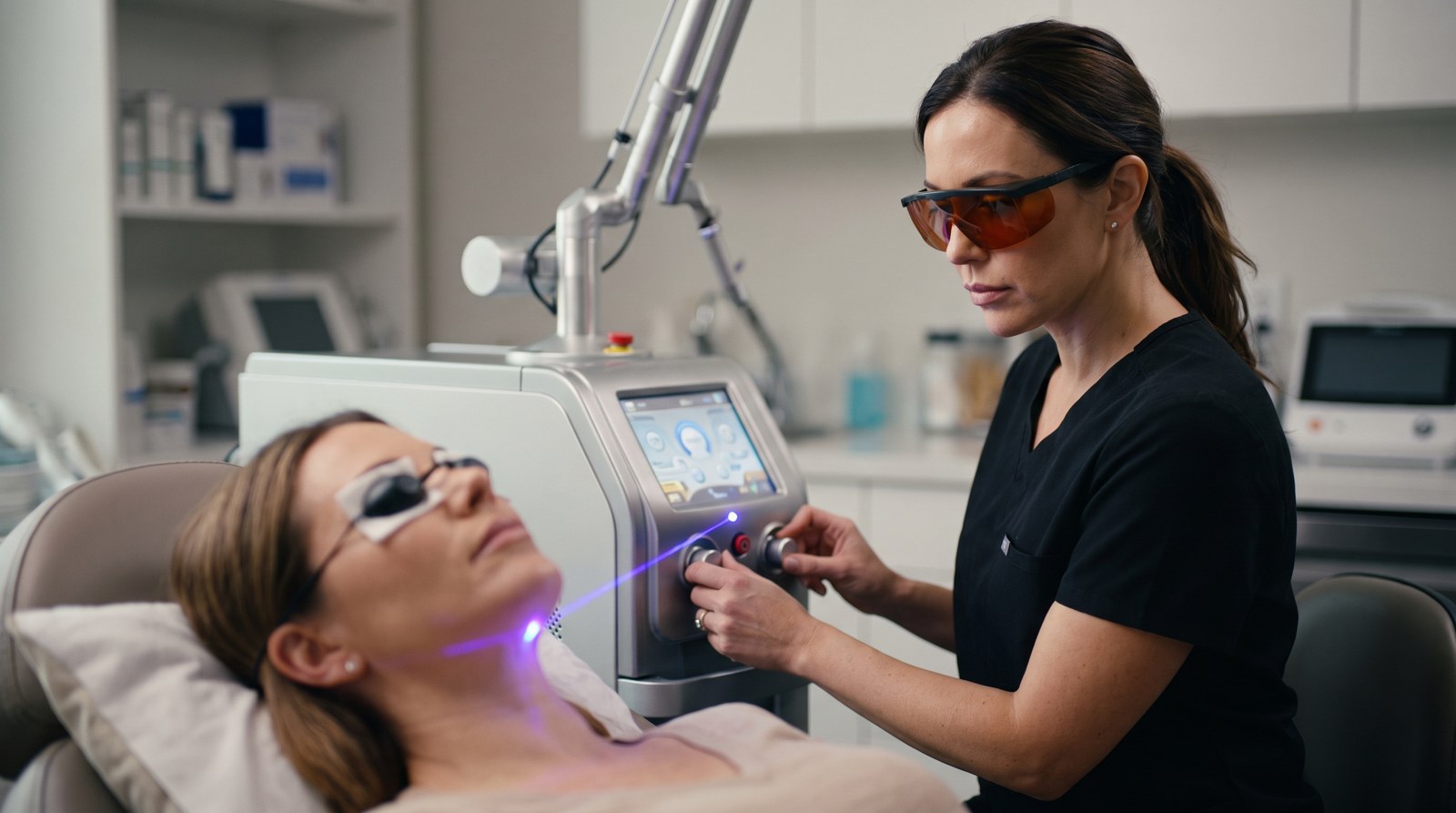
A laser technician performs advanced, energy-based skin treatments using professional-grade laser and light devices. The role sits at the intersection of esthetics and clinical care — more specialized than a traditional facial, and more hands-on than most people expect.

Day-to-day, you might be performing:

  • Laser hair removal — the most common service, using targeted light energy to reduce unwanted hair on the face, body, and sensitive areas across all skin tones
  • Skin rejuvenation treatments — addressing hyperpigmentation, sun damage, and uneven texture using fractional or non-ablative laser platforms
  • IPL (Intense Pulsed Light) therapy — treating redness, rosacea, and pigmentation with broad-spectrum light
  • Photofacials — a specific IPL modality that improves skin clarity and reduces visible signs of aging
  • Vascular and pigment treatments — targeting broken capillaries, age spots, and melasma

This is not the same job as a general esthetician. A licensed esthetician performs facials, waxing, chemical peels, and skincare services. A laser technician operates equipment that delivers concentrated energy to the skin — which means higher earning potential, stricter safety requirements, and the need for specialized training beyond a standard esthetics program.

That specialization is exactly what makes this career path so valuable. Clients pay significantly more for laser services than for traditional skin treatments, and med spas and dermatology clinics need technicians who can deliver results safely on every client — including clients with deeper skin tones who require precise parameter settings to avoid adverse reactions.


Virginia Licensing Requirements for Laser Technicians

Virginia regulates laser technicians through the Department of Professional and Occupational Regulation (DPOR), which oversees the Virginia Board for Barbers and Cosmetology, the licensing body for estheticians in the state.

Here’s how the pathway works:

Step 1: Earn Your Esthetics License

Virginia generally requires that laser procedures be performed either by a licensed esthetician working in an approved setting or under direct physician supervision in a licensed medical facility. For most people entering this field through a beauty and wellness school, that means esthetics licensure is your foundation.

To become a licensed esthetician in Virginia, you must complete 600 clock hours of esthetics training at a DPOR-approved school. After completing your program, you’ll sit for the Virginia State Board written and practical exam — and upon passing, you’ll hold an active Virginia esthetics license.

This license is not a formality. It’s what gives you legal standing to perform skin treatments — and, in most clinical settings, it’s what qualifies you to operate laser and light-based devices as well.

You can verify current licensing requirements directly through the Virginia DPOR website.

Step 2: Complete a Cosmetic Laser Technology Program

A standalone laser certification program — typically 60–100 hours of specialized training — builds on your esthetics foundation with the specific clinical knowledge laser work demands. This includes laser physics, tissue interaction, skin typing (Fitzpatrick scale), safety protocols, and hands-on operation of professional laser platforms.

This is where the quality of your program matters enormously. Not every laser training course gives you access to real equipment or real clients. A program with clinical hours on professional-grade devices — supervised by credentialed instructors — is what prepares you to actually perform these treatments safely from day one on the job.

A Note on Medical Supervision

Some laser procedures, particularly ablative treatments or those involving higher energy levels, may require a physician’s oversight regardless of your licensure status. Virginia’s regulatory framework distinguishes between settings (medical vs. esthetics) and between treatment types. If you plan to work in a dermatology office or cosmetic surgery center, the medical director will typically provide oversight. If you work in a freestanding med spa or esthetics studio, your esthetics license is your primary credential.

⚠️ Important: Virginia’s regulatory language around laser technicians is subject to change. Always confirm current DPOR requirements before enrolling in any program, and consult directly with your prospective employer about what credentials their setting requires.


What to Look for in a Cosmetic Laser Technology Program

Not all laser training programs are equal. When you’re evaluating cosmetic laser technician schools in Virginia, here are the questions that actually matter:

Is the School Accredited?

Accreditation from a recognized body — like the Council on Occupational Education (COE) — means the program has been independently evaluated for educational quality, instructor credentials, and student outcomes. It also affects your eligibility for federal financial aid. A program without accreditation may be cheaper upfront, but it may not qualify you for Pell Grants or other aid — and it may not carry the professional credibility employers expect.

What Equipment Will You Train On?

Laser technology changes. Professional med spas and clinics use industry-standard platforms — not outdated or entry-level devices. Ask any program you’re considering what specific laser systems students train on. If they can’t give you a clear answer, that’s a red flag.

How Many Hands-On Clinical Hours Are Included?

Reading about laser physics and actually operating a device on a live client are very different experiences. Look for programs that include supervised clinical hours — not just classroom instruction. The hands-on component is what builds the confidence and muscle memory that makes you employable from day one.

Do Instructors Hold Active Credentials?

Your instructors should be licensed, working professionals with real-world experience in laser and light-based treatments. Industry currency matters in a field that evolves as quickly as cosmetic technology does.

Does the Program Require Prior Esthetics Licensure?

This is a critical question for planning your path. Some laser programs accept students who are already licensed estheticians. Others are designed to run concurrently with or follow an esthetics program. Knowing this upfront determines your total training timeline and cost.


Laser Technician Salary and Career Outlook in Northern Virginia

The Northern Virginia and DC metro market is one of the strongest in the country for laser and med spa careers — and the numbers reflect that.

What Laser Technicians Earn in Virginia

Based on Bureau of Labor Statistics data for Skincare Specialists (SOC 39-5094) and local market data, laser technicians in Virginia typically earn between $42,000 and $62,000 per year. Technicians in the Northern Virginia corridor — Tysons Corner, Fairfax, Arlington, and adjacent DC suburbs — tend to earn on the higher end of that range, with some experienced technicians exceeding $65,000 annually when tips, commission on retail, and performance bonuses are factored in.

The BLS Occupational Outlook Handbook projects faster-than-average job growth for skincare specialists, and laser technicians sit at the premium end of that category.

Why Northern Virginia Pays More

The DC metro area consistently runs 10–20% above national average wages for beauty and wellness professionals. The reasons are straightforward: higher cost of living, higher household incomes, and a dense concentration of med spas, dermatology clinics, and cosmetic surgery centers competing for credentialed talent.

Fairfax County alone — which includes Tysons Corner, McLean, and Vienna — has one of the highest concentrations of cosmetic clinics and medical spas in Virginia. Add in the Arlington and Bethesda corridor and you have a market where qualified laser technicians are in consistent demand.

The Med Spa Industry Is Growing Fast

The U.S. medical spa market is projected to reach $47.1 billion by 2030 (Allied Market Research). That growth is driven by consumer demand for non-invasive cosmetic treatments — the exact services laser technicians provide. Laser hair removal alone remains one of the most requested cosmetic procedures in the country year after year.

For anyone entering this field now, the timing is strong. The combination of growing consumer demand, a concentrated local market, and a clear licensing pathway makes laser technology one of the most strategically smart specializations in the beauty and wellness industry.

Meet Someone Who Made the Jump

Consider a student like Daniela — a licensed esthetician who had been doing facials and waxing at a Northern Virginia spa for three years. She was good at her work, but her earning ceiling felt fixed. After completing AVI’s Cosmetic Laser Technician program, she added laser hair removal and IPL treatments to her service menu. Within six months, she had moved to a Tysons Corner med spa, was earning $18/hour plus commission, and was building a loyal client base that specifically requested her for laser services. The credential didn’t just expand her skills — it changed her income trajectory entirely.


Start Your Laser Technician Training at AVI Career Training

AVI Career Training in Vienna, Virginia offers a Cosmetic Laser Technician program designed to give you the specialized credential you need to work in the Northern Virginia med spa and cosmetic clinic market.

Here’s what sets AVI apart:

COE Accredited and SCHEV Certified

AVI holds COE accreditation — granted by the Council on Occupational Education, one of the most respected accrediting bodies for career and technical education. This accreditation means AVI’s programs have been independently evaluated for quality, and it’s what makes students eligible for federal financial aid, including Pell Grants.

AVI is also SCHEV Certified — approved by the State Council of Higher Education for Virginia — which confirms the school meets Virginia’s standards for post-secondary career training.

These aren’t marketing claims. They’re independently verified credentials that protect you as a student and signal quality to employers.

Hands-On Training in Vienna, VA — Central to the NoVA Market

AVI’s campus at 1595 Spring Hill Rd in Vienna, VA puts you at the center of the Northern Virginia job market. Tysons Corner — one of the highest concentrations of med spas and cosmetic clinics in the state — is minutes away. When you graduate, you’re not job-searching in a vacuum. You’re stepping into one of the most active cosmetic services markets on the East Coast.

Financial Aid and GI Bill® Acceptance

AVI offers financial aid for eligible students, including Pell Grants for those who qualify. AVI also accepts the GI Bill® — a meaningful benefit for veterans and active-duty service members transitioning into a new career in the DC metro area.

Not sure where to start with financing your training? AVI’s admissions team can walk you through your options before you commit to anything.

A Program Built for Real Outcomes

Consider Marcus — a veteran who used his Post-9/11 GI Bill benefits to enroll at AVI after separating from the military. He had no prior beauty industry experience, but he was methodical, detail-oriented, and ready for a hands-on technical career. After completing both the esthetics and laser programs at AVI, he landed a position at a med spa in Arlington that specifically valued his precision and calm under pressure — qualities the laser work demands. Two years later, he manages laser services for a multi-provider practice.

That kind of outcome doesn’t happen by accident. It happens when training is thorough, accreditation is real, and the local market is ready to hire.

Ready to Take the Next Step?

If you’re serious about laser technician training in Northern Virginia, the next move is simple: connect with AVI’s admissions team and get your specific questions answered.


Frequently Asked Questions

How long does it take to become a laser technician in Virginia?
The full path typically takes 12–18 months. Virginia’s esthetics licensure requires 600 clock hours of training, followed by the State Board exam. A laser-specific certificate program adds roughly 60–100 hours on top of that. The exact timeline depends on your program schedule and how quickly you move through licensure.

Do you need a license to perform laser treatments in Virginia?
Yes. In most settings, you’ll need an active Virginia esthetics license to legally perform laser and light-based treatments. In medical settings, a physician may provide oversight, but esthetics licensure is still the standard pathway for most laser technicians. Confirm current DPOR requirements before enrolling.

How much does a laser technician make in Northern Virginia?
Laser technicians in Northern Virginia typically earn between $42,000 and $62,000 per year, with experienced technicians in high-demand areas like Tysons Corner and Arlington often earning more when commissions and bonuses are included.

What is the difference between a laser technician and an esthetician?
A licensed esthetician performs skin care services like facials, waxing, and chemical peels. A laser technician — typically a licensed esthetician with additional specialized training — operates laser and light-based devices for hair removal, skin rejuvenation, and other energy-based treatments. Laser work is a clinical specialization that commands higher pay and requires additional credentialing.

Can you do laser hair removal without an esthetics license in Virginia?
Generally, no — not in a standalone esthetics or med spa setting. Virginia’s regulatory framework requires that laser procedures be performed by licensed estheticians or under physician supervision. Performing laser treatments without the appropriate credential exposes you and your employer to serious legal and liability risk. Always verify current DPOR guidance before beginning any laser work.

Article details:

Share: