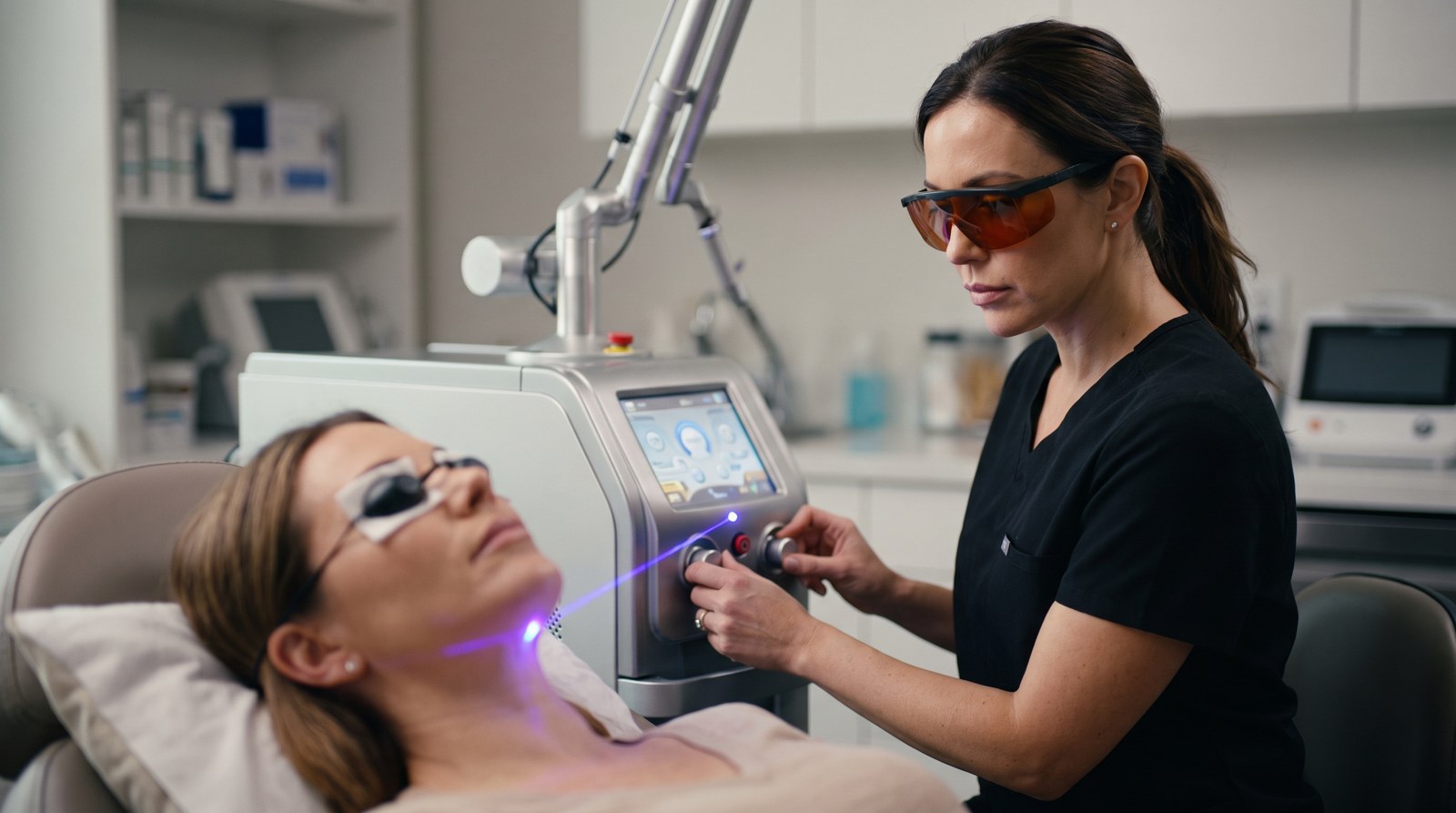
How to Become a Laser Technician in Virginia
Becoming a laser technician in Virginia starts with completing a formal cosmetic laser technology program — and if you’re in the Northern Virginia or DC metro area, AVI Career Training in Vienna, VA offers one of the region’s most comprehensive, hands-on paths to get you there.
This guide breaks down exactly what the career looks like, what Virginia requires, what to look for in a training program, and what you report earning once you’re working in one of the Mid-Atlantic’s established aesthetics markets.
—
> ### Key Takeaways
> – Virginia does not issue a standalone “laser technician license” — you must complete formal training and work under a supervising licensed practitioner
> – Cosmetic laser training programs typically range from 40–100+ contact hours depending on scope and curriculum
> – Laser technicians in the NoVA/DC metro area can earn $45,000–$70,000+ per year, with commission and tips increasing take-home pay significantly
> – AVI Career Training’s Cosmetic Laser Technology program is COE accredited and accepts the GI Bill®
> – Inclusive training across all Fitzpatrick Scale skin tones (I–VI) is essential — and a core part of AVI’s curriculum
—
What Does a Laser Technician Do?
A laser technician — sometimes called a cosmetic laser technician or laser aesthetician — uses FDA-cleared laser and light-based devices to perform non-surgical cosmetic treatments on clients. It’s a hands-on, client-facing career that sits at the intersection of aesthetics and medical technology.
Day to day, you might perform:
The role requires technical precision and genuine people skills in equal measure. You’re operating sophisticated equipment that can cause burns or hyperpigmentation if used incorrectly — which is exactly why training quality matters so much. At the same time, you’re building long-term relationships with clients who trust you with their skin.
Laser technicians work in medspas, dermatology offices, plastic surgery centers, and wellness clinics. The Northern Virginia and DC corridor has a particularly high concentration of all four.
Ready to start building that foundation? Apply to AVI Career Training’s Cosmetic Laser Technology program today.
—
Virginia Requirements to Become a Laser Technician
Here’s something that surprises many people researching this career: Virginia does not issue a standalone “laser technician license.”
Unlike some states that have created a dedicated laser operator credential, Virginia regulates cosmetic laser use through its broader medical and professional licensing framework. The Virginia Department of Health Professions (DHP) and the Board of Medicine govern who can operate laser devices for cosmetic purposes — and the key requirement is that laser operators must work under the supervision of a licensed physician or other authorized healthcare practitioner.
What this means practically:
Virginia’s regulatory landscape is worth understanding before you enroll anywhere. A school that trains you thoroughly on Virginia’s supervision structure, laser safety protocols, and clinical protocols will set you up to enter the workforce in full compliance — not scrambling to figure out the rules after graduation.
—
What to Look for in a Laser Technician School in Virginia
Not all laser training programs are created equal. Some offer a single weekend certification course. Others are comprehensive programs that prepare you for the full scope of cosmetic laser practice. Here’s how to evaluate your options — and what separates strong programs from weak ones.
Accreditation
This is non-negotiable. A program accredited by a recognized accrediting body — like the Council on Occupational Education (COE) — has been independently evaluated for curriculum quality, instructor credentials, student outcomes, and institutional integrity. Accreditation also matters for financial aid eligibility. Programs without it may be cheaper upfront, but they leave you without access to federal financial aid and with a credential that carries less weight with employers.
AVI Career Training is COE accredited — a distinction that reflects genuine institutional quality, not just a marketing claim.
Hands-On Clinical Hours
Reading about laser physics is not the same as operating a device on a real client. Look for programs that include substantial supervised clinical practice — not just classroom or simulation time. The hands-on hours are where you develop the muscle memory, client communication skills, and confidence that employers actually care about. Programs range from roughly 40 to 100+ contact hours; more hours mean more reps on real equipment.
Equipment Breadth
Medspas and laser clinics use a variety of technologies. A strong training program exposes you to both IPL (intense pulsed light) devices and true lasers — because the physics, safety protocols, and treatment applications differ significantly. If a program only trains you on one type of device, you’ll enter the workforce with a narrower skill set than your peers.
Fitzpatrick Scale Training Across All Skin Tones
This is one of the most important — and most frequently overlooked — quality markers in laser training.
The Fitzpatrick Scale classifies human skin types from Type I (very fair, always burns) to Type VI (deeply pigmented, never burns). Laser and IPL parameters must be carefully adjusted based on a client’s Fitzpatrick type. Improper settings on darker skin tones (Types IV–VI) can cause hyperpigmentation, burns, and scarring. This is not a minor risk — it’s a patient safety issue.
Programs that only train on light skin tones leave graduates underprepared to serve a diverse clientele and increase the risk of adverse outcomes. AVI’s curriculum is built around inclusive technique — training students to work safely and effectively across all six Fitzpatrick types. In a market as diverse as Northern Virginia, that’s not just ethical practice. It’s a competitive advantage.
Instructor Credentials
Your instructors should be licensed professionals with real clinical experience — not just theoretical knowledge. Ask prospective schools who teaches their laser courses and what their professional backgrounds are.
—
Meet a Student Like You: Priya’s Story
Priya had been working as a medical receptionist at a dermatology practice in Fairfax for four years. She watched laser technicians perform treatment after treatment every day — and knew she wanted to be on the other side of the door. But she wasn’t sure how to make the transition without going back to school for years.
When she found AVI’s Cosmetic Laser Technology program, she was relieved. The program fit around her existing schedule, and the hands-on clinical format meant she was actually practicing on clients — not just watching videos. By the time she graduated, she already understood the equipment her future employer used and could speak confidently about treatment protocols in her interview. She was hired at a medspa in Tysons within six weeks of completing the program.
Priya’s story isn’t unusual. The NoVA/DC metro is full of career-changers who already have adjacent experience in healthcare, esthetics, or hospitality — and are looking for a structured, efficient path into cosmetic laser work.
—
Laser Technician Salary and Career Outlook in Northern Virginia
The national median salary for skincare specialists — the BLS occupational category that includes laser technicians (SOC 39-5094) — is approximately $40,000–$47,000 per year according to the Bureau of Labor Statistics Occupational Outlook Handbook. But that national figure understates what’s possible in the Northern Virginia and DC metro market.
In the NoVA corridor — including Tysons, McLean, Reston, Arlington, and the DC suburbs — laser technicians regularly earn $45,000–$70,000+ per year, with experienced technicians at high-volume medspas clearing six figures when commission structures and tips are factored in. Here’s why this market is particularly strong:
Factors That Affect Your Earning Potential
| Factor | Impact on Earnings |
|—|—|
| Type of employer (medspa vs. dermatology office) | Medspas often offer commission structures; dermatology offices may pay flat salary |
| Years of experience | Technicians with 3+ years and a diverse treatment portfolio earn significantly more |
| Service menu breadth | Technicians trained on multiple laser types (hair removal + skin rejuvenation + IPL) command higher pay |
| Client base and retention | Strong consultative skills drive repeat bookings and tips |
| Geographic location within NoVA | Tysons/McLean practices typically pay more than suburban strip-mall locations |
The BLS projects employment for skincare specialists to grow faster than average through 2032, driven largely by demand for non-surgical cosmetic treatments. Laser technology sits at the center of that growth.
—
Can Estheticians Do Laser Treatments in Virginia?
This is one of the most common questions we hear — and the answer matters if you’re already licensed as an esthetician or thinking about pursuing both credentials.
In Virginia, the scope of practice for a licensed esthetician does not automatically include the operation of laser devices. Esthetics licensure covers skincare treatments, exfoliation, facials, and some light-based treatments depending on device classification — but cosmetic laser operation falls under a separate regulatory umbrella governed by the Board of Medicine’s supervision requirements.
What this means: If you’re a licensed esthetician who wants to add laser treatments to your services, you need to complete a formal cosmetic laser technology program and work in a setting with an authorized supervising practitioner. Your esthetics license is a valuable credential — it demonstrates client communication skills, skincare knowledge, and professionalism — but it doesn’t substitute for dedicated laser training.
The good news? If you’re already licensed as an esthetician, you’re entering laser training with a significant head start. You already understand the skin, know how to assess contraindications, and can manage client relationships. That foundation makes laser training faster to absorb and makes you a stronger candidate in the job market.
AVI offers both a Basic Esthetics program and a Cosmetic Laser Technology program — making it a natural home for students who want to build a comprehensive medical aesthetics career from the ground up.
—
Meet a Student Like You: Marcus’s Transition
Marcus served eight years in the Army before separating and relocating to the NoVA area. He’d worked as a combat medic, which gave him real comfort with clinical environments and working on diverse patients — but he needed a civilian career that matched his hands-on skills and gave him room to build something of his own.
He found AVI’s Cosmetic Laser Technology program while researching GI Bill®-eligible training options in Northern Virginia. The fact that AVI accepted his VA education benefits made the financial decision straightforward. He enrolled, completed the program, and parlayed his medical background and inclusive training into a position at a medspa in Arlington that specifically valued his ability to work confidently across all skin tones.
Marcus is now one of the highest-reviewed laser technicians at his practice. His military experience with diverse patients turned out to be a direct asset in a field where most technicians were trained primarily on lighter skin tones.
—
Start Your Laser Technician Training at AVI Career Training in Vienna, VA
AVI Career Training’s Cosmetic Laser Technology program is designed for students who want a career in medical aesthetics — not just a weekend certificate.
Here’s what sets AVI apart:
If you’re ready to stop researching and start training, the next step is simple.
Apply to AVI Career Training’s Cosmetic Laser Technology program today — or call us directly at (703) 943-9841 to speak with an admissions advisor about your options.
Your career in cosmetic laser technology starts in Northern Virginia. It starts at AVI.
—
AVI Career Training | 1595 Spring Hill Rd #720, Vienna, VA 22182 | (703) 943-9841
COE Accredited · SCHEV Certified · GI Bill® Accepted · Financial Aid Available