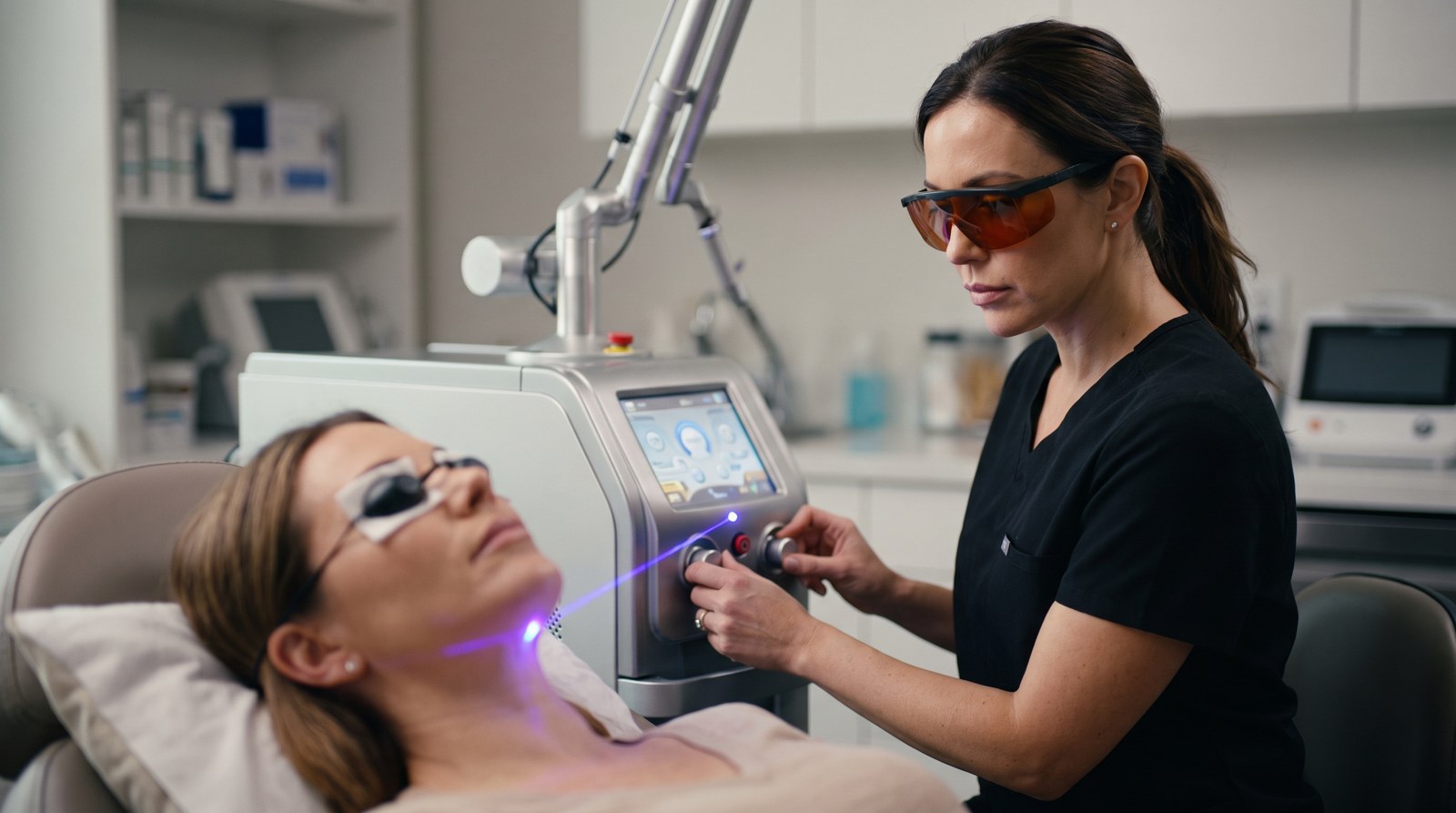
How to Become a Laser Technician in Virginia
To become a laser technician in Virginia, you need an esthetics or cosmetology license — then a recognized cosmetic laser technology program that prepares you for real clinical work. If you’re in Northern Virginia or the DC metro area, you have access to one of the more established markets for laser services in the mid-Atlantic region, and AVI Career Training in Vienna, VA offers a hands-on Cosmetic Laser Technology program designed to get you there. Apply to AVI Career Training online today, or keep reading to understand exactly what the path looks like.
This guide walks you through Virginia’s licensing requirements, what you’ll earn on the other side, and how AVI’s program is built for this market.
—
> ### Key Takeaways
> – Virginia’s Department of Professional and Occupational Regulation (DPOR) oversees esthetics and cosmetology licensing, which serve as the common prerequisite pathway into laser work
> – An esthetics license in Virginia requires 600 clock hours; a cosmetology license requires 1,500 clock hours
> – Skincare specialists earn a median national wage of approximately $42,000/year — Northern Virginia wages typically run 15–25% above that figure
> – The U.S. medical spa industry is projected to exceed $47 billion by 2030, driven by demand for laser and light-based services
> – AVI Career Training is COE-accredited and SCHEV-certified, accepts financial aid, and honors the GI Bill®
—
What Does a Laser Technician Actually Do?
Laser technicians perform light-based and energy-based cosmetic treatments on clients seeking real, visible results. Day to day, that means services like laser hair removal, skin rejuvenation, photofacials, pigmentation correction, and acne scar reduction — all using devices that require both technical knowledge and a steady, confident hand.
You’re not just pressing a button. You’re assessing skin tone, adjusting device settings, managing client expectations, and making sure every treatment is both safe and effective. That combination of clinical precision and client care is what makes skilled laser technicians genuinely valuable.
Where Laser Technicians Work
Most laser technicians in Northern Virginia work in one of three settings:
The Northern Virginia and DC metro market is one of the most concentrated med spa markets in the country. With a high-income population, a strong professional workforce, and consistent demand for appearance-focused services, this region supports a robust pipeline of laser technician jobs year-round.
Why Demand Is Growing
The U.S. medical spa industry is on a steep growth trajectory, projected to exceed $47 billion by 2030 (Grand View Research). Laser and light-based treatments are among the top drivers of that growth. Clients want effective, non-surgical solutions — and trained laser technicians are the professionals delivering them.
If you’re considering a career change or looking to specialize after esthetics school, laser technology is one of the highest-earning, fastest-growing niches in the beauty and wellness industry.
—
Virginia Licensing Requirements for Laser Technicians
Virginia does not currently issue a standalone “laser technician license” the way it licenses cosmetologists or estheticians. Instead, the state regulates laser and light-based treatments through a framework that ties laser work to either a licensed professional credential or medical supervision.
Here’s what that means practically.
The Role of DPOR
The Virginia Department of Professional and Occupational Regulation (DPOR) — specifically the Virginia Board of Cosmetology and Barbers — governs esthetics and cosmetology licenses in the state. You can review current requirements directly at the DPOR website.
To perform laser treatments in a non-medical setting (such as a med spa), most practitioners enter through one of these pathways:
What This Means for You
If you already hold a Virginia esthetics or cosmetology license, you’re in a strong position to move directly into laser specialization with the right program. If you don’t have a license yet, AVI Career Training’s Basic Esthetics program is a natural starting point — followed by the Cosmetic Laser Technology program.
> ⚠️ Important: Virginia’s regulations around cosmetic laser treatments are subject to change, and requirements can vary depending on procedure type and supervision context. Always confirm current requirements with DPOR and the Virginia Board of Cosmetology before enrolling or practicing. The information here reflects general guidance and should not substitute for official regulatory review.
—
What to Look for in a Laser Technician Training Program
Not all laser training programs are equal. Some are short weekend workshops with minimal hands-on time. Others are comprehensive programs that give you real clinical experience on real clients, using the variety of devices you’ll actually encounter in a med spa or dermatology office. Knowing what to look for helps you choose a program that actually prepares you — and that employers will recognize.
Accreditation Matters
The single most important credential a school can have is COE accreditation (Council on Occupational Education). COE accreditation means the school meets rigorous standards for academic quality, administrative practices, and student outcomes. It also makes you eligible for federal financial aid — which most unaccredited programs cannot offer.
AVI Career Training is COE-accredited and SCHEV-certified (State Council of Higher Education for Virginia), which means the program meets both national accreditation standards and Virginia’s own state oversight requirements.
Hands-On Clinical Hours
Reading about laser wavelengths and Fitzpatrick skin typing is useful. Actually performing treatments under instructor supervision is what builds the confidence to work professionally. Look for programs that prioritize clinical hours — not just classroom instruction.
Equipment Diversity
The real world of med spa work involves multiple device types. A strong laser training program exposes you to a range of platforms so you’re not limited to a single machine. Ask any program you evaluate: what devices will students train on?
Inclusive Training Across Skin Tones
This is non-negotiable in a market as diverse as Northern Virginia and DC. Laser treatments behave differently across the Fitzpatrick scale, and improperly calibrated settings on darker skin tones can cause serious harm. A program that only trains on one skin type is not preparing you for the actual clientele you’ll serve.
AVI’s curriculum is built around inclusive technique — training students to work safely and effectively on every skin tone. That’s not just a selling point. In the DC metro market, it’s a professional requirement.
Instructor Credentials
Your instructors should be licensed professionals with real industry experience — not just classroom academics. At AVI, instructors bring hands-on clinical backgrounds into every session, which means the advice you get reflects what actually happens in a med spa, not just what’s in a textbook.
—
Laser Technician Career Outlook & Salary in Virginia
Let’s talk numbers — because career decisions should be based on real data, not vague promises.
What Laser Technicians Earn
The Bureau of Labor Statistics (BLS) classifies laser technicians within the Skincare Specialists occupational category (SOC 39-5094). As of the most recent BLS data, the median annual wage for skincare specialists nationally is approximately $42,000. You can verify the current figure at bls.gov.
Laser specialization typically commands a premium above the general skincare specialist median. Technicians performing laser hair removal, skin resurfacing, and advanced light-based treatments are often the highest-compensated staff in a med spa environment — particularly those who can work across a diverse client base.
The Northern Virginia Premium
Northern Virginia and the DC metro area consistently run 15–25% above national wage medians for beauty and wellness roles. The concentration of high-income households, the density of cosmetic clinics and med spas in corridors like Tysons Corner, Reston, and Fairfax, and the overall cost of living all push compensation upward.
A laser technician in this market earning at the upper end of the range — especially with multiple years of experience and a strong client book — can exceed $60,000 annually, with commission structures at higher-volume med spas pushing totals higher.
Career Paths Beyond the Treatment Room
Starting as a staff laser technician is just the beginning. Experienced professionals in this field often move into:
The pathway from student to clinic owner is real in this industry, and Northern Virginia’s market supports it.
—
Two Paths Into Laser Technology: Real Scenarios
Career Changer With an Existing License
Imagine someone who has been a licensed esthetician in Virginia for three years. She’s skilled at facials and waxing, but she’s watching the med spas around Tysons Corner hire laser technicians at compensation levels well above what she’s currently earning. She wants to specialize — but she’s worried about starting over.
She doesn’t have to. Because she already holds an active Virginia esthetics license, she’s already past the licensing prerequisite. Enrolling in AVI’s Cosmetic Laser Technology program lets her add an established specialization to credentials she already has, without repeating foundational training. Within a matter of weeks, she completes the program, adds laser certifications to her resume, and transitions into a med spa role at a significantly higher earning level.
That’s not a hypothetical outcome — it’s the direct pathway the program is designed to support.
New to the Industry, Starting From Scratch
Now picture someone who has spent years in corporate project management and is ready for something different. He’s interested in the aesthetics industry but has no beauty school background. He wants a clear roadmap from zero to employed.
For him, the path is straightforward: start with AVI’s Basic Esthetics program (600 clock hours, preparing him to sit for the Virginia State Board exam), earn his esthetics license, then move directly into the Cosmetic Laser Technology program. The two programs build on each other. By the time he completes both, he holds a Virginia esthetics license and laser training credentials — which makes him a competitive candidate for med spa roles that pay above the industry average from day one.
He also discovers that AVI accepts the GI Bill® — a benefit he earned through prior military service that he didn’t know applied to beauty school. That changes the financial calculus entirely.
—
Start Your Laser Technician Training at AVI Career Training
AVI Career Training’s Cosmetic Laser Technology program is built for the Northern Virginia and DC metro market — where the clientele is diverse, the med spa industry is thriving, and employers expect technicians who can perform across a full range of skin tones and device types.
Here’s what sets AVI apart:
If you already hold a Virginia esthetics or cosmetology license, you may be able to move directly into the laser program. If you’re starting without a license, AVI’s esthetics programs provide the foundational training and licensure pathway you need first.
The Northern Virginia med spa market is growing. Trained laser technicians are well established. And the window to build a high-earning specialization in this field is open right now.
Ready to take the next step? Apply to AVI Career Training online today, or call us at (703) 943-9841 to speak with an admissions advisor about your options.
You can also learn more about AVI Career Training — including our accreditations, programs, and the instructors who will train you — on our website.
Your laser technician career starts with one application. Enroll at AVI and let’s build it together.
—
Virginia licensing requirements for cosmetic laser treatments are subject to change. Students should confirm current DPOR and Virginia Board of Cosmetology requirements at the time of enrollment. AVI Career Training recommends verifying all regulatory prerequisites directly with DPOR before applying.