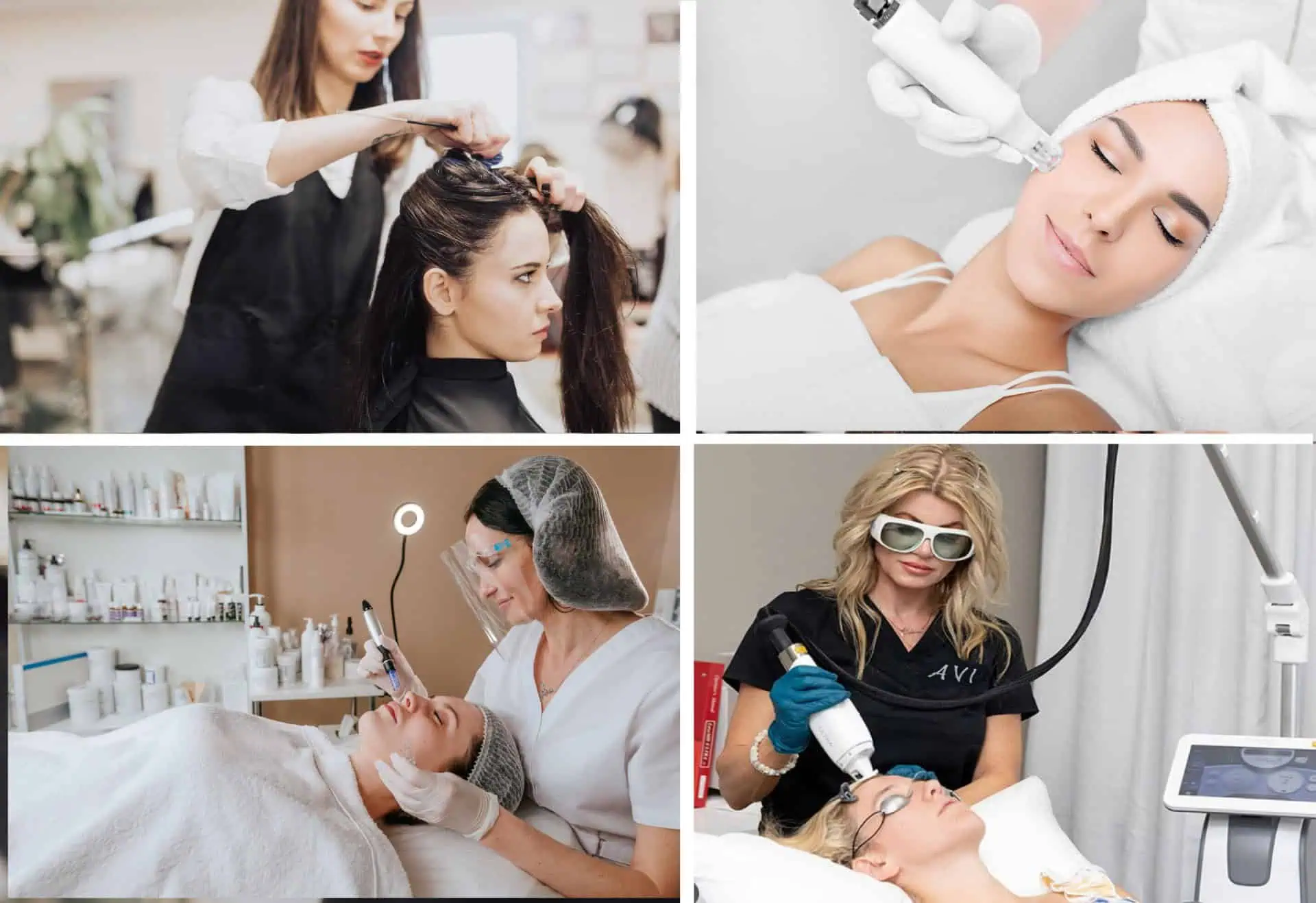
Is Cosmetology a Good Career Path? A Parent’s Guide
Cosmetology is a good career — one that offers real income, a clear licensing path, multiple specialization tracks, and the flexibility to grow from entry-level stylist to salon owner, brand educator, or independent business operator. If you’re a parent in Chevy Chase, MD researching this for your teen — or exploring it yourself — this guide gives you the facts you need to make a confident decision.
Key Takeaways
- Virginia requires 1,500 clock hours of cosmetology training to qualify for licensure
- Virginia cosmetologists earn a median annual wage of approximately $32,000–$38,000, with top earners significantly exceeding that through booth rental, specialization, and ownership
- Full-time cosmetology programs can be completed in 12–14 months, putting graduates in the job market faster than a 4-year degree
- COE accreditation and SCHEV certification are the two credentials that matter most when evaluating a cosmetology school in the DC metro area
- Financial aid and the GI Bill® are available at accredited schools like AVI Career Training in Vienna, VA — about 20 minutes from Chevy Chase
What a Cosmetology Career Actually Looks Like in 2025
Most parents picture one thing when they hear “cosmetology career”: a person behind a salon chair, cutting hair on weekends. That picture is incomplete — and it significantly undersells the career.
A cosmetology license opens doors across a much wider ecosystem than most families realize. Here’s where licensed cosmetologists actually work:
Salon & Spa Work
This is the most familiar path — and a solid one. Licensed stylists work in full-service salons, blowout bars, resort spas, and hotel amenity suites. Commission-based positions are common for new graduates; experienced stylists often move to booth rental, which functions more like running your own small business within an existing space.
Specialization Tracks
Cosmetologists can deepen expertise in specific services to command higher rates. Color correction, extensions, keratin treatments, and textured hair care are among the most in-demand specializations in the DC metro market right now. A stylist who builds a reputation in any one of these areas can charge premium prices and often has a fully booked calendar within a few years.
Salon Management and Ownership
Many experienced cosmetologists move into management or open their own salons. Salon ownership is a legitimate small business path — one that rewards people who combine technical skill with basic business sense. The cosmetology license is the foundation; everything else can be learned on the job or through continuing education.
Beauty Education
Licensed cosmetologists can become instructors at accredited schools, teaching the next generation of professionals. This path typically requires additional instructor training hours and appeals to professionals who enjoy mentoring and prefer a more structured schedule.
Editorial, Film, and Platform Work
Fashion editorial shoots, film and TV productions, and brand platform work all employ licensed cosmetologists. These roles require building a portfolio and networking within the creative industry, but they’re real career tracks — not exceptions.
The point is this: a cosmetology license is a starting point, not a ceiling. The cosmetology career path for teens today is more varied and more financially viable than it was even a decade ago.
Cosmetologist Salary in Virginia — What Parents Need to Know
Salary is usually the first question parents ask — and it deserves a straight answer.
According to Bureau of Labor Statistics data, the median annual wage for cosmetologists in Virginia is approximately $32,000–$38,000. That’s the median — meaning half of working cosmetologists in Virginia earn more than that figure. Entry-level stylists working on commission at a mid-range salon typically start in the lower part of that range. Within three to five years, income climbs as clientele builds and rebooking rates improve.
Here’s where the earning picture gets more interesting.
Income Variables That Move the Needle
Commission vs. Booth Rental
New graduates usually start on commission — typically 40–50% of service revenue. It’s predictable and comes with some built-in support from the salon. Booth renters pay a flat weekly or monthly fee to the salon and keep 100% of their service revenue. A busy booth renter with strong clientele can earn substantially more than the median — often $55,000–$75,000 or higher in high-income markets like Northern Virginia and the DC suburbs.
Specialization Premium
Cosmetologists who specialize in high-demand services — balayage, color correction, extensions, or natural and textured hair care — can charge $150–$400+ per service. One or two of those services per day changes the income math significantly.
Geographic Advantage
Chevy Chase, Bethesda, McLean, Vienna, and the greater DC metro area have among the highest average incomes in the country. That translates directly into what clients are willing to pay for quality services. A cosmetologist working in this market earns more than the state median by virtue of location alone.
Salon Ownership
The income ceiling for salon owners is uncapped. A well-run salon in Northern Virginia can generate six figures for its owner — though it comes with real business responsibility and risk.
The Income Arc: Entry-Level to Established
Parents sometimes look at an entry-level salary and make their decision based solely on that number. That’s like evaluating an accountant’s career based on their first-year associate salary. A more useful way to look at it:
- Year 1–2: Building clientele, learning speed and efficiency, earning in the $28,000–$36,000 range
- Year 3–5: Fully booked schedule, rebooking rate above 70%, potentially moving to booth rental, earning $40,000–$60,000+
- Year 5+: Specialization, loyal clientele, leadership roles, or ownership — income determined by ambition and business skill
That trajectory, starting with 12–14 months of school instead of four years, is part of why cosmetology competes seriously with traditional college paths for the right student.
Ready to explore what this career could look like for your family? Apply to AVI Career Training and take the first step.
Virginia Licensing Requirements and How Long School Takes
Virginia has clear, defined licensing requirements for cosmetologists — and understanding them helps parents plan realistically.
The Virginia State Board Requirements
The Virginia Department of Professional and Occupational Regulation (DPOR) oversees cosmetology licensing through the Virginia Board for Barbers and Cosmetology. Here’s what the path looks like:
- Required training hours: 1,500 clock hours at a licensed cosmetology school
- Minimum enrollment age: 16 years old in Virginia
- Licensing exam: Two-part exam including a written (theory) component and a practical (hands-on) component
- License renewal: Every two years; continuing education is required
The 1,500-hour requirement is substantial — but it’s also structured. Students learn theory, technique, sanitation and safety, client communication, and business fundamentals across that time. It’s not seat time; it’s professional preparation.
How Long Is Cosmetology School in Virginia?
This depends on your schedule, but here’s a practical breakdown:
- Full-time enrollment: Most students complete 1,500 hours in approximately 12–14 months
- Part-time enrollment: Students balancing other obligations may take 18–24 months
For a 17 or 18-year-old starting right after high school graduation, a full-time schedule means being licensed and working professionally before most of their college peers finish their sophomore year.
Why Accreditation Matters When Choosing a School
Not all cosmetology schools are equal — and accreditation is the clearest way to tell the difference. Two credentials matter most in the DC metro area:
COE Accreditation (Council on Occupational Education): The gold standard for career and technical schools. COE-accredited schools meet rigorous standards for curriculum quality, instructor qualifications, student outcomes, and institutional integrity.
SCHEV Certification (State Council of Higher Education for Virginia): Virginia’s state-level authorization for private postsecondary schools. SCHEV certification is required for schools operating in Virginia and signals regulatory compliance and institutional legitimacy.
Why does this matter practically? Accreditation determines whether a student can access federal financial aid — including Pell Grants and subsidized loans. It also affects whether credits and credentials are recognized by employers and licensing bodies.
AVI Career Training holds both COE accreditation and SCHEV certification. That’s not a marketing claim — it’s a verifiable credential that protects students and their investment.
Meet Two Students Who Asked the Same Questions You’re Asking
Marcus, 19 — Fairfax, VA
Marcus graduated from high school without a clear plan. He was creative, good with people, and had spent years watching his aunt do hair in her home salon. His parents were supportive but cautious — they worried a cosmetology career wouldn’t be financially stable enough.
He enrolled in the Cosmetology program at AVI Career Training, about 25 minutes from his home in Fairfax. Fourteen months later, he passed his Virginia State Board exam on the first attempt. He took a commission position at a salon in McLean, spent two years building his clientele, and specialized in men’s grooming and textured hair care. By age 22, he had transitioned to booth rental and was earning more than several of his friends who had taken on significant student loan debt at four-year universities.
Diane, 38 — Chevy Chase, MD
Diane had spent 12 years in retail management. She was burned out and looking for a career that gave her more control over her schedule and income. She found AVI while searching for a beauty school near Fairfax and was reassured by the school’s COE accreditation and the financial aid options available.
She enrolled part-time in the Cosmetology program, completing her 1,500 hours over 20 months while continuing to work part-time. She now operates as a booth renter at a Bethesda salon and has built a loyal client base that keeps her schedule consistently full. The career change she was afraid to make turned out to be the most financially sound decision of her adult life.
How to Evaluate a Cosmetology School Near Chevy Chase, MD
If you’re in Chevy Chase and searching for an accredited cosmetology school in the DC metro area, the options within a reasonable commute include schools in Maryland and Northern Virginia. Here’s what actually matters when comparing them.
Accreditation Status — Non-Negotiable
Ask any school you’re considering: Are you COE accredited? Are you SCHEV certified? If the answer to either is no, financial aid access may be limited and the credential may not carry the weight you expect.
Curriculum Inclusivity
This is a question most parents don’t think to ask — but it matters enormously for career readiness. Does the school’s curriculum train students to work on all skin tones and all hair textures? A cosmetologist working in the DC metro market will serve clients from every background. Training that defaults to a narrow demographic leaves graduates unprepared for a significant portion of their potential clientele.
At AVI Career Training, inclusive technique is built into the curriculum — not added as an afterthought. Students graduate ready to work beautifully on every client who walks through the door.
Instructor Credentials
Are instructors licensed industry professionals with real-world experience? Look for schools where instructors are active practitioners, not just classroom teachers. The practical knowledge gap between the two is significant.
Financial Aid Availability
Accredited schools can offer access to federal financial aid programs including Pell Grants and subsidized loans. AVI also accepts the GI Bill®, making it a strong option for military families in the Northern Virginia and DC metro area.
Commute Logistics from Chevy Chase
AVI Career Training is located at 1595 Spring Hill Rd #720, Vienna, VA 22182 — in the Spring Hill Road corridor near the Tysons area. From Chevy Chase, that’s approximately 20–30 minutes via I-495 or the Capital Beltway, depending on traffic. It’s a manageable daily commute and puts students in the heart of one of the wealthiest and most service-dense markets in the country.
Schedule a tour of AVI Career Training to see the campus and meet with an admissions advisor.
What Else Can You Do With a Cosmetology License?
One of the most common concerns parents raise is that cosmetology is too narrow. The worry: what if my child wants to grow or change direction?
A cosmetology license provides a foundation for several adjacent paths:
- Esthetics crossover: Licensed cosmetologists who add esthetics training can expand into skincare services, facial treatments, and waxing — broadening their service menu and client base
- Instructor licensure: With additional training hours, cosmetologists can become licensed instructors at accredited schools
- Salon management: No additional license required; management skills are developed through experience and continuing education
- Product and brand work: Many product companies — from professional color lines to styling tool brands — employ licensed cosmetologists as educators, trainers, and brand ambassadors
- Entrepreneurship: A cosmetology license is the legal foundation for opening your own salon, mobile beauty business, or specialty service studio
The Bureau of Labor Statistics projects steady demand for cosmetologists and personal appearance workers nationally. In high-income markets like Northern Virginia and the DC suburbs, that demand is even stronger — and the income ceiling is correspondingly higher.
Next Steps for Chevy Chase Families Exploring Beauty Careers
The Honest Comparison: Cosmetology vs. a Four-Year Degree
This is the question behind every other question parents ask. Here’s the honest answer:
A four-year degree offers broader theoretical education and access to certain career paths that require it. But it also means four years of tuition, living expenses, and deferred income — often resulting in $40,000–$100,000+ in student loan debt before a graduate earns their first professional paycheck.
Cosmetology school at an accredited institution like AVI Career Training can be completed in 12–14 months full-time, with financial aid available to reduce out-of-pocket costs. Graduates sit for the Virginia State Board exam, get licensed, and start earning — often before age 20.
For students who are hands-on learners, creative, people-oriented, and motivated by entrepreneurial possibility, the cosmetology path frequently delivers a better financial outcome in the first five years of a career. It’s not the right fit for everyone — but it deserves serious consideration, not a reflexive dismissal.
What to Do Right Now
If you’re a Chevy Chase family seriously exploring cosmetology as a career option, here are three concrete next steps:
- Review Virginia’s licensing requirements directly at the Virginia DPOR website so you’re working from official information
- Compare programs honestly — ask about accreditation, curriculum, instructor credentials, and financial aid at every school you consider
- Visit AVI Career Training in Vienna, VA — see the classrooms, meet the instructors, and ask every question you have before making a decision
AVI’s admissions team works with families from across the DC metro area, including Chevy Chase, Bethesda, McLean, Fairfax, and beyond. There’s no pressure and no obligation — just an honest conversation about whether this path makes sense for your student.
Apply now or schedule your tour at AVI Career Training. You can also reach us directly at (703) 943-9841.
Cosmetology is a good career — for the right student, with the right training, at the right school. AVI Career Training exists to be that school for Northern Virginia and DC metro families who are ready to find out.
AVI Career Training | 1595 Spring Hill Rd #720, Vienna, VA 22182 | (703) 943-9841 | COE Accredited · SCHEV Certified · Financial Aid Available · GI Bill® Accepted