AVI Career Training

How to Become a Laser Technician in Virginia

Share:

How to Become a Laser Technician in Virginia

Becoming a laser technician in Virginia requires completing an approved esthetics training program, passing the Virginia State Board exam, and gaining hands-on laser technology training — a career path that can take as little as six to nine months and open doors to some of the highest-paying positions in the beauty and wellness industry.

If you’ve been researching laser technician training in Northern Virginia, you’re already ahead of the curve. The DC metro area’s medical spa market is actively hiring trained laser professionals — and qualified candidates are in short supply. This guide walks you through exactly what the path looks like, what Virginia requires, and how AVI Career Training in Vienna, VA prepares you to succeed in this growing field.

Apply to AVI Career Training today and take the first step toward your laser technician career.


Key Takeaways

  • Virginia regulates cosmetic laser use under DPOR; most laser technicians begin with esthetician licensure requiring 600 clock hours of approved training
  • Laser technicians in the DC metro area earn approximately $45,000 – $70,000+ annually, with performance bonuses common in high-volume medspa settings
  • AVI Career Training’s Cosmetic Laser Technology program is COE-accredited and SCHEV-certified, with financial aid and GI Bill® acceptance available
  • The global laser hair removal market is projected to grow significantly through 2030, with a widening skills gap in inclusive laser care for deeper skin tones
  • AVI graduates are trained to work across all Fitzpatrick skin types — a marketable edge in Northern Virginia’s racially and ethnically diverse client base

What Does a Laser Technician Actually Do?

Laser technicians perform non-surgical cosmetic procedures using medical-grade laser and light-based devices. This is a medical-adjacent role — skilled, precise, and increasingly in demand across the DC metro area’s growing network of medical spas, dermatology practices, and luxury wellness clinics.

Your day-to-day as a laser technician might include:

  • Laser hair removal — the most widely requested service, using targeted light energy to disrupt hair follicles across the face, body, and bikini area
  • Skin rejuvenation and resurfacing — treatments that reduce fine lines, acne scarring, and uneven texture using fractional or ablative lasers
  • Photorejuvenation (IPL) — intense pulsed light treatments targeting sun damage, redness, and hyperpigmentation
  • Pigment and vascular treatments — addressing conditions like melasma, age spots, rosacea, and spider veins
  • Pre- and post-treatment consultations — assessing skin type, reviewing contraindications, and managing client expectations

This is not a purely cosmetic role in the casual sense of the word. Laser technicians work with high-energy devices that interact directly with skin tissue. That means safety knowledge, clinical judgment, and a thorough understanding of skin biology are non-negotiable.

Clients trust you with results that matter to them — and with their physical safety. That’s what makes this career both demanding and deeply rewarding.


Virginia Licensing Requirements for Laser Technicians

Virginia does not issue a standalone “laser technician license” the way some states do. Instead, the state regulates cosmetic laser use through the Virginia Department of Professional and Occupational Regulation (DPOR) — and the most common pathway into laser work runs through esthetician licensure.

Here’s what that means in practice.

Esthetician Licensure as the Foundation

To legally perform cosmetic laser procedures at most Virginia facilities, you’ll need an active esthetician license issued by DPOR. Earning that license requires:

  1. Completing 600 clock hours of esthetics training at a DPOR-approved school
  2. Passing the Virginia State Board exam — which includes both a written theory component and a practical skills assessment
  3. Applying for licensure through DPOR once you’ve met all educational and exam requirements

The 600-hour requirement is a firm threshold — there are no shortcuts. At full-time pace, most students complete this training in approximately five to six months, depending on the school’s schedule structure.

Physician Supervision and Scope of Practice

Virginia law requires that certain laser procedures be performed under physician oversight or within a defined scope of practice for licensed practitioners. The specifics vary based on the device classification, the procedure type, and the clinical setting. Medical spas in Virginia — particularly those operating laser devices — typically employ or contract with a supervising physician or medical director.

This is why your employer context matters. A laser technician working at a physician-affiliated medspa operates under a different framework than someone at a day spa offering basic light-based services. Understanding this distinction protects both you and your clients.

You can review current DPOR regulations and esthetician licensing requirements directly on the Virginia DPOR website.

Why COE Accreditation Matters for Your License Application

When you train at a COE-accredited school like AVI Career Training, your training hours are recognized by DPOR as meeting the requirements for Virginia licensure. Accreditation is not just a marketing credential — it’s the difference between training that counts toward your license and training that doesn’t. If you’re going to invest time and money in a program, make sure the school is properly accredited before you enroll.


What You’ll Learn in a Cosmetic Laser Training Program

A strong laser technician training program doesn’t just teach you how to operate equipment. It builds the foundational knowledge and hands-on confidence to work safely and effectively across a wide range of clients, skin types, and clinical scenarios.

At AVI Career Training, the Cosmetic Laser Technology curriculum is designed to do exactly that.

Laser Physics and Device Operation

You’ll start with the science behind how lasers and light-based devices work — wavelengths, chromophores, tissue interaction, and the differences between laser types (ablative vs. non-ablative, fractional vs. full-field, diode vs. Nd:YAG). Understanding the “why” behind each technology helps you make better clinical decisions and troubleshoot treatment variables.

The Fitzpatrick Skin Typing Scale — and Why It’s Critical

The Fitzpatrick scale classifies skin into six types based on melanin content and UV response. It’s the cornerstone of laser treatment planning because melanin in the skin competes with target chromophores (like hair follicles or blood vessels) for laser energy. Getting this wrong can cause burns, blistering, hyperpigmentation, or hypopigmentation.

Most laser training programs default to lighter Fitzpatrick types (I–III) in their clinical examples and practice models. AVI’s curriculum is built differently.

AVI specifically trains students to work across Fitzpatrick types III–VI — including deeper skin tones common across the Northern Virginia and DC metro’s diverse population. This matters for safety, for outcomes, and for your marketability as a technician. Graduates who are confident treating melanin-rich skin are genuinely harder to find — and more valuable to employers.

Safety Protocols, Contraindications, and Risk Management

Laser treatment safety is non-negotiable. Your training covers:

  • Eye safety — proper eyewear for technicians and clients, laser classification, controlled access zones
  • Contraindications — medications (photosensitizers, retinoids, blood thinners), skin conditions, recent sun exposure, and pregnancy considerations
  • Adverse event recognition — what to watch for during and after treatment, how to respond, and documentation protocols
  • Device maintenance — basic care, calibration checks, and manufacturer safety guidelines

Hands-On Clinical Practice

Reading about lasers and actually using them are different skill sets. AVI’s program includes supervised clinical hours where you practice on real clients in a structured, safety-first environment. This is where your confidence is built — not in a classroom simulation, but in actual practice.


Meet Simone: A Career Change That Made Sense

Simone spent eight years as a medical assistant at a dermatology clinic in Fairfax. She watched laser technicians perform procedures daily and knew the role paid well and had room to grow — but she’d assumed she needed a nursing degree to get there.

When a colleague mentioned AVI Career Training’s Cosmetic Laser Technology program in Vienna, Simone looked into it. She enrolled in the esthetics program, completed her 600 hours while working part-time, passed her Virginia State Board exam, and moved directly into the laser program.

Six months after finishing, Simone was hired as a full-time laser technician at a medspa in the Tysons corridor — earning more in her first year than she had in her final three years as a medical assistant. The clinical background helped, but it was AVI’s hands-on curriculum and inclusive training approach that gave her the edge during hiring.


Career Outlook: Salary and Job Opportunities in Northern Virginia

The Northern Virginia and DC metro market is one of the strongest in the country for laser technician careers. Tysons Corner, Arlington, Bethesda, and the broader Fairfax County corridor are home to a dense concentration of medical spas, dermatology clinics, and luxury wellness centers — all actively hiring trained laser professionals.

What Laser Technicians Earn in the DC Metro Area

Based on data from the Bureau of Labor Statistics, Indeed, and Glassdoor, laser technicians in the DC metro area typically earn:

  • Entry-level: $45,000 – $52,000 annually
  • Mid-career (2–5 years): $55,000 – $65,000 annually
  • Experienced / specialized: $70,000+ annually

These figures represent base compensation. In high-volume medspa environments, laser technicians frequently earn performance bonuses tied to service volume — which can add several thousand dollars to annual take-home pay. Tips, though not standard in clinical settings, are common in hybrid spa-medspa environments.

Note: Salary ranges are estimates based on publicly available market data and are not guaranteed. Actual earnings vary based on employer, experience, licensure, and geographic setting.

Where Laser Technicians Work in Northern Virginia

The highest-earning opportunities for laser techs in Northern Virginia tend to cluster in:

  • Medical spas — particularly those affiliated with dermatologists or plastic surgeons along the Tysons, McLean, and Reston corridors
  • Dermatology and cosmetic surgery practices — often offering more structured hours and career advancement tracks
  • Luxury day spas with laser suites — common in the DC suburbs, where clients expect premium services
  • Physician-owned aesthetic clinics — increasingly common as the non-surgical cosmetics market grows

The global laser hair removal market is projected to grow significantly through 2030, driven by rising demand across all demographics and skin types. A skills gap in treating darker Fitzpatrick skin tones (III–VI) is creating a real competitive advantage for technicians trained in inclusive laser protocols. The Northern Virginia and DC metro market — one of the most diverse regions in the country — reflects this demand clearly.

According to the Bureau of Labor Statistics, skin care specialists (the occupational category that includes laser technicians) are projected to see faster-than-average employment growth over the next decade.


Meet David: From the Army to the Medspa

David served eight years in the Army before separating at Fort Belvoir. He wanted a hands-on career that didn’t require a four-year degree and offered real earning potential in Northern Virginia. A veteran services counselor pointed him toward AVI Career Training and mentioned they accepted the GI Bill®.

David enrolled using his Post-9/11 GI Bill® benefits, covering most of his tuition costs. He completed his esthetics training, earned his Virginia State Board license, and went through AVI’s Cosmetic Laser Technology program. Within two months of graduating, he had two job offers — one from a dermatology group in Arlington and one from a medspa in Herndon.

He took the medspa position for the earning potential and hasn’t looked back. His military background — discipline, attention to safety protocols, client communication — translated directly into laser technician work. AVI gave him the technical skills to match.


Why Train at AVI Career Training in Vienna, VA

There’s no shortage of cosmetology and esthetics schools in the DC metro area. But AVI Career Training is specifically designed for students who want career-ready training, not just a credential.

Here’s what sets AVI apart for aspiring laser technicians:

COE Accreditation and SCHEV Certification

AVI is COE Accredited and SCHEV Certified — two credentials that matter directly to your licensure application. COE (Council on Occupational Education) accreditation means AVI meets rigorous standards for educational quality, program outcomes, and institutional integrity. SCHEV certification confirms AVI is approved to operate as a postsecondary school in Virginia. These aren’t optional extras. They’re the credentials that ensure your training hours count toward your Virginia State Board application.

Inclusive Curriculum Built for All Skin Tones

AVI’s programs are built on the principle that beauty education should work for every client — not just the ones who appear in stock photos. The Cosmetic Laser Technology curriculum specifically addresses Fitzpatrick types III–VI, equipping graduates to work safely and effectively with melanin-rich skin. In a region as diverse as Northern Virginia, that’s not just a values statement — it’s a competitive edge.

Hands-On Training at a Real Clinic

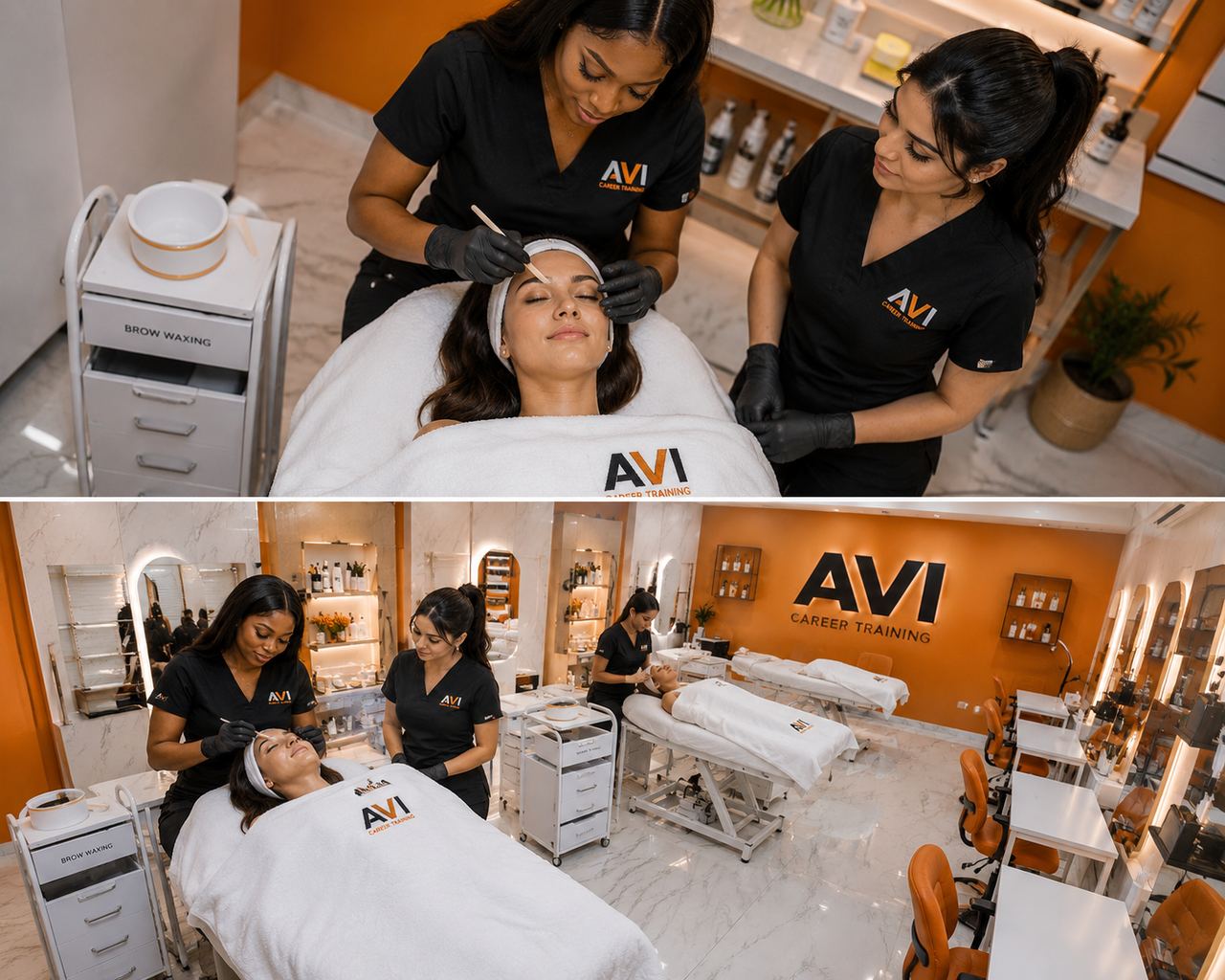
AVI students train on real clients in a supervised clinic environment before they graduate. This isn’t a simulation or a mannequin-based program. You build practical skill under the guidance of licensed industry professionals — so your first day on the job isn’t your first day working with real people.

Financial Aid and GI Bill® Acceptance

AVI offers financial aid for students who qualify, including Pell Grants and institutional aid options. AVI also accepts the GI Bill®, making the program accessible to veterans and active-duty military personnel transitioning into civilian careers. Call (703) 943-9841 to speak with an admissions advisor about your specific financial situation.

Location That Serves the Whole DC Metro

AVI’s campus is located at 1595 Spring Hill Rd #720, Vienna, VA 22182 — accessible from Fairfax, Tysons, McLean, Reston, Falls Church, and the broader Northern Virginia corridor. If you’re in the DC metro area and serious about laser technician training, AVI is close, accredited, and ready to help you get started.


Your Next Step Starts Here

Laser technician training in Northern Virginia doesn’t have to be complicated. The path is clear: complete your esthetics hours, pass your Virginia State Board exam, complete your laser technology training, and step into one of the fastest-growing specializations in the beauty and wellness industry.

AVI Career Training gives you the accredited program, the inclusive curriculum, the hands-on clinical hours, and the career support to make that path real — not just possible.

Apply to AVI Career Training now and start building the career you’ve been researching. Or call (703) 943-9841 to speak with an admissions advisor who can walk you through your options, timeline, and financial aid eligibility.

The medspa down the road is hiring. Let’s make sure you’re the one they call.

Article details:

Share: