Becoming a laser technician in Northern Virginia starts with completing an esthetician program, earning your Virginia esthetics license, and then enrolling in a hands-on cosmetic laser training program — like the one offered at AVI Career Training in Vienna, VA.
That’s the short answer. But the path has real details worth understanding before you invest your time and money. Virginia has a specific regulatory framework for laser and light-based treatments. Not every school prepares you for the actual workforce in this market. And Northern Virginia is one of the strongest regions in the country for laser technician careers — if you train right.
This guide walks you through every step: what the job actually looks like, what Virginia requires, what you’ll learn at AVI, and what your earning potential looks like in the DC metro area.
Apply now to AVI’s Cosmetic Laser Technology program and take the first concrete step toward this career.
—
> ### Key Takeaways
> – Virginia requires an active esthetician license before you can operate laser devices — esthetics training (600 hours) comes first
> – AVI’s Cosmetic Laser Technology program is COE-accredited and SCHEV-certified, located at 1595 Spring Hill Rd #720, Vienna, VA 22182
> – Laser technicians in the DC metro area earn which varies by experience and location due to the density of medspas and cosmetic clinics in Tysons, McLean, and Arlington
> – Fairfax County’s population is over 40% non-white — AVI trains you to work confidently on every Fitzpatrick skin type, a genuine workforce-readiness advantage
> – Financial aid is available at AVI; GI Bill® accepted
—
What Does a Laser Technician Actually Do?
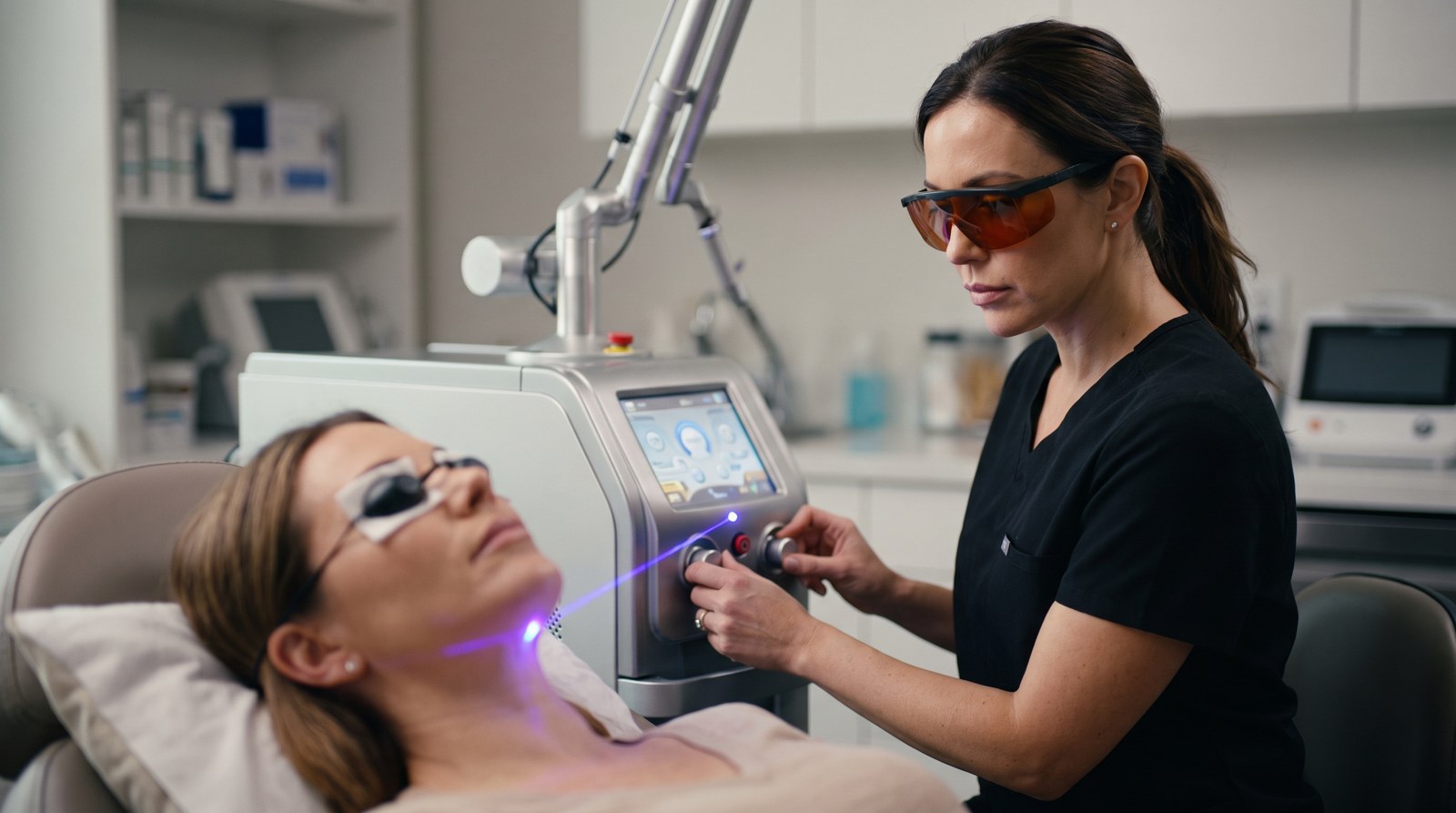
A laser technician — sometimes called a laser esthetician — performs non-surgical cosmetic procedures using laser and light-based technology. These aren’t facials or waxing appointments. This is a clinical skill set that requires technical knowledge, safety training, and hands-on precision.
The most common treatments laser technicians perform include:
- Laser hair removal — permanent reduction of unwanted hair using targeted light energy to disable hair follicles
- Skin rejuvenation — treatments that reduce fine lines, tighten skin texture, and improve overall tone
- Photofacials (IPL) — intense pulsed light treatments targeting sun damage, redness, and uneven pigmentation
- Pigmentation treatments — addressing hyperpigmentation, melasma, age spots, and post-inflammatory marks
- Laser acne therapy — using specific wavelengths to reduce active breakouts and post-acne scarring
This is where the role diverges from general esthetics. A licensed esthetician performs skin care services like facials, chemical peels, and waxing. A laser technician operates medical-grade energy-based devices, which carry different risks, require deeper science knowledge, and command higher pay. Many laser technicians are licensed estheticians who have added laser training — and that’s exactly the path Virginia requires.
If you’ve searched “laser technician vs. esthetician” and landed here, the clearest distinction is this: laser work is esthetics elevated by clinical technology. The skin knowledge carries over. The device operation is an additional, specialized skill.
—
Virginia Licensing Requirements for Laser Technicians
This is where most “how to become a laser technician” articles let you down. They offer generic national advice and leave you guessing about your specific state. Here’s what Virginia actually requires.
The Virginia DPOR Framework
The Virginia Department of Professional and Occupational Regulation (DPOR) oversees cosmetology and esthetics licensing through the Virginia Board for Barbers and Cosmetology. Laser and light-based treatments fall within the scope of esthetics practice in Virginia — which means the esthetician license is the regulatory gateway to laser work.
You can review current licensing requirements directly on the Virginia DPOR website.
Step 1: Earn Your Esthetician License
Before you can operate a laser device in a professional setting in Virginia, you must hold an active esthetician license. That means completing a state-approved esthetics training program — Virginia requires 600 hours of esthetics education — and passing the Virginia State Board exams (written and practical).
AVI Career Training offers both a Basic Esthetics program and a Master Esthetics program for students who want to build the full foundation before adding laser credentials. If you’re new to the field entirely, this is your starting point.
Step 2: Complete Laser-Specific Training
Once you hold your esthetics license, you can enroll in laser technician training. Virginia does not currently issue a separate standalone “laser license,” but operating laser devices without foundational esthetics credentials exposes both you and your employer to significant liability. Reputable medspas and dermatology clinics in this market require documented laser training and typically require it to include supervised clinical hours.
AVI’s Cosmetic Laser Technology program is structured to satisfy that professional standard. It builds directly on esthetics fundamentals and takes you into device-specific, hands-on training.
A Note on Medical Supervision
In Virginia, certain advanced laser treatments — particularly those crossing into medical territory (such as ablative laser resurfacing) — may require medical supervision or physician oversight depending on the procedure and setting. Many medspa roles in the DC metro area operate under a medical director model. Your laser training should prepare you to understand that scope clearly. AVI’s curriculum addresses scope of practice and clinical safety protocols explicitly.
—
What You’ll Learn in AVI’s Cosmetic Laser Technology Program
AVI Career Training’s Cosmetic Laser Technology program is built for the real clinical environment — not a textbook overview of laser theory. Here’s what the curriculum covers.
Laser Physics and Device Technology
Before you touch a device, you need to understand how it works. That means learning the science behind laser energy: wavelengths, chromophores, selective photothermolysis, and how different devices interact with different tissue targets. This foundation is what separates a confident, precise technician from someone just following a protocol sheet.
Skin Anatomy and Fitzpatrick Skin Typing
You’ll study skin anatomy in clinical depth — layers, structures, and how skin behaves differently across individuals. A critical part of that is learning the Fitzpatrick Scale, the dermatological classification system that categorizes skin types from I (very light) to VI (very dark). Laser settings, treatment protocols, and risk assessments all depend on accurately identifying and working with a client’s Fitzpatrick type.
This is one of the areas where AVI’s training stands apart.
Inclusive Training on Diverse Skin Tones — Why It Matters Here
Fairfax County — where AVI is located — has a population that is over 40% non-white, according to U.S. Census data. That means a significant portion of the clients you’ll see in Northern Virginia have medium-to-deep skin tones: Fitzpatrick types IV, V, and VI. These skin types require adjusted laser parameters, different wavelength choices, and more careful contraindication screening to avoid hyperpigmentation, scarring, or burns.
Many laser training programs still default to lighter skin tones as the “standard” and treat darker skin as an afterthought. That’s a workforce-readiness gap. AVI’s curriculum is built to train you on all skin types with equal confidence and clinical accuracy. When you graduate, you can serve the actual population of Northern Virginia — not just a portion of it.
This isn’t just a values statement. It’s a practical competitive advantage when you’re applying for jobs at medspas in Tysons, McLean, or Arlington where client demographics reflect the region’s diversity.
Contraindications and Safety Protocols
Laser treatments can cause serious harm when misapplied. You’ll learn how to conduct thorough client consultations, identify contraindications (conditions or medications that make a treatment unsafe), and follow laser safety protocols — including proper eyewear, room safety, device calibration, and documentation. Understanding risk is as important as executing the treatment.
Clinical Hands-On Practice
Theory only gets you so far. AVI’s program includes clinical practice hours where you work with real clients under instructor supervision. This is where the skills become instincts — where you learn to adjust, communicate with clients, and build the confidence that employers notice in an interview.
—
Career Outlook and Earning Potential in the DC Metro Area
The national picture for laser technicians is strong. The U.S. medical spa industry has been growing steadily and is projected to continue expanding significantly through the end of the decade, driven by consumer demand for non-surgical cosmetic procedures — laser hair removal and skin rejuvenation consistently rank among the most requested treatments.
But the Northern Virginia and DC metro market isn’t average. It’s one of the most favorable regions in the country for this career.
Where Laser Technicians Work
Graduates of laser training programs in this area find roles in:
- Medical spas (medspas) — the most common setting; often operate under physician oversight with a high-volume treatment menu
- Dermatology clinics — clinical environment with a focus on medical and cosmetic skin conditions
- Cosmetic surgery centers — pre- and post-surgical laser treatments alongside surgeons and PAs
- Wellness and aesthetics centers — growing segment of upscale spas adding laser services to their menus
The Tysons-McLean-Arlington corridor has a high concentration of premium medspas and cosmetic clinics serving a high-income, appearance-conscious clientele. That demand translates directly into stronger compensation.
What Laser Technicians Earn
According to Bureau of Labor Statistics Occupational Employment data, the median annual wage for skincare specialists — the BLS category that most closely encompasses laser technicians — is approximately $42,000–$48,000 nationally. However, experienced laser technicians working in established urban markets or specializing in medical-grade treatments often earn between $55,000 and $70,000 or more per year, particularly with commission or production-based pay structures common in medspas.
The Northern Virginia and DC metro area consistently reports wages above the national median for skincare and aesthetics roles, reflecting the region’s higher cost of living and the density of premium service businesses. When you factor in tips and commission structures at high-volume medspas, total compensation can exceed the base wage significantly.
—
Mini-Story: Career Changer to Medspa Technician
Consider someone like a 34-year-old former administrative professional in Reston who was looking for a career that combined her interest in skincare with something more financially rewarding and hands-on. She completed AVI’s Basic Esthetics program first, passed her Virginia State Board exams, and then enrolled directly in the Cosmetic Laser Technology program. Within a few months of finishing her laser training, she was interviewing at medspas in the Tysons area — and her ability to demonstrate clinical confidence on diverse skin types during her interview practical was what set her apart. She started her first medspa role at a base salary above what she’d earned in her previous career, with a production bonus structure tied to laser appointment volume.
That kind of outcome isn’t a fluke. It reflects what happens when practical training meets a strong local job market.
—
How to Enroll in AVI’s Laser Technician Program
AVI Career Training is located at 1595 Spring Hill Rd #720, Vienna, VA 22182 — easily accessible from Tysons, McLean, Reston, Herndon, and the broader Northern Virginia area.
Program Prerequisites
To enroll in AVI’s Cosmetic Laser Technology program, you should hold — or be working toward — a Virginia esthetician license. If you’re earlier in your journey, AVI’s esthetics programs give you the foundation you need before adding laser credentials.
Accreditation You Can Rely On
AVI Career Training is COE Accredited (Council on Occupational Education) and SCHEV Certified (State Council of Higher Education for Virginia). These aren’t marketing badges — they’re the credentials that make your diploma meaningful to employers and qualify you for federal financial aid.
Financial Aid and the GI Bill®
AVI offers financial aid for students who qualify, including federal aid programs and the GI Bill® for eligible veterans and service members. If you’ve served and are considering a career change into the beauty and wellness industry, AVI is one of the few schools in Northern Virginia that can help you use your benefits for laser technician training specifically.
Program Length
Laser technician training programs vary in clock hours based on curriculum scope. Contact AVI directly for current program details, including total hours, schedule options, and start dates — so you can map out a realistic timeline from enrollment to career entry.
—
Mini-Story: Veteran Transitioning to Laser Technology
A 29-year-old Army veteran from Woodbridge had used the structure and discipline of her service background to excel in a healthcare administrative role, but she wanted a career with more direct client interaction and higher earning potential. She discovered AVI through a search for GI Bill®-eligible schools in Northern Virginia and called the admissions team at (703) 943-9841 to ask whether her benefits would apply. They did. She completed her esthetics training at AVI, then moved directly into the Cosmetic Laser Technology program. The transition from military structure to clinical precision felt natural — and her veteran’s eye for protocol made laser safety training second nature. She’s now working at a cosmetic clinic in Arlington.
—
Ready to Start Your Laser Technician Career?
Northern Virginia is one of the best markets in the country to launch a career in cosmetic laser technology. The demand is real, the pay is above average, and the path is clear — if you train at the right school.
AVI Career Training gives you Virginia-specific preparation, hands-on clinical practice, inclusive training on all skin tones, COE accreditation, and access to financial aid and GI Bill® benefits. Everything you need to move from interested to employed.
Apply now to AVI’s Cosmetic Laser Technology program — or call (703) 943-9841 to speak with an admissions advisor about your options, program scheduling, and financial aid.
You can also visit us at 1595 Spring Hill Rd #720, Vienna, VA 22182 — learn more about AVI Career Training and what makes this school the right choice for serious students in Northern Virginia.
Your next career is closer than you think.
—
AVI Career Training is COE Accredited and SCHEV Certified. GI Bill® is a registered trademark of the U.S. Department of Veterans Affairs. Use of this trademark does not imply endorsement by VA.