How to Become a Laser Technician in Virginia
Becoming a laser technician in Virginia means completing a Virginia esthetician license (600 clock hours) and layering on accredited laser-specific training — and the Northern Virginia med-spa market makes this one of the established career paths in the DMV area right now.
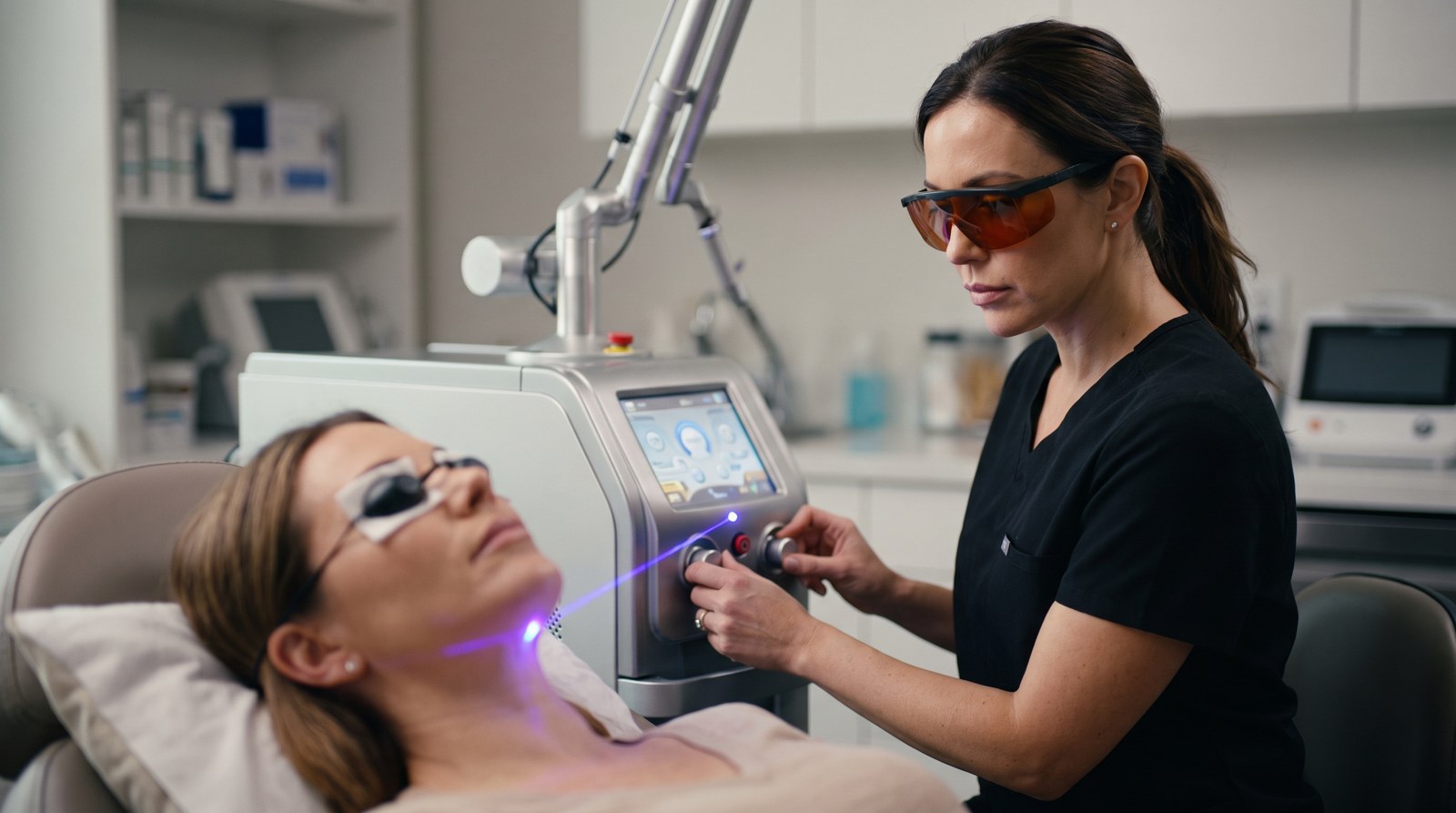
If you’ve been searching for a career that combines clinical precision with real earning potential — without a four-year degree — laser technology in aesthetics deserves a serious look. Tysons Corner, McLean, Reston, and the broader Northern Virginia corridor are packed with medical spas and dermatology clinics actively hiring trained laser professionals. The demand is real. The path is clear. And AVI Career Training, a COE-accredited school right here in Vienna, Virginia, offers a Cosmetic Laser Technician program built to get you there.
Apply now to take the first step toward your laser technician career.
—
- Virginia requires 600 clock hours of esthetics training for licensure (DPOR)
- Virginia does not issue a standalone “laser technician license” — practitioners typically hold an esthetician license plus laser-specific training
- Skincare specialists in the DC–Virginia–Maryland metro earn a median of $45,000–$62,000+ annually (BLS OES, SOC 39-5094)
- National job growth for skincare specialists is projected at +16% — faster than average (BLS)
- AVI Career Training is COE Accredited and SCHEV Certified, located in Vienna, VA — minutes from the Tysons Corner hiring hub
—
What Does a Laser Technician Actually Do?
A laser technician uses medical-grade light and laser energy to deliver cosmetic skin treatments — this is a clinical-adjacent specialty that goes well beyond general esthetics.
Day-to-day, you might perform laser hair removal on a range of skin tones, deliver photofacials to treat sun damage, apply intense pulsed light (IPL) for pigmentation concerns, or use non-ablative laser devices for skin rejuvenation. Some laser technicians work in dermatology offices. Others work in luxury med-spas. Many do both over the course of their careers.
What makes this role distinct — and genuinely technical — is understanding how laser energy interacts with the skin at a biological level. The Fitzpatrick scale, a six-phototype classification system used to categorize skin’s response to ultraviolet light, is one of the most critical tools in your kit. Proper skin typing before any laser treatment is non-negotiable. It determines safe treatment parameters and protects clients from burns, hyperpigmentation, or scarring. Technicians who can work confidently across all six Fitzpatrick phototypes are significantly more valuable to employers — and to the clients who trust them.
This is also why inclusive training matters so much. A program that only demonstrates laser techniques on light skin tones does its graduates a disservice. You’ll be serving a diverse clientele across Northern Virginia and the broader DMV area, and your training should reflect that reality from day one.
—
Virginia Licensing Requirements for Laser Technicians
Virginia does not issue a standalone “laser technician license” — but that doesn’t mean laser procedures are unregulated.
Here’s how the regulatory landscape actually works in Virginia, so you’re not guessing when you start your job search.
The Esthetician License Foundation
The Virginia Department of Professional and Occupational Regulation (DPOR) oversees cosmetology and esthetics licensing in the state. To perform esthetic services professionally in Virginia — including those that serve as the foundation for laser work — you generally need a Virginia esthetician license. That requires completing 600 clock hours of approved esthetics training and passing the Virginia State Board exam.
You can verify current requirements directly at dpor.virginia.gov.
Laser-Specific Oversight
Laser and light-based procedures occupy a grey zone that straddles esthetics and medicine. In Virginia, the level of supervision required depends on:
In many med-spa settings, laser technicians operate under the oversight of a supervising physician or medical director. This is standard industry practice and not a barrier to employment — it’s simply the structure of how aesthetic medicine is delivered in Virginia. When you’re job hunting, you’ll want to clarify the supervision model with each employer.
What This Means for You
The practical takeaway: your most direct path to becoming a laser technician in Virginia is to:
1. Complete an accredited esthetics program (600 clock hours)
2. Pass the Virginia State Board exam to earn your esthetics license
3. Complete a structured, accredited cosmetic laser technician training program
4. Seek employment in a setting with appropriate medical oversight
That’s the roadmap. And it’s more achievable than most people expect — especially with the right school.
—
What to Look for in a Laser Technician Training Program
Not all laser training is equal — and in this field, the difference between good and inadequate training can affect client safety.
Here’s what a quality cosmetic laser technology program should include — and what to watch out for.
Curriculum Essentials
Hands-on equipment time is non-negotiable. Reading about laser physics is one thing; operating a device on real clients with instructor supervision is how you actually build competence and confidence. Ask any program you’re considering: how many hours are students actually behind a laser device?
A rigorous program should cover:
Accreditation Matters
This is where many prospective students make an expensive mistake. A weekend laser certification course offered by a laser equipment vendor may feel like a shortcut. But these courses are typically unaccredited, untransferrable, and not recognized as formal credentials by most reputable employers.
Council on Occupational Education (COE) accreditation — which AVI Career Training holds — signals that a school meets rigorous academic, financial, and student-outcome standards. SCHEV certification (State Council of Higher Education for Virginia) means the school is approved to operate in Virginia. These aren’t just checkboxes. They represent a level of institutional accountability that weekend courses simply don’t have.
When you graduate from a COE-accredited program, your credentials travel. Employers recognize them. And you can build on them.
AVI’s Cosmetic Laser Technician Program
AVI Career Training’s Cosmetic Laser Technician program (NO FINANCIAL AID FOR THIS PROGRAM) in Vienna, Virginia is built around exactly these principles. The curriculum covers laser science, skin anatomy, Fitzpatrick typing, hands-on device operation, and safety protocols — with intentional attention to inclusive training on all skin tones. You’ll train with licensed industry professionals in a real educational environment, not a sales room.
Apply now to take the first step toward your laser technician career.
—
Timeline and Cost — What to Realistically Expect
One of the most common questions prospective students ask is: how long does this actually take? Here’s an honest breakdown.
The Full Training Timeline
Step 1 — Esthetics Licensure (if you don’t already hold one)
Virginia requires 600 clock hours for an esthetics license. Depending on whether you attend full-time or part-time, this typically takes six to nine months. After completing hours, you sit for the Virginia State Board exam.
Step 2 — Cosmetic Laser Technician Training
AVI’s Cosmetic Laser Technician program (NO FINANCIAL AID FOR THIS PROGRAM) is a focused, accelerated course layered on top of your esthetics foundation. Contact AVI directly at (703) 943-9841 or through the application portal to get current program hours and scheduling options — clock hours for this program should be confirmed with AVI administration.
Combined realistic timeline: For students starting from scratch, plan for roughly six to twelve months total, depending on pace and scheduling. If you already hold a Virginia esthetics license, the laser training component can be completed in significantly less time.
Meet Jasmine
Jasmine was a 29-year-old dental receptionist in Reston who had always been drawn to aesthetics but assumed she’d need years of school she couldn’t afford. She enrolled in AVI’s esthetics program while working part-time, completed her 600 hours, passed her Virginia State Board exam, and then moved directly into the Cosmetic Laser Technician program. Within fourteen months of walking through AVI’s doors, she was working at a med-spa in Tysons — doing the laser hair removal and skin rejuvenation treatments she’d always been curious about. She didn’t need a four-year degree. She needed the right school and a clear plan.
Tuition and Financial Aid
Tuition for esthetics and laser programs varies. Contact AVI at (703) 943-9841 or apply online for current tuition figures and payment options.
Important note on financial aid for the Cosmetic Laser Technician program: Because the Cosmetic Laser Technician program (NO FINANCIAL AID FOR THIS PROGRAM) is under 600 clock hours, it does not qualify for federal financial aid (Title IV / FAFSA). Federal aid, Pell Grants, and the GI Bill® are not available for this specific program.
If you need help covering the cost of laser training, ask AVI’s admissions team about:
Being transparent about financing options matters. AVI’s team can walk you through what’s available for your specific situation.
—
Laser Technician Salary and Career Outlook in Virginia
The Northern Virginia laser technician market is strong — and the numbers back it up.
What Laser Technicians Earn in Virginia
According to the U.S. Bureau of Labor Statistics (BLS), skincare specialists (SOC 39-5094) in the Washington–Arlington–Alexandria DC–VA–MD metropolitan area earn a median annual wage in the range of $45,000–$62,000+, with the higher end of that range common in medical spa and dermatology clinic settings where laser services command premium pricing.
Laser specialists typically out-earn general estheticians for several reasons:
Self-employed laser technicians who rent space or build private practices can earn significantly more — though that path requires business development skills alongside clinical ones.
The Hiring Market in Northern Virginia
The Tysons Corner corridor, Reston, McLean, Great Falls, and Bethesda are among the densest concentrations of medical spas and dermatology practices in the entire mid-Atlantic region. Employers in this market are actively competing for trained, credentialed laser technicians — particularly those who can work confidently on diverse skin tones.
That’s a hiring advantage for AVI graduates. You’re training at a school in Vienna, VA — minutes from this market — with instructors who understand what Northern Virginia employers are actually looking for.
National Outlook
The BLS Occupational Outlook Handbook projects 16% job growth for skincare specialists over the coming decade — a rate classified as “much faster than average.” Laser services are a significant driver of that growth, as consumer demand for non-invasive aesthetic treatments continues to rise across all demographics.
Meet Marcus
Marcus spent six years in the U.S. Army before transitioning to civilian life in Northern Virginia. He wanted a career in healthcare-adjacent work but didn’t want to spend years in school. He enrolled at AVI, completed his esthetics training, and then moved into the Cosmetic Laser Technician program. He’s now working at a dermatology clinic in McLean — doing laser skin treatments and building a client base that’s requested him by name. The career he built in under a year is paying him more than the office job he almost settled for.
—
Frequently Asked Questions
Q: What education do you need to become a laser technician?
A: In Virginia, you typically need a state esthetics license (requiring 600 clock hours of approved training) plus completion of a structured laser technician training program. Virginia does not issue a standalone laser license, so the esthetics credential forms your regulatory foundation.
Q: Does Virginia require a license to perform laser hair removal?
A: Virginia does not have a dedicated “laser technician license,” but laser procedures are regulated. Practitioners generally need an esthetics or cosmetology license from DPOR, laser-specific training, and — depending on the practice setting and device classification — may work under physician or medical director supervision. Check dpor.virginia.gov for current regulatory guidance.
Q: How long does laser technician training take?
A: If you’re starting from scratch, the combined path (esthetics licensure plus laser training) typically takes six to twelve months, depending on full-time vs. part-time enrollment. If you already hold a Virginia esthetics license, the laser-specific program at AVI can be completed in a shorter, focused timeframe.
Q: How much does a laser technician make in Virginia?
A: Skincare specialists in the DC–VA–MD metro area earn a median of approximately $45,000–$62,000+ annually, according to BLS data. Laser technicians working in medical spas and dermatology clinics — where laser services command higher prices — often trend toward the upper end of that range, plus commission and tips.
Q: Can estheticians do laser treatments in Virginia?
A: Yes — licensed estheticians who have completed accredited laser training can perform laser treatments in Virginia. The specific scope of services may depend on the device type and practice setting, and some environments require physician oversight. Accredited laser training on top of your esthetics license is the standard professional path.
Q: Is financial aid available for AVI’s Cosmetic Laser Technician program?
A: No. AVI’s Cosmetic Laser Technician program (NO FINANCIAL AID FOR THIS PROGRAM) is under 600 clock hours and does not qualify for federal financial aid (Title IV / FAFSA). Payment plans and private financing options are available — contact AVI’s admissions team at (703) 943-9841 to discuss your options.
Q: Why choose AVI Career Training for laser technician training in Northern Virginia?
A: AVI Career Training is COE Accredited and SCHEV Certified — credentials that matter to employers. The school is located in Vienna, Virginia, minutes from one of the densest med-spa markets in the mid-Atlantic. AVI’s curriculum includes inclusive training on all Fitzpatrick skin types, hands-on equipment time, and instruction from licensed industry professionals.
—
Ready to Start Your Laser Technician Career in Northern Virginia?
The path to becoming a laser technician in Virginia is real, achievable, and shorter than most people expect. You don’t need a four-year degree. You need the right training, the right credentials, and a school that prepares you for the actual market you’ll be working in.
AVI Career Training’s Cosmetic Laser Technician program (NO FINANCIAL AID FOR THIS PROGRAM) in Vienna, VA gives you hands-on laser experience, inclusive skin-tone training, and the backing of a COE-accredited institution — all minutes from the Northern Virginia med-spa corridor where employers are hiring.
Have questions before you apply? Call AVI admissions at (703) 943-9841 or contact the team online. You can also learn more about AVI Career Training — our accreditations, our instructors, and our approach to beauty education that works for everyone.
Your laser technician career starts here.
—
AVI Career Training is a COE-accredited, SCHEV-certified beauty and wellness school located at 1595 Spring Hill Rd #720, Vienna, VA 22182 — serving the Northern Virginia, Tysons Corner, and broader DMV area. AVI offers hands-on career training programs in Cosmetology, Basic and Master Esthetics, Nail Technician, Massage Therapy, Cosmetic Laser Technician, Electrolysis, and ESL. AVI’s curriculum is built around inclusive techniques that serve every skin tone and hair type. The school is accredited by the Council on Occupational Education (COE) and certified by the State Council of Higher Education for Virginia (SCHEV). Financial aid (including GI Bill®) is available for qualifying programs.
📍 1595 Spring Hill Rd #720, Vienna, VA 22182 | 📞 (703) 943-9841 | 🌐 avicareertraining.com