How to Become a Laser Technician in Virginia
Becoming a laser technician in Virginia requires completing an accredited cosmetic laser technology program, meeting Virginia’s esthetician licensure requirements, and working under physician supervision in a licensed medical spa or clinical setting. It’s a clear, achievable path — and one that leads to some of the highest-paying roles in the beauty and wellness industry.
If you’re considering laser technician training in Virginia, this guide walks you through every step: what the role actually involves, what Virginia law requires, what to look for in a training program, and what you can realistically earn in the Northern Virginia and DC metro market.
—
> Key Takeaways
> – Virginia does not issue a standalone “laser technician license” — laser work requires esthetician licensure (600 hours) plus specialized laser training under physician oversight
> – AVI Career Training’s Cosmetic Laser Technology program is COE-accredited and SCHEV-certified, with hands-on training on real clients in Vienna, VA
> – Laser technicians in Northern Virginia typically earn between $45,000 and $70,000+ annually, with med spa and dermatology settings at the higher end
> – The U.S. medical spa industry is valued at over $5.4 billion and growing — demand for trained laser professionals has never been stronger
> – BLS projects approximately 17% growth for skincare specialists — faster than average for all occupations
—
What Does a Laser Technician Do?
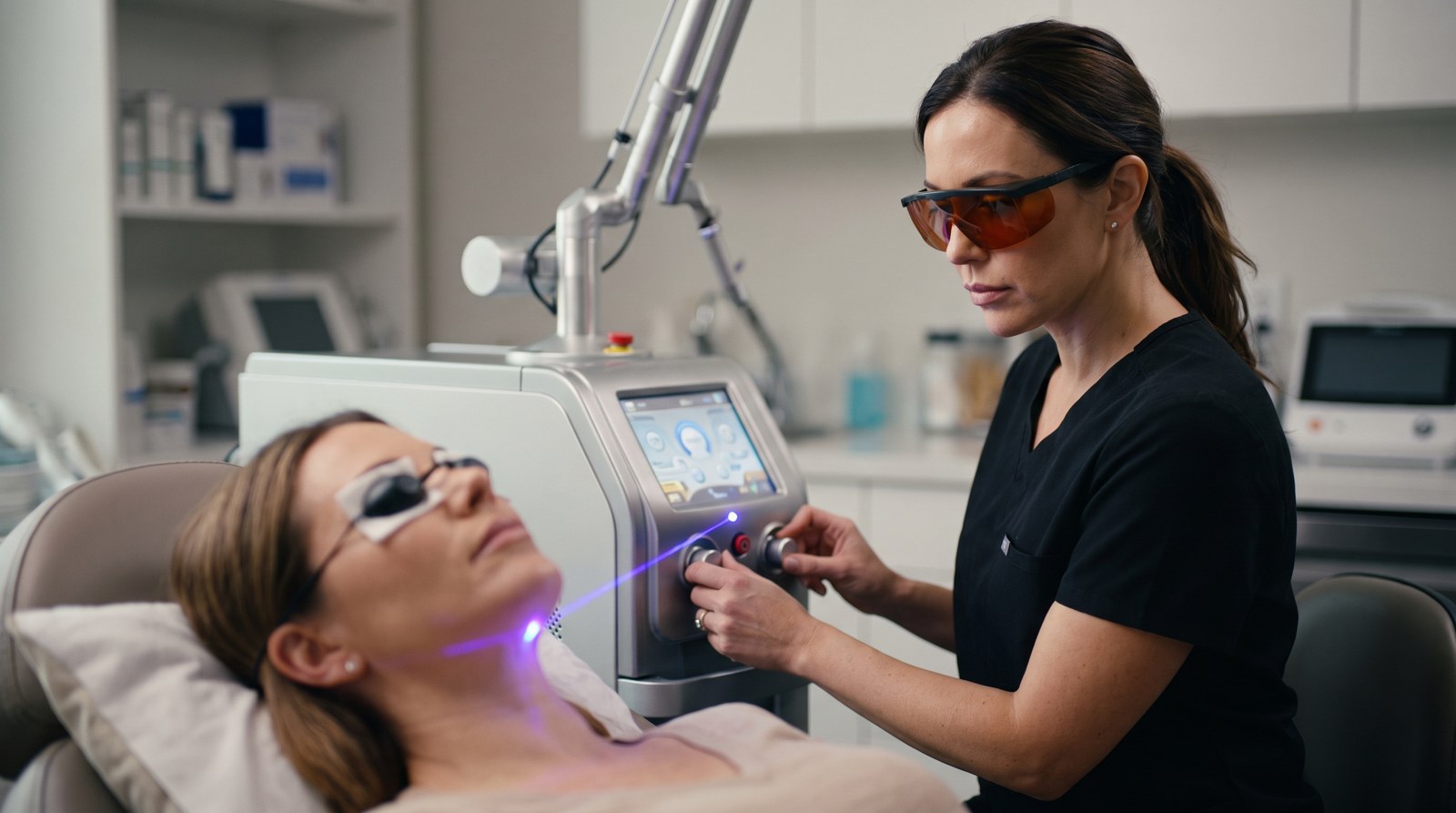
A laser technician performs light-based and energy-based cosmetic treatments on clients in medical spas, dermatology offices, plastic surgery clinics, and wellness centers. The job combines technical precision with genuine client care.
Day-to-day services typically include:
Laser technicians work with a range of devices — including diode lasers, Nd:YAG lasers, alexandrite lasers, and IPL systems. The specific equipment you’re trained on matters enormously, especially when it comes to safely treating clients across all skin tones and Fitzpatrick types.
This is an important point: not all laser training programs address diverse skin tones equally. At AVI Career Training, inclusive training across every skin tone and hair type is built directly into the curriculum — because the clients walking through your door won’t all look the same.
—
Virginia Licensing Requirements for Laser Technicians
Here’s where many prospective students get confused — and where it’s worth being completely clear.
Virginia does not issue a standalone “laser technician license.”
Unlike some states that have created a distinct regulatory category for laser operators, Virginia governs cosmetic laser use through its Board of Medicine. In Virginia, laser and light-based treatments are classified as medical procedures. That means they must be performed under physician supervision or pursuant to a valid physician delegation protocol.
What This Means in Practice
To legally perform laser treatments in Virginia, you typically need to:
1. Hold an active Virginia esthetician license — which requires completing a state-approved esthetics program (600 hours) and passing the Virginia State Board written and practical exams
2. Complete specialized cosmetic laser training — through an accredited program that covers device operation, safety protocols, treatment parameters, and contraindications
3. Work under physician oversight — in a medical spa or clinical setting where a licensed physician has established a delegation agreement and treatment protocols
Some employers also require proof of specific laser certifications, particularly for high-powered devices. Your training program — and the credentials it confers — will matter to hiring managers.
Certification vs. Licensure: Know the Difference
A license is issued by the state and is legally required to practice. A certification is issued by a training institution or professional organization and documents your specific competencies.
In Virginia’s laser landscape, you need the license (esthetician) and the certification (laser technology training) to be a fully qualified, hireable laser technician. One without the other leaves gaps that most reputable med spas won’t overlook.
For the most current guidance on Virginia’s regulatory framework for laser procedures, review the Virginia Department of Health Professions (DHPS) resources and consult the Board of Medicine’s delegation guidelines directly. Regulations can be updated, and it’s always worth verifying current requirements before enrolling or practicing.
—
What to Look for in a Laser Technician Training Program
Not all cosmetic laser programs are created equal. If you’re investing time and money into laser technician training in Virginia, here are the criteria that actually matter.
Accreditation and State Certification
This is non-negotiable. Your program should be accredited by a recognized accrediting body — such as the Council on Occupational Education (COE) — and certified by the State Council of Higher Education for Virginia (SCHEV). These credentials protect your investment and signal to employers that your training meets established educational standards.
AVI Career Training is both COE Accredited and SCHEV Certified. That matters when you’re job hunting and when you’re applying for financial aid.
Hands-On Clinical Hours
Reading about laser parameters and watching demonstrations will only take you so far. Look for programs that put you behind the device on real clients — not just mannequins or classmates. Clinical hours build the muscle memory, client communication skills, and safety instincts that classroom time alone cannot replicate.
AVI students train on real clients in AVI’s student clinic, giving you the hands-on experience employers actually want to see.
Equipment Variety
The laser industry uses multiple device types across different wavelengths. A strong program exposes you to more than one platform — including IPL systems, diode lasers, and Nd:YAG lasers. Knowing how to operate multiple devices makes you a more versatile hire and prepares you to adapt when a new employer uses different equipment.
Inclusive Skin Tone Training
This is a quality marker that separates serious programs from generic ones. Laser and light-based treatments carry real risks when performed incorrectly on darker skin tones — including burns, hyperpigmentation, and scarring. Your training should address Fitzpatrick skin typing, safe parameter selection across all skin types, and the specific contraindications relevant to clients with more melanin.
At AVI, we believe beauty education must serve everyone. Inclusive, skin-tone-aware training is woven into how we teach every laser and esthetics module.
Instructor Credentials
Your instructors should be licensed, actively credentialed professionals — not just former students or administrative staff filling a teaching role. Ask programs directly: what are your instructors’ qualifications? Do they have real clinical laser experience?
—
Career Outlook and Earning Potential for Laser Technicians in Virginia
Let’s talk about the financial reality — because the numbers are genuinely compelling.
Salary Ranges in Northern Virginia
Laser technicians in Northern Virginia typically earn between $45,000 and $70,000+ annually, depending on setting, experience, and the range of services they perform. Med spas and dermatology practices in the DC metro area consistently pay at the higher end of that range, driven by the region’s high cost of living, dense concentration of medical spa businesses, and affluent client base.
Commission structures and tip income can push total compensation significantly higher for experienced practitioners with strong client retention skills.
For broader context, the U.S. Bureau of Labor Statistics (BLS) tracks skincare specialists as an occupational category that includes laser technicians. The BLS Occupational Outlook Handbook currently projects approximately 17% employment growth for skincare specialists — a rate classified as much faster than average across all occupations. That’s not a niche statistic — it reflects real, sustained demand.
Why Northern Virginia Is a Strong Market
The DC metro area is one of the most competitive and markets for aesthetic services in the country. The density of medical spas, plastic surgery practices, and high-end wellness centers in Fairfax County, Arlington, McLean, and surrounding communities creates consistent demand for trained laser professionals.
As med spas continue to expand nationally — the U.S. medical spa industry now exceeds $5.4 billion in annual revenue according to the American Med Spa Association (AmSpa) — Northern Virginia is capturing a significant share of that growth. Laser hair removal alone remains the #1 most performed non-surgical aesthetic procedure in the U.S., per the ASDS Annual Statistics Report.
Career Pathways
Entry-level laser technicians typically start in a staff position at a medical spa, learning the client base and refining their technique. From there, career pathways include:
The combination of esthetician licensure and laser certification creates a versatile credential set. You’re not locked into one lane.
—
Meet Two Students Who Made the Transition
From Retail to Med Spa in Under a Year
Destiny had spent five years in retail management when she decided she wanted work that was both hands-on and financially rewarding. She researched esthetics programs in Northern Virginia and enrolled at AVI Career Training. After completing her esthetics training and adding AVI’s Cosmetic Laser Technology program, she passed her Virginia State Board exam and landed a position at a medical spa in Tysons Corner within months of graduating. She now performs laser hair removal and IPL treatments full-time — earning more in her first year in aesthetics than she had in her last two years in retail.
An Esthetician Who Leveled Up
Marcus was a licensed esthetician working at a day spa, earning a solid income but feeling like he’d plateaued. He knew medical spas were where the real earning potential was, but he lacked the laser credentials to get through the door. He enrolled in AVI’s Cosmetic Laser Technology program while continuing to work part-time. The hands-on training — working on actual clients with multiple device types — gave him the confidence and the resume line he needed. Within two months of completing the program, he transitioned to a dermatology group practice and nearly doubled his previous hourly rate.
—
Start Your Laser Technician Career at AVI Career Training
AVI Career Training’s Cosmetic Laser Technology program is designed for people who are serious about building a career in the med spa and clinical aesthetics world — not just curious about lasers.
Here’s what sets AVI apart:
Whether you’re a licensed esthetician looking to add laser services or you’re starting your beauty career from scratch, AVI has a path for you. Our programs are built around real career outcomes — not just diplomas.
Ready to take the first step? Apply now at AVI Career Training and start building the career you’ve been working toward.
—
Frequently Asked Questions
How Do I Become a Laser Technician in Virginia?
Complete a state-approved esthetics program (600 hours), pass the Virginia State Board exam to earn your esthetician license, then complete an accredited cosmetic laser technology program. Because Virginia classifies laser treatments as medical procedures, you’ll also need to work under physician supervision in a licensed med spa or clinical setting. AVI Career Training offers both the esthetics and laser technology training to walk you through the full credential pathway.
Do You Need a License to Perform Laser Treatments in Virginia?
Yes. In Virginia, laser and light-based treatments are governed by the Board of Medicine and are considered medical procedures requiring physician oversight or delegation. Performing these treatments without the appropriate credentials — including esthetician licensure and documented laser training — puts you and your clients at risk. Always verify current requirements with the Virginia Department of Health Professions.
How Long Does Laser Technician Training Take?
Laser-specific training programs typically range from 40 to 100+ hours, depending on the program’s scope and curriculum depth. If you also need to complete your esthetician licensure (600 hours), you should factor that into your overall timeline. Many students complete both pathways at AVI and are employment-ready within a year of starting.
How Much Does a Laser Technician Make in Virginia?
Laser technicians in Northern Virginia typically earn between $45,000 and $70,000+ annually, with medical spa and dermatology settings at the higher end of that range. Total compensation can increase with commission structures, tips, and specialization in advanced laser procedures. The DC metro market consistently pays above national medians due to cost of living and demand.
What Is the Difference Between a Laser Technician and an Esthetician?
An esthetician is a licensed skincare professional who performs facials, waxing, chemical peels, and other non-laser skin services. A laser technician is trained specifically to operate laser and light-based devices for procedures like laser hair removal, IPL photofacials, and skin resurfacing. In Virginia, esthetician licensure is the foundation — laser certification is the specialization layered on top. Many AVI students earn both credentials and position themselves for higher-paying med spa roles.
—
AVI Career Training | 1595 Spring Hill Rd #720, Vienna, VA 22182 | (703) 943-9841
COE Accredited · SCHEV Certified · Financial Aid Available · GI Bill® Accepted