Hands-on cosmetology training is defined as supervised practical skill development performed in real or simulated salon settings, and it is the foundation of every successful beauty career. Most state boards require between 1,000 and 2,100 clock hours combining theory and supervised practice before a student qualifies for licensing exams. That range reflects how much physical repetition the industry demands before a graduate touches a paying client independently. Muscle memory, client confidence, and technical precision are all built through practice and expert feedback, not through watching videos or reading textbooks. Avi Career Training in Fairfax County, VA, structures its programs around this principle, pairing accredited curriculum with personalized mentorship from enrollment to graduation.
What does hands-on cosmetology training actually involve?
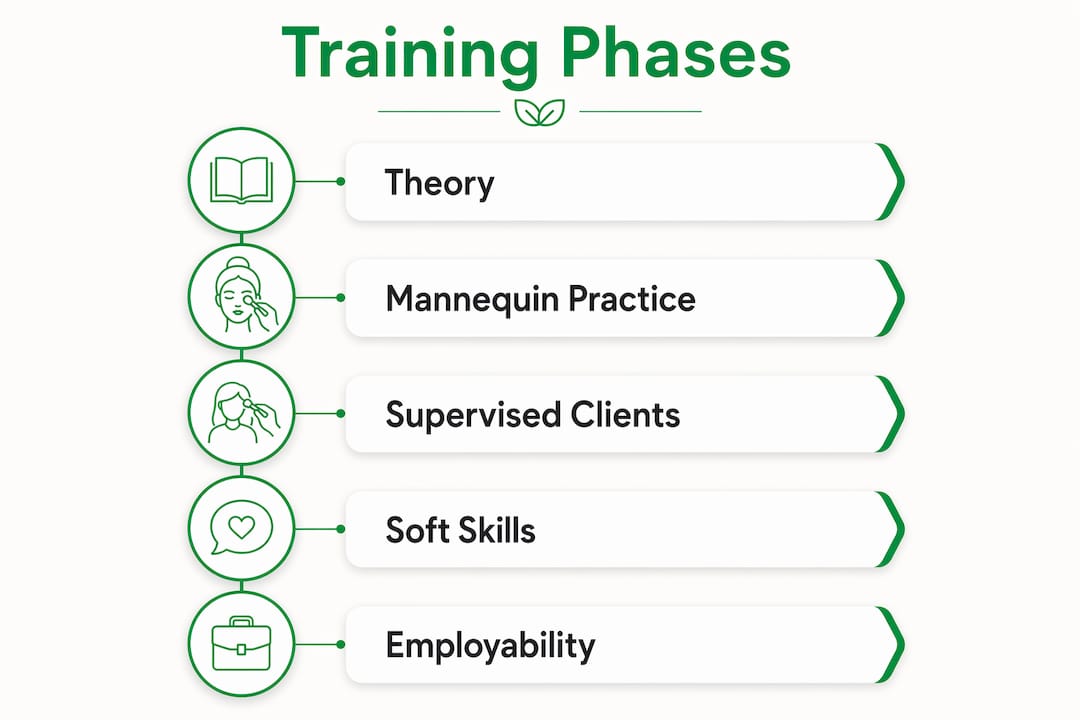
Practical cosmetology education follows a clear progression. Students begin with foundational theory before moving to clinical practice, and that sequence is not arbitrary. Modern 1,500-hour programs cover theory across 30 distinct chapters before students ever work on a live client. That structure prevents gaps in knowledge that would otherwise show up as errors on the salon floor.
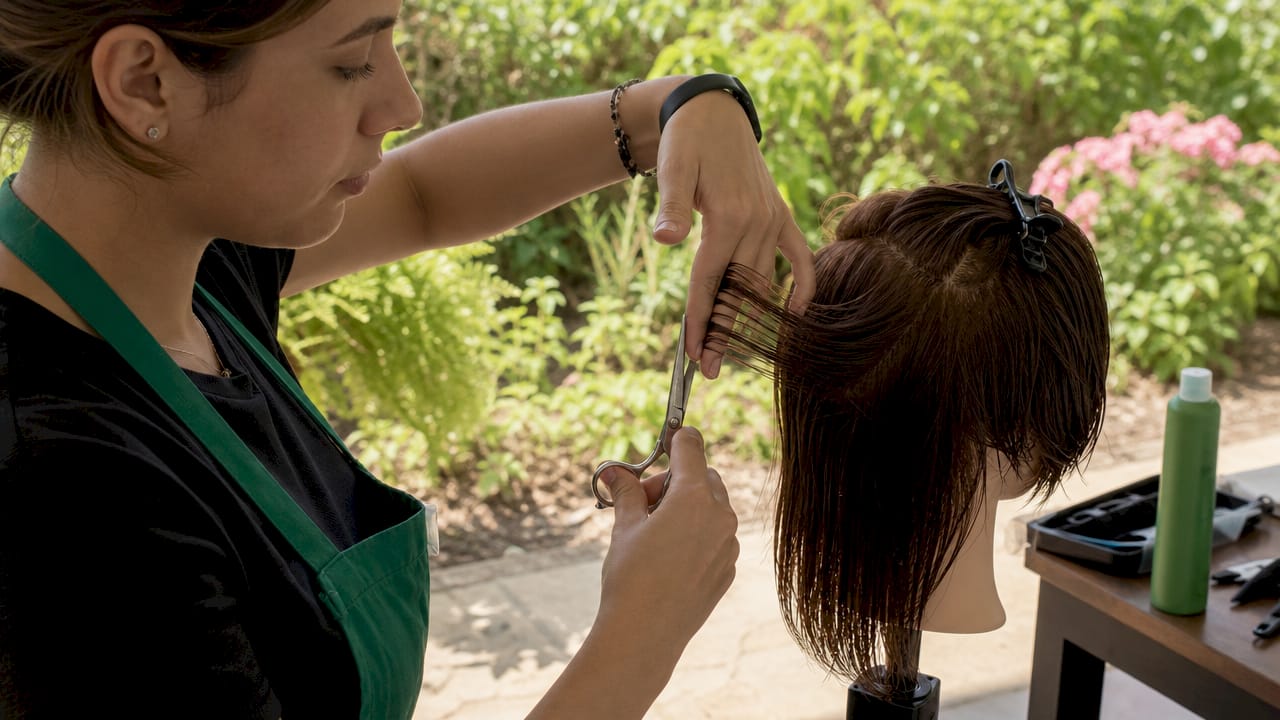
The training arc moves from mannequins to supervised real-client work in stages. Early sessions focus on grip, posture, and tool handling on mannequin heads. Mid-program, students graduate to supervised client services in a school salon setting. By the final phase, they complete full service cycles independently under instructor observation.
Mastery checkpoints mark each transition. Specialized esthetics programs, for example, require students to complete eight core services and pass multiple mock exams at a 95% proficiency threshold before they are considered licensing-ready. That standard exists because state board exams test both technical execution and procedural knowledge simultaneously.
| Training phase | Primary focus |
|---|---|
| Theory and orientation | Anatomy, chemistry, sanitation, and safety protocols |
| Mannequin practice | Tool handling, technique repetition, and posture |
| Supervised client services | Full service delivery with instructor oversight |
| Mock exams and checkpoints | Proficiency verification before state board eligibility |
How does repetition build real technical skill?
Muscle memory develops through repetitive, supervised practice, and that physical conditioning is what separates a confident technician from a hesitant one. A student who has performed 200 blowouts has internalized tension, sectioning, and heat angle at a level no tutorial can replicate. The hands simply know what to do.
Instructor feedback during live practice is what keeps that repetition productive. Without real-time corrections, students risk locking in bad habits that become progressively harder to unlearn. A slightly wrong wrist angle on a razor cut, repeated 50 times without correction, becomes the default. Catching it on day three is far easier than retraining it after licensure.
Practical training also prepares students for the unpredictable. Real clients present varied hair textures, skin sensitivities, and unexpected reactions. Handling those situations in a supervised environment builds the problem-solving instincts that only live client work can teach.
Pro Tip: Log each service you complete during training with a brief note on what went well and what your instructor corrected. Reviewing that log weekly accelerates skill development faster than additional practice hours alone.
Key differences between passive observation and active skill acquisition:
- Watching a tutorial shows the correct outcome but does not train the hands to reproduce it.
- Active practice under supervision creates physical pathways that persist under pressure.
- Instructor corrections during live practice prevent technique errors from becoming defaults.
- Repeated exposure to varied client types builds adaptability that theory cannot simulate.
- Completing full services from start to finish develops timing and workflow that partial drills miss.
How does live client work develop professional soft skills?
Technical skill alone does not make a hire-ready graduate. Salon service training covers the complete service cycle, from greeting and consultation through retail recommendations and rebooking, and that full arc is what separates a competent student from a professional. Employers notice the difference immediately.
Supervised client interactions teach students to read body language, manage expectations, and adapt their communication style to each person. A client who is nervous about a color change needs a different approach than one who arrives with a clear reference photo. Learning to navigate those dynamics in a safe training environment means the graduate handles them confidently on day one of employment.
The professional habits formed during training also include time management. Completing a full service within a scheduled window, while maintaining quality and client comfort, is a skill that only repeated real-world practice develops. Students who train in simulated salon conditions arrive at their first job already calibrated to professional pace.
The full client service cycle students master during training:
- Greeting and intake — welcoming the client and reviewing any intake forms or history.
- Consultation — assessing needs, discussing goals, and setting realistic expectations.
- Service delivery — executing the technical work with precision and attention to client comfort.
- Retail recommendation — suggesting products based on the client’s specific hair or skin needs.
- Rebooking — scheduling the next appointment before the client leaves the chair.
- Post-service follow-up — noting service details for future reference and continuity.
Why does hands-on experience increase employability?
Employers prioritize graduates with extensive live-client experience because those graduates require significantly less on-the-job training. A salon owner hiring a new stylist is investing in productivity from week one. A graduate who has already completed hundreds of supervised services arrives ready to contribute, not just observe.
The learning gap between graduation and confident practice shrinks dramatically when training includes real client work. Students who practice only on mannequins often experience a confidence drop when they face their first paying client. Students with extensive supervised client hours do not. That difference shows up in client retention rates and in employer reviews during the first 90 days.
Building a portfolio during training also matters. Real client work produces before-and-after documentation, service logs, and references that strengthen a job application. Programs that prioritize hands-on beauty training give students the material to demonstrate competence, not just claim it.
“Hiring managers value graduates who demonstrate readiness due to extensive hands-on practice. The ability to hit the ground running with minimal additional training is the single most cited factor in hiring decisions within the beauty industry.”
The career benefits of thorough practical training extend beyond the first job. Graduates who built strong technical habits during school advance faster, earn client loyalty sooner, and face fewer liability concerns in their early careers. The investment in supervised hours pays returns across the entire professional arc.
Key Takeaways
Hands-on cosmetology training is the single most reliable predictor of career readiness because it builds technical precision, professional habits, and client confidence through supervised repetition that no classroom instruction can replicate.
| Point | Details |
|---|---|
| Training hours and structure | State boards require 1,000–2,100 hours combining theory and supervised practice before licensing. |
| Muscle memory through repetition | Repeated supervised practice builds the physical precision needed for consistent, confident service delivery. |
| Instructor feedback prevents bad habits | Real-time corrections during live practice stop technique errors from becoming permanent defaults. |
| Soft skills are trained, not assumed | The full client service cycle, from consultation to rebooking, must be practiced repeatedly to become professional habit. |
| Employability increases with client hours | Graduates with extensive live-client training require less on-the-job training and are more attractive to employers. |
Why I think theory-first students underestimate what training actually demands
The most common mistake I see aspiring cosmetology professionals make is treating the theory portion of their program as the hard part. They study anatomy, memorize chemical processes, and feel prepared. Then they pick up a pair of shears or a facial steamer for the first time and realize the gap between knowing and doing is enormous.
Students often assume that watching tutorials or shadowing professionals fills that gap. It does not. Observation is passive. Skill is physical. The only way to develop the hand pressure, timing, and spatial awareness that professional cosmetology demands is to practice those actions under someone who can correct you in real time.
What I have found is that the students who thrive are the ones who treat every supervised service as a performance review, not just a task to complete. They ask their instructors specific questions after each correction. They request feedback on their weakest techniques, not just their strongest ones. That mindset, built during training, becomes the professional habit that drives long-term career growth.
The beauty industry does not reward people who know the most. It rewards people who can deliver consistently, adapt quickly, and make clients feel confident. All three of those qualities are built on the salon floor, not in a classroom. Choose a program that gives you as many supervised hours as possible, and treat every one of them as irreplaceable.
— krishna
Avi’s cosmetology program puts practice at the center
Avi Career Training in Fairfax County, VA, builds its cosmetology curriculum around the principle that supervised practice is non-negotiable. Students work through structured practical training that moves from foundational technique to real client services, with personalized instructor mentorship at every stage.
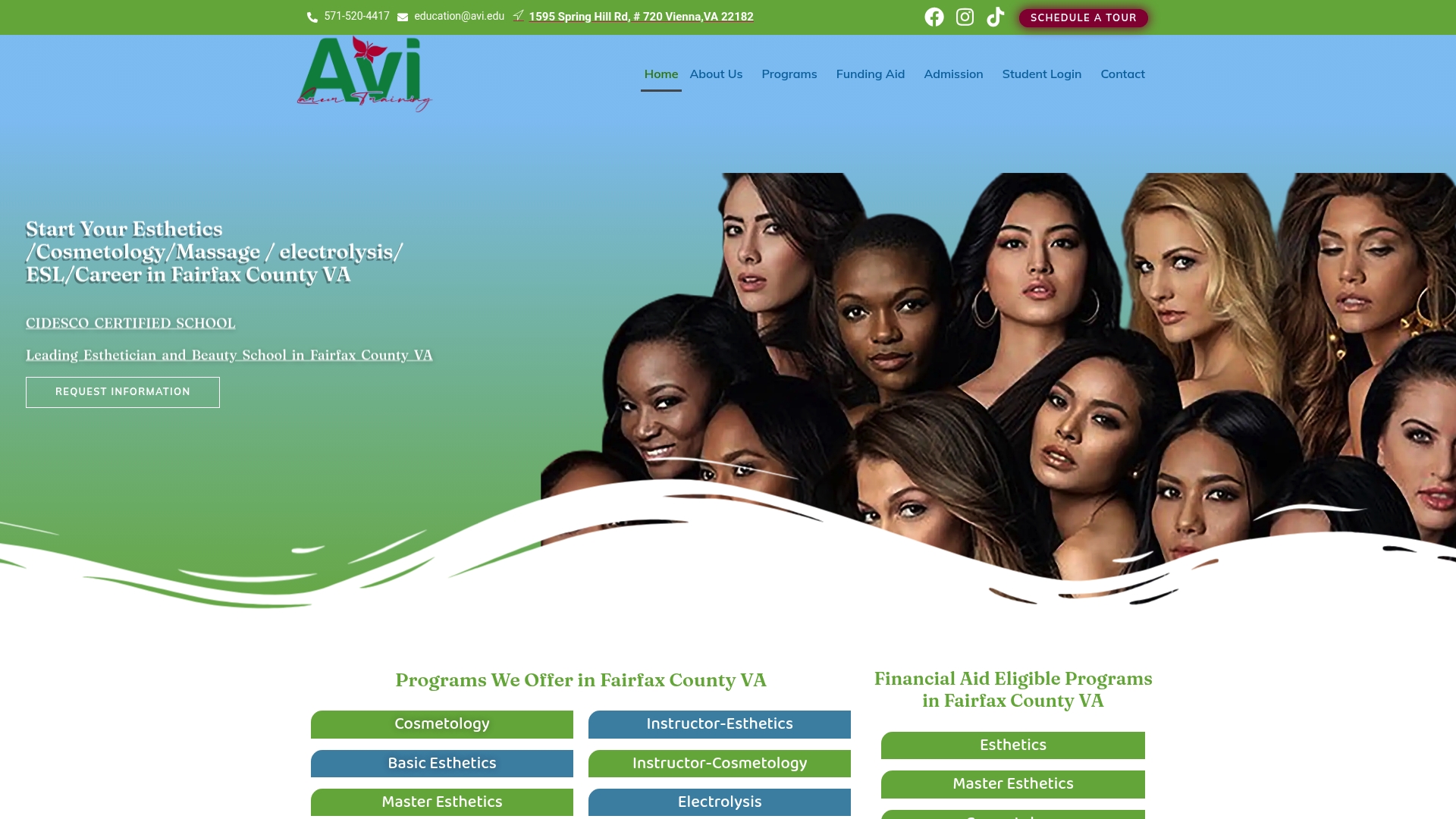
Avi’s partnerships with leading spas and salons across Northern Virginia create direct pathways from the school salon floor to professional employment. Students develop both the technical skills and the client management habits that employers in the region actively seek. Financial aid options make the program accessible to students at every stage of their planning. Learn more about the Avi cosmetology program and what a structured, hands-on education looks like in practice. You can also review what to expect from your education before you enroll.
FAQ
What is hands-on cosmetology training?
Hands-on cosmetology training is supervised practical skill development in real or simulated salon settings. It combines tool handling, technique repetition, and live client services under instructor oversight to prepare students for state licensing exams and professional employment.
How many hours of hands-on training does cosmetology require?
Most state boards require between 1,000 and 2,100 clock hours of combined theory and supervised practice. The exact number varies by state and program type.
Why does hands-on training matter more than watching tutorials?
Tutorials show correct outcomes but do not train the hands to reproduce them. Supervised practice builds the muscle memory and real-time problem-solving skills that only active, corrected repetition can develop.
What soft skills do students learn through live client training?
Students learn the full service cycle, including consultation, retail recommendations, and rebooking, along with time management and client communication. These skills are what differentiate hire-ready graduates from technically competent but professionally underprepared ones.
Does hands-on training improve job prospects after graduation?
Employers consistently prioritize graduates with extensive live-client hours because those graduates require less on-the-job training. Supervised client experience also produces a portfolio of real work that strengthens job applications from day one.