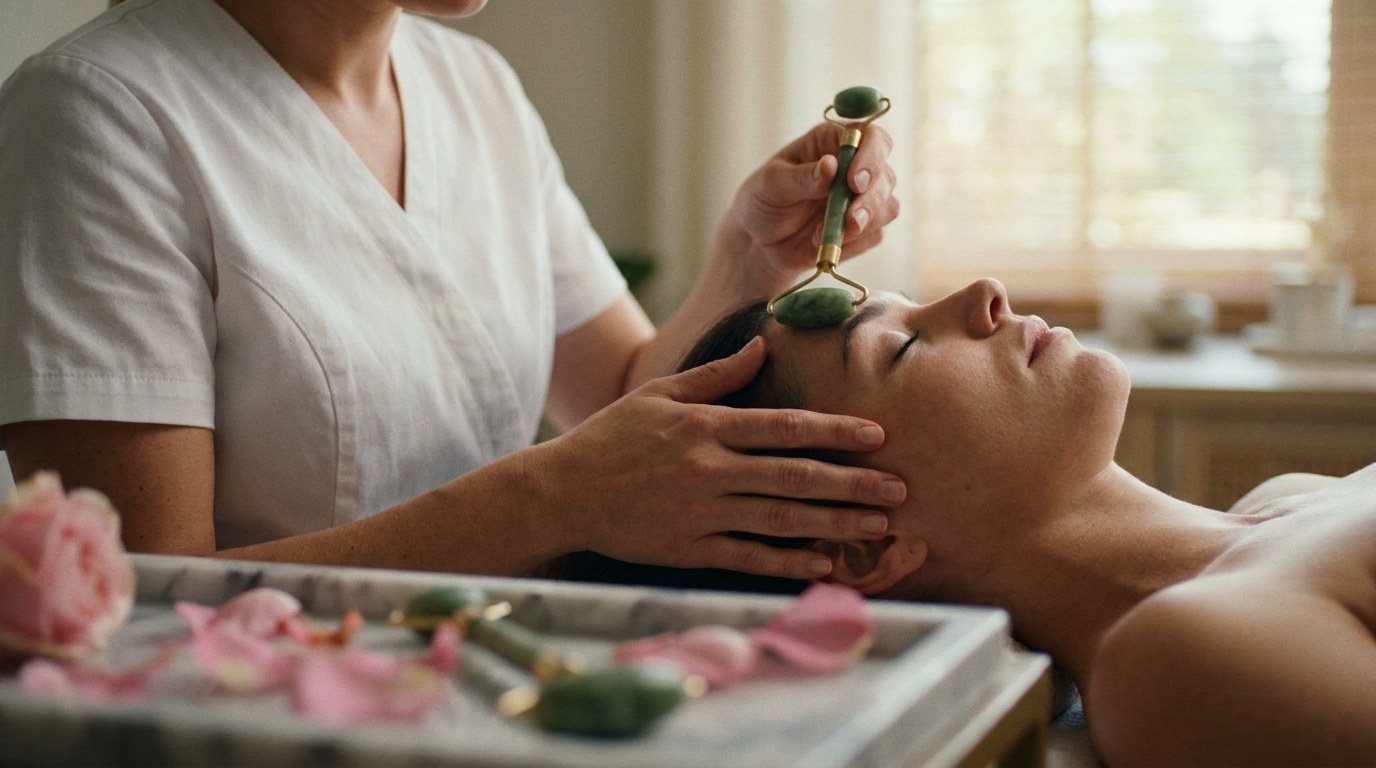
At AVI Career Training, an esthetics (NO FINANCIAL AID FOR THIS PROGRAM) student day in the life begins with arriving at a professional school environment in Northern Virginia, suiting up in your student uniform, and spending the next several hours moving between skin science theory, hands-on technique practice, and real client services — all under the guidance of licensed instructors. It is structured, purposeful, and genuinely exciting.
If you have been searching for what esthetics (NO FINANCIAL AID FOR THIS PROGRAM) school actually feels like before committing to enrollment, you are in the right place. This is not a highlight reel. This is a realistic, honest look at what your days will look like inside AVI’s Basic Esthetics program — from the moment you walk through the door to the moment you log your final clock hours for the day.
Key Takeaways
– Virginia requires 600 clock hours of esthetics training to sit for the state licensing exam
– AVI Career Training is COE-accredited and SCHEV-certified — two of the highest credentials a beauty school can hold
– Students practice on real clients in a supervised student clinic, building professional speed and confidence before graduation
– The Virginia State Board exam includes both a written (theory) component and a practical skills component
– Licensed estheticians in Virginia earn between $38,000 and $52,000+ per year, with medical and spa roles exceeding $60,000
– Federal financial aid (FAFSA/Title IV) is NOT available for this program as it does not meet the minimum 600-hour requirement. AVI offers flexible payment plans and private financing options.
Ready to see yourself in this picture? Apply now at AVI Career Training and take the first step toward your esthetics career.
Morning: Arriving, Setting Up, and Getting Into Professional Mode
Your day at AVI does not start the moment class begins. It starts the moment you walk in.
Students arrive and transition quickly into a professional mindset. That means getting into your required student uniform, organizing your kit and workstation, and reviewing what is scheduled for the day. This might sound like a small detail, but it is one of the most important habits you will build in esthetics (NO FINANCIAL AID FOR THIS PROGRAM) school.
Esthetics (NO FINANCIAL AID FOR THIS PROGRAM) is a client-facing career. The way you present yourself — your grooming, your setup, your demeanor — communicates professionalism before you say a single word. AVI builds this into your routine from day one, so it becomes second nature long before you are working with paying clients in a real spa or medical setting.
What Your Morning Setup Actually Looks Like
You check your schedule for the day. Is it a heavier theory morning with a clinic afternoon? Are you assigned to a specific client service? You prepare accordingly.
Workstations are organized before any session begins. Tools are sanitized and laid out properly. Product labels are checked. This is not busywork — it is the foundation of safe, professional esthetics (NO FINANCIAL AID FOR THIS PROGRAM) practice. Instructors observe and coach during this phase, which means the learning starts before the first lesson is ever delivered.
This daily ritual of arriving and setting up is part of what makes the esthetics (NO FINANCIAL AID FOR THIS PROGRAM) program schedule at AVI feel less like school and more like professional training.
Classroom Time — The Science Behind Great Skin
After setup, most mornings include dedicated classroom instruction. This is where you build the theoretical knowledge that makes your hands-on skills meaningful and safe.
What do esthetics (NO FINANCIAL AID FOR THIS PROGRAM) students learn in the classroom? More science than most people expect.
Skin Anatomy and Physiology
You will study the layers of the skin — epidermis, dermis, hypodermis — and understand what happens at the cellular level when a treatment is applied. You learn how the skin barrier works, why certain ingredients penetrate differently, and what happens when the skin is compromised. This is not memorization for the sake of a test. This knowledge is what separates a skilled esthetician from someone just going through the motions.
Ingredient Science and Product Knowledge
Retinoids, AHAs, BHAs, hyaluronic acid, niacinamide — the modern skincare ingredient landscape is complex, and your clients will ask questions. AVI’s curriculum teaches you how active ingredients work, how to layer them, and when certain ingredients become contraindicated based on a client’s skin condition or medications.
Skin Analysis Across All Skin Tones
This is where AVI’s curriculum stands apart from generic esthetics (NO FINANCIAL AID FOR THIS PROGRAM) programs. Skin analysis is not a one-size-fits-all skill. Hyperpigmentation presents differently on deeper skin tones. Rosacea can be masked or mistaken on melanin-rich skin. Fitzpatrick scale assessment requires nuance and training across a full spectrum of skin types.
AVI’s instruction is built around diversity from the start. You learn to analyze and treat every skin type — not as an add-on, but as a core competency. That means you graduate ready to serve any client who walks through any door.
Contraindications and Safety Protocols
You will also spend significant classroom time on contraindications — the conditions, medications, and situations that make a particular treatment unsafe for a particular client. This is non-negotiable knowledge for a licensed esthetician. The Virginia State Board written exam tests this content directly, and AVI prepares you thoroughly for it.
Hands-On Training — Where the Real Learning Happens
Classroom instruction builds your knowledge. Hands-on training builds your skill, your muscle memory, and your professional instincts.
AVI’s esthetics (NO FINANCIAL AID FOR THIS PROGRAM) training hands-on model means that a significant portion of your program hours are spent with your hands on skin — not watching demonstrations, not reviewing slides. Doing.
How Practical Sessions Are Structured
Early in your training, you practice techniques on mannequins and training models. This gives you the space to develop proper hand pressure, movemen