Esthetics School in Northern Virginia: Your Path to a Licensed Career
AVI Career Training in Vienna, Virginia gives you everything you need to become a licensed esthetician — hands-on clinical training, COE accreditation, flexible payment plans, and a curriculum built for Northern Virginia’s diverse and growing skincare market.
If you’ve been searching for an esthetics (NO FINANCIAL AID FOR THIS PROGRAM) school in Northern Virginia that takes your career seriously, you’re in the right place. The DC metro area is home to one of the densest concentrations of medspas, day spas, dermatology clinics, and wellness studios in the country — and licensed estheticians are well established. The question isn’t whether this career is viable. The question is how fast you can get started.
Apply now at AVI Career Training and take the first step toward your esthetician license.
Key Takeaways
- Virginia requires 600 clock hours of approved esthetics training to qualify for licensure
- AVI Career Training is COE Accredited and SCHEV Certified — meeting both federal and state standards
- Full-time students can complete the program in approximately 4–5 months; part-time students in roughly 8–10 months
- Skincare specialists in the DC metro area typically earn above the national median of approximately $42,000/year — with medspa and clinical roles often paying more
- AVI accepts GI Bill® benefits and offers flexible payment plans and private financing options — making the program accessible for students across all financial situations
What Does an Esthetician Actually Do?
An esthetician is a licensed skincare professional. Your work focuses on the health and appearance of the skin — not hair cutting, chemical relaxers, or nail services. That distinction matters when you’re choosing a training path.
As a licensed esthetician (NO FINANCIAL AID FOR THIS PROGRAM) in Virginia, you can perform:
- Facials and skin analysis — assessing skin type and recommending customized treatments
- Chemical exfoliation — including peels and enzyme treatments that resurface and brighten skin
- Waxing and hair removal — brows, lip, legs, and full-body services
- Makeup application — including special occasion, corrective, and airbrush techniques
- Extractions and acne treatments — clearing congestion safely and effectively
- Body treatments — wraps, scrubs, and hydration therapies
- Advanced skincare technology — microdermabrasion, LED therapy, and other devices used widely in medspas
How Esthetics Differs from Cosmetology
Cosmetology is a broader license. A cosmetologist can cut and color hair, perform nail services, and provide skincare — but the training is divided across all of those disciplines. Virginia requires 1,500 clock hours for a cosmetology license.
Esthetics (NO FINANCIAL AID FOR THIS PROGRAM) is a focused, specialized track. You go deeper into skincare science, skin conditions, treatment protocols, and product chemistry. If your goal is to work in a spa, medspa, or skincare-forward environment, an esthetics license is the direct route — and you can earn it in a fraction of the time.
For career changers and first-time students alike, esthetics offers a faster path to licensure without sacrificing depth. You’ll graduate knowing how to assess skin, treat conditions, and deliver professional results from day one on the floor.
Virginia Esthetician License Requirements
Before you can work legally as an esthetician in Virginia, you must meet the requirements set by the Virginia Department of Professional and Occupational Regulation (DPOR) and the Virginia State Board of Cosmetology.
Here’s exactly what you need:
1. Complete 600 Clock Hours at an Approved School
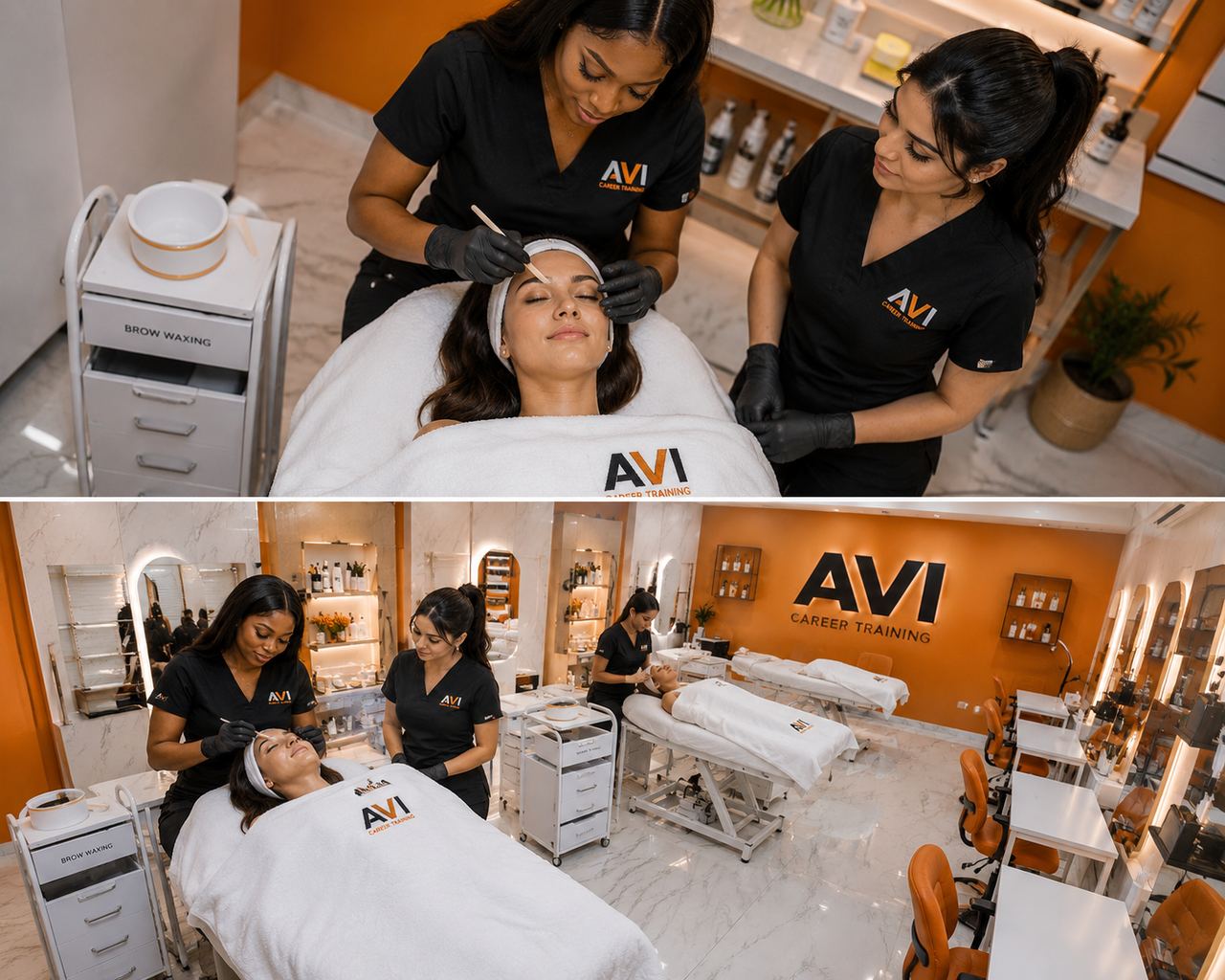
Virginia requires 600 clock hours of esthetics (NO FINANCIAL AID FOR THIS PROGRAM) training at a school approved by VDPOR. These hours cover both classroom instruction — theory, anatomy, skin science, sanitation — and hands-on clinical practice on real clients.
Not all hours are equal. The quality of those 600 hours depends entirely on the school you choose. A program that loads you into a classroom for lectures is very different from one that puts you in a working clinic treating diverse clients under licensed instructor supervision.
2. Pass the State Board Exams
After completing your training hours, you’ll sit for a two-part Virginia State Board exam:
- Written exam — covers esthetics theory, state law, sanitation and safety, skin anatomy, and treatment protocols
- Practical exam — a hands-on skills demonstration where you perform techniques in front of a licensed evaluator
Strong programs prepare you for both parts throughout your training — not just in the final weeks before the exam.
3. Submit Your Application and Fees
Once you pass both exams, you apply for your Virginia esthetician license through DPOR. Your school will help guide you through the paperwork, but it’s worth reviewing current requirements directly on the Virginia DPOR website to confirm any updated fee or documentation requirements before you apply.
How Long Does It Take?
The answer depends on your schedule:
- Full-time students typically complete 600 hours in approximately 4–5 months
- Part-time students typically complete training in approximately 8–10 months
After completing your hours, you schedule your board exams. Many students sit for their exams within weeks of graduation and are working in their field within the same calendar year they starte