Finding cosmetology and esthetics training with hands-on experience, flexible scheduling, and clear job connections is still more work than it should be. Many programs limit practical experience, do not clearly publish tuition, or lack international certification paths that help with job placement. This comparison lists tuition information, training formats, and unique program strengths, so applicants can select a school that matches their career priorities.
Table of Contents
- AVI Career Training
- Esthetic Institute
- Empire Beauty School
- Aveda Arts & Sciences Institutes
- Paul Mitchell Beauty School & Training
- Comparison of alternatives
AVI Career Training

At a Glance
CIDESCO esthetics certification is integrated with Virginia state license training at AVI. Students complete client clinic hours in on site spa and medical clinic settings while pursuing industry credentials. The school reports rolling admissions and acceptance of GI Bill benefits, and it holds Council on Occupational Education accreditation and VA licensure.
Core Features
Hands-on training happens in real salons and medical settings, with programs in cosmetology, esthetics, master esthetics, permanent cosmetic tattooing, massage therapy, electrolysis, laser tech, and nail technology. AVI also offers ESL for beauty industry English and healthcare support programs such as Medical Assistant, Phlebotomy, and EKG tech. Financial aid options include federal Pell Grants, federal loans, VA benefits, and payment plans.
Key Differentiator
AVI combines CIDESCO credentialing with local licensure training and routine client clinic hours. That pairing gives students internationally recognized certification while they log the practical client experience licensing boards and employers expect.
Pros
Experienced licensed instructors bring real salon and medical backgrounds into classroom and clinic instruction, which sharpens clinical technique and salon workflow skills. The curriculum covers all skin types on the Fitzpatrick scale I–VI and includes hands-on practice in modern labs, an on site spa, and laser suites. Accreditation by the Council on Occupational Education and approval to accept federal and veteran aid helps students access funding and GI Bill benefits. Monthly start dates mean greater scheduling flexibility for people balancing work or family.
Cons
- Primarily in-person training requires physical attendance, which limits options for students seeking fully remote programs.
Who It’s For
People seeking practical, career-focused training to get licensed and work in spas, salons, or medical clinics fit AVI well. Veterans and military families who plan to use GI Bill benefits will find the school approved for those benefits. Candidates who want monthly start dates and a clear path to externship or placement in Northern Virginia will benefit most.
Unique Value Proposition
AVI’s network of partnerships with leading spas and salons in Northern Virginia places students into externships and career connections. That network turns clinic hours into hiring opportunities by connecting students directly with employers during training. For students, this reduces the gap between graduation and paid employment while keeping hands-on practice central to the curriculum.
Real World Use Case
A student trains in the massage therapy program using GI Bill benefits, completes client hours in the on site clinic, and takes an externship at a partnered spa. The externship converts into a paid position at a medical massage clinic in the DC metro area within months of licensure.
Pricing
Program length varies by offering, with most courses running 600–1,000 hours. Tuition often falls between $34,000 and $85,000 depending on program choice and clock hours. Financial aid, federal loans, VA benefits, and payment plans can reduce out-of-pocket cost.
Website: https://avi.edu
Esthetic Institute
At a Glance
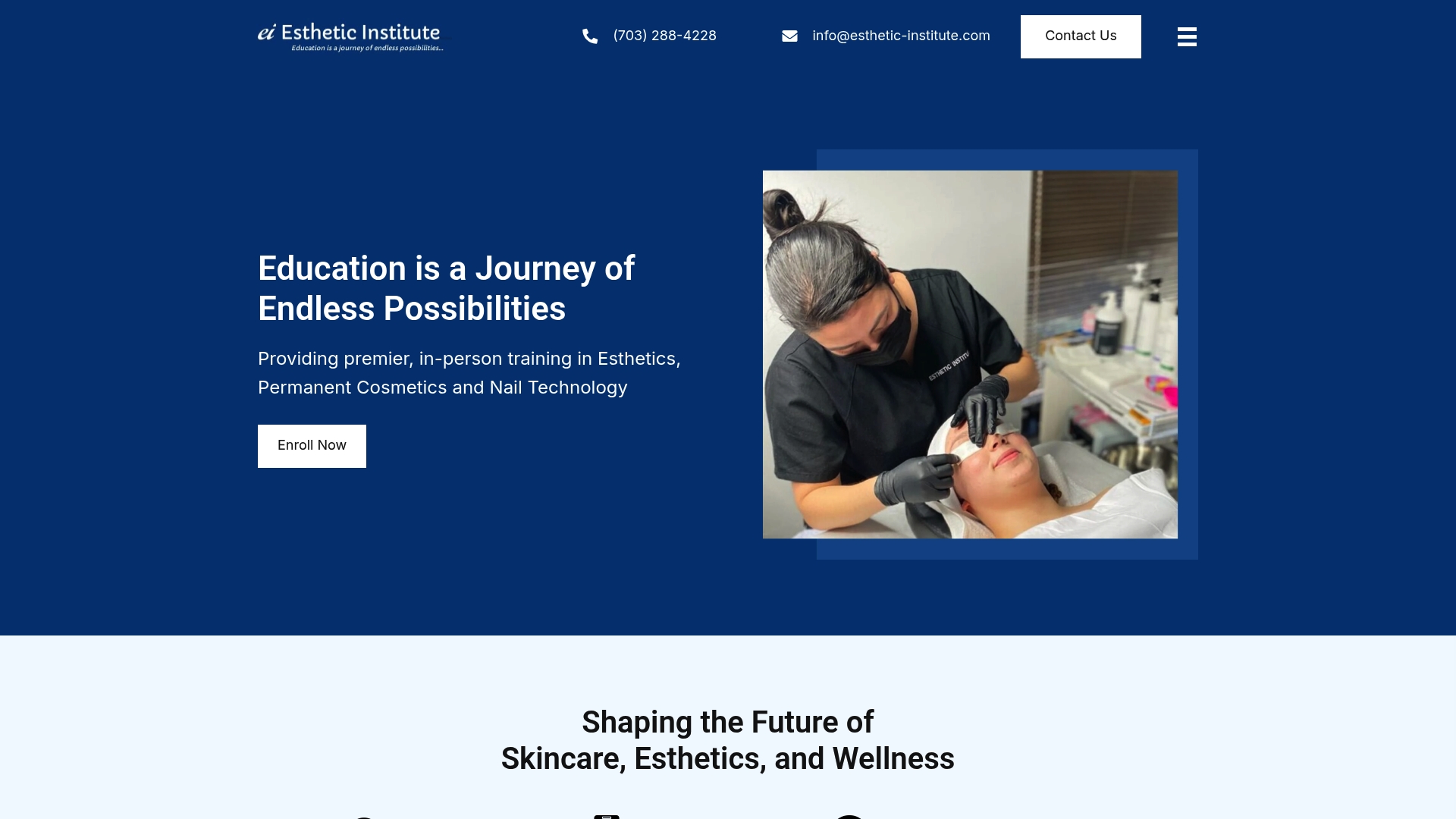
Esthetic Institute reports a 95% industry success rate and states it is one of 12 CIDESCO certified schools in the United States. The school focuses on science based esthetics training and practical clinical experience in Vienna, Virginia. That combination aims to prepare graduates for license and work in medical spas and international markets.
Core Features
The school delivers in person, hands on training across esthetics, master esthetics, nail technology, and permanent cosmetics, and it pairs classroom theory with clinic floor practice. Advanced dermal therapy and dermal procedures for licensed estheticians appear in the curriculum alongside permanent cosmetics and microblading modules. The program schedule includes full time, part time, evening, and weekend classes to help students to complete clinical hours.
Key Differentiator
Esthetic Institute stands out for its CIDESCO accreditation and international exam pathway. That certification claim attracts students aiming for work abroad or in high end medical spa settings. The school also highlights long term ties to the industry and a heavy emphasis on clinical practice.
Pros
The school is accredited by NACCAS and recognized by the U.S. Department of Education, which supports access to federal aid for eligible programs. It reports strong graduate outcomes and positions CIDESCO certification as a route to international recognition. Programs emphasize clinical hours and practical techniques, so students graduate with hands on experience employers can evaluate.
Cons
- Specific programs like permanent cosmetics are offered only as part time and may have limited class schedules.
- The curriculum is primarily in person. There is no mention of online or hybrid course options.
- Some programs may not be eligible for Title IV financial aid due to total hours.
When It May Not Fit
If you need a fully remote or hybrid training option, this school will not meet that requirement. Students who require very flexible scheduling across every module may find permanent cosmetics and some specialty classes harder to attend. Programs that require eligibility for Title IV aid should confirm hours and approval before enrolling.
Who It’s For
Aspiring estheticians, permanent makeup artists, nail technicians, and practicing beauty professionals who want accredited, practical training in Virginia will find this school relevant. Students planning to pursue CIDESCO certification or clinical roles in medical spas benefit most from the curriculum and exam pathway.
Real World Use Case
A working student enrolls in evening classes to complete required clinical hours while keeping a part time job. That student studies advanced dermal therapy, takes CIDESCO preparation, and then pursues positions in medical spas that value both clinical skill and an international credential.
Pricing
Not applicable — informational only.
Website: https://estheticinstitute.com
Empire Beauty School
At a Glance
Empire Beauty School highlights that students work with real clients during training. This program uses professional products and aligns curriculum with employer expectations. Multiple campus locations and scholarship support target students who need practical salon experience and financial assistance.
Core Features
The school centers its curriculum on practical client service, product knowledge, and career pathway planning, so students practice salon workflows while enrolled. Programs include cosmetology, esthetics, nail technology, and educator training, and coursework pairs classroom lessons with supervised client shifts. Financial aid and scholarships are available to help offset tuition costs.
Key Differentiator
Empire emphasizes real client work combined with professional product use across several program types and campuses. That emphasis creates repeated opportunities to build technical skill and client communication. The focus aligns training with what local salons expect from entry level hires.
Pros
The strongest advantage is the focus on practical, real world experience that prepares students for salon and spa roles. Multiple program tracks let learners pivot from cosmetology to esthetics or nail technology without changing schools. Financial aid and scholarship support lower the barrier for students who need funding while they train.
Cons
- Page not available for detailed pricing. Cost information likely varies by program and campus, so budget planning requires direct contact.
- Limited public detail on program duration and specific course schedules. Prospective students must request syllabi or speak with admissions to confirm hours.
- No explicit mention of online or hybrid learning options. Those needing remote classes should verify availability with the campus.
When It May Not Fit
If you need precise tuition figures before contacting a school, this listing will feel incomplete. Students who require fully online coursework should look elsewhere or call campuses about flexible schedules. Large urban professionals seeking evening only options must confirm class times with the local campus.
Who It’s For
This school fits people aiming for careers in salon service, skincare, nail technology, or beauty education who value in person client time during training. It suits applicants who want product familiarity and client service practice before job hunting. Applicants needing heavy online coursework or upfront price transparency may find a different option a better match.
Real World Use Case
A cosmetology student enrolls, completes supervised client shifts, practices product retail conversations, and builds a portfolio through photo showcases and competitions. That hands on time accelerates readiness for an entry level salon chair. Career services and campus partnerships help connect graduates with local employers.
Pricing
Detailed tuition and program length are not posted on the public page. Pricing appears to vary by program type and campus location, so expect to request a cost breakdown from admissions. Financial aid and scholarship options are listed as available to eligible students.
Website: https://empire.edu
Aveda Arts & Sciences Institutes
At a Glance
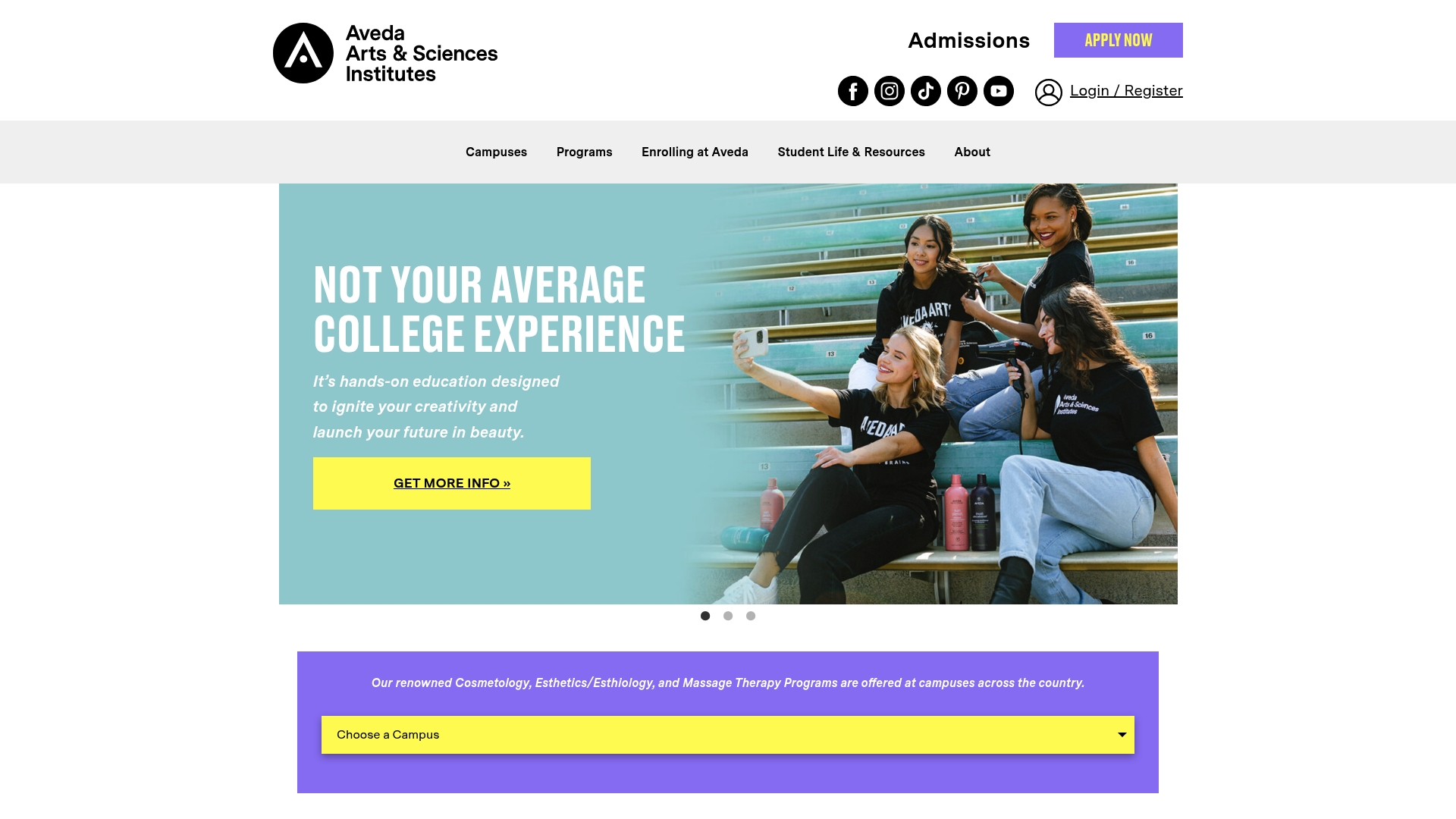
Campuses operate across the United States, including Arlington, Atlanta, Austin, Dallas, New York, and Seattle. Founded in 1997, the institutes blend hands-on cosmetology, esthetics, massage, and instructor training with Aveda’s eco-conscious practices. Students engage in community events and charitable programs that link training to local industry opportunities.
Core Features
Aveda Arts & Sciences Institutes center instruction on experiential classroom and clinic work, where students practice services on paying clients and peers. The curriculum pairs technical skill training with business fundamentals and a focus on environmental responsibility drawn from Aveda’s Indian Ayurveda roots. Instructors are industry professionals who lead clinic shifts, demonstrations, and community events to build practical experience and contacts.
Key Differentiator
The defining feature is the integration of Aveda’s Indian Ayurveda roots and eco-conscious practices into daily training. That blend makes environmental responsibility a taught skill rather than an optional module. Programs connect community outreach, scholarship events, and salon-ready clinic time to reinforce that philosophy.
Pros
The institutes emphasize hands-on practice that matches real salon and spa workflows. Programs cover technical services, client consultation, and basic business skills, which helps graduates enter the workforce prepared for standard salon demands. Multiple campus locations increase geographic access, and alumni connections plus events create visible pathways into local salons and spas.
Cons
- Students should expect additional time commitments for marketing events and community activities outside classroom hours. These activities support networking but add to the weekly workload.
- Specific tuition figures and detailed financial aid options are not clearly listed in the available content. Prospective students must request those numbers directly from each campus.
- Practical training requires active participation and steady attendance. Reviews praise instructors and the immersive environment while noting that only consistent effort yields the strongest outcomes.
When It May Not Fit
If you need transparent, upfront tuition tables before an initial inquiry, this model may feel frustrating. The institutes publish program descriptions but not standardized tuition across campuses. If minimal outside commitments are a priority, the event and outreach expectation may conflict with tight schedules.
Who It’s For
People passionate about beauty and sustainability who want hands-on clinic experience fit this program. Aspiring cosmetologists, estheticians, massage therapists, and future instructors who value community work and eco-friendly product knowledge will find the ethos aligns with their goals. Candidates should be willing to attend events and clinic sessions outside core classroom hours.
Real World Use Case
A Dallas applicant enrolls in the cosmetology track to gain daily clinic shifts, instructor-led demonstrations, and business classes. That student uses local Catwalk for Water events and salon networking nights to meet potential employers. After completing required clinic hours, the graduate secures placement at a salon that emphasizes eco-friendly services.
Pricing
Pricing is not listed in the public summary and is marked as not applicable for an informational page. Tuition and available financial aid vary by campus, so prospective students must contact their chosen institute to obtain precise figures and payment options.
Website: https://avedaarts.edu
Paul Mitchell Beauty School & Training
At a Glance
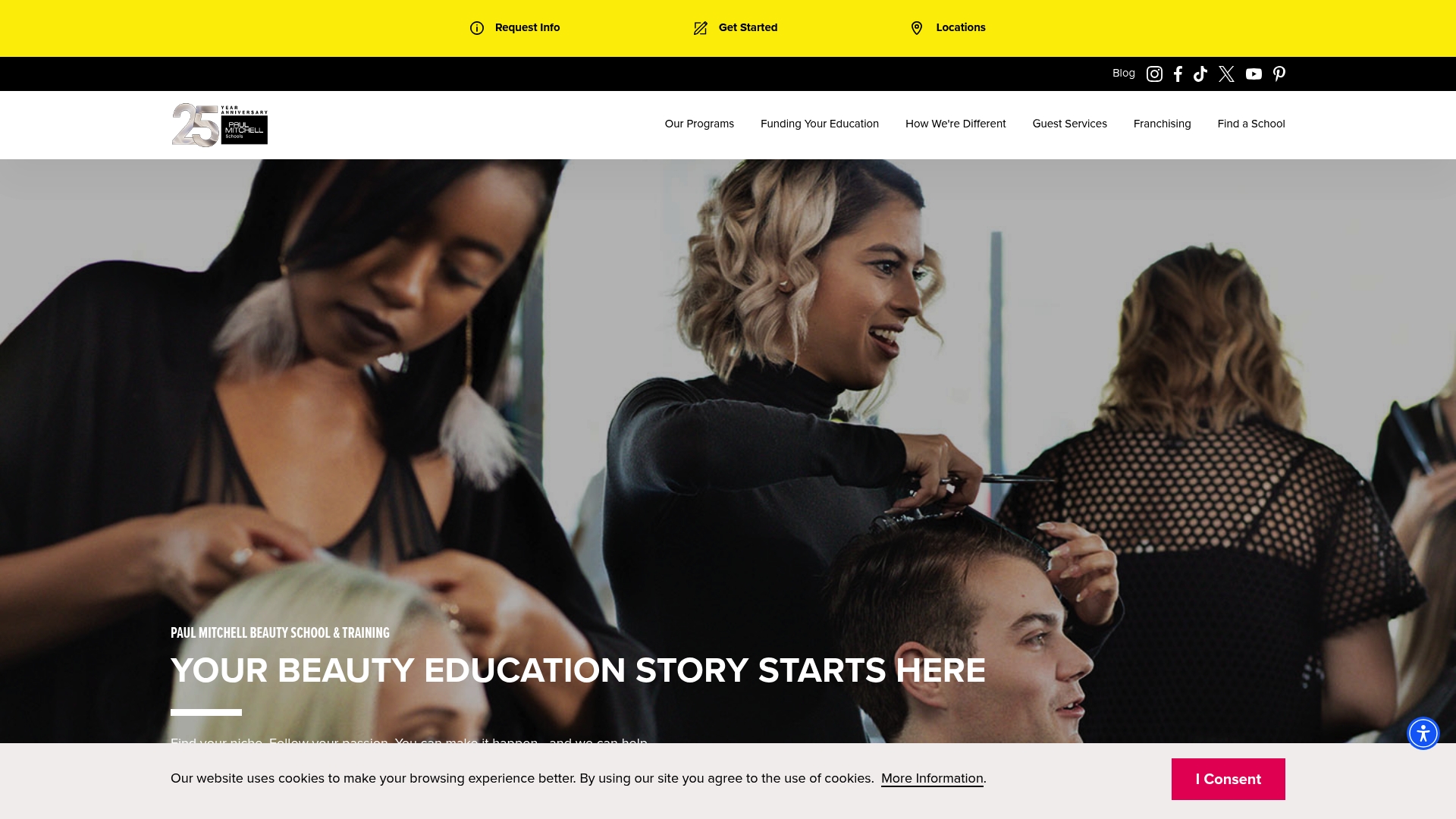
Each campus operates independently as a franchise. The schools report national accreditation by NACCAS. Students perform guest services under supervision and participate in regular FUNraising events that combine training with community outreach.
Core Features
Programs include cosmetology, barbering, esthetics, nails, makeup, and instructor training. Coursework mixes classroom theory with extensive hands-on training, and supervised guest services so students practice real appointment flow. Students practice retailing and technique with Paul Mitchell professional products and join philanthropic events as part of their education.
Key Differentiator
The program pairs extended practical service hours with scheduled charity events, making community engagement a training component. Students gain client-facing experience through guest services and local fundraisers under instructor guidance. That hands on charity component links technical skill development to public events and retail experience.
Pros
Program variety lets you choose a focused career track for salon, spa, or educator roles. The curriculum emphasizes practical client work and supervised guest services, which builds appointment management, technical speed, and retail confidence. The school supports placement and further education, and that accreditation helps validate credentials with employers.
Cons
- Tuition can be high and students pay extra for books, tools, and required product kits.
- Schools do not provide housing, so you must arrange accommodation separately.
- Program offerings and start dates vary by campus, requiring local outreach for exact scheduling.
When It May Not Fit
If you need on campus housing or direct financial aid, look elsewhere. Program start dates and course availability change by franchise location, so confirm schedules with the campus you plan to attend. Financial responsibility for tuition, kits, and exam fees falls to the student unless a specific campus lists aid programs.
Who It’s For
Aspiring beauty professionals who want hands on education and regular client practice benefit most from these schools. You should value community work and public events because philanthropy functions as part of the training plan. Ideal candidates plan to pursue state licensure and employment in salons, spas, or independent booths.
Real World Use Case
A student enrolls in the cosmetology program, completes required practical hours, and works guest services to build a salon portfolio. Instructors supervise client work while students learn retailing with Paul Mitchell products and prepare for state licensure. That combination leads to externship conversations and placement contacts with local salons.
Pricing
Tuition varies by campus and program. The listing is informational only and does not include specific tuition figures. Expect additional costs for books, tools, product kits, and exam fees when you budget for enrollment.
Website: https://paulmitchell.edu
Comparison of alternatives
For individuals seeking a combination of CIDESCO certification, state licensure, and hands-on clinic hours, AVI Career Training presents a compelling option. However, other competitors provide noteworthy offerings that may better suit specific preferences or goals.
Credentialing and Training Scope
AVI Career Training differentiates itself by integrating CIDESCO certification with state licensing preparation. This combination prepares graduates for both international opportunities and local employment. Conversely, Esthetic Institute focuses on CIDESCO certification with an emphasis on preparing professionals for international markets and high-end medical spas. Its curriculum includes advanced dermal therapy modules, demonstrating a strong commitment to clinical excellence. For students prioritizing international careers, Esthetic Institute’s focus provides unique value.
Financial Accessibility and Scheduling
Empire Beauty School and Aveda Arts & Sciences Institutes stand out for geographic distribution, offering campuses in numerous U.S. cities, which greatly improve accessibility for students in different regions. Empire Beauty School supplements this with financial aid and grant opportunities, making education more attainable for individuals needing funding support. Aveda Arts & Sciences accentuates community involvement and eco-conscious training methodologies, appealing to students eager to merge sustainability with professional skill development.
Best fit
- People seeking practical, career-focused training that combines CIDESCO certification with state licensure and hands-on clinic hours benefit most from AVI Career Training.
- Students prioritizing international career preparation through CIDESCO certification should consider Esthetic Institute for its emphasis on advanced dermal therapy and medical spa integration.
- Applicants drawn to sustainability in salon practices paired with training will find the philosophy of Aveda Arts & Sciences Institutes aligns with their values.
- Individuals looking to emphasize local financial accessibility and flexible scheduling will appreciate the options at Empire Beauty School.
Our pick
AVI Career Training merges global certification and local practicality, making it a versatile choice for aspiring esthetics professionals. Its combined CIDESCO and state licensure programs streamline career pathways for students aiming to blend international credentials with practical experience. While Esthetic Institute excels in international market preparation, AVI Career Training’s curriculum and accessibility to federal financial aid make it the preferred choice for most aspiring esthetics professionals in the area.
Selecting the right esthetics and cosmetology institute depends on factors including program comprehensiveness, hands-on training, and accreditation for financial aid.
| Institute | Key Differentiator | Best For | Pricing | Limitation |
|---|---|---|---|---|
| AVI Career Training | Combines CIDESCO certification with local licensure hours | Veterans and career-changing professionals | $34,000–$85,000 | Requires in-person attendance |
| Esthetic Institute | CIDESCO pathway and international credential focus | Aspiring estheticians seeking international careers | Price not published | Limited online or hybrid flexibility |
| Empire Beauty School | Emphasis on real client service and product knowledge | Salon-ready cosmetologists and estheticians | Price not published | Lack of upfront tuition transparency |
| Aveda Arts & Sciences Institutes | Integrated eco-friendly practices and community events | Eco-conscious beauty professionals | Price not published | Time commitments for additional marketing and outreach activities |
| Paul Mitchell Beauty School | Client services paired with community philanthropy | Hands-on learners valuing client-facing experience | Price not published | High tuition with additional kit and book expenses |
How to Find a Reliable Alternative to dsiacademy.edu for Your Beauty Career Needs
Many people seeking effective hands-on beauty training struggle to find programs that combine practical client experience with recognized certification. The article highlights this challenge for those looking at dsiacademy.edu alternatives and emphasizes the need for programs that connect classroom learning with real-world salon or spa work.
Avi offers a proven solution focused on in-person training that pairs accredited credentials with personalized mentorship. Students gain career-ready skills through client clinic hours and benefit from partnerships with Northern Virginia salons and spas. This approach helps reduce the gap between training and employment.
See how Avi supports aspiring beauty professionals who value practical, career-focused education with financial aid options.
Learn more about Avi’s programs and externship opportunities that turn hands-on practice into job offers.
Start your application at Avi’s website today to connect with a school that puts real client experience and career placement first.
FAQ
What features make Avi suitable for cosmetology and esthetics training?
Avi provides hands-on training in real salons and medical settings, allowing students to gain practical experience while pursuing industry credentials. This feature aligns with the school’s focus on client clinic hours, which prepares students effectively for the job market.
How does Avi compare to Esthetic Institute for CIDESCO certification?
Esthetic Institute is notable for its strong CIDESCO accreditation, which appeals to those aiming for work abroad or in high-end medical spas. Avi, on the other hand, combines CIDESCO certification with local licensure training, making it a better fit for students seeking immediate employment in Northern Virginia.
What is the duration of programs at Avi?
Programs at Avi typically range from 600 to 1,000 hours of training. This timeframe allows students to gain substantial experience before entering the workforce.
Can I use GI Bill benefits at Avi?
Yes, Avi accepts GI Bill benefits, making it an excellent option for veterans and military families. This accessibility helps reduce the financial burden while pursuing cosmetology and esthetics training.
How does Avi’s approach to training differ from Empire Beauty School?
Empire Beauty School emphasizes real client work with professional products during training. Both institutions offer practical experience; however, Avi strengthens its ties to local employers through externships, which can lead to quicker job placements.
Recommended
- ESL Program in Northern Virginia — Build the English Skills to Earn Your Beauty License | AVI Career Training
- Why Beauty School Beats the 2026 Job Market Crunch
- ESL Classes for Beauty School in Virginia — Industry-Specific English Training at AVI Career Training | AVI Career Training
- ESL English Language Program at AVI — Beauty School in Northern Virginia Built for Immigrant Students | AVI Career Training