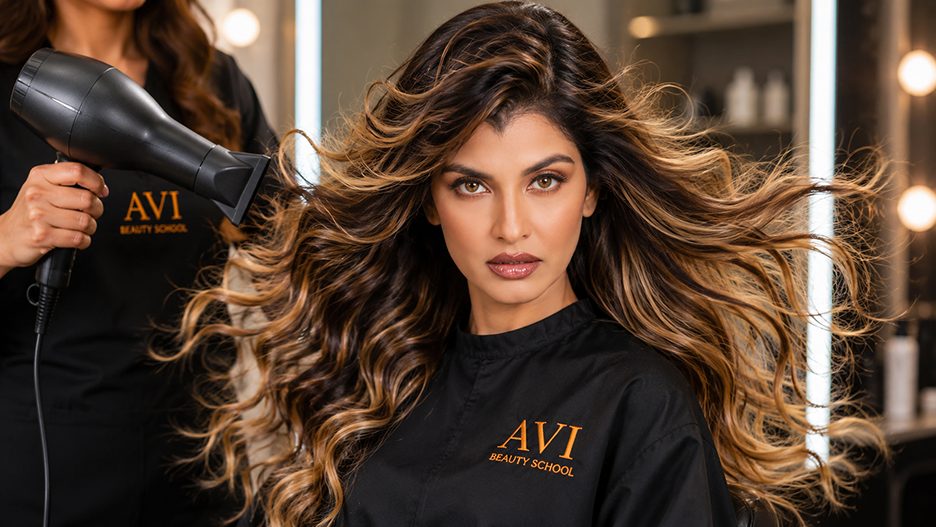
Cosmetology School in Northern Virginia
AVI Career Training in Vienna, Virginia is a COE-accredited cosmetology school in Northern Virginia that prepares students for Virginia State Board licensure through hands-on training, inclusive curriculum, and real career support. If you’re ready to turn a passion for beauty into a licensed profession — in one of the most economically strong markets on the East Coast — this is where to start.
Northern Virginia is not a generic market. Clients here are affluent, diverse, and willing to pay for skilled, knowledgeable stylists. That means the career you build after cosmetology school matters as much as the school you choose. AVI’s Cosmetology program is built specifically for this market — training students to work beautifully on every hair texture and skin tone, not just a narrow slice of the population.
Ready to take the first step? Apply to AVI Career Training today and find out how soon you can get started.
—
Key Takeaways
—
What Virginia Requires to Become a Licensed Cosmetologist
Before you can work as a licensed cosmetologist in Virginia, you have to meet specific requirements set by the Virginia Department of Professional and Occupational Regulation (DPOR). Understanding these requirements upfront helps you choose a school that actually prepares you for licensure — not just one that sounds good on the surface.
The 1,500-Hour Requirement
Virginia requires 1,500 clock hours of cosmetology training at a state-approved school. These hours cover both technical skills and foundational theory — everything from chemical safety and scalp analysis to sanitation protocols and client communication. Every hour counts toward your eligibility to sit for the State Board exam, so you want a program that tracks your hours accurately and keeps you on pace.
This is not an area where shortcuts pay off. Schools that rush students through or pad hours without meaningful instruction create graduates who struggle on the State Board exam. At AVI Career Training, every hour in our Cosmetology program is structured, supervised, and designed to build the competency the exam tests.
The Virginia State Board Exam
Once you complete your 1,500 hours, you become eligible to sit for the Virginia State Board cosmetology exam, administered by PSI Exams. The exam has two distinct components:
Passing both components earns you your cosmetology license in Virginia. That license is what allows you to work legally in any salon, spa, or beauty business in the state. Your school’s job is to make sure you’re ready for both parts — and AVI’s curriculum is built to do exactly that.
> Editorial note: Virginia DPOR requirements are subject to legislative change. Always verify current hour thresholds and exam requirements directly at dpor.virginia.gov before enrolling.
—
What You’ll Learn in a Cosmetology Program
A strong cosmetology curriculum goes well beyond learning how to cut hair. The 1,000-hour requirement exists because cosmetologists need to be genuinely skilled across a wide range of services — and safe enough to protect both clients and themselves. Here’s what a well-structured cosmetology program covers.
Core Technical Skills
Salon Business and Professionalism
Cosmetology school isn’t only about technical skills. A good program also prepares you to operate like a professional — which directly affects your income.
Inclusive Technique — AVI’s Differentiator
Here’s where many cosmetology programs fall short: they train students on a narrow range of hair textures and skin tones. That works fine in a homogeneous market. It does not work in Northern Virginia.
The DC metro area is one of the most racially and ethnically diverse regions in the country. Your clients will have 4C natural hair, fine European hair, mixed textures, sensitive melanin-rich skin, and everything in between. AVI’s curriculum is intentionally built around all hair textures and all skin tones — because that’s the actual client base you’ll serve.
That’s not a marketing line. It’s a practical advantage that affects your income, your reviews, and your reputation from day one.
—
How Long Cosmetology School Takes (And What Comes After)
This is one of the most common questions prospective students ask — and one of the most important. Let’s answer it directly.
Full-Time vs. Part-Time Pacing
At full-time enrollment, most cosmetology students in Virginia complete their 1,000 hours in approximately 12 to 14 months. Part-time enrollment naturally extends that timeline — often to 18 to 24 months — but it gives students the flexibility to work or manage other responsibilities while training.
Neither pace is wrong. The right choice depends on your life, your finances, and how quickly you want to start working. AVI’s admissions team can walk you through the options and help you map out a realistic schedule. Reach out to AVI to discuss your specific situation.
After School: Exam to First Paycheck
Once you complete your hours, here’s the typical path to your first paycheck as a licensed cosmetologist:
1. Complete 1,500 clock hours at your accredited school
2. Apply to PSI Exams to schedule your Virginia State Board written and practical exams
3. Pass both exam components — many students sit for both within a few weeks of graduation
4. Receive your Virginia cosmetology license from DPOR
5. Begin working — at a salon, as a booth renter, or building your own clientele
For students who prepare well and schedule their exams promptly, the window from graduation to first day on the floor can be as short as four to eight weeks. That means if you start school today at full-time pace, you could be a licensed, working cosmetologist within 14 to 16 months.
Meet Destiny: From Career Pivot to Licensed Colorist
Destiny spent seven years working retail management before deciding she was done building someone else’s schedule. She enrolled in AVI’s Cosmetology program at 29 — older than some of her classmates, but more focused than most. She went full-time, put in her hours, and made a point of practicing color techniques on every texture in the student clinic.
Eight weeks after graduation, she passed both State Board exams on her first attempt. Three months later, she was behind the chair at a Tysons Corner salon, building a clientele that already books two weeks out. Destiny didn’t need four years. She needed the right 1,500 hours.
—
Cosmetology Career Paths and Earning Potential in Northern Virginia
One of the biggest misconceptions about cosmetology is that the career ceiling is low. In Northern Virginia, that’s simply not accurate. The market here is different — and that difference shows up in your paycheck.
What Cosmetologists Earn in the DC Metro Area
According to Bureau of Labor Statistics occupational data, cosmetologists in the Washington, DC metro area earn a median salary in the range of $36,000–$52,000 per year in base wages. That figure increases meaningfully with:
Northern Virginia’s median household income is among the highest in the country. Clients in Tysons Corner, McLean, Reston, and Great Falls have the disposable income to spend on quality services — and they tip accordingly. That’s a real, structural advantage that stylists in lower-income markets simply don’t have access to.
Career Paths Available With a Virginia Cosmetology License
Your cosmetology license in Virginia opens more doors than most people realize:
The license itself is the foundation. What you build on top of it is up to you.
—
Why AVI Career Training — What to Look for in a Cosmetology School
Not all cosmetology schools in Northern Virginia are the same. Accreditation, curriculum quality, instructor experience, and financial aid eligibility vary significantly — and those differences affect your career before you ever set foot in a salon.
Here’s what to look for, and how AVI Career Training measures up.
Accreditation: The Credential That Unlocks Everything
COE Accreditation (Council on Occupational Education) is recognized by the U.S. Department of Education as a legitimate accrediting body for career and technical schools. This accreditation is not a formality — it’s the prerequisite for:
AVI Career Training is COE Accredited and SCHEV Certified (State Council of Higher Education for Virginia). When you train at AVI, you’re training at a school that meets federal and state standards — and your credential reflects that.
Schools without accreditation may offer cheaper tuition upfront. But if you can’t access financial aid, that lower sticker price often costs more out of pocket. And a license earned at a non-accredited school can create complications down the line.
Financial Aid and the GI Bill®
AVI accepts federal financial aid, including Pell Grants for eligible students. For active-duty military, veterans, and qualifying family members, AVI also accepts the GI Bill® — one of the few beauty schools in the region with the accreditation required to do so.
If you’re not sure whether you qualify for financial aid, AVI’s admissions team can walk you through the process. Apply or reach out here to start the conversation.
Instructor Quality and Real-World Experience
At AVI, your instructors are licensed industry professionals — not career academics. They’ve worked behind the chair, in salons, and with real clients across a range of skin tones and hair textures. That experience shows up in what they teach and how they teach it.
A Campus Built for Northern Virginia’s Market
AVI’s campus is located at 1595 Spring Hill Rd #720, Vienna, VA 22182 — in the heart of Fairfax County, minutes from Tysons Corner and easily accessible from across Northern Virginia. You’re not training in isolation from the market you’ll enter. You’re embedded in it.
Meet Marcus: From the Military to the Salon Floor
Marcus served eight years in the Army before transitioning out and spending two years trying to figure out what came next. He’d always had an interest in cutting hair — had been the go-to guy in his unit — but didn’t know if it could be a real career. A friend mentioned AVI. When Marcus found out AVI accepted the GI Bill®, the decision got a lot simpler.
He enrolled full-time, completed his 1,500 hours, and passed both State Board exams. Today he runs his own suite in a Fairfax County salon suite building, serves a clientele that followed him from a walk-in shop, and nets more per year than he made in uniform. His training didn’t cost him anything out of pocket. His license earned him everything.
—
Is Cosmetology School Worth It in 2025?
Yes — with the right school and the right market. Here’s the honest answer:
Cosmetology is a skilled trade with real licensing requirements, not an easy credential. The 1,000-hour Virginia requirement exists because clients trust licensed cosmetologists with chemical services, heat tools, and intimate proximity to their hair and skin. That barrier to entry is also what protects the profession’s earning potential.
In Northern Virginia specifically, the market conditions make cosmetology a particularly strong career choice:
The caveat: school quality matters. A program at an accredited school with experienced instructors, inclusive curriculum, and State Board exam preparation is worth the investment. A cheap, unaccredited program that leaves you unprepared for the exam is not.
AVI Career Training is the former. Learn more about AVI and what makes this program different.
—
Start Your Cosmetology Career at AVI Career Training
If you’re ready to build a real career in beauty — with a license, a skill set, and a school behind you that has the credentials to back it up — AVI Career Training is ready for you.
Located in Vienna, VA, AVI serves students from across Northern Virginia: Fairfax County, Arlington, Reston, McLean, Herndon, and beyond. Our Cosmetology program meets Virginia’s 1,000-hour requirement, prepares you for the State Board exam, and trains you to work confidently on every client who walks through the door.
Financial aid is available. GI Bill® is accepted. Your career can start sooner than you think.
Apply to AVI Career Training now — or call us at (703) 943-9841 to speak with an admissions advisor.
—
Information in this article reflects Virginia DPOR requirements as understood at time of publication. Hour requirements and licensing regulations are subject to change. Verify current requirements at dpor.virginia.gov before enrolling. Salary data referenced from U.S. Bureau of Labor Statistics Occupational Employment and Wage Statistics (bls.gov) for the Washington-Arlington-Alexandria, DC-VA-MD-WV metropolitan area.